English हिन्दी
Connect with us

India News

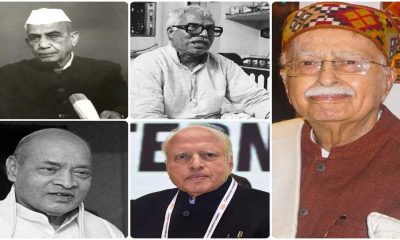
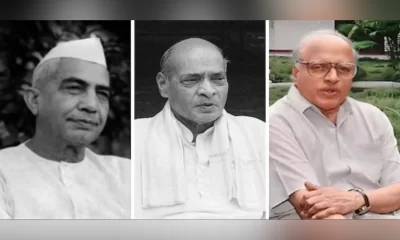
Former Bihar Chief Minister Karpoori Thakur awarded Bharat Ratna posthumously

With the Ram Mandir Pran Prathishtan finally over, this decision to confer the Bharat Ratna on Karpoori Thakur points to a long game in Bihar ahead of the 2024 Lok Sabha elections.

Published

on

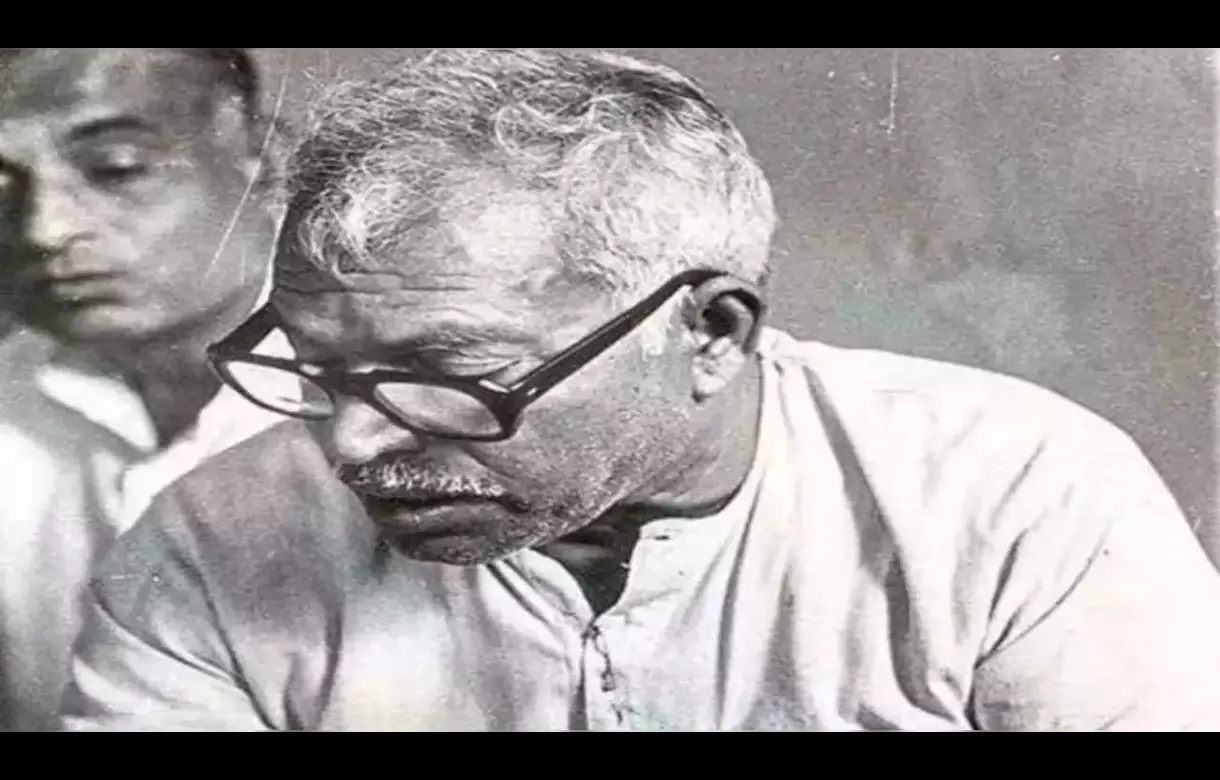
Former Bihar Chief Minister Karpoori Thakur was awarded with Bharat Ratna, posthumously by the President of India Droupadi Murmu on Tuesday evening. The nation’s highest honour to the former Bihar Chief Minister comes 35 years after his death. Karpoori Thakur died on February 17, 1988. 

He served as the Chief Minister from December 1970 to June 1971 and from December 1977 to April 1979. Revered by his followers as Jannayak, Karpoori Thakur was known for his efforts to strengthen the backward castes. He paved the way for reservations for backward castes in government services in Bihar in 1978. 

With the Ram Mandir Pran Prathishtan finally over, this decision to confer the Bharat Ratna on Karpoori Thakur points to a long game in Bihar ahead of the 2024 Lok Sabha elections. Both the Janata Dal United and the Rashtriya Janata Dal follow or claim to follow in the footsteps of Thakur.
Bihar Chief Minister Nitish Kumar has made the request for conferring the Bharat Ratna on Thakur several times. Nitish Kumar is also seen as the glue holding together the INDIA Bloc despite the Congress larger footprint elsewhere. 

The decision comes after the JDU had seen inner-party trouble in the preceding few months ending with former party president Lalan Singh submitting his resignation. The friction or the perceived friction between Nitish and RJD chief Lalu Yadav has also been cited as adding to the discomfort between the allies. 

Given Nitish Kumar’s proclivity to switch sides, the Bharat Ratna seems to have become a handy tool to attempt to wreak havoc in Opposition ranks.

Prime Minister Narendra Modi also paid tributes to the former Bihar Chief Minister. Taking to X, he wrote that he is delighted that the Government of India has decided to confer the Bharat Ratna on the beacon of social justice, the great Jannayak, Karpoori Thakur and that too at a time marking his birth centenary. He added that the prestigious recognition is a testament to his enduring efforts as a champion for the marginalized and a stalwart of equality and empowerment.

India News

PM Modi predicts BJP win in Bengal, says he will return for oath-taking ceremony

PM Modi says he will return for BJP government’s oath-taking ceremony in Bengal after results, expressing strong confidence in victory.

Published

on

PM Narendra Modi

Prime Minister Narendra Modi on Monday expressed strong confidence that the Bharatiya Janata Party (BJP) will form the next government in West Bengal after the ongoing Assembly elections, stating that he plans to return for the oath-taking ceremony.

Addressing a rally during the final phase of campaigning, the Prime Minister said he would come back to the state after the declaration of results to attend the swearing-in of the BJP government.

Confidence ahead of results

The remarks came during his last campaign event, where he indicated optimism about the party’s electoral performance. The results of the West Bengal Assembly elections are scheduled to be announced on May 4.

He told the gathering that the enthusiasm and public support witnessed during his campaign tours had strengthened his belief that the BJP would secure a mandate in the state.

Campaign concludes amid high political stakes

The Prime Minister’s statement underscores the high-stakes political battle in West Bengal, where the BJP is aiming to challenge the ruling Trinamool Congress. The election has seen intense campaigning from all major parties, with voter turnout remaining high in earlier phases.

The West Bengal Assembly elections are being held in multiple phases, with counting set to determine the next government in the state.

Continue Reading

India News

Raghav Chadha defends BJP move, cites toxic work environment in AAP

Raghav Chadha says he left AAP due to a toxic internal environment and lack of freedom to work.

Published

on

Raghav Chadha

Raghav Chadha has defended his decision to leave the Aam Aadmi Party and join the Bharatiya Janata Party, stating that a “toxic work environment” within his former party forced him to take the step.

In a video shared on Instagram, the Rajya Sabha MP addressed criticism over his political switch and said the internal atmosphere in AAP had deteriorated significantly over time.

‘Stopped from working and speaking’

Chadha claimed that he and others were unable to function effectively within the party, alleging that leaders were restricted from expressing themselves or carrying out their responsibilities.

He said the environment had become increasingly difficult, adding that it was no longer possible for him to contribute meaningfully under such conditions.

Decision after years of association

The politician, who had been associated with AAP since its early days, said he had devoted a significant part of his life to the party but felt it had changed over the years. Reports indicate he highlighted that the organisation was not the same as when he joined it.

Chadha also suggested that his decision was not impulsive but taken after careful consideration of available options, including staying back or leaving politics altogether.

Response to backlash

The move has triggered strong reactions from political circles and supporters, with criticism emerging over his switch to the BJP. However, Chadha defended his choice, pointing to internal challenges and a lack of space to work within AAP.

He further argued that multiple leaders leaving the party should prompt reflection, questioning whether all of them could be wrong.

Political impact

Chadha’s exit is part of a larger development where several AAP leaders have shifted to the BJP, significantly altering the party’s strength in the Rajya Sabha.

The development has intensified political tensions between the two parties, with AAP criticising the defections and BJP welcoming the new entrants.

Continue Reading

India News

Veteran photographer Raghu Rai dies at 83, leaves behind visual legacy of India

Veteran photographer Raghu Rai, known for documenting India’s defining moments, has died at 83, leaving behind a lasting visual legacy.

Published

on

Raghu Rai, photographer death, Indian photojournalism, Delhi news, Padma Shri awardee, India culture, photography legend

Raghu Rai, one of India’s most celebrated photographers whose work chronicled the country’s social, political and cultural journey, has died at the age of 83. He passed away at a private hospital in Delhi on Sunday, according to reports.

Rai was widely regarded as a pioneer of photojournalism in India, known for capturing powerful moments ranging from political events to everyday life. His images became a visual record of modern India, reflecting its diversity and complexity.

A career that defined Indian photojournalism

Born in 1942 in Jhang, then part of British India (now in Pakistan), Rai began his photography career in the 1960s. Over the decades, he worked with leading publications and documented key moments in India’s history.

His work included coverage of major events such as the Bhopal gas tragedy and the Bangladesh Liberation War, earning him widespread recognition. He was awarded the Padma Shri in 1972 for his contribution to photography.

Rai also gained international acclaim, with his photographs appearing in global publications and exhibitions, cementing his status as one of the most influential visual storytellers from India.

Illness and passing

According to family accounts cited in reports, Rai had been battling cancer for the past two years. Though he underwent treatment, his condition worsened in recent months, along with age-related complications.

He is survived by his wife Gurmeet, son Nitin, and daughters Lagan, Avani and Purvai. His last rites were scheduled to be held at Lodhi Crematorium in Delhi.

Tributes and legacy

Tributes have poured in from across the country, with leaders and members of the photography community remembering him as a visionary who captured “the soul of India.”

His work, spanning over five decades, continues to serve as a powerful archive of India’s evolution, making him one of the most respected figures in global photojournalism.

Continue Reading

Trending

© Copyright 2022 APNLIVE.com