English हिन्दी
Connect with us

India News

Bursting of crackers on Diwali: No blanket ban, but SC lays down restrictions for all festivals

Published

on

Bursting of crackers on Diwali: No blanket ban, but SC lays down restrictions for all festivals

[vc_row][vc_column][vc_column_text]Amid the precarious air pollution situation in Delhi and several other parts of the country and Diwali approaching, the Supreme Court today (Tuesday, October 23) laid down restrictions to be followed for bursting of crackers applicable across the board for all festivals.

However, to the relief of citizens, the top court declined to issue a blanket, country-wide ban on fireworks.

A Supreme Court bench of Justices AK Sikri and Ashok Bhushan was hearing a bunch of petitions – including one filed by minors Arjun Gopal, Aarav Bhandari and Zoya Rao Bhasin (all aged below four years) through senior advocate Gopal Sankaranarayanan – which had sought a complete ban on the manufacturing, transportation and sale of fire crackers.

The court clarified that on festivals, including Diwali, the bursting of firecrackers will be allowed only between 8 pm and 10 pm. On Christmas and New Year’s Eve, the bench said, crackers can be burst between 11:45 pm and 12:45 am.

“We make it clear that we are concerned not only with Diwali… be it Gurpurab or Christmas, our directions will work across the board,” said Justice Sikri.

No fire crackers would be burst during the day, said the SC.

The SC said “improved and green” crackers can be manufactured and sold only by the licensed holders. The court imposed a complete ban on the sale of firecrackers by e-commerce firms, including Amazon and Flipkart.

It added that firecrackers will also have to comply with the prescribed noise levels and also barred the use of some chemicals, including barium salt, in the manufacturing.

The SC ordered the Petroleum and Explosives Safety Organisation (PESO) to give clearances to crackers only if they meet noise and emission standards. The court order made it clear that the existing stock of crackers would become redundant.

The court added that the Centre and state governments should promote community bursting of firecrackers by designating such spots.

In the national capital, the Supreme Court said the Aam Aadmi Party government should look into the possibility of community fireworks to reduce the pollution load. If the government goes for this, the judges said this should be done within the next week so that people do not end up buying firecrackers.

Local police officers shall be personally liable if there is a violation of the court orders and will be hauled up for contempt.[/vc_column_text][/vc_column][/vc_row][vc_row][vc_column][vc_column_text css=”.vc_custom_1540286805313{border-top-width: 10px !important;border-right-width: 10px !important;border-bottom-width: 10px !important;border-left-width: 10px !important;padding-top: 10px !important;padding-right: 10px !important;padding-bottom: 10px !important;padding-left: 10px !important;background-color: #e5e5e5 !important;border-radius: 10px !important;}”]Main points

* People can burst low-emission firecrackers for 2 hours on Diwali (8pm to 10 pm), 35 minutes on Christmas and New Year’s eve (11.55 pm to 12.30 am).

* The top court asks Centre to encourage community cracker-bursting during Diwali and other festivals in Delhi-NCR.

* SC bans the online sale of firecrackers and puts a stay on the e-commerce portals from selling firecrackers.

* The top court asks the Central Pollution Control Board to monitor air quality 7 days before and 7 days after Diwali.

* Firecrackers can be sold only through licence holders.

* The area Station house officers will be held accountable if banned firecrackers are sold in their area.

* PESSO (Petroleum and Explosives Safety Organization) asked review the clinical composition of fireworks and give the suggestion within two weeks.

* The court ruling shall apply to all festivals and marriages.[/vc_column_text][/vc_column][/vc_row][vc_row][vc_column][vc_column_text]The judge said that this judgment has tried to strike a balance and has relied majorly on the suggestions and guidelines proposed by the central government.

The bench had reserved its verdict on the PILs on August 28 following elaborate arguments which saw Chairman, Centre for Chest Surgery & Lung Transplantation, Sir Ganga Ram Hospital and chief of Lung Foundation Dr Arvind Kumar make a passionate appeal before the judges in favour of banning fire crackers completely. Dr Kumar had placed on record graphic images of lungs of his patients, and explained to the court how, “everyone had turned a smoker” because of the high level of air pollution. He had established that the spike in air pollutants during Diwali, primarily due to bursting of fire crackers, could turn fatal for people with lung conditions.

Standing counsel for the Central Pollution Control Board, Supreme Court advocate Vijay Panjwani, who had supported the appeal for a complete ban on fire crackers during the court proceedings told reporters after the apex court’s verdict that though the “order is not very strict, it will regulate the sale and use of crackers to some extent”.

“All state pollution control boards and the Central Pollution Control Board will measure particulate matters (PM) 2.5 and 10 in the air seven days ahead of Diwali and seven days after Diwali,” Panjwani said.

Last year the top court had imposed a complete ban on sale of firecrackers in the national capital region and today’s decision brings relief for many Delhites wanting to celebrate Diwali the way have been accustomes to.

For the rest of the country, it will be the first time that the festival of lights would be celebrated under strict restrictions.

The top court had earlier said all aspects, including the fundamental right of livelihood of firecracker manufacturers and the right to health of over 1.3 billion people in the country, needs to be taken into account while considering a plea for the ban.

It had asked the Centre to suggest measures to be taken to curb the pollution and the effect of firecrackers on the public at large.

Manufacturers earlier told the court that the use of firecrackers should not be completely banned and it should instead be strictly regulated. They said firecrackers are not the reason for the increase in air pollution and there are other factors, like wind and temperature, which contribute to it.

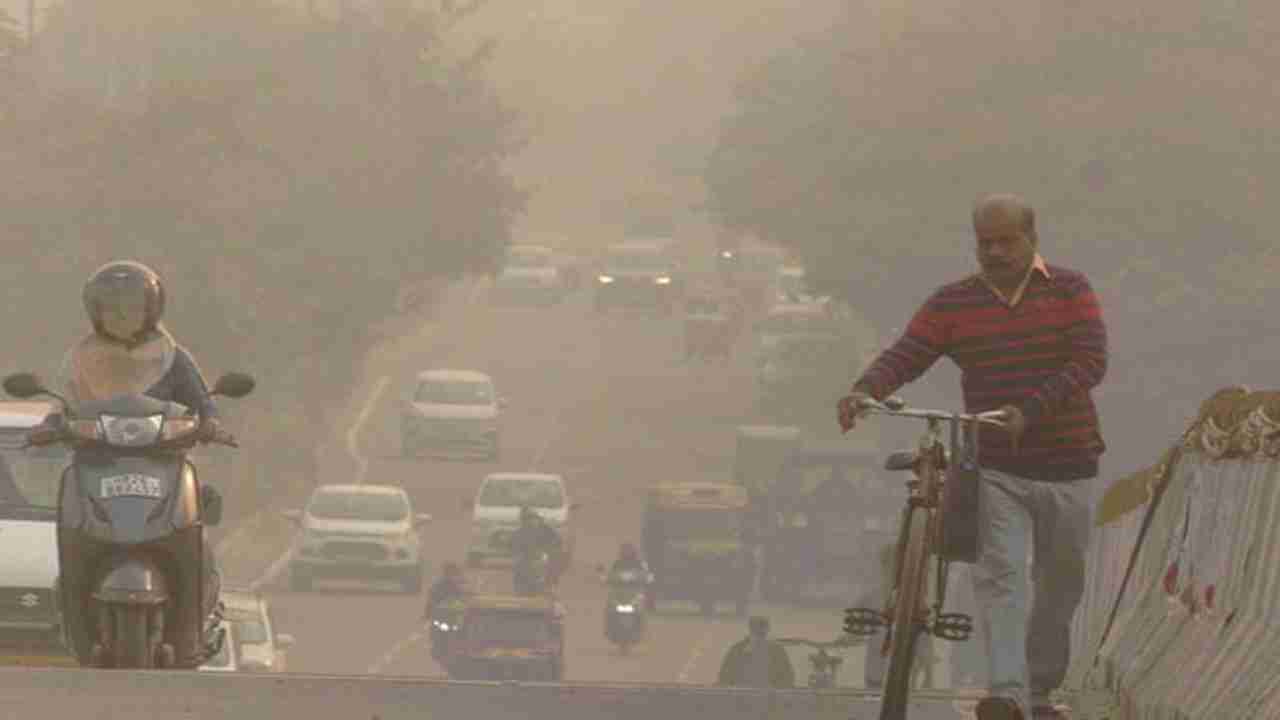
India’s poor air quality causes over one million premature deaths every year, according to a joint report by two US-based health research institutes earlier this year. Delhi’s Air Quality Index (AQI) continued to be ‘very poor’ on Monday with an average reading of 318 of PM (particulate matter) 2.5 at 9 am, according to data of System of Air Quality and Weather Forecasting And Research (SAFAR).

Last October, the Supreme Court suspended the sale of firecrackers in Delhi-NCR till November 1 in the run up to Diwali which was celebrated on October 19 in 2017. But the use of firecrackers in the city was still rampant on Diwali day, according to an analysis of CPCB data by the Centre for Science and Environment (CSE).

The average PM2.5 concentration during Diwali and the morning after (12pm-12am, October 19-20) was 397 microgramme per cubic metre — 6.6 times higher than the safe limit and is in the ‘emergency’ zone. The day before Diwali (October 18), the 24-hour average was 184 microgramme per cubic metres.[/vc_column_text][/vc_column][/vc_row]

India News

Delhi to install 305 mist sprayers across 9 major pollution hotspots

Chief Minister Rekha Gupta announced that 305 mist sprayers will be installed across nine pollution hotspots in Delhi, alongside expert-led planning and coordinated measures to reduce dust and biomass-related pollution.

Published

on

Delhi-NCR air quality

The Delhi government has announced a large-scale deployment of mist sprayer technology to tackle rising air pollution, with Chief Minister Rekha Gupta confirming that 305 mist sprayers will be installed across nine pollution hotspots in the capital.

Mist sprayers to curb dust at critical locations

During an inspection at ITO, Gupta said the mist sprayers already operational at the site are performing effectively. She noted that 35 poles at ITO have been fitted with these machines, which are helping suppress dust—a major contributor to air pollution in Delhi.

According to the Chief Minister, trials conducted in certain NDMC areas have shown promising results, reinforcing confidence in the technology.

High-level committee to guide pollution-control measures

Gupta announced the formation of a high-level expert committee that will advise the government on effective measures to reduce pollution. The panel will include senior officials from various departments as well as environmental specialists, including experts from IITs. Officials stated that the committee will receive special powers to implement pollution-mitigation strategies.

Departments directed to repair roads, add greenery

The Chief Minister said departments including PWD, DSIIDC and DDA have been instructed to fix potholes, repair and carpet roads, plant foliage along dividers and islands, and take other measures to reduce pollution sources.

She urged residents to report potholes on the government portal for quicker action.

Appeal to RWAs to prevent biomass burning

To curb winter pollution, Gupta advised Resident Welfare Associations (RWAs) to distribute electric heaters to security guards to discourage biomass burning, which significantly contributes to seasonal pollution spikes.

Continue Reading

India News

PM Modi welcomes Vladimir Putin with warm hug as Russian President begins India visit

Russian President Vladimir Putin began a high-profile visit to India on Thursday, welcomed by PM Narendra Modi as both nations prepare to discuss defence, energy and trade cooperation.

Published

on

Vladimir Putin rides in Indian PM Narendra Modi's car on India visit

Russian President Vladimir Putin arrived in New Delhi on Thursday evening for a 27-hour visit focused on strengthening defence, energy and trade cooperation. The visit, marked by a warm embrace and a brief car ride shared with Prime Minister Narendra Modi, underscores the continuity of the India-Russia strategic partnership amid shifting global geopolitics.

Putin receives ceremonial welcome and packed schedule ahead

Putin landed in Delhi around 6:35 pm, where PM Modi personally received him at Palam airport. The two leaders shared a hug before leaving together, with the Prime Minister set to host a private dinner in honour of the visiting President — a reciprocal gesture to the hospitality extended during Modi’s Moscow visit last year.

On Friday, Putin will begin his official engagements with a ceremonial welcome at Rashtrapati Bhavan, followed by a visit to Rajghat to pay homage to Mahatma Gandhi. He is also scheduled to attend the India-Russia Annual Summit at Hyderabad House, where both sides will hold a working lunch.

The Russian President will later inaugurate a new India-based channel of Russia’s state broadcaster and attend a state banquet hosted by President Droupadi Murmu, before departing India on Friday night.

Defence, energy and trade to dominate agenda

Officials have indicated that discussions will centre on defence, energy and trade — the three pillars of the bilateral relationship. Agreements are expected across sectors including shipping, healthcare, fertilisers and connectivity.

Ahead of the summit, defence ministers from both countries held extensive talks, covering additional procurement of S-400 air defence systems and delayed military hardware shipments affected by the Ukraine war. The S-400 platform, procured under a USD 5 billion deal, played a major role during Operation Sindoor.

The Kremlin has also hinted that Russia may propose the Su-57 fifth-generation fighter jet, which would put Moscow in direct competition with Western aircraft makers.

Energy ties face renewed pressure

India remains among the largest buyers of discounted Russian crude. However, fresh US sanctions on key Russian oil producers have led to a dip in purchases.

Putin’s visit also comes at a time of strain in India-US ties, with Washington recently imposing steep tariffs on Indian goods — including measures linked directly to India’s continued oil trade with Russia.

Massive security deployment in Delhi

Delhi Police have stationed over 5,000 personnel across central and New Delhi districts, supported by SWAT teams, anti-terror units, snipers, quick-reaction teams, anti-drone systems, HD-CCTV networks and layered surveillance measures for the visit.

Continue Reading

India News

Rahul Gandhi attacks Centre ahead of Vladimir Putin’s India visit

Rahul Gandhi alleged that the government discourages visiting foreign dignitaries from meeting Opposition leaders, calling it a sign of “insecurity,” hours before Russian President Vladimir Putin arrives in Delhi.

Published

on

Rahul Gandhi

As Russian President Vladimir Putin arrives in Delhi today for the India-Russia Annual Summit, Leader of the Opposition Rahul Gandhi has renewed his charge that the Centre discourages visiting foreign leaders from meeting Opposition representatives. He called it a sign of “insecurity” within the government.

Rahul Gandhi alleges break in long-followed tradition

Speaking outside Parliament, Rahul Gandhi said that it has traditionally been the norm for visiting foreign leaders to meet the Leader of the Opposition, a practice he claims continued during the tenures of Atal Bihari Vajpayee and Manmohan Singh.

He alleged that the present government advises foreign dignitaries against such meetings. “When foreign leaders come, the government suggests they should not meet the Leader of the Opposition. This is their policy,” Gandhi said. He added that a meeting with the Opposition offers visiting leaders a broader perspective, as “we too represent India.”

Gandhi further stated that this approach reflects the government’s reluctance to allow engagement between the Opposition and foreign guests.

Former Foreign Secretary counters Gandhi’s remarks

Responding to Gandhi’s allegations, former Foreign Secretary and Rajya Sabha MP Harsh Vardhan Shringla said visiting leaders operate on very tight schedules and there is no protocol mandating a meeting with the Leader of the Opposition. He stressed that such interactions depend entirely on the guest’s time and preference, noting that the required meetings are those with the President and the Prime Minister.

Putin’s schedule packed with bilateral engagements

Russian President Vladimir Putin is set to land in Delhi this evening on Prime Minister Narendra Modi’s invitation. His itinerary includes:

  • A private dinner with PM Modi
  • Visit to Mahatma Gandhi’s memorial at Raj Ghat
  • Engagements at Bharat Mandapam and Hyderabad House
  • A banquet hosted by President Droupadi Murmu

The visit forms part of the 23rd India-Russia Annual Summit.

Continue Reading

Trending

© Copyright 2022 APNLIVE.com