
India News
Amritsar: Accident Eyewitness Demolish Train Driver’s Claims


In the developments unfolding after the heart breaking tragedy when train ran over Dussehra crowd in Amritsar, locals on Sunday came out hard against the claim of the train driver saying that the crowd at the spot of the accident had pelted stones at the train.
Earlier Minsiter of State Railways Manoj Sinha and several other BJP leaders including Subramaniam Swami said that driver was not responsible for the accident. Punjab congress led government was being held responsible and Navjot Singh Sidhu and company were made accountable for the accident killing 61 people, including women and children.
Read More: No Action against Amritsar Train driver: Manoj Sinha
The train driver, in a statement to police and the railway authorities said he had not stopped his train because of stone pelting from the crowd at the accident spot.
 According to an agency report, one of the witnesses said, “I was at the spot. Leave alone stopping, the train did not even slow down. It seemed as if the driver wanted to mow us down. The train passed us in a matter of seconds.”
Shailender Singh Shally, the Municipal Councillor, reportedly said, “Is it logically possible for us to pelt stones at the train when so many people were dead and injured around us? Is it possible for us to get our bearings after such an incident and pelt stones at a speeding train? The driver is lying.”
Read More: Amritsar: Train rams into Dussehra crowd, 61 killed
The driver also claimed of applying “emergency brakes” as he saw the crowd on the tracks but “still some people were caught in the path of the train”. He also claimed that he continuously honked to get people off the tracks.
The driver said people started throwing stones at the train when it was “almost on the verge of stopping” and so, keeping in mind the safety of his passengers, he continued towards Amritsar and informed officials there about the accident.
However, the eyewitness have rubbished the driver’s claims saying the train did not slow down anywhere near the spot.
Paramjit Singh, another eyewitness said, “He did not even slow down, let alone almost stopping. The train was in such speed that the accident happened in split seconds. There are hundreds of videos that show how fast the train went. There was no chance of us reacting, leave alone pelt stones. All we could hear around us was people screaming and crying.”
This was a Diesel Electrical Multiple Unit (DEMU) having maximum speed of 96 kmph. If brakes applied such train stops completely in about 300 metres if empty, and it takes 600 metres if carrying passengers. The Railway official Vivek Kumar, DRM Ferozepur said that the last recorded speed of the train was 68kmph.
Ajay Goenka, who was present on the spot said, “As the train passed, I heard people screaming and shouting. There was no stone pelting. I don’t understand why the driver would make up such a thing. Will people who are seeing their loved ones lying in pools of blood leave them and pick up stones to hit the train?”
He further said, “Anyway, the speed of the train was such that even if people wanted to pelt stones, by the time they collected them, the train would have disappeared from sight. He is lying.”
Police also supports eyewitnesses statement saying that not just the train was travelling at a high speed, there were no reports of stone pelting at the site of the incident on October 19.
Sukhminder Singh, the Station House Officer (SHO) of Mohkampura said, “As far as I know, there has been no stone pelting at the spot of the accident when the train passed.”





India News
Journalist files police complaint against Rahul Gandhi over push allegation
Journalist Richa Parashar has filed a criminal complaint against Rahul Gandhi and others, alleging that she was pushed while covering the Opposition’s march to the Supreme Court. The Congress has denied the allegation.

India News
Delhi court orders release of CJP founder Abhijeet Dipke
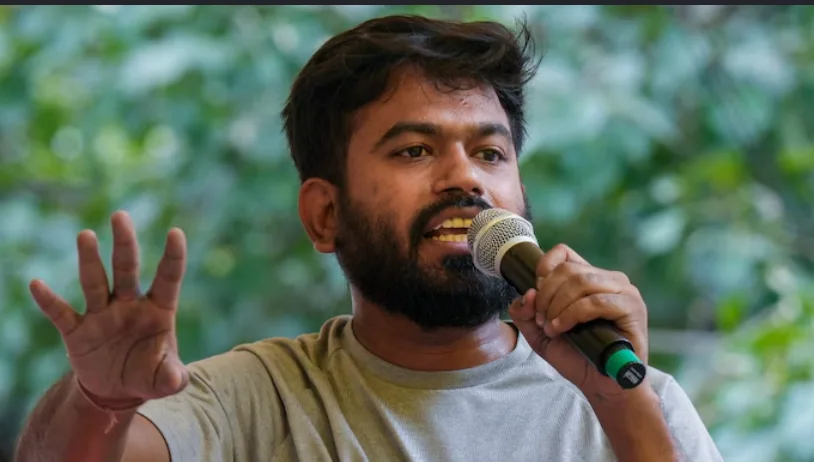
A Delhi court on Saturday ordered the conditional release of Cockroach Janta Party founder Abhijeet Dipke, who was detained and subsequently arrested ahead of a planned protest march at Connaught Place.
India News
Anirudh Ravichander to marry Kavya Maran in November, reception on November 21
Anirudh Ravichander and Kavya Maran are set to marry in November, with their Chennai wedding reception scheduled for November 21.


ED summons Pinarayi Vijayan in money laundering case

Anirudh Ravichander to marry Kavya Maran in November, reception on November 21

Delhi court orders release of CJP founder Abhijeet Dipke

Journalist files police complaint against Rahul Gandhi over push allegation
Journalist files police complaint against Rahul Gandhi over push allegation
Delhi court orders release of CJP founder Abhijeet Dipke
Anirudh Ravichander to marry Kavya Maran in November, reception on November 21
ED summons Pinarayi Vijayan in money laundering case

LK Advani, 98, hospitalised in Delhi with chest infection

Afghan Men Try To Hang With The Jet Engine Of The Aircraft in Kabul- Afghanistan News – Kabul News
Trending Top 10 News: 10000 Crore Fine on Flipkart, Apple to Launch Unique Feature, Hdfc Bank Job Ad

Trending Top 10 News: Nokia 6310, Apple sales, Bachpan ka Pyar Video Kid, Dainik Bhaskar IT Raid

Trending Top 10 News: Canada bans Indian flights, Rain in Delhi NCR, AIMIM Twitter hacked, Raj Kundra case

Trending Top 10 News: Shein India, Apple New Service, Pocket Oxygen, Oppo Launched New Phone
-
 India News23 hours ago
ED summons Pinarayi Vijayan in money laundering case
-
 India News13 hours ago
Anirudh Ravichander to marry Kavya Maran in November, reception on November 21
-
 India News13 hours ago
Delhi court orders release of CJP founder Abhijeet Dipke
-
 India News11 hours ago
Journalist files police complaint against Rahul Gandhi over push allegation
