English हिन्दी
Connect with us

India News

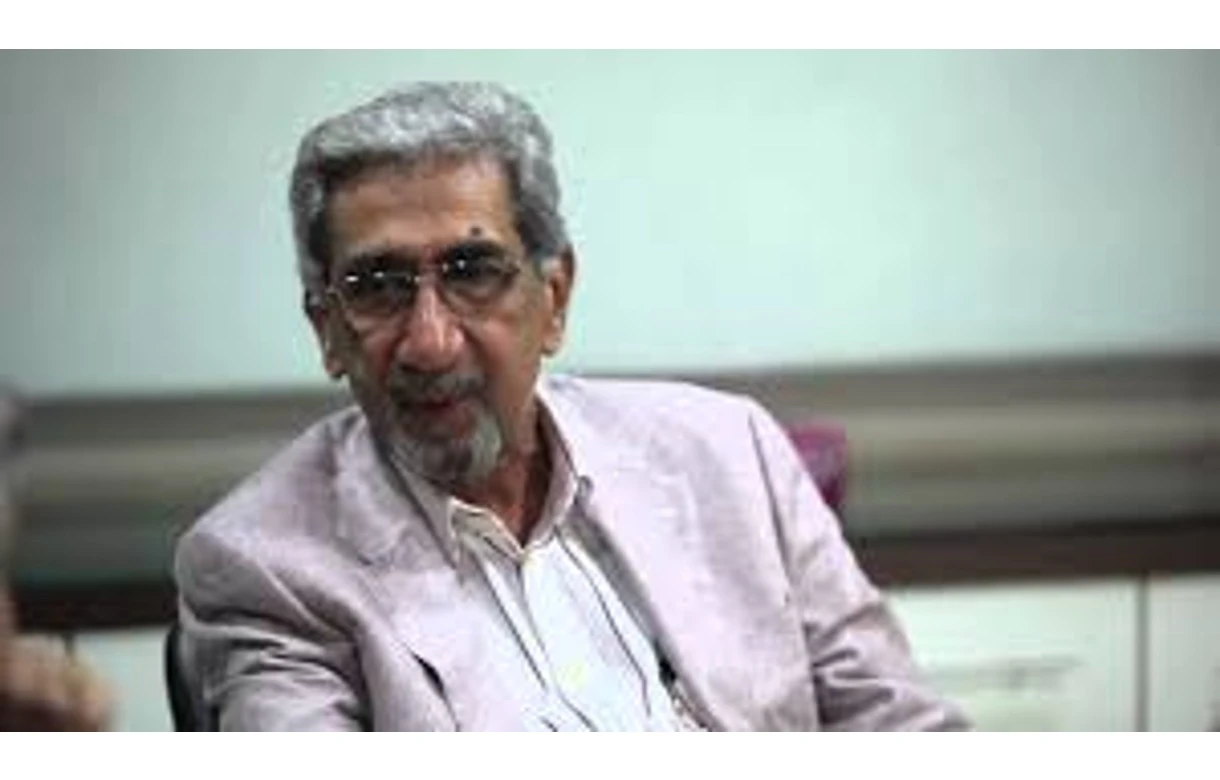
Iqbal Chagla, one of India’s leading lawyers, passes away at 86

He was also the father of Justice Riyaz Chagla, a sitting judge of the Bombay High Court.

Published

on

Senior Advocate Iqbal Chagla, a prominent figure in India’s legal community and a distinguished member of the Bombay Bar Association (BBA), passed away on Sunday, January 12, at the age of 86. The son of former Bombay High Court Chief Justice MC Chagla, Iqbal had been unwell. He was also the father of Justice Riyaz Chagla, a sitting judge of the Bombay High Court.
BBA President Nitin Thakker confirmed the news, stating, “Yes, Mr. Chagla is no longer with us. He was unwell. The last rites will be held on Monday at Worli Crematorium.”

Born in 1939, Iqbal Chagla earned an MA in History and Law from Cambridge University before being called to the Bombay Bar. He was bestowed with the title of Senior Advocate in the 1970s. From 1990 to 1999, he served as President of the BBA for three terms.

Chagla was also a member of the Executive Committee of the Bar Association of India and served on the National Legal Services Authority (NLSA) in Delhi. Notably, he declined a direct offer for a judgeship on the Supreme Court, which would have positioned him to become Chief Justice of India (CJI) within a few years.

In the 1990s, during his presidency of the BBA, Chagla moved resolutions calling for the resignations of five judges from the Bombay High Court, some of whom resigned or were transferred. He notably introduced a resolution in 1995 demanding the resignation of Chief Justice AM Bhattacharjee, who faced significant scrutiny regarding his integrity. Under pressure from Chagla’s actions, Chief Justice Bhattacharjee ultimately resigned.

As one of the leading legal luminaries of the Bombay Bar, Chagla was highly sought after for his expertise in civil litigation and corporate law. With nearly 60 years of membership in the BBA, he represented clients in numerous high-profile cases and was recognized as a distinguished Senior Advocate at the Bombay High Court. His expertise extended to international arbitrations, where he provided counsel on proceedings in foreign courts.

India News

Yogi Adityanath’s do namoone remark sparks Akhilesh Yadav’s jab on BJP infighting

Yogi Adityanath’s ‘do namoone’ comment in the UP Assembly has been countered by Akhilesh Yadav, who termed it a confession of BJP’s internal power struggle.

Published

on

Yogi Adityanath

Uttar Pradesh Chief Minister Yogi Adityanath’s recent “do namoone” comment in the state Assembly has triggered a sharp political exchange, with Samajwadi Party chief Akhilesh Yadav turning the remark into an attack on the Bharatiya Janata Party’s alleged internal discord.

The comment was made during a heated Assembly discussion on allegations of codeine cough syrup smuggling in Uttar Pradesh. Opposition members had accused the state government of inaction, claiming that timely steps could have saved the lives of several children. Rejecting the allegation outright, Adityanath said that no child in the state had died due to consumption of the cough syrup.

While responding to the opposition benches, the Chief Minister made an indirect jibe, saying there were “two namoone”, one in Delhi and one in Lucknow. Without naming anyone, he added that one of them leaves the country whenever there is a national debate, and suggested that a similar pattern applied to the Samajwadi Party leadership. The remark was widely interpreted as being aimed at Leader of Opposition Rahul Gandhi and Akhilesh Yadav, a former Uttar Pradesh chief minister and current Lok Sabha MP

Akhilesh Yadav calls remark a ‘confession’

Akhilesh Yadav responded swiftly on social media, calling Adityanath’s statement a “confession” that exposed an alleged power struggle within the BJP. He said that those holding constitutional posts should maintain decorum and accused the ruling party of bringing its internal disputes into the public domain. Yadav posted his response shortly after the Chief Minister shared a video clip of the Assembly remarks online.

The Samajwadi Party has, on several occasions, claimed that there is a tussle between the Uttar Pradesh government and the BJP’s central leadership. Party leaders have cited the appointment of deputy chief ministers and certain bureaucratic decisions as evidence of attempts to curtail the Chief Minister’s authority.

Adityanath has consistently dismissed these claims, maintaining that he holds the post because of the party’s trust in him. The latest exchange has once again brought the narrative of BJP infighting into political focus, even as both sides continue to trade barbs ahead of key electoral contests

Continue Reading

India News

Sonia Gandhi calls weakening of MGNREGA a collective moral failure, targets Centre in op-ed

Sonia Gandhi has accused the Centre of weakening MGNREGA, calling it a collective moral failure with serious consequences for crores of working people.

Published

on

Sonia Gandhi

Congress Parliamentary Party chairperson Sonia Gandhi has sharply criticised the Central government over what she described as the steady dismantling of rights-based legislation, with a particular focus on the Mahatma Gandhi National Rural Employment Guarantee Act (MGNREGA).

In a recent opinion article published in a leading English daily, Sonia Gandhi argued that MGNREGA was envisioned as more than a welfare measure. She said the rural employment scheme gave legal backing to the constitutional right to work and was rooted in Mahatma Gandhi’s idea of Sarvodaya, or welfare for all.

Calling its weakening a serious failure, she wrote that the decline of MGNREGA represents a “collective moral failure” that will have lasting financial and human consequences for crores of working people across India. She stressed that safeguarding such rights-based frameworks is crucial at a time when, according to her, multiple protections are under strain.

Concerns raised over education, environment and land laws

Sonia Gandhi also flagged concerns beyond rural employment. Referring to education policy, she claimed that the Right to Education has been undermined following the National Education Policy 2020, alleging that it has led to the closure of around one lakh primary schools across the country.

On environmental and land-related legislation, she stated that the Forest Rights Act, 2006, was weakened through the Forest (Conservation) Rules, 2022. According to her, these changes removed the role of the gram sabha in decisions related to the diversion of forest land.

She further alleged that the Right to Fair Compensation and Transparency in Land Acquisition, Rehabilitation and Resettlement Act has been significantly diluted, while adding that the National Green Tribunal has seen its authority reduced over the years.

Warning on agriculture and food security laws

Touching upon agriculture reforms, Sonia Gandhi referred to the now-repealed three farm laws, claiming they were an attempt to deny farmers the right to a minimum support price. She also cautioned that the National Food Security Act, 2013, could face similar threats in the future.

Reiterating her central argument, she urged unity to protect statutory rights, stating that the erosion of such laws has implications that extend well beyond policy, affecting livelihoods and dignity on the ground.

Continue Reading

India News

Thick smog engulfs Delhi, flights and trains delayed as air quality slips to very poor

Delhi remained under a thick smog cover as air quality dipped into the very poor category, causing delays in flights and train services due to low visibility.

Published

on

delhi-air-quality

A dense blanket of smog covered Delhi on Saturday morning, pushing air quality into the ‘very poor’ category and disrupting flight and train operations across the national capital and adjoining areas. Reduced visibility due to smog led to delays in air and rail traffic, while authorities warned that pollution levels could worsen further in the coming days.

The Air Quality Index (AQI) in Delhi was recorded at 380, placing it in the ‘very poor’ bracket. Visuals from Bhairav Marg near Pragati Maidan showed motorists using headlights during early hours, as visibility remained low. At around 7 am, the AQI at this location stood at 433.

Nearly half of Delhi’s air quality monitoring stations reported ‘severe’ pollution levels. Anand Vihar recorded an AQI of 428 with PM2.5 as the dominant pollutant, while Jahangirpuri reported an AQI of 425.

Transport services hit by low visibility

Flight operations at Delhi airport were impacted due to low visibility conditions. The airport issued an advisory asking passengers to check with their respective airlines for updated flight information, as low visibility procedures were in place. Runway visibility was reported to be between 800 and 1,200 metres.

Live flight tracking data showed multiple flights running behind schedule. One airline also warned passengers about possible disruptions at several airports in northern and eastern India, including Delhi, due to dense fog conditions. Travellers were advised to verify flight status before heading to the airport, with options offered on select flights to reschedule or seek refunds without additional charges.

Rail services were also affected, with more than 30 trains running late by an average of three to four hours. Some long-distance trains reported delays of over six to eight hours, causing inconvenience to passengers travelling to and from the capital.

Air quality likely to worsen

The weather department had earlier forecast dense to very dense fog at isolated places over Delhi and several parts of north and central India. According to the Air Quality Early Warning System for Delhi, pollution levels are expected to remain in the ‘very poor’ category on Saturday and may slip into the ‘severe’ category on Sunday and Monday. In view of the deteriorating conditions, an ‘orange’ alert has been issued for Saturday.

Continue Reading

Trending

© Copyright 2022 APNLIVE.com