English हिन्दी
Connect with us

Gadgets

Climate change biggest health threat, cost India 7,500 crore labour hours in 2017

Published

on

Climate change biggest health threat, cost India 7,500 crore labour hours in 2017

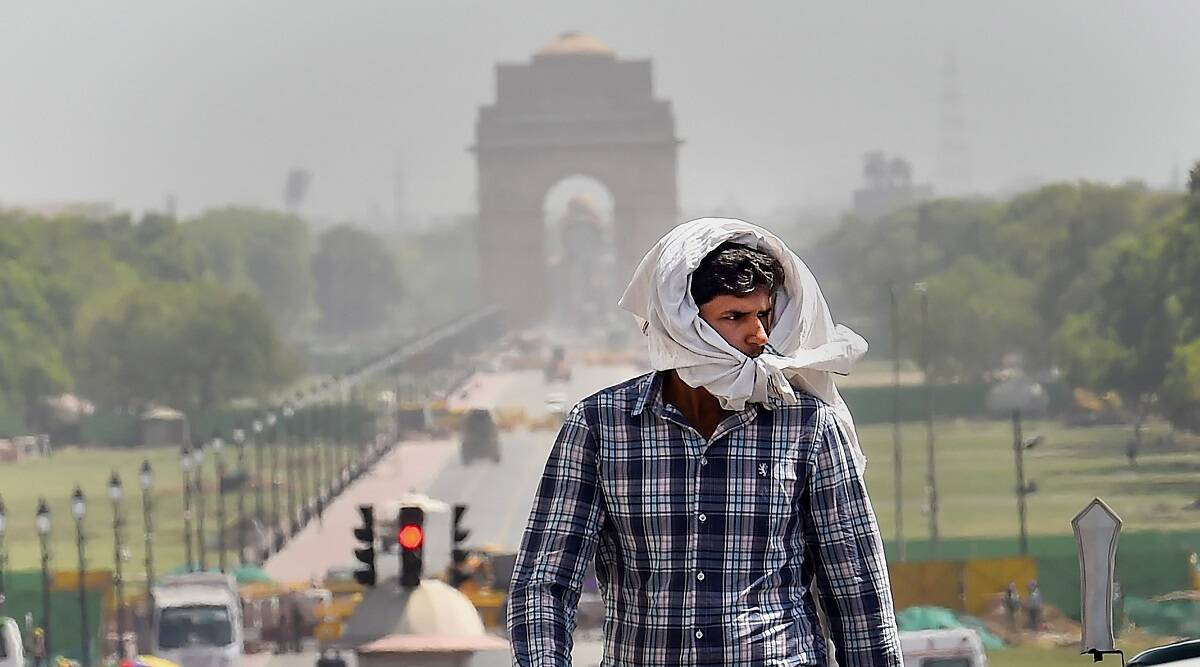
Heat and extreme weather events and impact on health from climate change make it the biggest global health threat of the 21st century, says a report by The Lancet medical journal on Wednesday, November 28.

Scientists said climate change impacts – from heatwaves to worsening storms, floods and fires – were surging and threatened to overwhelm health systems, with hundreds of millions more people already suffering in the last two decades.

According to the Lancet Countdown 2018 on Health and Climate Change report, globally each person was exposed to an additional 1.4 days of heat wave between 2000 and 2017 compared to the baseline period of 1986 to 2005. In 2017, an additional 157 million heat wave exposure events took place, which is 18 million more heat exposure events than in 2016.

India is one of the countries worst hit by heat stress and labour hours lost.

From 2014-2017, the average length of heatwaves in India ranged from 3-4 days compared to the global average of 0.8-1.8 days, and Indians were exposed to almost 60 million heatwave exposure events in 2016, a jump of about 40 million from 2012, the report released Thursday showed.

India also lost nearly 75,000 million labour hours in 2017 (equivalent to a year’s work for 7% of the working population), compared to about 43,000 million hours in 2000, an increase of more than 30,000 million labour hours lost in less than two decades.

In India, average temperatures are set to rise alarmingly, the Lancet Countdown report on health and climate change says. By the end of the 21st century, Northern, Central and Western India may witness temperature rise averaging 2.2 to 5.5°C.

The impacts, the authors on India policy brief note, vary with different sectors with the agriculture being most vulnerable as compared to the industrial and services sector.

“For India, whose large agriculture economy makes up 18% of the country’s GDP and employs nearly half the population, this translates into substantial climate-related impacts on the workforce and economy,” said Dr K Srinath Reddy an author of the India policy brief of the Lancet report, according to a report in The Times of India (TOI).

For the agriculture sector alone, the labour hours lost increased from about 40,000 million hours in 2000 to about 60,000 million hours in 2017, says a briefing paper for Indian policy makers by the Public Health Foundation of India (PHFI) based on the Lancet Countdown report.

The report comes ahead of the 24th UN Climate Change Conference, also known as COP (Conference of Parties) – annual meetings held to assess and negotiate ways to deal with climate change. Issues likely to be discussed at this year’s conference are transfer of climate funds from developed countries to developing nations for adaptation to climate change impacts, and how nations can keep global temperature rise under 1.5 degree Celsius.

The report was authored by people from 27 organisations, including doctors, academics and policy professionals, who relied on written works and primary data reports from various countries.

“What we saw in the data shared is that the number, duration and intensity of heat waves has been increasing in India, particularly in the last decade. There are spikes in heat wave related morbidity and mortality. Lancet had shared summary data sets with us,” said Dr Poornima Prabhakaran, associate professor and deputy director of the Centre for Environmental Health at PHFI, co-author of the briefing paper.

Mortality rates for malignant melanoma have increased significantly in Europe, the Americas, and the Western Pacific.

Low and middle-income countries, India included, are likely to be worst affected by climate change, given weaker health systems and poorer infrastructure, experts said, adding that this may lead to further widening of existing health and economic inequities.

Heatwaves are associated with increased rates of heat stress and heat stroke, exacerbation of heart failure and acute kidney injury from dehydration. Children, the elderly and those with pre-existing morbidities are particularly vulnerable.

Dr Reddy was quoted by The Times of India (TOI) as saying that identifying local heat hot spots through appropriate tracking and modelling of meteorological data is needed to tackle the crisis.

Observing that a recent report “places India amongst the countries who most experience high social and economic costs from climate change”, the study makes several recommendations. These include identifying “heat hot-spots” through appropriate tracking of meteorological data and promoting “timely development and implementation of local Heat Action Plans with strategic inter-agency co-ordination, and a response which targets the most vulnerable groups.”

The report prepared jointly with the Public Health Foundation of India also urges a review of existing occupational health standards, labour laws and sectoral regulations for worker safety in relation to climatic conditions.

Gadgets

OnePlus India CEO Robin Liu steps down, shutdown rumours resurface

OnePlus India confirms business continuity after CEO Robin Liu’s resignation sparks shutdown rumours online.


Published

on

The resignation of Robin Liu as India CEO of OnePlus has triggered fresh speculation online about the company’s future, even as the firm has firmly denied any plans to shut down operations.

Liu will step down from his role effective March 31, 2026. His exit comes months after he publicly dismissed similar rumours about the company withdrawing from certain markets.

Google searches spike after leadership exit

Following news of Liu’s departure, search trends for terms like “OnePlus shutdown”, “OnePlus shutting down”, and “OnePlus India shutdown” saw a noticeable surge, indicating rising public concern.

However, OnePlus India clarified that there is no change in its business operations and dismissed the shutdown claims as misinformation.

In a public statement, Liu said the company is “operating as usual” and urged stakeholders to rely on official sources rather than unverified reports. He reiterated that claims about the company shutting down are false.

Company says operations remain unchanged

The company stated that Liu’s decision to step down was due to personal reasons and not linked to any strategic withdrawal or operational challenges in India.

OnePlus further emphasized that its India business continues normally, with no immediate changes expected in its strategy or market presence.

Restructuring within OPPO group

Industry observers suggest Liu’s exit may be part of a broader restructuring within the OPPO group, which owns OnePlus.

The restructuring is believed to focus on streamlining operations, reducing costs, and accelerating product development amid challenges such as rising component costs and supply constraints.

Reports also indicate that OnePlus experienced a decline in shipments in 2025, which may have contributed to internal changes.

Reports hint at global strategy shift

According to a report by 9to5Google, the company may scale back its presence in some global markets, including parts of Europe, as early as April 2026.

At the same time, OnePlus is reportedly planning to strengthen its focus on India and expand further into the mid-range smartphone segment.

Continue Reading

Gadgets

Oppo K14 5G launched in India with 7000mAh battery, starts at Rs 17,999

Oppo has launched the K14 5G in India with a 7000mAh battery, fast charging and durability features, starting at Rs 17,999.

Published

on

oppo K14 5G

Oppo has launched its latest mid-range smartphone, the K14 5G, in India, positioning it as an “endurance powerhouse” with a strong focus on battery life, smooth performance and long-term reliability.

The smartphone starts at Rs 17,999 for the 6GB + 128GB variant, while the 6GB + 256GB and 8GB + 256GB models are priced at Rs 19,999 and Rs 21,999 respectively. It will be available for purchase starting March 20 via Flipkart and the company’s official online store. Buyers can also avail an instant discount of up to Rs 1,000 along with no-cost EMI options for up to three months.

Focus on battery life and endurance

A key highlight of the Oppo K14 5G is its 7000mAh battery, designed to support extended daily usage without frequent charging. The company claims the device can deliver up to 738.8 hours of standby time. It also supports long usage across activities such as voice calls, video streaming, navigation and messaging.

The device comes with 45W fast charging, which can charge the battery from 1 percent to 37 percent in around 30 minutes, with a full charge taking about 92 minutes. Oppo says the battery is engineered to maintain durability for up to five years. Reverse wired charging is also supported for added convenience.

Built for durability and everyday use

The smartphone is designed with durability in mind, featuring SGS 5-star certification and MIL-STD-810H military-grade testing. It has undergone multiple drop tests and transportation shock testing to ensure resistance against accidental falls and rough usage conditions.

The device also carries IP66, IP68 and IP69 ratings, offering protection against dust, water immersion and high-pressure water exposure. Additional features like water-repellent camera coating and glove and splash touch support further enhance usability in different environments.

Display and design

The Oppo K14 5G features a 6.75-inch display with a 120Hz refresh rate and brightness of up to 1125 nits in high brightness mode. It is available in three colour options — Icy Blue, Prism Violet and Prism White — with a matte finish and subtle reflective design elements.

Performance and cooling

Powered by the MediaTek Dimensity 6300 chipset, the smartphone is designed to handle everyday tasks such as browsing, streaming and multitasking efficiently. It runs on ColorOS 15, which includes system optimisation features aimed at maintaining smooth performance over time.

To manage heat during extended usage, the device includes a vapor chamber cooling system with graphite layers for improved thermal management. This helps maintain stable performance during gaming and heavy usage.

Camera and AI features

The smartphone is equipped with a 50MP main camera, supported by a 2MP monochrome sensor, along with an 8MP front camera. It offers AI-powered features such as portrait retouching, AI eraser, AI clarity enhancement and dual-view video recording.

These tools are designed to improve image quality, assist in editing and enhance overall photography experience for users.

Availability and after-sales support

The Oppo K14 5G will be available starting March 20 with launch offers including discounts and EMI options. The company is also offering a 30-day inspection and replacement policy in case of manufacturing defects, supported by its nationwide service network.

Continue Reading

Gadgets

OnePlus Freedom Sale 2026 brings discounts on 15, 15R, 13, Nord 5 and tablets

OnePlus Freedom Sale 2026 begins Jan 16 with discounts on phones, tablets, and audio products across online and offline stores.


Published

on

OnePlus has announced its Freedom Sale, offering discounts on smartphones, tablets, and audio products across online and offline platforms. The deals include the recently launched OnePlus 15 series, Nord lineup, Buds audio devices, and other gadgets.

When and where to shop

The OnePlus Freedom Sale starts on Jan. 16 and will run both online and offline. Shoppers can purchase smartphones through OnePlus.in, OnePlus Experience Stores, Amazon, as well as offline retailers including Croma, Reliance Digital, Vijay Sales, and others. Tablets are available on Flipkart during the sale period.

Discounts on OnePlus smartphones

  • OnePlus 15: Launched at Rs 72,999, buyers can get an instant Rs 4,000 discount, lowering the effective price to Rs 68,999. Additional benefits include six months of no-cost EMI and a bundled OnePlus Nord Buds 3.
  • OnePlus 13: Originally priced at Rs 69,999, the phone receives an Rs 8,000 price drop, plus a bank discount of Rs 4,000, bringing the price down to Rs 57,999.
  • OnePlus 15R: Listed at Rs 47,999, buyers can avail Rs 3,000 off until Jan 26. After the date, the effective price is Rs 45,999.
  • OnePlus 13R: Launched at Rs 42,999, this device gets up to Rs 6,000 price cut and an additional Rs 1,000 bank discount.

Discounts on OnePlus tablets

  • OnePlus Pad 2: Rs 2,000 instant bank discount reduces the price to Rs 34,999.
  • OnePlus Pad 3: Eligible for a Rs 3,000 instant discount, making the price Rs 44,999. Purchases until Jan 26 include a free Stylo 2 stylus.
  • OnePlus Pad Go 2: Rs 1,000 price drop plus Rs 2,000 bank discount, now Rs 23,999.
  • OnePlus Pad Go: Price reduced to Rs 13,999 after Rs 3,000 cut and Rs 1,000 bank discount.
  • OnePlus Pad Lite: Available for Rs 11,999 after a Rs 2,000 price drop and Rs 2,000 bank discount.

Audio devices on offer

  • OnePlus Buds 4: Rs 700 price cut with Rs 300 bank discount, bringing the effective price to Rs 4,999.
  • OnePlus Buds Pro 3: Now Rs 9,999 after Rs 1,000 price drop and Rs 1,000 bank discount. No-cost EMI options are available for both Buds 4 and Buds Pro 3.

Additional discounts are also applicable to the Nord Buds series — including Nord Buds 3, Nord Buds 3 Pro, and Nord Buds 3R — and neckband devices such as Bullets Wireless Z2 ANC and Bullets Wireless Z3.

Continue Reading

Trending

© Copyright 2022 APNLIVE.com