English हिन्दी
Connect with us

India News

Pakistan boosts defence budget amid economic cutbacks, eyes 4.2% growth

Pakistan has hiked its defence budget by 20% in the 2025-26 fiscal plan, while reducing overall government spending, sparking concerns over economic priorities.

Published

on

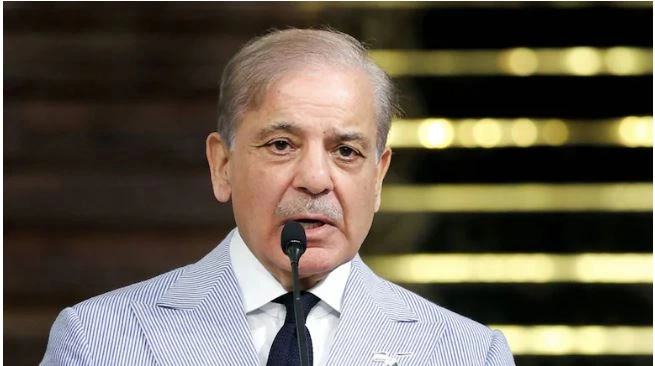
Shahbaz sherif

Pakistan’s newly unveiled federal budget for 2025-26 highlights a sharp increase in defence spending, with a 20% hike that pushes military allocations to PKR 2.55 trillion ($9 billion), excluding pensions. At the same time, the government has trimmed overall spending by 7%, raising concerns over Islamabad’s development priorities.

Defence allocation sees major rise

In the budget presented by Prime Minister Shehbaz Sharif’s administration, the total defence allocation – including PKR 742 billion ($2.63 billion) for military pensions – rises to PKR 3.292 trillion ($11.67 billion). The outlay also earmarks PKR 704 billion ($2.5 billion) for physical assets and military equipment. This increase follows a recent military clash with India, triggered by the April terror attack in Jammu and Kashmir’s Pahalgam that left 26 dead. India has accused Pakistan of backing the attackers.

Sharif stated Pakistan must aim to surpass India in the economic arena, underlining defence as a critical pillar of national strategy.

Spending cuts and IMF conditions

Despite the military boost, Pakistan has cut total government expenditure by 7% as it attempts to stabilise an economy burdened by nearly PKR 76,000 billion (approximately $270 billion) in debt accumulated in the first nine months of the current fiscal year.

The finance ministry, led by Muhammad Aurangzeb, presented a PKR 17.573 trillion ($62 billion) budget, with a growth target of 4.2% for the coming fiscal year. Inflation is expected to ease to 7.5%, while the fiscal deficit is forecast to reduce to 3.9% of GDP from the previous 5.9%.

Pakistan is following terms laid out by the International Monetary Fund (IMF), which recently disbursed $2.4 billion in aid. Islamabad has assured the IMF that the budget is being prepared in consultation with the Fund, and has reiterated its commitment to privatising Pakistan International Airlines.

Growth struggles amid regional competition

While Aurangzeb expressed optimism, actual economic growth for the current fiscal year is likely to fall short at 2.7%, compared to the 3.6% target. This figure lags significantly behind the regional average, with South Asia recording 5.8% growth in 2024 and projections of 6.0% for 2025, according to the Asian Development Bank.

Aurangzeb highlighted the need for structural economic reform, stating, “Our budget strategy is to change the economy’s DNA by bringing basic changes.” He emphasised boosting exports and foreign reserves to avert past balance-of-payments crises.

Experts remain cautious

Despite interest rate cuts aimed at reducing borrowing costs, economists caution that fiscal constraints and IMF-mandated reforms may limit investment. Many believe that without parallel structural reform and developmental focus, Pakistan’s aspirations of economic stability and competitiveness will remain constrained.

India News

BJP spokesperson Shehzad Poonawalla’s mother injured in hit-and-run incident in Pune

BJP spokesperson Shehzad Poonawalla has alleged that his mother was deliberately hit by a car in Pune and left critically injured. She is scheduled to undergo surgery.

Published

on

Shehzad Punawalla

BJP national spokesperson Shehzad Poonawalla has claimed that his mother was seriously injured after being struck by a car in an alleged hit-and-run incident in Pune. The accused reportedly fled the spot after the incident, leaving her critically injured.

According to Poonawalla, the incident occurred a few hours earlier and his mother is scheduled to undergo surgery. He appealed to authorities to identify and arrest the person responsible at the earliest.

Sharing details on social media, Poonawalla said an unidentified individual ran a car over his mother and escaped from the scene. He requested prayers for her recovery and expressed anguish over the incident, describing his mother as a compassionate person whose injury had deeply shaken him.

He also tagged Pune City Police, senior police officials, and Maharashtra Chief Minister Devendra Fadnavis, urging strict legal action against the accused and ensuring that the person does not evade accountability.

CCTV footage surfaces, police complaint to be filed

In a related development, Poonawalla’s brother and political analyst Tehseen Poonawalla shared CCTV footage on social media that allegedly shows the moment their mother was hit by the vehicle.

Tehseen stated that his mother, a senior citizen, had stepped out of the car while it was being refuelled when the incident occurred. He alleged that the act appeared deliberate and said efforts were underway to identify the vehicle involved.

He further confirmed that a police complaint would be filed and questioned how the vehicle could have hit his mother when she was standing at a distance from the car.

Fractured hip, surgery planned

Providing an update on her medical condition, Tehseen said their mother had suffered a fractured hip and would require surgical intervention. She has been admitted to hospital and doctors are monitoring her vitals ahead of surgery.

He described the incident as infuriating and heartbreaking, adding that his mother would need a rod implant following the hip surgery. He also said he had spoken to senior police officials and expressed hope that swift action would be taken.

Authorities have not yet issued an official statement on the incident. Further details are awaited as investigations continue.

Continue Reading

India News

Three sisters die after jumping from ninth floor in Ghaziabad

Three minor sisters died after jumping from the ninth floor of their Ghaziabad apartment, allegedly following a dispute over online gaming, police said.

Published

on

Three sisters die after jumping from ninth floor in Ghaziabad

Three minor sisters died after jumping from the ninth floor of their apartment building in Uttar Pradesh’s Ghaziabad, allegedly following objections by their parents to their online gaming habits.

The incident occurred at Bharat City, a residential township in Ghaziabad, at around 2 am on Wednesday. The girls were found dead at the spot.

The sisters have been identified as Pakhi, aged 12, Prachi, 14, and Vishika, 16.

According to police, the three siblings were extremely close and spent most of their time together. They reportedly followed the same daily routine, including bathing, eating, attending school, and sleeping together.

Preliminary findings suggest the girls had become addicted to online gaming during the COVID-19 pandemic. They were reportedly playing an online task-based game referred to as a ‘Korean love game’. Police also said the sisters were not attending school regularly.

Investigators said the parents had objected to the girls’ excessive gaming, following which the incident allegedly took place. Police teams reached the spot soon after and have begun an investigation to ascertain the exact sequence of events.

Further details are awaited as the probe continues.

Continue Reading

India News

US tariff cut to 18% is positive signal for Indian exporters, says Sitharaman

Nirmala Sitharaman says India’s exports could recover after the US reduced tariffs on Indian goods to 18%, restoring competitiveness in key sectors.

Published

on

Nirmala Sitharaman

India’s exports to the United States are expected to gain momentum following Washington’s decision to reduce tariffs on Indian goods to 18%, Finance Minister Nirmala Sitharaman said on Tuesday, describing the move as a “good auguring” for exporters.

Speaking in an interview to media, Sitharaman said the tariff reduction would help Indian exporters regain competitiveness in the US market, particularly after the sharp impact of punitive duties imposed last year.

“So, actually our exports will pick up now, that is my expectation,” she said, adding that exporters had also identified alternative markets during the period of elevated tariffs and would continue operating in them.

Tariff rollback brings relief after export setback

The US had imposed steep tariffs of up to 50% on Indian goods last year, which significantly raised landed costs and squeezed exporter margins. Several sectors, including steel, aluminium, textiles, engineering goods and certain agricultural products, were affected as US buyers diverted orders to other suppliers.

On Monday, US President Donald Trump announced a reduction in tariffs on Indian goods to 18% as part of a broader trade understanding. The agreement includes India lowering trade barriers and committing to stop purchases of Russian oil, instead sourcing energy from the US and potentially Venezuela.

On implementation, the revised tariff structure would bring duties on Indian exports broadly in line with other Asian economies, where rates range between 15% and 19%.

Improved competitiveness against regional rivals

The 18% tariff undercuts duties imposed on key regional competitors such as Vietnam and Bangladesh, which face tariffs of around 20%. This is expected to restore India’s price advantage in the US market.

Labour-intensive sectors such as apparel, footwear and jewellery are likely to see the most immediate benefit. These segments had witnessed a sharp fall in orders after the 50% tariffs imposed in August severely dented competitiveness.

Earlier in the day, Sitharaman described the development as “good news for #MadeInIndia products” in a social media post, noting that Indian goods would now face reduced duties in the US market.

Trade and capital flow impact

Earlier punitive tariffs had also weighed on bilateral trade. India’s trade surplus with the US shrank by an average of USD 2.5 billion per month between September and December 2025 compared to the January–August period, according to research cited in the report.

Investor sentiment had weakened as well, with foreign investors pulling out nearly USD 14 billion in equities since July 2025.

The rollback of the additional 25% punitive tariff linked to Russian oil purchases effectively lowers the applied tariff on Indian exports from 50% to 18%, offering significant relief to exporters and improving prospects for a recovery in trade flows.

Continue Reading

Trending

© Copyright 2022 APNLIVE.com