English हिन्दी
Connect with us

Latest world news

India-UK trade deal may be signed during PM Modi’s likely visit to London this month

Prime Minister Narendra Modi is likely to visit the UK soon, with the India-UK free trade deal and defence cooperation on the agenda.

Published

on

India uk trade deal

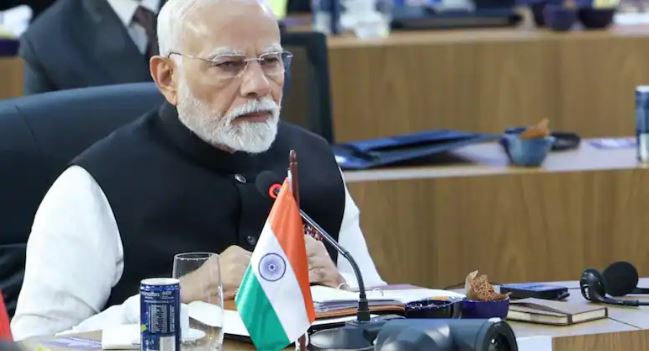
Prime Minister Narendra Modi is expected to visit the United Kingdom by the end of July or early August, in what could mark a major milestone in India-UK relations. Diplomatic sources indicate that the long-anticipated India-UK free trade agreement (FTA) is likely to be formally signed during the visit.

The FTA, concluded earlier in May after three years of intensive negotiations, promises to be a landmark pact between the two nations. It is set to eliminate tariffs on nearly 99% of Indian exports and facilitate easier access for British products such as whisky and automobiles into the Indian market. The deal represents the most comprehensive trade pact undertaken by the UK since its departure from the European Union.

Alongside the FTA, the two countries also concluded a double contribution convention earlier this year. Prime Minister Modi has hailed both agreements as historic steps toward deepening the India-UK strategic partnership, while driving trade, investment, employment, and economic growth in both countries.

Sources confirm that both sides are working to finalize the schedule for the high-level visit, which may take place either at the end of July or in early August. While there had been speculation about British Prime Minister Keir Starmer visiting India first, that visit is now expected later in the year.

In addition to the trade pact, the visit may focus on advancing defence and security cooperation. Discussions are expected on the implementation of the Technology Security Initiative (TSI), a framework established in July 2023 to enhance collaboration in emerging technologies such as telecom, semiconductors, artificial intelligence, and critical minerals.

The TSI aims to leverage the respective strengths of India and the UK in these sectors and foster resilient supply chains and joint R&D projects. It aligns with the broader objectives outlined in the India-UK Roadmap 2030, which envisions a strengthened partnership across economic, security, and technological dimensions.

Notably, India remained the UK’s second-largest source of investment projects in 2023–24 for the fifth consecutive year, underscoring the robust economic engagement between the two nations.

If signed during PM Modi’s visit, the FTA would mark a transformative moment in bilateral relations and elevate the India-UK partnership to new strategic heights.

Latest world news

PM Modi thanks President Trump, says India-US trade framework reflects strong partnership

PM Modi said the India-US interim trade framework reflects growing trust between the two countries and offers tariff relief and new opportunities for Indian exporters.

Published

on

Modi trump

Prime Minister Narendra Modi has welcomed the newly announced interim trade framework between India and the United States, describing it as a reflection of the “growing depth, trust and dynamism” in bilateral relations.

The Prime Minister said the agreement highlights US President Donald Trump’s “personal commitment to robust ties between our countries” and opens up fresh opportunities across multiple sectors of the Indian economy.

Under the framework, the United States will apply a reciprocal tariff rate of 18 per cent on Indian goods. The uniform rate places India in a comparatively stronger position than several countries in the region and provides a competitive advantage for Indian exporters.

Focus on employment, innovation and supply chains

In a post on X, PM Modi said the interim framework is expected to generate large-scale employment, particularly for women and young people. He added that the agreement would deepen cooperation in investment and technology while strengthening resilient and trusted supply chains.

According to the Prime Minister, both countries share a commitment to promoting innovation, and the framework would contribute to global economic growth by enhancing trade and industrial collaboration.

Key sectors set to benefit from tariff relief

The 18 per cent tariff rate is expected to support Indian exporters in sectors such as textiles, apparel, leather goods, chemicals and engineering products. The framework also strengthens India’s position against regional competitors that rely heavily on cost-based exports.

The agreement further opens a path to tariff removal on a wide range of Indian goods, including generic pharmaceuticals, gems and diamonds, and aircraft parts. These sectors already have a strong global presence and face steady demand in the US market.

Washington will also remove tariffs on certain Indian aircraft and aircraft components, while India will receive a preferential tariff rate quota for automotive parts. However, outcomes related to generic drugs and pharmaceutical ingredients will depend on the findings of a US Section 232 investigation.

Preferential market access beyond tariffs

Beyond tariff measures, both countries have agreed to provide preferential market access in sectors of sustained mutual interest, marking another step toward closer economic cooperation under the interim framework.

Continue Reading

Latest world news

Suicide bombing at Islamabad imambargah kills 69, over 160 injured

At least 69 people were killed after a suicide bomber detonated explosives at a Shia shrine in Islamabad’s Shehzad Town area, triggering a city-wide emergency.

Published

on

Suicide bombing at Islamabad Shrine

A suicide bombing at a Shia place of worship in Pakistan’s capital Islamabad left at least 69 people dead and more than 160 injured on Friday, according to media reports.

The explosion took place at Tarlai Imambargah, located in the Shehzad Town area, when a suicide bomber detonated explosives near the main gate of the shrine during afternoon hours.

Attacker stopped at entrance, officials say

Security officials were quoted as saying that the attacker was intercepted by guards at the entrance, preventing him from entering the main hall where worshippers had gathered. Despite this, the blast caused extensive damage to the gate and nearby structures.

Visuals from the scene showed shattered windows of surrounding buildings and debris scattered across the road following the explosion.

Emergency declared, injured shifted to hospitals

Following the blast, the Islamabad Inspector General of Police declared a city-wide emergency, as rescue and law enforcement teams rushed to the site amid fears of high casualties.

The injured were shifted to Pakistan Institute of Medical Sciences (PIMS) and Polyclinic Hospital for treatment.

Prime minister condemns attack

Pakistan Prime Minister Shehbaz Sharif expressed deep grief over the attack and strongly condemned the bombing at the Shiite mosque in Islamabad.

In a statement, he said the incident was a tragic act of violence and offered condolences to the families of those killed. Official statements noted that dozens were injured in the attack, with treatment ongoing at city hospitals.

Previous attack referenced

The incident comes less than three months after a suicide blast outside a district and sessions court building in Islamabad on November 11, 2025, in which 12 people were killed and over 30 injured.

Continue Reading

Latest world news

Suicide bombing at Islamabad shrine kills 10, over 20 injured

A suicide bombing at a Shia shrine in Islamabad’s Shehzad Town area killed at least 10 people and injured over 20, prompting a city-wide emergency.

Published

on

Suicide bombing at Islamabad Shrine

At least 10 people were killed and around 20 others sustained injuries after a suicide bomber detonated explosives at a Shia shrine in Pakistan’s capital, Islamabad, on Friday afternoon.

The explosion took place at Tarlai Imambargah, located in the Shehzad Town area, when the attacker set off the device at the main entrance of the place of worship, where devotees had gathered.

Bomber stopped at entrance, say officials

Security officials said alert guards intercepted the attacker at the gate, preventing him from entering the main hall of the shrine. The timely action is believed to have reduced the scale of casualties inside the premises.

However, the blast caused significant damage to the gate structure. Visuals from the site showed shattered windows of nearby buildings and debris scattered across the road following the explosion.

Emergency declared across Islamabad

In the aftermath of the attack, the Islamabad Inspector General of Police declared a city-wide emergency. Rescue teams and law enforcement personnel rushed to the site amid concerns that the casualty count could rise.

The injured were shifted to Pakistan Institute of Medical Sciences (PIMS) and Polyclinic Hospital for treatment.

Recent history of suicide attacks in the capital

The incident comes less than three months after a suicide bombing outside a district and sessions court building in Islamabad on November 11, 2025, which killed 12 people and injured more than 30 others, raising renewed concerns over security in the capital.

Continue Reading

Trending

© Copyright 2022 APNLIVE.com