English हिन्दी
Connect with us

India News

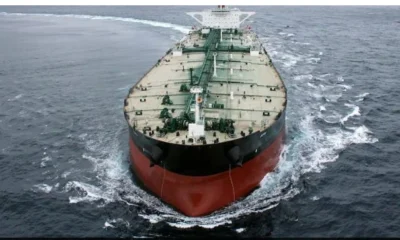
India hits back as US imposes 50% tariff over Russian oil trade, but spares EU and China

India has sharply criticized the US for imposing a 50% tariff on its imports over Russian oil trade, accusing Washington of double standards while sparing EU and China.

Published

on

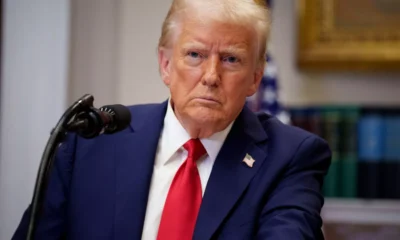
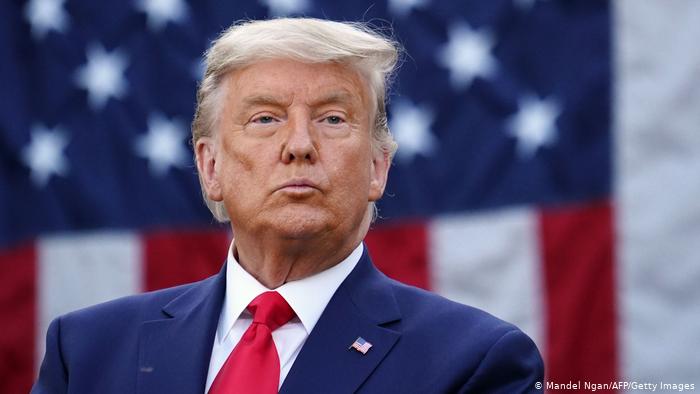
The United States has drawn sharp criticism from India after President Donald Trump signed an executive order slapping a steep 50 per cent tariff on Indian imports, citing India’s continued oil trade with Russia. This move has triggered a diplomatic pushback from New Delhi, which termed the decision as “unfair, unjustified and unreasonable.”

With this order, India now faces the highest import tariff imposed by the US globally, tied only with Brazil. Other countries facing elevated tariffs include Switzerland (39%), Canada and Iraq (35%), and China (30%).

India argued that the US decision reflects double standards, especially when several European nations and China continue to import Russian energy without facing similar penalties.

India defends its energy security needs

Responding to the move, India asserted that its imports from Russia are determined by market dynamics and national energy security requirements for its 1.4 billion citizens. The Indian government stated that many other countries, including US allies, continue similar transactions, yet India is being selectively targeted.

“It is therefore extremely unfortunate that the US should choose to impose additional tariffs on India for actions that several other countries are also taking in their own national interest,” India said in its official statement.

India also warned that it would take all necessary steps to protect its national interests and trade rights.

China and EU escape similar scrutiny

Observers have pointed out that while India is being punished, China’s growing Russian oil imports remain untouched. In 2024, China sourced 21.5% of its crude oil from Russia—up significantly from the previous years—largely aided by smaller, independent refiners. Moreover, Russian LNG imports by China hit 8.3 million metric tonnes last year.

The European Union, despite political rhetoric against Moscow, also continues substantial trade ties with Russia. Though total EU-Russia trade volume fell from €257.5 billion in 2021 to €67.5 billion in 2024, key energy imports persisted. Russian LNG imports to the EU rose 9% in 2024, and mineral fuels remain the EU’s top Russian import category.

A Finnish think tank estimated that since Russia’s 2022 invasion of Ukraine, EU nations paid Moscow over $105 billion for gas, covering about 75% of Russia’s military expenditure in 2024.

Even Belgium increased its LNG imports from Russia by 12% in June, highlighting the ongoing energy dependence of the West on Moscow.

Trade imbalance and geopolitics

India is the largest export market for the US, purchasing $87 billion worth of goods in 2024. In contrast, India imported $41 billion from the US, creating a trade surplus of $46 billion in New Delhi’s favour. President Trump recently accused India of “undermining Western efforts” to pressure Russia and warned of tariff hikes, which have now materialized.

Meanwhile, despite its hardline rhetoric, the US itself maintained $5.2 billion in bilateral trade with Russia in 2024—mostly in chemicals—albeit much lower than the $36 billion traded in 2021.

Moscow backed India’s position, with Kremlin spokesperson Dmitry Peskov saying, “Sovereign countries have the right to choose their own trade partners.”

India News

US-India trade deal to strengthen strategic partnership, says Amit Shah

Amit Shah says the US-India trade deal with reduced tariffs will elevate strategic partnership and pave the way for stronger trade ties and mutual growth.

Published

on

Amit Shah

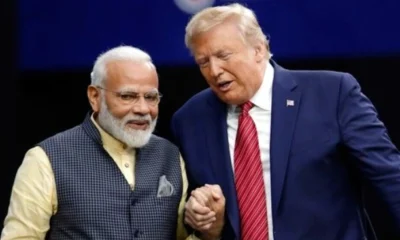
Union Home Minister Amit Shah on Monday said the newly announced trade deal between India and the United States will elevate the strategic partnership between the two countries and pave the way for stronger trade ties and mutual growth.

In a post on social media platform X, Shah said the agreement marks a significant moment in India-US relations, with business between the two nations set to expand further. He noted that the deal, which includes a reduction in reciprocal tariffs, will benefit both countries and their people.

Calling it a “big day” for bilateral ties, Shah said the trade deal has been locked with a significantly reduced tariff of 18 per cent, creating fresh opportunities for economic cooperation. He also congratulated Prime Minister Narendra Modi and US President Donald Trump on what he described as a historic agreement.

According to Shah, the agreement will strengthen the strategic partnership between the two democracies and support growth on both sides. He added that trade and business activity between India and the US is expected to flourish in the coming period.

Modi welcomes reduced tariffs on Indian goods

Prime Minister Narendra Modi also welcomed the development, saying he was delighted that tariffs on “Made in India” products would now be reduced to 18 per cent. He thanked President Trump for the announcement and said the move would benefit the people of both nations.

Modi said cooperation between two large economies and the world’s largest democracies creates opportunities for mutually beneficial growth. He added that such collaboration helps unlock new possibilities for trade and development.

The prime minister also said he looked forward to working closely with the US president to take the bilateral partnership to unprecedented heights.

Trump outlines terms of the agreement

US President Donald Trump said the United States agreed to lower the reciprocal tariff on Indian goods from 25 per cent to 18 per cent following a phone conversation with Prime Minister Modi. He added that India would move forward to reduce tariffs and non-tariff barriers against the US.

Trump said New Delhi had also committed to purchasing American goods at a much higher level, including energy, technology, agricultural products, coal and other items. He mentioned that India would buy US energy worth more than USD 500 billion.

The US president said the relationship between the two countries would become even stronger going forward. He also noted that the two leaders discussed the ongoing war between Russia and Ukraine during their conversation.

Background to the trade talks

India and the US had agreed earlier to finalise the first tranche of a bilateral trade agreement, but negotiations had slowed after higher tariffs were imposed on Indian goods. The latest agreement follows several rounds of talks between the two sides.

Officials said India now faces lower tariffs compared to several competing export economies, which could provide an advantage to Indian exporters in the US market.

Continue Reading

India News

Markets surge as Nifty jumps 750 points after India-US trade deal

Indian equity markets rallied sharply with Nifty and Sensex posting strong gains after the India-US trade agreement announcement.

Published

on

Sensex

The Indian equity markets opened sharply higher on Tuesday morning, buoyed by optimism following the announcement of a trade agreement between India and the United States.

In early trade, the Nifty jumped around 750 points, while the Sensex surged nearly 2,400 points, reflecting strong investor confidence hours after the deal was made public.

The rally came after US President Donald Trump announced that Washington would slash tariffs on Indian goods to 18 per cent from 50 per cent, as part of a broader trade agreement with New Delhi. In return, India agreed to halt purchases of Russian oil and lower trade barriers, according to the announcement.

President Trump shared the development in a post on his social media platform, calling it a major trade breakthrough. The announcement was followed by a message from Prime Minister Narendra Modi, who thanked the US President on behalf of the people of India for the decision.

Rupee opens stronger against dollar

The positive sentiment was also reflected in the currency market. The Indian rupee opened stronger at 90.40 against the US dollar, gaining 1.10 rupees in early trade, supported by expectations of increased foreign investor inflows following the deal.

Asian markets rebound

Asian markets also traded higher, adding to the positive global cues. Japan’s Nikkei rose about 2.5 per cent, recovering from previous losses, while South Korea’s KOSPI climbed nearly 4 per cent. Market sentiment was further supported by signs of improved US factory activity overnight.

Futures indicated a recovery in Hong Kong markets, while S&P 500 futures were up around 0.3 per cent, as investors tracked upcoming corporate earnings.

With global cues turning favourable and optimism surrounding the India-US trade agreement, Indian markets are expected to remain buoyant, with investors closely watching further developments during the trading session.

Continue Reading

India News

Rahul Gandhi, Rajnath Singh clash in Lok Sabha over ex-Army chief’s unpublished book on Ladakh

Lok Sabha proceedings were disrupted after Rahul Gandhi cited an unpublished book by former Army chief General MM Naravane on the Ladakh stand-off, drawing objections from Rajnath Singh and other BJP leaders.

Published

on

Rahul Gandhi

A sharp confrontation unfolded in the Lok Sabha on Monday after Leader of Opposition Rahul Gandhi referred to an unpublished book by former Army chief General MM Naravane while speaking on the 2020 India-China Ladakh stand-off, prompting strong objections from treasury benches.

Rahul Gandhi began his address by holding a printout of a magazine article that carried an essay on General Naravane’s yet-to-be-published memoir, Four Stars of Destiny. The reference immediately drew an intervention from Defence Minister Rajnath Singh, who objected to the citation, saying quoting an unpublished book violated parliamentary rules.

Objections from treasury benches

Rajnath Singh demanded that the Leader of Opposition place the book before the House, arguing that since the memoir had not been formally published, its contents could not be cited during proceedings. The objection was echoed by Home Minister Amit Shah, who questioned how references could be made to material that was not publicly available.

Parliamentary Affairs Minister Kiren Rijiju went a step further, suggesting that the House should deliberate on action against members who do not comply with the Speaker’s rulings.

As Rahul Gandhi persisted, repeatedly referring to “Chinese tanks” while discussing the eastern Ladakh situation, the opposition from BJP members intensified, leading to sustained disruptions.

Opposition support and continued disruptions

Samajwadi Party chief Akhilesh Yadav backed Rahul Gandhi, stating that issues concerning China were sensitive and that the Leader of Opposition should be allowed to present his views in the House.

Responding to the objections, Rahul Gandhi questioned the resistance to his remarks, asking what in the book was causing such concern. He maintained that both the article and the contents he was quoting were “100 per cent authentic.”

The Congress leader also said he had not intended to raise the issue but felt compelled to do so after BJP MP Tejasvi Surya questioned the patriotism of the Congress and its leadership.

Government, Congress trade charges

Government sources accused Rahul Gandhi of setting a dangerous precedent by citing material from an unpublished book, alleging that such references could be misused to make unverified claims on the floor of Parliament.

Congress MP Priyanka Gandhi defended her brother, saying he was not attempting to defame the Army and was merely reading an excerpt attributed to the former Army chief. She accused the ruling party of resisting discussion whenever uncomfortable issues surfaced.

House adjourned amid chaos

The repeated interruptions forced Lok Sabha Speaker Om Birla to adjourn the House till 3 pm. When proceedings resumed, similar scenes played out as Rahul Gandhi again attempted to speak on the subject, leading to further disruptions and another adjournment.

Continue Reading

Trending

© Copyright 2022 APNLIVE.com