English हिन्दी
Connect with us

Latest world news

India overtakes Japan, set to challenge Germany for third-largest economy

India has overtaken Japan to become the world’s fourth-largest economy and is on track to challenge Germany for the third spot within the next three years.

Published

on

India overtakes Japan, set to challenge Germany for third-largest economy

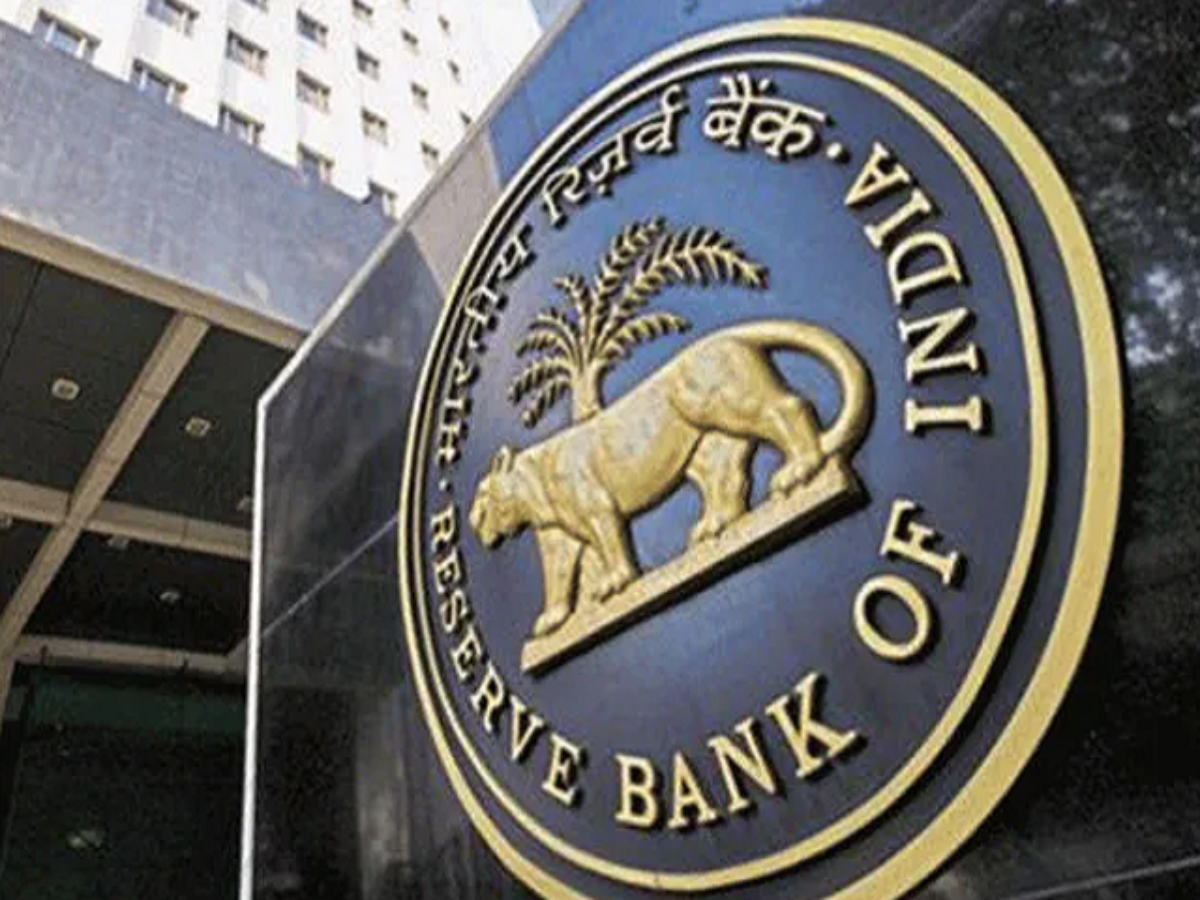
India has overtaken Japan to become the world’s fourth-largest economy, marking a significant milestone in its economic journey. According to the government’s end-of-year economic review, India’s nominal gross domestic product has reached $4.18 trillion, placing it behind only the United States, China and Germany.

While the official confirmation will come in 2026 with the release of final annual GDP figures, international data already points in this direction. Projections indicate that India is on track to consolidate its position ahead of Japan in the current year.

India’s global economic standing improves

International projections show India continuing its upward trajectory. Estimates for 2026 place India’s economy at $4.51 trillion, marginally ahead of Japan’s projected $4.46 trillion. This strengthens expectations that India has effectively moved into the fourth position globally.

The government has said India is now poised to overtake Germany to become the world’s third-largest economy within the next two-and-a-half to three years. The economic review projects India’s GDP to reach $7.3 trillion by 2030, supported by strong domestic demand and ongoing structural reforms.

India first entered the top five global economies in 2022, when its GDP surpassed that of Britain, according to international financial data.

Growth continues despite global uncertainties

The government’s assessment comes at a time of global economic uncertainty. In August, Washington imposed steep tariffs on New Delhi over its purchases of Russian oil, adding pressure on trade and currency markets.

Despite these challenges, the review highlighted India’s economic resilience, stating that growth has remained strong amid persistent global trade uncertainties. The rupee touched a record low against the US dollar in early December after declining around five per cent in 2025, driven by concerns over trade relations and the impact of tariffs on exports.

Key challenges remain for India

While India’s overall economic size has expanded rapidly, income levels remain relatively low. According to World Bank data, India’s GDP per capita stood at $2,694 in 2024, far below Japan’s $32,487 and Germany’s $56,103.

India also faces the challenge of employment generation. More than a quarter of its 1.4 billion population is aged between 10 and 26, underscoring the need to create well-paying jobs for millions of young graduates entering the workforce.

Growth outlook remains strong

Global institutions continue to project robust growth for India. The World Bank has forecast economic growth of 6.5 per cent in 2026. Moody’s expects India to remain the fastest-growing G20 economy, with growth of 6.4 per cent in 2026 and 6.5 per cent in 2027.

The International Monetary Fund has revised its outlook upward, projecting growth of 6.6 per cent in 2025 and 6.2 per cent in 2026. Other agencies, including the OECD, Asian Development Bank, S&P and Fitch, have also issued optimistic forecasts, citing strong consumer demand and reform momentum.

The government reiterated its long-term ambition of achieving high middle-income status by 2047, the centenary year of India’s independence, driven by sustained economic growth, structural reforms and social progress.

Earlier this year, Prime Minister Narendra Modi announced broad consumption tax cuts and advanced labour law reforms after economic growth slowed to a four-year low in the year ended March 31.

Latest world news

New Zealand rings in 2026 with fireworks at Auckland’s Sky Tower

New Zealand marked the arrival of 2026 with a dazzling fireworks display at Auckland’s Sky Tower, becoming one of the first countries in the world to enter the New Year.

Published

on

New Zealand rings in 2026 with fireworks at Auckland’s Sky Tower

As the world prepared to step into 2026, New Zealand once again emerged among the earliest countries to welcome the New Year, marked by a grand fireworks display in Auckland.

The celebrations centred around the iconic Sky Tower, which lit up the city’s skyline shortly after midnight local time. Locals and tourists gathered in large numbers to witness one of the first major New Year countdowns globally.

The Sky Tower, standing at 240 metres, remained the focal point of the event. A five-minute fireworks show featured around 3,500 fireworks launched from multiple levels of the structure, making it the tallest fireworks display in the country.

While Auckland hosted the headline event, forecasts of rain and possible thunderstorms forced the cancellation of several smaller community celebrations across parts of New Zealand’s North Island. Authorities took precautionary steps to avoid safety risks amid unstable weather conditions.

Although Auckland’s celebration gained global attention, New Zealand’s Chatham Islands were technically among the earliest places in the country to enter 2026 due to their unique time zone.

Which country celebrates New Year first

Kiritimati Island in Kiribati, located in the Pacific Ocean, is the first place in the world to welcome the New Year. Also known as Christmas Island, it falls under the UTC+14 time zone, making it nearly a full day ahead of the last regions to celebrate.

New Year arrival times across major countries (IST)

  • Kiribati: 3:30 PM, December 31
  • New Zealand: 4:30 PM, December 31
  • Australia (east coast): 6:30 PM, December 31
  • Japan, South Korea and North Korea: 8:30 PM, December 31
  • China, Hong Kong and Taiwan: 9:30 PM, December 31
  • Thailand: 10:30 PM, December 31
  • India and Sri Lanka: 12:00 AM, January 1
  • Russia (Moscow): 2:30 AM, January 1
  • Ukraine: 3:30 AM, January 1
  • Germany, France, Spain, Italy and Switzerland: 4:30 AM, January 1
  • UK, Portugal and Ghana: 5:30 AM, January 1
  • Brazil and Argentina: 8:30 AM, January 1
  • United States (east coast): 10:30 AM, January 1

The final places to welcome 2026 are American Samoa and the Baker and Howland Islands, located in the UTC-12 time zone, where midnight arrives nearly 24 hours after Kiribati.

Continue Reading

Latest world news

No third-party intervention: India rejects China’s claim on India-Pakistan truce

India has rejected China’s claim of mediating peace with Pakistan, stressing that the May ceasefire followed direct military talks and involved no third-party intervention.

Published

on

Jaishankar prasad

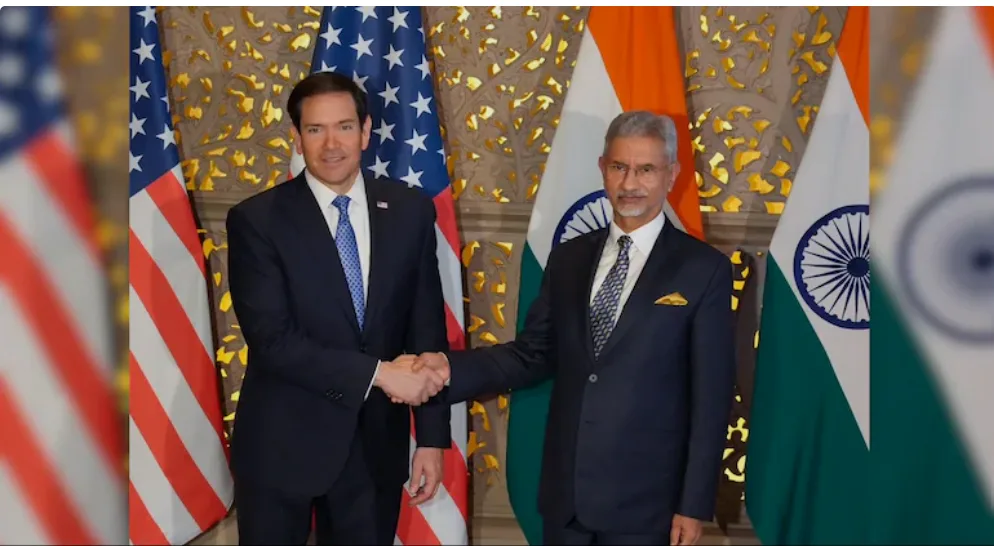
India has firmly rejected China’s claim that it played a mediating role in ending the military conflict between India and Pakistan earlier this year, reiterating that the ceasefire was the result of direct military-level communication between the two countries, with no third-party involvement.

The clarification comes after China echoed similar assertions made earlier by US President Donald Trump, projecting itself as a peace broker during the May conflict between New Delhi and Islamabad. Indian government sources, however, stressed that Pakistan had itself reached out for a ceasefire following Operation Sindoor.

According to sources, Islamabad requested a truce through established military channels, and there was no external mediation at any stage. They underlined that India’s long-standing position against third-party intervention in matters concerning India and Pakistan remains unchanged.

India’s position on the ceasefire

New Delhi has consistently maintained that the hostilities, which began on May 7, were resolved through direct talks between the Directors General of Military Operations (DGMOs) of the two countries.

At a press briefing on May 13, the Ministry of External Affairs had clarified that the understanding on the ceasefire, including its timing and wording, was finalised during a phone call between the two DGMOs on May 10 at 15:35 hours. The government reiterated that no other country played any role in facilitating the agreement.

Indian officials have repeatedly emphasised that all issues related to India and Pakistan are to be addressed bilaterally, without any external involvement.

China reiterates mediation claims

China’s assertion came through remarks by its foreign minister, who claimed that Beijing had mediated peace in several conflict zones, including between India and Pakistan, during a period marked by heightened global instability.

While outlining China’s foreign policy approach at a symposium in Beijing, he said China had taken what he described as an objective stance to address both immediate conflicts and their root causes, citing its role in easing tensions in multiple regions.

India has not accepted these claims, making it clear that the India-Pakistan ceasefire followed established military protocols and bilateral engagement alone.

China’s role during the conflict under scrutiny

China’s involvement during the May conflict has also come under international scrutiny. A recent report by a bipartisan US commission stated that Beijing used the four-day confrontation between India and Pakistan as an opportunity to test and showcase its modern defence systems.

The report noted that several Chinese-made weapons were used in active combat for the first time during the conflict, providing real-world operational data. It further claimed that China later explored the possibility of offering advanced military platforms to Pakistan in the weeks following the hostilities.

Chinese diplomatic missions reportedly highlighted the performance of these systems after the conflict, which the report suggested was aimed at boosting defence exports. Beijing, however, downplayed allegations that it treated the conflict as a “live laboratory” for its weapons, avoiding direct responses to remarks made by senior Indian military officials on the issue.

Indian defence leadership has stated that China extended extensive support to Pakistan during Operation Sindoor, describing Beijing’s approach as indirect and strategic, aimed at exerting pressure on India without direct involvement.

Continue Reading

Latest world news

Khaleda Zia to be buried today with full state honours in Dhaka

Former Bangladesh prime minister Khaleda Zia will be buried today with full state honours in Dhaka as foreign dignitaries including India’s external affairs minister attend her funeral.

Published

on

Khalida zia

Bangladesh’s former prime minister Khaleda Zia will be laid to rest on Wednesday with full state honours, the interim government announced. The funeral will take place in Dhaka, with several foreign dignitaries expected to attend, including India’s external affairs minister S Jaishankar and Pakistan’s deputy prime minister and foreign minister Ishaq Dar.

Khaleda Zia, a three-time prime minister and longtime chief of the Bangladesh Nationalist Party, died in Dhaka on Tuesday after a prolonged illness. She was 80.

Funeral prayers to be held after Zohr prayers

According to the interim government, Zia’s Namaz-e-Janaza will be held on Wednesday after Zohr prayers at the South Plaza of Parliament and the adjoining Manik Mia Avenue. Following the funeral prayers, she will be buried beside her husband, former president and BNP founder Ziaur Rahman, at Zia Udyan in Sher-e-Bangla Nagar.

The decision was taken at a special meeting of the interim government’s advisory council. The Bangladesh Nationalist Party was represented at the meeting by its secretary general, who attended as a special invitee.

Foreign leaders to attend funeral in Dhaka

Several foreign dignitaries are expected to attend the funeral ceremony. India’s external affairs minister S Jaishankar will travel to Dhaka on Wednesday to represent the government and people of India at the funeral.

Pakistan’s deputy prime minister and foreign minister Ishaq Dar is also scheduled to attend the Janaza, according to officials.

Bangladesh announces state mourning

Earlier, Chief Adviser Muhammad Yunus announced three days of state mourning following the death of Khaleda Zia. A one-day general holiday has been declared on Wednesday, the day of her funeral prayers.

During the mourning period, the national flag will be flown at half-mast on all government, semi-government and autonomous institutions, educational institutions, and on government and private buildings across the country, as well as at Bangladesh missions abroad.

Special prayers will be organised in mosques nationwide for the eternal peace of Khaleda Zia, with similar prayers to be held at places of worship of other faiths. Condolence books will also be opened at Bangladesh missions abroad.

The government has assured full cooperation for all arrangements related to Zia’s funeral and burial.

Continue Reading

Trending

© Copyright 2022 APNLIVE.com