English हिन्दी
Connect with us

India News

West Bengal election battle begins as phase 1 voting covers 152 seats

Phase 1 of the Bengal assembly elections begins with voting across 152 constituencies, setting the stage for a high-stakes TMC vs BJP contest.

Published

on

West bengal elections

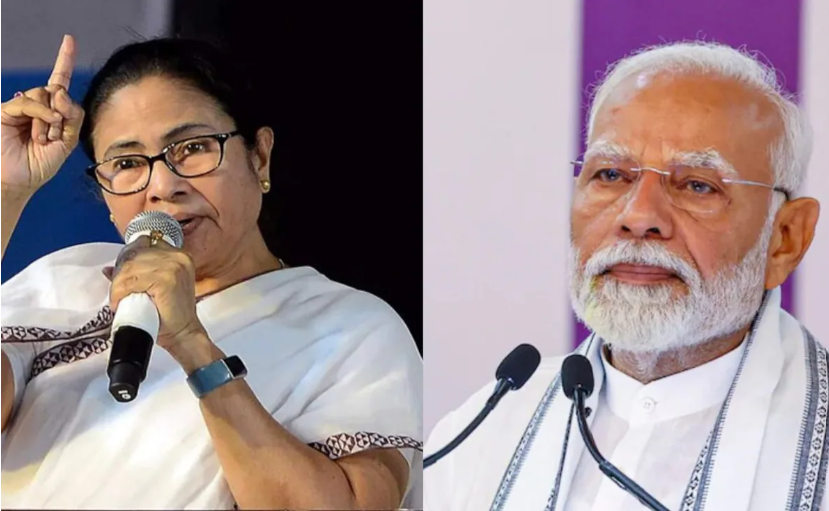
Voting for the first phase of the West Bengal assembly elections 2026 began on April 23, marking the start of a crucial political contest in the state.

In this phase, polling is being held across 152 constituencies, making it one of the most significant stages of the election process. The voting spans multiple districts across both North and South Bengal, setting the tone for the rest of the electoral battle.

The election is largely being seen as a direct contest between the ruling Trinamool Congress (TMC) and the Bharatiya Janata Party (BJP). While the TMC is seeking to retain power after over a decade in office, the BJP is aiming to expand its presence and challenge the incumbent government.

A large number of candidates are in the fray for this phase, reflecting the scale and intensity of the contest. Several prominent leaders are contesting from key constituencies, adding to the political significance of the opening phase.

The elections are being conducted in two phases, with the second round of polling scheduled for April 29. The counting of votes is expected in early May, after which the composition of the 294-member assembly will be decided.

Key issues shaping voter sentiment include employment concerns, welfare schemes, governance, and identity politics. The outcome of this phase is expected to provide early indications of the broader electoral trend in the state.

With high voter turnout expected and tight security arrangements in place, the first phase is being closely watched as it could influence momentum for the remaining constituencies.

Education

CBSE Class 12 result 2026 declared: 85.20% students pass, direct link and official websites to check scorecard

CBSE has declared the Class 12 result 2026 with an overall pass percentage of 85.20%. Students can check results online using official websites and apps.

Published

on

CBSE Result

The Central Board of Secondary Education (CBSE) has officially declared the Class 12 board examination results for 2026. This year, the overall pass percentage stands at 85.20%, marking a key academic milestone for lakhs of students across India.

Students who appeared for the examination can now check and download their scorecards from the official CBSE result portals and other designated platforms.

Official websites to check CBSE Class 12 result 2026

Candidates can access their results through the following official websites:

  • cbseresults.nic.in
  • results.cbse.nic.in
  • cbse.gov.in
  • cbse.nic.in

Apart from these websites, students can also use DigiLocker and the UMANG app to download their digital marksheets.

How to download CBSE Class 12 scorecard

To view and download the result, students need to:

  1. Visit the official CBSE result website
  2. Click on the “Class 12 Result 2026” link
  3. Enter roll number, school number, and admit card ID
  4. Submit details to view scorecard
  5. Download and save the marksheet for future use

Digital marksheet availability

CBSE has also made digital marksheets available through DigiLocker, allowing students to securely access their academic documents online. These digital records can be used for admission and verification purposes.

Key highlight of CBSE result 2026

  • Overall pass percentage: 85.20%
  • Result released for Class 12 board exams 2026
  • Multiple online platforms activated for result access

Continue Reading

India News

Vijay removes astrologer from OSD post after political backlash

Tamil Nadu Chief Minister Vijay has withdrawn the appointment of his astrologer as Officer on Special Duty following widespread political backlash.

Published

on

Tamil Nadu Chief Minister C Joseph Vijay has removed his astrologer from the post of Officer on Special Duty (OSD) following strong political criticism over the controversial appointment.

The move comes just days after Vijay appointed his astrologer, Radhan Pandit Vettrivel, to a key position in the Chief Minister’s Office. The decision had triggered immediate backlash from political allies and opposition leaders, who questioned the relevance and appropriateness of appointing an astrologer to an official government post.

According to the report, the appointment drew criticism over concerns related to governance practices and the role of non-administrative figures in official decision-making. Several leaders argued that such a move could send the wrong message in a constitutional framework that emphasizes scientific temper in public administration.

Facing mounting pressure, Vijay has now decided to withdraw the appointment, marking a quick reversal in a politically sensitive matter that had already sparked debate across Tamil Nadu’s political circles.

The astrologer, who was previously seen as a close aide and had reportedly predicted Vijay’s electoral success, had been made OSD shortly after the formation of the government. However, the decision quickly became a point of controversy, forcing the administration to reconsider.

The development highlights the growing scrutiny around key appointments made by the new government and the political challenges facing Vijay in his early tenure as Chief Minister.

Continue Reading

India News

Vijay wins floor test with 144 votes, secures power amid AIADMK split in Tamil Nadu

Vijay secures a decisive floor test victory in Tamil Nadu with 144 votes amid AIADMK split and opposition abstentions.

Published

on

Tamil Nadu Chief Minister and Tamilaga Vettri Kazhagam (TVK) leader C. Joseph Vijay has won a crucial vote of confidence in the state Assembly, securing 144 votes and comfortably crossing the majority mark. The result confirms the stability of his government following a politically charged floor test marked by shifting loyalties and opposition abstentions.

DMK walkout and aiadmk abstention shape vote dynamics

The Dravida Munnetra Kazhagam (DMK) walked out of the Assembly ahead of the vote with its 59 MLAs, while the All India Anna Dravida Munnetra Kazhagam (AIADMK), led by Edappadi K. Palaniswami, abstained from voting with its 47 MLAs.

This absence from two major opposition blocs significantly influenced the final numbers in the confidence motion.

144 votes secure majority for tvk government

Vijay’s government received support from 144 lawmakers in the 234-member Tamil Nadu Assembly, comfortably above the required majority mark. Only 22 members voted against the motion, while five MLAs chose to abstain.

The outcome ensures that the TVK-led government retains power, at least for now, in a politically fragmented Assembly.

25 aiadmk mlas break ranks to support vijay

A major political development emerged during the voting, with 25 AIADMK MLAs defying party leadership and voting in favour of Vijay’s government. This internal rebellion highlights a widening rift within the AIADMK and raises questions about its future cohesion under Palaniswami’s leadership.

The split has added a new dimension to Tamil Nadu politics, where cross-voting played a decisive role in shaping the final result.

Vijay calls victory a mandate for change

After the results were announced, Vijay described the outcome as a turning point, stating that his party symbol had “changed history.” He indicated that the TVK government would function as a minority administration focused on safeguarding the rights of all sections of society.

Political implications of a fractured opposition

While the floor test has secured Vijay’s position as chief minister, the deeper political story lies in the fragmentation of the opposition, particularly within the AIADMK. The emergence of rebel MLAs supporting TVK signals potential long-term realignments in Tamil Nadu’s political landscape.

Continue Reading

Trending

© Copyright 2022 APNLIVE.com

Left Menu Icon