English हिन्दी
Connect with us

India News

Budget 2026 signals India’s strategy to shield economy from global tariff shocks

Budget 2026 highlights India’s cautious approach to global trade tensions, focusing on defence, infrastructure and strategic self-reliance while sticking to fiscal discipline.

Published

on

pm modi

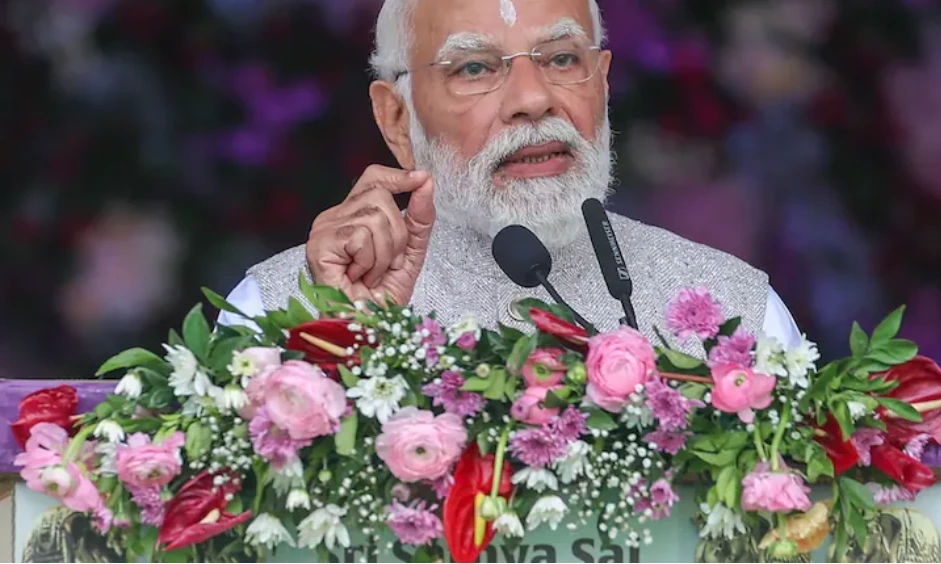
Prime Minister Narendra Modi’s economic strategy to protect India from rising global trade tensions became clearer with the presentation of the Union Budget 2026, which focused on strengthening strategic sectors, supporting exporters and maintaining fiscal stability.

The spending plan comes at a time when India faces an uncertain external environment, marked by tariff pressures from the United States and disruptions to global supply chains. The budget announced fresh support for exporters affected by overseas trade barriers and increased backing for critical sectors such as rare earths, semiconductors and critical minerals.

A key highlight of the budget was a significant push towards national security and infrastructure. The government announced an 18% increase in defence expenditure alongside new infrastructure outlays, positioning the move as a safeguard against regional security challenges involving China and Pakistan.

Despite higher spending in select areas, the government largely adhered to its fiscal roadmap. Overall expenditure remained controlled, with no major tax cuts for households and no large-scale stimulus measures. The budget also avoided major populist announcements in a year when the ruling party faces electoral contests in several states.

According to policy analysts, the approach reflects caution amid global uncertainty. The emphasis is on insulating the economy while keeping a close watch on external risks rather than pursuing aggressive expansion.

Market reaction to the budget was muted, with equities declining after the announcement. Investors attributed the fall mainly to a tax increase on equity market transactions aimed at curbing speculation, rather than dissatisfaction with the broader spending plan. The government’s decision to borrow more than expected in the next fiscal year also raised concerns about potential pressure on the bond market.

Setting the tone for the budget speech in Parliament, Finance Minister Nirmala Sitharaman highlighted the challenges posed by weakening multilateral trade systems and disruptions in access to resources and supply chains. She stressed the need for India to remain integrated with global markets while boosting exports and attracting long-term investment.

Although not named directly, the budget addressed challenges arising from recent tariff measures imposed by the US, including steep duties affecting labour-intensive sectors such as textiles and furniture. These measures have added pressure on industries dependent on overseas demand.

The government’s response has been to strengthen domestic capabilities. Over the past year, steps have been taken to boost consumption, simplify labour regulations and open up sectors such as nuclear energy and finance to investors. The latest budget builds on that direction by deepening reforms and improving productivity across sectors.

At the same time, India is seeking to diversify its trade relationships. Recent free trade agreements with the European Union, the UK and New Zealand aim to reduce dependence on any single market and provide exporters with greater stability.

Focus on self-reliance and strategic sectors

The budget placed strong emphasis on self-reliance, announcing new initiatives to promote domestic manufacturing in semiconductors and pharmaceuticals. It also outlined plans to develop mining, processing and manufacturing capacity for rare earth minerals, particularly in mineral-rich eastern and southern states.

Industry leaders described the initiatives as essential for building a resilient industrial ecosystem capable of withstanding global shocks.

However, questions remain over whether the cautious spending approach will be sufficient to support growth and generate employment for India’s young workforce. While the government has projected growth between 6.8% and 7.2% for the coming fiscal year, market estimates are slightly lower.

Opposition leaders criticised the budget for not addressing issues such as youth unemployment and declining household savings. The government, however, appears focused on navigating geopolitical and economic uncertainty while staying committed to fiscal discipline.

India News

Madras High Court orders vigilance probe into alleged bribe in gold fraud case

The Madras High Court has ordered a vigilance probe into allegations that a senior lawyer received Rs 50 lakh in a gold trade fraud case registered by the CBI.

Published

on

Madras High Court

The Madras High Court has directed a vigilance inquiry into allegations that a senior lawyer allegedly accepted Rs 50 lakh from accused individuals in a gold trade fraud case, purportedly to secure favourable judicial orders.

Justice Nirmal Kumar, who was hearing petitions related to the case, ordered the probe and subsequently recused himself from further proceedings.

Allegations linked to Rs 89.90 crore gold fraud case

The matter stems from a Rs 89.90 crore gold trade fraud case registered by the Central Bureau of Investigation (CBI). Two accused persons have moved the High Court seeking quashing of the case and discharge from the proceedings.

According to court records, a communication sent by a body identifying itself as the All India Lawyers Association for Justice to the judge and the Union Law Ministry alleged that a senior lawyer representing the petitioners had received Rs 50 lakh from the accused. The letter claimed the amount was meant to obtain favourable orders in the case.

Lawyer denies charges

Following receipt of the letter, the court summoned the concerned lawyer for clarification. The lawyer denied the allegations and stated willingness to cooperate with any inquiry.

The CBI’s special public prosecutor urged the court to disregard the letter, arguing that it affected the dignity of the institution and sought steps to identify the sender.

After considering the submissions, the court ordered a vigilance inquiry into the claims. Justice Nirmal Kumar then recused himself from hearing the related petitions.

Continue Reading

India News

Rahul Gandhi meets farmers over India-US trade deal, BJP calls it stage-managed

Rahul Gandhi met farmer leaders over concerns surrounding the India-US trade deal, drawing sharp criticism from BJP, which termed the interaction stage-managed.

Published

on

Rahul-Gandhi

Congress leader Rahul Gandhi met representatives of several farmer organisations at his Parliament office to discuss concerns related to the proposed India-US trade framework. The meeting has triggered sharp political reactions, with the Bharatiya Janata Party (BJP) alleging that the interaction was “stage-managed”.

According to details shared, Gandhi — who is the Leader of Opposition in the Lok Sabha — held discussions with representatives of 17 major farmer unions from across the country. The farm leaders conveyed apprehensions that the trade agreement could adversely affect cultivators, particularly those growing corn, soyabean, cotton, fruits and nuts.

They urged the need for a nationwide movement to safeguard farmers’ rights and protect their incomes from any potential impact of the agreement.

BJP alleges ‘artificial narrative’

Responding to the development, Union Minister Piyush Goyal criticised the Congress leader, terming the meeting “artificial” and “baseless”. In a video post on X, Goyal alleged that Gandhi was attempting to mislead farmers.

“Mr Rahul Gandhi has once again rolled out a stage-managed, most artificial and fake narrative,” Goyal said. He further claimed that individuals posing as farmer leaders were aligned with the Congress party and were part of an orchestrated attempt to create confusion.

The minister added that the government had fully protected the interests of farmers in the India-US trade deal and accused the opposition of provoking sentiment against the country’s economic policies.

What the India-US trade framework proposes

The interim trade agreement between India and the United States focuses on lowering tariff barriers while balancing domestic agricultural sensitivities. As part of the arrangement, the US has agreed to reduce reciprocal tariffs on Indian goods — from levels as high as 50 per cent to 18 per cent — benefiting sectors such as textiles, leather, footwear and pharmaceuticals.

The government has maintained that between 90 and 95 per cent of Indian agricultural products remain outside the scope of the agreement, ensuring protection for farmers.

The political exchange reflects broader debate over the potential implications of the trade framework, particularly for the agriculture sector.


Continue Reading

India News

Ex-shooter of Mukhtar Ansari gang shot dead in Barabanki, 15 rounds fired

A former shooter linked to Mukhtar Ansari’s gang was killed in Barabanki after attackers fired 15 rounds at his vehicle during a 10-minute assault.

Published

on

A former shooter linked to the gang of Mukhtar Ansari was shot dead in Uttar Pradesh’s Barabanki district after unidentified attackers opened fire on his vehicle.

The deceased, Shoaib alias Bobby, had earlier been associated with Ansari’s criminal network. He was also an accused in the 1999 murder case of Lucknow jailer RK Tiwari.

Attack in Asaini area

According to police officials, the incident took place in the Asaini area when Shoaib was travelling from Barabanki towards Lucknow. A total of 15 rounds were fired at his vehicle during the attack.

Authorities said the firing continued for nearly ten minutes. Eyewitnesses reported hearing multiple gunshots as the vehicle came under sustained fire, creating panic in the locality. The scale of the assault and the number of bullets discharged indicate that more than one attacker may have been involved, police added.

Background of the deceased

Shoaib Bobby had been identified in the past as a shooter for the Ansari gang. He was named as an accused in the 1999 killing of jailer RK Tiwari in Lucknow.

About Mukhtar Ansari

Mukhtar Ansari, who was 63 at the time of his death in 2024, had been booked in 65 criminal cases over the years, including charges of murder and extortion. Despite his criminal record, he was elected five times as a Member of the Legislative Assembly from different political parties.

Born in 1963 into an influential family, Ansari entered organised crime during a period when contract mafia activities were prevalent in parts of Uttar Pradesh. From 2005 until his death, he remained lodged in various jails in Uttar Pradesh and Punjab.

Ansari died of cardiac arrest after being hospitalised in 2024. According to a medical bulletin issued in Hindi, he was shifted from jail in Banda to Rani Durgavati Medical College at around 8.25 pm after complaining of vomiting and being found unconscious.

Police are continuing their investigation into the Barabanki shooting.

Continue Reading

Trending

© Copyright 2022 APNLIVE.com