English हिन्दी
Connect with us

India News

Budget session begins amid opposition push on Trump remarks, SIR and G RAM G Act

The Budget Session of Parliament begins with opposition parties lining up issues ranging from Donald Trump’s remarks to the G RAM G Act, though debate in the first phase is expected to be limited.

Published

on

Rajya Sabha

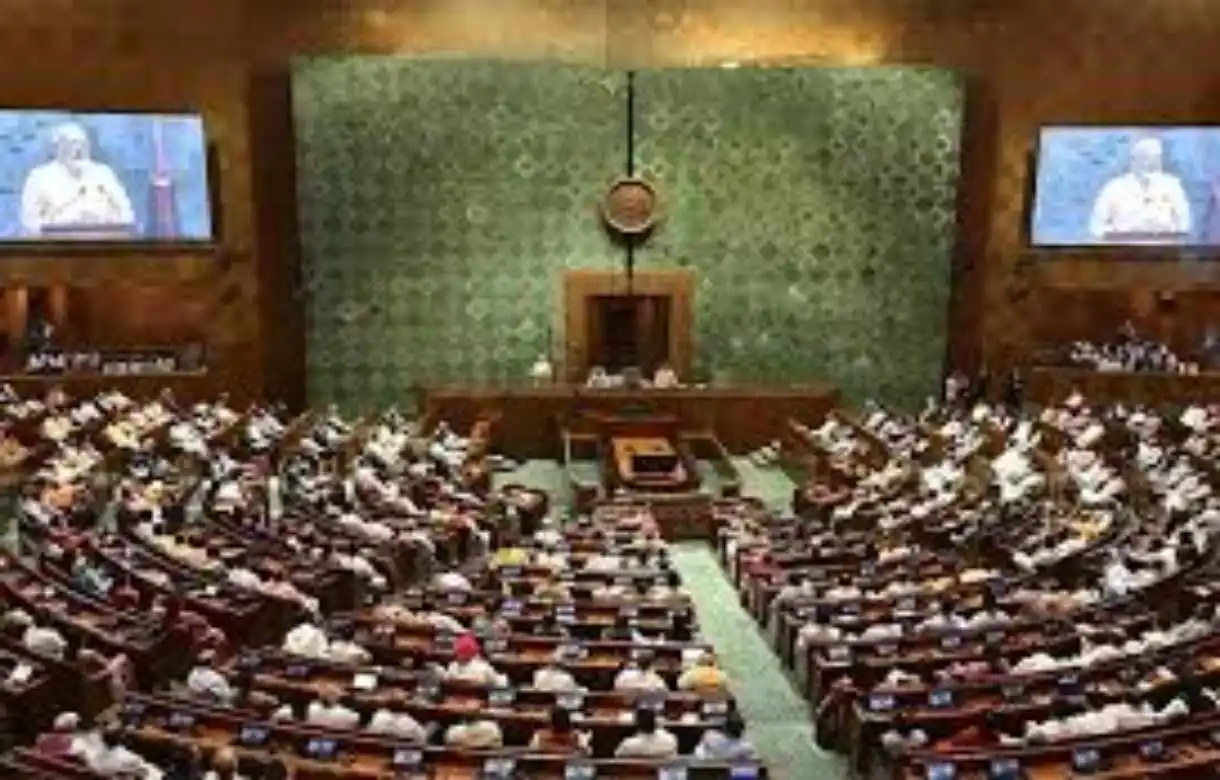
The first phase of Parliament’s Budget Session begins today with President Droupadi Murmu addressing the joint sitting of both Houses, setting the stage for a politically charged session ahead of the Union Budget.

In the run-up to the session, opposition parties have signalled their intent to corner the Narendra Modi government on a range of issues, including recent remarks by US President Donald Trump, the Special Intensive Revision (SIR) of electoral rolls, and the replacement of the Mahatma Gandhi National Rural Employment Guarantee Act (MGNREGA) with the G RAM G Act.

Opposition flags key concerns

At an all-party meeting chaired by Defence Minister Rajnath Singh on Monday, opposition leaders outlined the matters they want raised during the session. However, the scope for extended debate in the first phase is expected to remain limited due to a packed schedule focused largely on budgetary business.

After the President’s address today, the Economic Survey will be tabled tomorrow. Finance Minister Nirmala Sitharaman is scheduled to present the Union Budget on Sunday, marking her ninth consecutive budget presentation. This will be followed by discussions on the Motion of Thanks to the President’s Address in both Houses, to which Prime Minister Narendra Modi will respond.

The first leg of the Budget Session will conclude on February 13, while the second phase is set to begin on March 9.

Trump remarks, SIR and rural job law in focus

Among the issues highlighted by the opposition are what they describe as shifting statements by US President Trump regarding a trade deal with India. Opposition parties have also raised concerns over complications arising from the Special Intensive Revision of voter lists in several states.

The G RAM G Act, which has replaced MGNREGA, is another major flashpoint. Opposition parties argue that the new legislation requires detailed discussion, while also alleging misuse of central agencies against opposition leaders.

An ally of the ruling National Democratic Alliance, the Telugu Desam Party, is learnt to be preparing a demand for restrictions on social media access for children aged between 0 and 16 years.

Opposition leaders may also question the government’s silence on geopolitical developments in regions such as Venezuela and Greenland.

Government rules out debate on select issues

The Centre has made it clear that it is not inclined to reopen discussions on SIR and the G RAM G Act during the session. Parliamentary Affairs Minister Kiren Rijiju has maintained that the SIR was debated extensively during discussions on electoral reforms in the Monsoon Session.

Despite this, the Trinamool Congress is expected to push for a discussion on SIR, particularly in the context of the upcoming West Bengal Assembly elections. Chief Minister Mamata Banerjee is also likely to lead a protest in Delhi on the issue.

On the G RAM G Act, the government’s stand is that the legislation has already been passed and enacted, leaving little room for further debate in Parliament.

UGC regulations unlikely to dominate session

The controversy surrounding the new University Grants Commission regulations is not expected to feature prominently during the Budget Session. Major political parties have largely remained silent on the issue, with only a few leaders raising concerns publicly.

While some Members of Parliament may attempt to flag the matter, the UGC regulations are unlikely to emerge as a central point of confrontation in the current session.

India News

Turnout crosses 80% in Bengal and Tamil Nadu till 5 PM in key elections

Bengal phase 1 and Tamil Nadu elections witness strong voter turnout, crossing 80% with largely peaceful polling.

Published

on

Voter Turnout

Polling for the 2026 Assembly elections is underway in West Bengal and Tamil Nadu, with voters turning out in large numbers across key constituencies.

In West Bengal, voting is being held across 152 constituencies, with around 3.6 crore voters expected to participate in this phase. Security arrangements were tightened, and long queues of voters were seen at polling stations from early morning.

Turnout rises steadily through the day

Voter participation increased consistently as polling progressed. By afternoon, turnout had crossed the halfway mark in both states, indicating steady engagement.

As per latest updates till 5 PM, West Bengal recorded 89.92% turnout, while Tamil Nadu reported 82.24% voter participation.

Large electorate participates in phase 1

In West Bengal, nearly 3.6 crore eligible voters took part in the first phase across several districts, including Darjeeling and Jalpaiguri.

Tamil Nadu is witnessing a three-way contest between the DMK-led alliance, the AIADMK-BJP alliance, and actor Vijay’s entry into the political space.

Sporadic incidents reported

Polling has been largely peaceful, though isolated incidents were reported, including an attack on BJP MLA Agnimitra Paul’s car and a boycott reported in parts of Tamil Nadu.

Despite these disruptions, voting continued without major interruptions, and authorities maintained overall control.

High-stakes political contest

The elections are being closely watched as major political parties compete for power. West Bengal is witnessing a closely fought contest, while in Tamil Nadu, key regional rivals are battling for control of the state Assembly.

The outcome is expected to play an important role in shaping the political landscape of both states.

Continue Reading

Education

UP Board result 2026 declared: Class 10 pass rate at 90.42%, class 12 at 80.38%

UP Board 2026 results are out with strong pass rates. Here’s how to check your score and key highlights.

Published

on

Result

The Uttar Pradesh Madhyamik Shiksha Parishad has declared the UP Board Class 10 and Class 12 results for 2026 on April 23 at 4 pm.

This year, more than 52 lakh students registered for the exams, including over 27 lakh candidates in Class 10 and nearly 25 lakh in Class 12. The examinations were conducted between February 18 and March 12 across around 8,000 centres in the state.

Pass percentage and performance trends

The overall performance remains strong:

  • Class 10 pass percentage: 90.42%
  • Class 12 pass percentage: 80.38%

Girls have once again outperformed boys in both classes, continuing the trend seen in previous years.

How to check UP Board result 2026

Students can access their results through official platforms by following these steps:

  • Visit the official website: upmsp.edu.in or upresults.nic.in
  • Click on the result link for Class 10 or Class 12
  • Enter roll number and required details
  • View and download the provisional marksheet

Alternatively, results are also available via DigiLocker and other digital platforms.

What students should do after results

Students are advised to:

  • Download and print the provisional marksheet immediately
  • Collect the original marksheet from their respective schools later
  • Apply for re-evaluation or compartment exams if required

Continue Reading

India News

Voting underway in West Bengal phase 1 and Tamil Nadu as turnout crosses 50% by afternoon

Voter turnout crosses 50% in West Bengal phase 1 and Tamil Nadu as polling continues across key constituencies.

Published

on

voting percentage Bengal and Tamilnadu

Voting is underway in West Bengal and Tamil Nadu as the 2026 assembly elections see active participation from voters across both states. In West Bengal, the first phase of polling is being held across 152 constituencies in 16 districts, marking the beginning of a multi-phase election process.

Tamil Nadu, on the other hand, is witnessing single-phase polling across all 234 assembly seats, making it a crucial electoral day for the state.

Polling began in the morning with voters arriving at booths early, and arrangements were in place to ensure smooth voting.

Turnout figures show steady participation

As voting progressed, turnout figures indicated moderate to strong participation in both states.

  • West Bengal recorded around 62.2% voter turnout by 1 pm
  • Tamil Nadu saw approximately 56.8% turnout by the same time

Earlier in the day, initial turnout trends showed gradual momentum as queues built up at polling stations.

High-stakes contest in both states

The elections are significant for major political parties in both regions.

In West Bengal, the contest remains largely between the ruling Trinamool Congress and the Bharatiya Janata Party, with several key constituencies drawing attention. Around 3.6 crore voters are eligible to vote in this phase, highlighting the scale of the exercise.

Tamil Nadu’s election features a traditional contest between the DMK and AIADMK alliances, with the outcome expected to shape the state’s political direction.

Security and arrangements in place

Authorities have deployed security personnel and made logistical arrangements to ensure peaceful polling. Reports indicate that voting is largely proceeding smoothly, with monitoring systems in place across sensitive areas.

The election process in West Bengal will continue with the second phase scheduled for April 29, while Tamil Nadu will conclude voting in a single day.

Continue Reading

Trending

© Copyright 2022 APNLIVE.com