English हिन्दी
Connect with us

Latest Science News

A non-invasive method developed to assess burn wound healing

Published

on

Burn Injury

[vc_row][vc_column][vc_column_text]By Dinesh C Sharma

Assessing a burn wound to know the status of healing is currently an invasive process such as biopsy which is both painful and scarring. Now scientists have developed a non-invasive technique that involves mere flash of a laser light to assess healing.

The method exploits a particular property of some tissue proteins – ability to re-emit light upon absorption. Such proteins, known as tissue fluorophores, have chemical compounds that can re-emit light. Collagen is one such protein that is vital in wound healing. So when a laser light is flashed on tissues under examination, the amount of re-emitted light from the healing tissue directly corresponds to collagen concentration, which in turn, indicates the status of recovery process.

Researchers at the Manipal Academy of Higher Educationused commercially available 325 nm laser light to inspect healing by exploring tissue fluorophores, and a detector to collect re-emitted light. The re-emitted spectra were recorded using a fibre optic probe kept very close – about three mm – to the wound site. The spectra was then analysed in a spectrograph connected to a computer.

The collagen levels measured by this technique, known as autofluorescence, were validated by biochemical tests of patient tissues. The comparison showed that autofluorescence was consistent and suitable for assessment of burn wound healing. This study also shown tissue collagen can be used as an optical biomarker for assessing burn wound healing, researchers explained. Tissue samples were collected from burn patients admitted to the Department of Plastic Surgery and Burns,Kasturba Medical College.

In earlier studies, the technique was used in lab-induced wounds in animals. Now it has been tested in tissue samples from human burn patients suffering from different degree of burn wounds. Tissue formed following treatment was excised before grafting and utilized for autofluorescence measurement.

“Our technique is user-friendly and solely dependent on excitation and emission of tissue fluorophores without the addition of any external dye molecule. This helps maintain tissue architecture during the assessment of healing,” Dr VijendraPrabhu of Department of Biotechnology at the Manipal Institute of Technology, a member of the research team, told India Science Wire.

For clinical management of wounds, periodic evaluation of injured tissue is necessary to know progress of healing. Sometimes wound assessment is done by trained clinicians but it is a subjective method. The other method is to conduct histopathology and biochemicalanalysis to measure amount of collagen deposited. Repetitive invasive tests can result in fresh wounds and possibility of infection and scarring.

Through autofluorescence technique, collagen information of the tissue can be gathered in just 10 to 15 seconds. “It can provide complementary data conducive to making clinical decisions. After successful testing on clinical samples, we are ready for mass testing on burn wound patients. This system can also be utilized to test collagen disorders in patients,” Dr Prabhu said.

The research team included researchers from Manipal Academy of Higher Education – Prof K.K.Mahato (Department of Biophysics, School of Life Sciences); Dr. Vijendra Prabhu (Manipal Institute of Technology); Anusha Acharya (School of Life Sciences);  Prof B.S. Satish Rao (Department of Radiation Biology and Toxicology),Bharath Rathnakar (Department of Biophysics); Dr. Pramod Kumar (Department of Plastic Surgery and Burns) and Dr. Vasudeva Guddattu (Department of Statistics).The study was funded by the Indian Council of Medical Research (ICMR), and research findings have been published in Journal of Biophotonics. (India Science Wire)[/vc_column_text][/vc_column][/vc_row]

Latest Science News

Astronaut Shubhanshu Shukla to meet PM Modi after return from historic space mission

Astronaut Shubhanshu Shukla, who recently returned from the ISS as part of the Axiom-4 mission, will meet PM Modi this evening. Parliament will also hold a special discussion on his historic journey.

Published

on

Subhanshu shukla

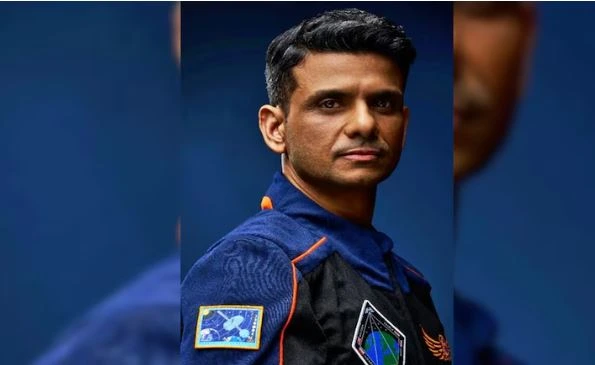
Indian astronaut Group Captain Shubhanshu Shukla, the first Indian to visit the International Space Station (ISS), will meet Prime Minister Narendra Modi this evening at his official residence in New Delhi.

PM Modi to host meeting with astronaut

According to officials, the meeting at 7 Lok Kalyan Marg is expected to take place between 5 pm and 5:30 pm. Shukla, who arrived in India on Sunday, will also be part of the National Space Day celebrations scheduled for August 23.

Warm welcome in India

The astronaut was greeted at the airport by his family, Science and Technology Minister Jitendra Singh, Delhi Chief Minister Rekha Gupta, and hundreds of citizens waving the national flag. Shukla had been in the United States for a year, preparing for the Axiom-4 mission, which launched from Florida on June 25 and docked at the ISS the next day. He served as the mission’s pilot.

Emotional note from Shukla

Before his return, Shukla shared an emotional post on Instagram, expressing mixed feelings of leaving his space colleagues while being eager to meet his loved ones and people of India. He also quoted a song from the film Swades, which he had chosen as his anthem on the launch day.

Parliament session on India’s space journey

In honour of Shukla’s mission, the Lok Sabha is holding a special session today to discuss “India’s first astronaut aboard the ISS – critical role of space programme for Viksit Bharat by 2047.” Union minister Kiren Rijiju said the discussion would highlight the importance of India’s space achievements and future goals.

Continue Reading

India News

Shubhanshu Shukla pens emotional note as he returns to India after space mission

Indian astronaut Shubhanshu Shukla penned an emotional Instagram post as he returned to India after his 18-day ISS mission, marking a milestone in India’s space journey.

Published

on

Indian astronaut Group Captain Shubhanshu Shukla has shared an emotional Instagram post as he heads back home after completing his 18-day mission aboard the International Space Station (ISS).

Astronaut reflects on mixed emotions

In his heartfelt message, written from the aircraft, Shukla expressed the whirlwind of emotions he felt while leaving behind his fellow astronauts, who had been his family during the mission. “As I sit on the plane to come back to India, I have a mix of emotions running through my heart. I feel sad leaving a fantastic group of people behind who were my friends and family for the past year during this mission. I am also excited about meeting all my friends, family and everyone in the country for the first time post mission. I guess this is what life is — everything all at once,” he wrote.

Acknowledges support and inspiration

The astronaut thanked everyone for the love and support he received throughout his journey. He also recalled the words of his commander Peggy Whitson, saying, “Goodbyes are hard, but we need to keep moving in life. As my commander Peggy Whitson fondly says, ‘The only constant in spaceflight is change’. I believe that applies to life as well.”

Shukla ended his note with a line from the song Yun Hi Chala Chal from the film Swades, reflecting his spirit of resilience.

Link to India’s space ambitions

Shukla’s return comes at a crucial time as India advances its space programme. Prime Minister Narendra Modi had earlier mentioned that the astronaut would soon return and that he was tasked with documenting his training and ISS stay. This record will serve as a valuable reference for Gaganyaan, India’s first human spaceflight mission.

Over the past year, Shukla trained extensively at NASA, Axiom, and SpaceX facilities. His flight to the ISS as part of the Axiom 4 mission marked a milestone in India’s preparations for future human space exploration.

The Gaganyaan project aims to send Indian astronauts into orbit aboard an indigenous rocket. The government has also outlined plans for a Bharatiya Antariksh Station by 2035 and a crewed mission to the moon by 2040.

Continue Reading

Latest Science News

Shubhanshu Shukla becomes second Indian in space, lifts off for ISS aboard Axiom-4 mission

Group Captain Shubhanshu Shukla becomes the second Indian astronaut to travel to space after four decades, aboard the Axiom-4 mission to the International Space Station.

Published

on

subhanshu shukla

Group Captain Shubhanshu Shukla of the Indian Air Force has etched his name in history as the second Indian astronaut to travel to space. Launching aboard the SpaceX Crew Dragon on the Axiom-4 mission, Shukla began his journey from NASA’s Kennedy Space Center in Florida, from the very launchpad that propelled Neil Armstrong’s Apollo 11 moon mission in 1969.

Four decades after Wing Commander Rakesh Sharma became the first Indian to journey into space in 1984, Shukla’s mission marks a monumental milestone for India’s space ambitions. Speaking ahead of the mission, Shukla expressed the emotional weight of the moment, saying, “I carry with me not just instruments and equipment, but the hopes and dreams of a billion hearts.”

A multinational crew on a scientific journey

Group Captain Shukla is joined by Commander Peggy Whitson from the US, Slawosz Uznanski-Wisniewski from Poland, and Tibor Kapu from Hungary. The four-member crew is on a mission to the International Space Station (ISS), where they are scheduled to arrive after a 28-hour journey and dock around 4:30 pm tomorrow.

The fortnight-long mission includes the execution of 60 scientific experiments, with seven of them designed by Indian researchers. Shukla is also expected to engage in an interaction with a VIP from space during the mission, adding a special human touch to this scientific voyage.

A mission delayed, but not denied

The Axiom-4 launch had faced multiple delays due to unfavorable weather and technical complications. June 25 finally saw the successful launch, marking NASA’s sixth official date announcement for the mission.

Before lift-off, Shukla shared a heartfelt message with his family: “Just wait for me, I’m coming.” The Indian pilot had been under quarantine for over a month in preparation, ensuring he was in optimal health for the journey.

As the spacecraft orbits Earth en route to the ISS, India watches with pride and anticipation, inspired once again by the courage of its space pioneers.

Continue Reading

Trending

© Copyright 2022 APNLIVE.com