English हिन्दी
Connect with us

Latest world news

Pakistan says India’s action ‘uncalled for aggression’, but denies any damage done

Published

on

imran-khan

[vc_row][vc_column][vc_column_text]Soon after Ministry of External Affairs secretary Vijay Gokhale’s briefing on Indian Air Force strike on Jaish-e-Mohammad camp at Balakot in Pakistani territory, Pakistan said that it would respond to India’s action, calling it ‘uncalled for aggression’.

Separately, it also denied any terror camp existed at the place of attack or that any damage was done and said it would take international media to the spot to see it for themselves. Pakistan had responded similarly after the September 2016 surgical strike.

In a pre-dawn operation, 12 Indian Air Force Mirage-2000 jets crossed the Line of Control (LoC) and destroyed terror camps of Pakistan-based Jaish-e-Mohammed in Balakot. The air strike, which has been dubbed surgical strikes 2.0, comes two weeks after a terror attack on CRPF soldiers in Pulwama, Jammu and Kashmir.

Pakistan Prime Minister Imran Khan urged people of Pakistan to remain prepared for all eventualities. The statement came after an emergency meeting to review the situation, PTI reported.

According to a report by Dawn, Prime Minister Imran Khan convened a special meeting of the National Security Committee (NSC) where he said, “The claimed area of strike is open for the world to see the facts on ground. For this domestic and international media is being taken to the impact site. Forum concluded that India has committed uncalled for aggression to which Pakistan shall respond at the time and place of its choosing.”

However, at the same time, Prime Minister’s Office, Pakistan @PakPMO tweeted: “Forum strongly rejected Indian claim of targeting an alleged terrorist camp near Balakot and the claim of heavy casualties. Once again Indian government has resorted to a self serving, reckless and fictitious claim.”

Foreign Minister Shah Mahmood Qureshi said India has committed “aggression” by violating the LoC and Islamabad has “right to self-defence”.

Within hours of Gokhale’s briefing, Pakistan’s National Security Committee (NSC) said in a statement: “Forum concluded that India has committed an uncalled for aggression to which Pakistan shall respond at the time and place of its choosing. To take the nation on board, the government has decided to requisition joint session of Parliament.”

The NSC meeting was attended by Ministers of Foreign Affairs, Defence, Finance and Chief of the Army Staff General Bajwa, among others.

“Forum strongly rejected Indian claim of targeting an alleged terrorist camp near Balakot and the claim of heavy casualties. Once again Indian government has resorted to a self-serving, reckless and fictitious claim,” the NSC said in its statement.

The government of Pakistan said that they will take domestic and international media to the impact zone that was hit by Indian payloads.

Pakistan alleged that the Indian government initiated action out of domestic compulsions.

“This action has been done for domestic consumption being in an election environment, putting regional peace and stability at grave risk. The claimed area of the strike is open for the world to see the facts on the ground. For this domestic and international media is being taken to the impact site. The forum concluded that India has committed uncalled for aggression to which Pakistan shall respond at the time and place of its choosing,” Dawn quoted a government statement.

“He [Prime Minister Khan] decided to engage with global leadership to expose irresponsible Indian policy in the region,” the statement further reads.

Foreign minister Qureshi said: “First, they committed aggression against Pakistan today. It is a violation of the LoC. I consider it a violation of the LoC, and Pakistan his right to give a suitable response in self-defence.” He was speaking to reporters after an “emergency meeting” with high-level officials at the Foreign Office (FO) for consultations.

Qureshi says, “Pakistan has never backed down on peace talks and Kartarpur was one such initiative. Indian propaganda is Indian propaganda. But to do everything with regards to vote, vote, vote, election, election, election.”

Asking Pakistani’s to remain calm, Qureshi said, “Nation should not be worried over the Indian act as the defenders of the country are fully prepared to respond to any misadventure.” He also added that Pakistan is a “peace-loving” nation and has “registered successes in the war on terrorism,” reported Radio Pakistan.

Senator Sherry Rehman, a leading opposition leader of the Pakistan People’s Party, said that “Indian incursion” across the LOC is strategically “ill-advised and tactically pointless”. “Such moves only ratchet up tensions in a region bristling with anger. “Obvious that (Prime Minister Narendra) Modi’s election wardrums make prospects for talks collateral damage. India’s ruling party sees no other way to win the elections hence, itching for war,” Rehman said in a tweet.

Meanwhile, India’s Opposition leaders congratulated the Indian Air Force on the strike. Congress president Rahul Gandhi, party leader Shashi Tharoor, West Bengal Chief Minister Mamata Banerjee and Delhi Chief Minister and Aam Aadmi Party chief Arvind Kejriwal, tweeted congratulating the armed forces for striking terror camps.

Nations urge India and Pakistan to exercise restraint

China has urged India and Pakistan to “exercise restraint” and asked New Delhi to carry out its fight against terrorism through international cooperation, hours after Indian fighter jets struck Jaish-e-Mohammed’s biggest camp in Pakistan in a pre-dawn attack.

When asked for China’s response to India’s airstrikes on terrorist camps in Pakistan, Chinese Foreign Ministry spokesman Lu Kang told the media here that we have taken note of relevant reports.”

“I want to say that India and Pakistan are both important countries in South Asia. A sound relationship and cooperation between the two serves the interests of both the countries and peace and stability in South Asia,” he said.

“We hope that both India and Pakistan can exercise restraint and do more to improve mutual their bilateral relations,” he said.

The European Union (EU), too, called on India and Pakistan to exercise “maximum restraint” after Indian warplanes attacked a militant camp in Pakistan, sending tensions soaring between the nuclear-armed arch-rivals. “We remain in contact with both countries and what we believe is essential is that all exercise maximum restraint and avoid further escalation of tensions,” EU spokeswoman Maja Kocijancic told reporters.[/vc_column_text][/vc_column][/vc_row]

Latest world news

UK Foreign Secretary Yvette Cooper visits India to strengthen bilateral partnership

UK Foreign Secretary Yvette Cooper held high-level meetings in New Delhi during her first official visit to India, underscoring efforts to deepen cooperation in trade, security, technology and regional stability.

Published

on

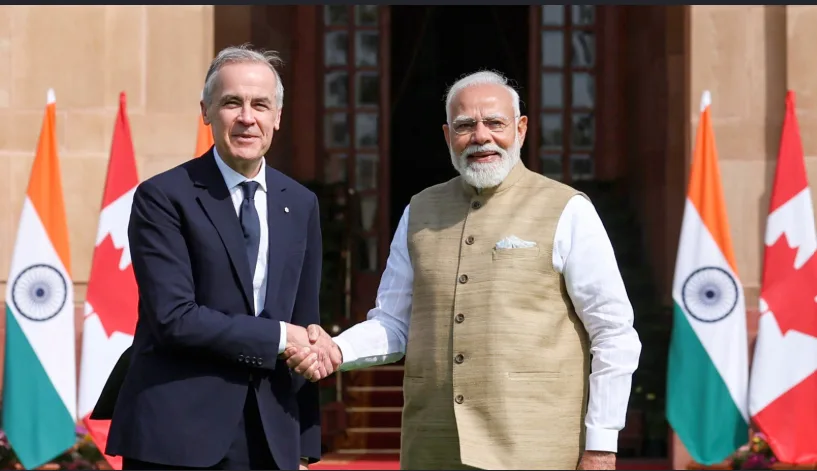
UK Foreign Secretary Yvette Cooper visited New Delhi for her first official trip to India since assuming office, holding key meetings with Prime Minister Narendra Modi and External Affairs Minister S. Jaishankar as both countries seek to deepen cooperation across trade, security and strategic sectors.

The visit comes at a significant time in India-UK relations, with both governments working toward the implementation of their recently concluded trade agreement while also expanding collaboration in areas such as technology, climate action, supply chains and regional security.

Focus on trade and strategic cooperation

During her engagements in New Delhi, Cooper discussed ways to strengthen the comprehensive strategic partnership between the two countries. Conversations also touched on accelerating the implementation of the India-UK trade agreement and enhancing economic cooperation.

Her visit followed recent discussions between Indian Commerce Minister Piyush Goyal and UK Business and Trade Secretary Peter Kyle regarding the rollout of the bilateral trade pact.

New initiatives announced

India and the UK also announced fresh cooperation initiatives during the visit, including the launch of a Critical Minerals Global Supply Chain Observatory aimed at strengthening collaboration on critical minerals and supply-chain resilience.

Officials described the initiative as an important step in expanding cooperation in emerging strategic sectors and supporting resilient global supply chains.

Addressing global challenges

Apart from bilateral issues, discussions covered wider global concerns, including regional stability, economic disruptions arising from international conflicts and maritime security. The visit reflects the growing importance both countries attach to their strategic partnership amid evolving geopolitical challenges.

India and the UK have increasingly broadened cooperation across defence, technology, innovation, clean energy and people-to-people ties, with both sides aiming to further strengthen engagement in the coming years.

Fact-check assessment

The core angle—Yvette Cooper’s first official visit to India, meetings with PM Modi and S. Jaishankar, focus on trade, security, strategic cooperation and the launch of new bilateral initiatives—is supported by multiple current reports and appears factually sound.

Continue Reading

Latest world news

Trump says India-US trade deal likely soon, calls PM Modi a good friend

Donald Trump has expressed confidence that India and the United States will soon finalize a trade agreement, while praising Prime Minister Narendra Modi and highlighting ongoing bilateral negotiations.

Published

on

Donald Trump statement

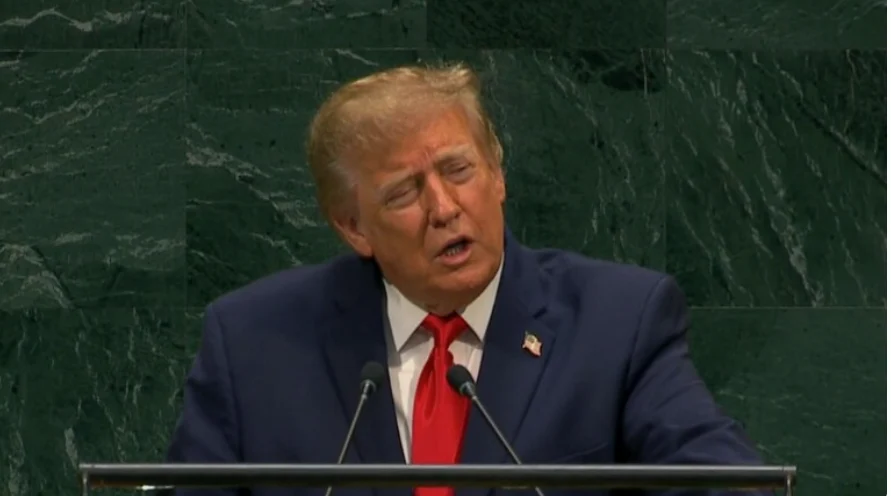
US President Donald Trump has expressed confidence that the United States and India will reach a trade agreement in the near future, even as discussions continue amid concerns over potential new tariffs. Trump also praised Prime Minister Narendra Modi, describing him as a good friend and highlighting the strong relationship between the two leaders.

Speaking to reporters at the White House, Trump said he expects the two countries to finalize a deal and pointed to his personal rapport with Prime Minister Modi. He said the relationship between Washington and New Delhi remains strong and that ongoing negotiations are moving toward an agreement.

The remarks come shortly after a US trade delegation concluded discussions in India on an interim bilateral trade arrangement. According to Indian officials, the talks were conducted in a cooperative atmosphere, with both sides reaffirming their commitment to a mutually beneficial agreement aimed at strengthening economic ties.

During the interaction, Trump also repeated his criticism of India’s past tariff policies, arguing that India had imposed high duties on American goods for many years. He claimed recent US trade measures were intended to address what he views as an imbalance in the trading relationship.

His comments come days after the US administration proposed additional tariffs on imports from India and several other economies under a separate trade investigation related to forced-labour concerns. The proposal remains under review and has become one of the issues running alongside broader trade negotiations between the two countries.

Despite the tariff dispute, both governments have continued negotiations. Recent statements from officials on both sides suggest that substantial progress has already been made on several aspects of the proposed agreement, with discussions focused on resolving the remaining issues.

The United States is one of India’s largest trading partners, and a bilateral agreement is expected to further expand trade and investment flows between the two countries. Trump’s latest remarks are being seen as a sign that both sides remain committed to finding common ground despite ongoing trade disagreements.

Continue Reading

Latest world news

India considers tax relief to attract foreign investors amid Iran war impact

India is evaluating tax incentives, including a possible capital gains tax exemption on government securities for foreign investors, to support capital inflows amid economic pressures linked to the Iran war.

Published

on

India is considering a set of measures aimed at attracting more foreign investment as the ongoing Iran war continues to create pressure on the country’s economy, according to reports citing government sources. One of the key proposals under discussion is the removal of capital gains tax on investments made by foreign portfolio investors (FPIs) in government securities.

The move comes at a time when geopolitical tensions in West Asia have pushed up global oil prices, weakened investor sentiment and increased pressure on the Indian rupee. India, which imports a significant share of its crude oil requirements, has been among the countries closely monitoring the economic fallout from the conflict.

Government exploring ways to boost capital inflows

Officials are reportedly evaluating tax-related incentives to make Indian debt markets more attractive to overseas investors. The proposed exemption on capital gains from government securities is aimed at encouraging foreign portfolio investment and supporting capital inflows during a period of heightened global uncertainty.

The government is seeking to counter the impact of foreign capital outflows that have intensified amid concerns over the Iran conflict and its implications for energy markets and global economic growth.

Rupee and markets under pressure

Recent weeks have seen increased volatility in financial markets, with foreign investors pulling money out of Indian equities. Analysts have linked part of the pressure on the rupee to rising oil prices and continued overseas investor withdrawals.

Market participants believe that measures aimed at attracting foreign investment into government securities could help improve investor confidence and provide support to the domestic currency.

Broader economic concerns

The Iran war has added to concerns about inflation, economic growth and India’s external sector. Higher energy prices can increase import costs and put pressure on inflation, while sustained foreign capital outflows may affect financial market stability.

While no final decision has been announced, discussions on easing tax rules for foreign investors reflect the government’s efforts to strengthen capital inflows and cushion the economy from external shocks.

Continue Reading

Trending

© Copyright 2022 APNLIVE.com