
India News
Top legal luminaries deliberate on Insolvency & Bankruptcy Code at India Legal Conclave


[vc_row][vc_column][vc_column_text]The first ever Legal Leadership Conclave, organised by India Legal Research Foundation (ILRF) and Supreme Court Bar Association (SCBA) in association with others, held in Mumbai on Saturday, April 27, evaluated the impact of Insolvency and Bankruptcy Code (IBC) and the challenges ahead.
The law that has been in existence for three years now is a landmark law is hailed as a major step for economic reform.
Supreme Court Justice NV Ramana, who inaugurated the conclave, said in his opening remarks that with the IBC code having been around for three years, it was time to take a look at its functioning. “The IBC is one of the key reforms in the field of commercial law undertaken in the last two decades and now that it has been around for three years, it is time to reflect on its journey and discuss ways to smoothen its functioning,” he said.
“In recent times, non-performing assets have threatened to cripple our banking system and have taken the wind out of the sails of our economic growth, said Justice Ramana, adding that the IBC was enacted to provide for a time-bound insolvency resolution mechanism.
“In three years since its enactment, 12,000 insolvency cases have been filed under it and around Rs 1 lakh crore have been recovered through insolvency proceedings,” he observed and added that the object behind enacting the IBC was to consolidate the existing framework by creating a single law for Insolvency and Bankruptcy.

Justice NV Ramana lighting the lamp. Also seen are MD, APN News Rajshri Rai (standing behind him) and Editor-in-Chief India legal Inderjit Badhwar (second from right).
[/vc_column_text][/vc_column][/vc_row]
[vc_row][vc_column][vc_column_text]The conclave, that had two sessions, had a line up of speakers that included some of the best authorities to speak on the subject. Other than Justice NV Ramana of the Supreme Court, among those who spoke are: PK Malhotra, former law secretary; Justice BN Srikrishna, former SC judge; Editor-in-chief, India Legal, Inderjit Badhwar; Justice Pradeep Nandrajog, chief justice of the Bombay High Court.
The event is a launch pad for a series of conclaves being held nationwide on a wide range of contemporary legal issues with the participation of sitting judges of the Supreme Court and High Courts and several other legal luminaries and thought leaders. The SCBA which works tirelessly towards protecting the interests of the Supreme Court lawyers is an important pillar of our legal system. The ENC Group-promoted ILRF, is a non-profit organization which is committed to bring justice to those who deserve it but cannot afford it.
India legal is the first and only weekly, independent politico-legal magazine that covers an entire gamut of legal news and developments in the country and which has constantly endeavoured to promote the cause of legal education. This approach also forms the bedrock of media initiatives of the ENC group, including the widely acclaimed news channels, APN TV and N1 News. The ENC Group takes great pride and responsibility in promoting new ideas, initiatives, and recommendations for the benefit of not only the legal fraternity but also society at large. It is in continuing with this tradition that the Legal Leadership Conclave is being held today. The event is being held in partnership with the Supreme Court Bar Association (SCBA) and India Legal Research Foundation (ILRF), APN TV and Nepal 1.
The IBC has emerged as the topic for discussion, the reasons for which are not hard to fathom. Before the introduction of the IBC, it took companies about four to five years to dissolve their operations; now the time has dropped drastically to a year.
However, as with any new legislation, the IBC’s smooth implementation has been riddled with many issues that had not been thought of at the time of drafting the legislation. Some of these issues have been addressed by way of legislative amendments and court orders while many more were discussed at the daylong conclave.
As mentioned above, the conclave was held in two sessions.
The Technical Session I
Subject: Opportunities and Challenges for IBC
The speakers at the session included Mukulita Vijayawargiya, member (IBBI); VP Singh (NCLT member); Mohan Bhaskar Pantulu (NCLT member); TK Vishwanathan, former secretary general, Lok Sabha; and Som Sekhar Sundaresan, advocate. Justice BR Gavai of the Bombay High Court chaired the panel.
Technical Session II
Subject: Impact of IBC on business establishments and the real estate sector
The speakers at this session were: Ravi Kumar Duraisamy (member NCLT); Justice J Bharati Dangre of the Bombay High Court; Justice V. Nallasenapathy (member NCLT); Soli Cooper, advocate; OP Bhatt, director ONGC and ex-chairman IBA; Jana Kalyan Das, senior advocate; and former SCBA president PH Parekh. Justice Dangre was the chairperson of the session
There were two rounds of Q&A where discerning questions related to IBC were asked.
Valedictory Session
This was attended by Justice Nandrajog, Justice Ramana and senior advocate Janak Dwarka Das. Justice Ramana concluded the event
The Vote of Thanks was delivered by India Legal’s Editor-in-Chief Inderjit Badhwar.
Read the full speech of Justice N V Ramana here
Watch the full speech here
[/vc_column_text][/vc_column][/vc_row]






India News
Mallikarjun Kharge seeks all-party meeting with PM Modi on delimitation
Congress president Mallikarjun Kharge has written to Prime Minister Narendra Modi for the fourth time, seeking an all-party meeting on delimitation. He also flagged the 64-day delay in proroguing Parliament’s Monsoon Session.

India News
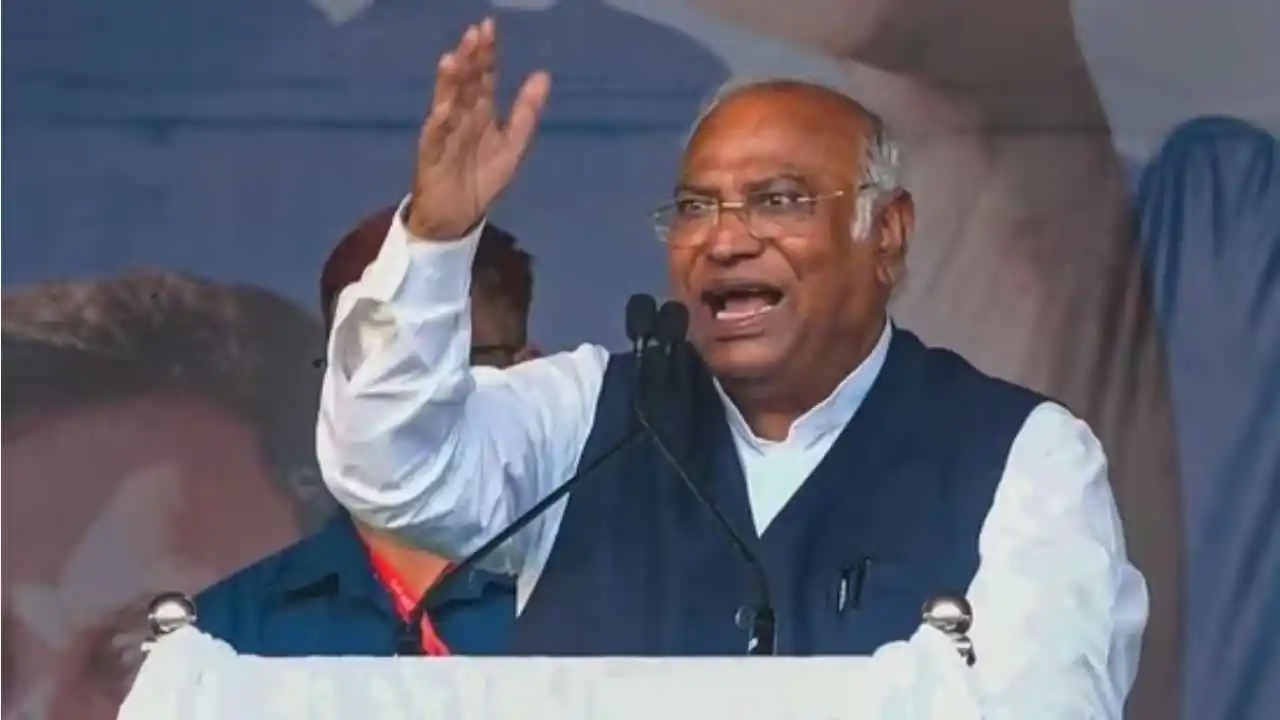
Abhijeet Dipke detained ahead of CJP’s national flag march in Delhi
Cockroach Janta Party founder Abhijeet Dipke was detained by Delhi Police on October 16, 2026, shortly before a planned national flag march. The proposed rally followed the judicial custody of two CJP members who had waved the Tricolour at Jantar Mantar.
India News
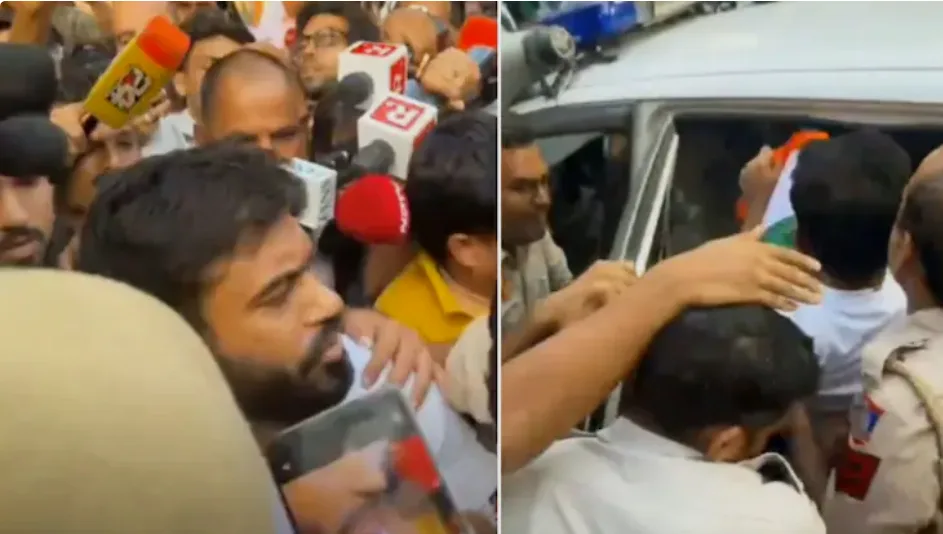
Delhi deploys 25,000 personnel, installs CCTV cameras ahead of CJP march
More than 25,000 police and paramilitary personnel have been deployed in Delhi ahead of the CJP’s planned protest march at Connaught Place. Authorities have also imposed restrictions and stepped up CCTV surveillance.

Delhi Police offers 11-person limit for CJP’s Connaught Place protest

Actor Imran Khan asked to leave India after CJP protest

Magnitude 7 earthquake strikes Russia’s Kamchatka Peninsula

Mallikarjun Kharge’s ‘Your Friends’ jab at Rahul Gandhi over congress exits

Delhi deploys 25,000 personnel, installs CCTV cameras ahead of CJP march

Mallikarjun Kharge seeks all-party meeting with PM Modi on delimitation

Abhijeet Dipke detained ahead of CJP’s national flag march in Delhi
Magnitude 7 earthquake strikes Russia’s Kamchatka Peninsula
Delhi deploys 25,000 personnel, installs CCTV cameras ahead of CJP march
Mallikarjun Kharge’s ‘Your Friends’ jab at Rahul Gandhi over congress exits

Afghan Men Try To Hang With The Jet Engine Of The Aircraft in Kabul- Afghanistan News – Kabul News
Trending Top 10 News: 10000 Crore Fine on Flipkart, Apple to Launch Unique Feature, Hdfc Bank Job Ad

Trending Top 10 News: Nokia 6310, Apple sales, Bachpan ka Pyar Video Kid, Dainik Bhaskar IT Raid

Trending Top 10 News: Canada bans Indian flights, Rain in Delhi NCR, AIMIM Twitter hacked, Raj Kundra case

Trending Top 10 News: Shein India, Apple New Service, Pocket Oxygen, Oppo Launched New Phone
-
 India News23 hours ago
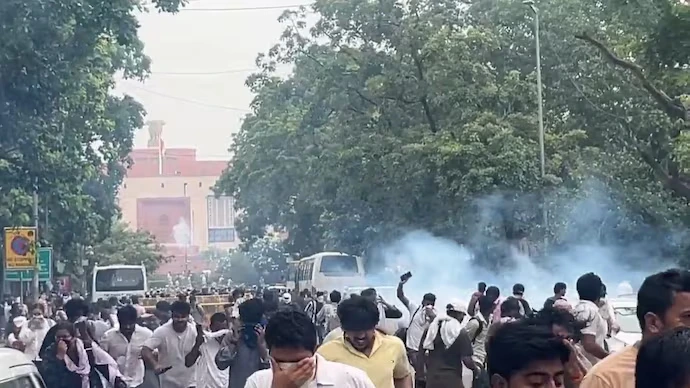
Delhi Police offers 11-person limit for CJP’s Connaught Place protest
-
 India News24 hours ago
Actor Imran Khan asked to leave India after CJP protest
-
 Latest world news11 hours ago
Magnitude 7 earthquake strikes Russia’s Kamchatka Peninsula
-
 India News11 hours ago
Mallikarjun Kharge’s ‘Your Friends’ jab at Rahul Gandhi over congress exits
-
 India News11 hours ago
Delhi deploys 25,000 personnel, installs CCTV cameras ahead of CJP march
-
 India News2 hours ago
Abhijeet Dipke detained ahead of CJP’s national flag march in Delhi
-
 India News28 mins ago
Mallikarjun Kharge seeks all-party meeting with PM Modi on delimitation
