English हिन्दी
Connect with us

India News

Poor performance by public sector banks, says RBI report

Published

on

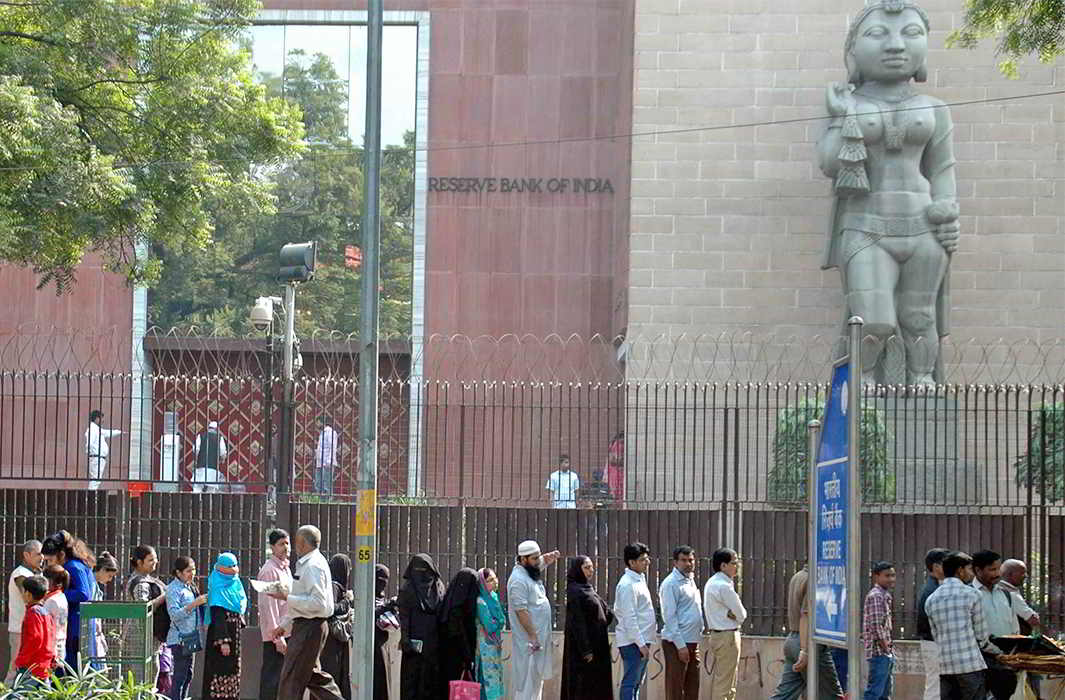
Reserve Bank of India New Delhi. Photo: UNI

[vc_row][vc_column][vc_column_text]The private sector banks and foreign banks earned net profits, but the public sector banks incurred a loss of Rs 180 billion

Parsa Venkateshwar Rao Jr[/vc_column_text][vc_column_text]The growth in the banking sector for 2015-16—according to RBI’s “Report on the Trend and Progress of Banking in India 2015-16”—fell to 7.7 per cent in 2015-16, from 9.7 per cent in 2014-15.

As the banks, especially the public sector ones, had to provide for the “delinquent loans”, the credit and advances, which is an indirect marker of economic activity, fell to a dismal 2.1 per cent in 2015-16 from 7.4 per cent in 2014-15.

Interestingly, the Current Account and Savings Account (CASA) deposits with private sector banks as well as foreign banks grew better than those with the public sector banks.  The growth of CASA deposits with private sector banks jumped to an impressive three per cent—from over 16 per cent to over 19 per cent.

While the Credit-Deposit (C-D) ratio of the banking sector as a whole remained static at 78 per cent, the C-D ratio of the private sector banks stood at 90.3 per cent.

The banking sector on the whole showed declining earnings on interest and non-interest incomes. It was mainly due to slowdown in the growth of credit. Though the sector is not in the red, profits fell by 60 per cent. The private sector banks and foreign banks earned net profits, but the public sector banks incurred a loss of Rs 180 billion, and net losses amounting to 148 per cent.

But the priority sector lending—which includes weaker sections, small and medium enterprises, agriculture and housing— showed a marked improvement, increasing from 9.3 per cent in 2014-15 to 16 per cent in 2015-16. The target for the priority sector lending was 40 per cent. The public sector banks achieved 39.3 per cent, private sector banks logged 45.1 per cent and foreign banks showed 35.3 per cent.

The recovery of non-performing assets (NPAs) for all the banks fell from Rs 307.92 billion in 2014-15 to Rs 227.68 billion in 2015-16. The public sector banks could recover only Rs 1,897.57 billon in 2015-16, compared to Rs 278.49 billion the previous year.

The report notes that recovery was better through the Lok Adalats and Debt Recovery Tribunals (DRTs) than through the SARFAESI (Securitisation and Reconstruction of Financial Assets and Enforcement of Security Interest Act, 2002) channel. The recovery through SARFAESI reduced from Rs 256 billion in 2014-15 to Rs 131.79 billion in 2015-16.

Despite a slowdown in credit growth, the loan portfolio reveals an interesting profile. Loans in the housing sector accounted for 52 per cent, up by 16.4 per cent over the previous year, followed by personal loans, 29.8 per cent, which include educational loans, while auto loans stood at 11.1 per cent.

Meanwhile, the credit sensitive sectors, including capital and real estate, accounted for 20 per cent of the loans. Foreign banks lent 27.7 per cent, which is more than private banks, which stood at 26.3 per cent. The public sector banks loans in this sector were the lowest, at 16.9 per cent. An overwhelming chunk of the loans, 92.5 per cent, in this segment went to the real estate.

The ownership pattern of the banks shows that while the government maintains a majority stake in the public sector banks, 51 per cent, the non-resident shareholding in the PSBs, 11.9 per cent, contrasted with 72.7 per cent in the private sector banks.

Lead Picture: Reserve Bank of India New Delhi. Photo: UNI[/vc_column_text][/vc_column][/vc_row]

India News

RBI cuts repo rate to 5.25%, paving the way for cheaper loans

The RBI has cut the repo rate to 5.25%, aiming to support growth as inflation softens. The central bank also raised GDP projections and announced liquidity-boosting measures.

Published

on

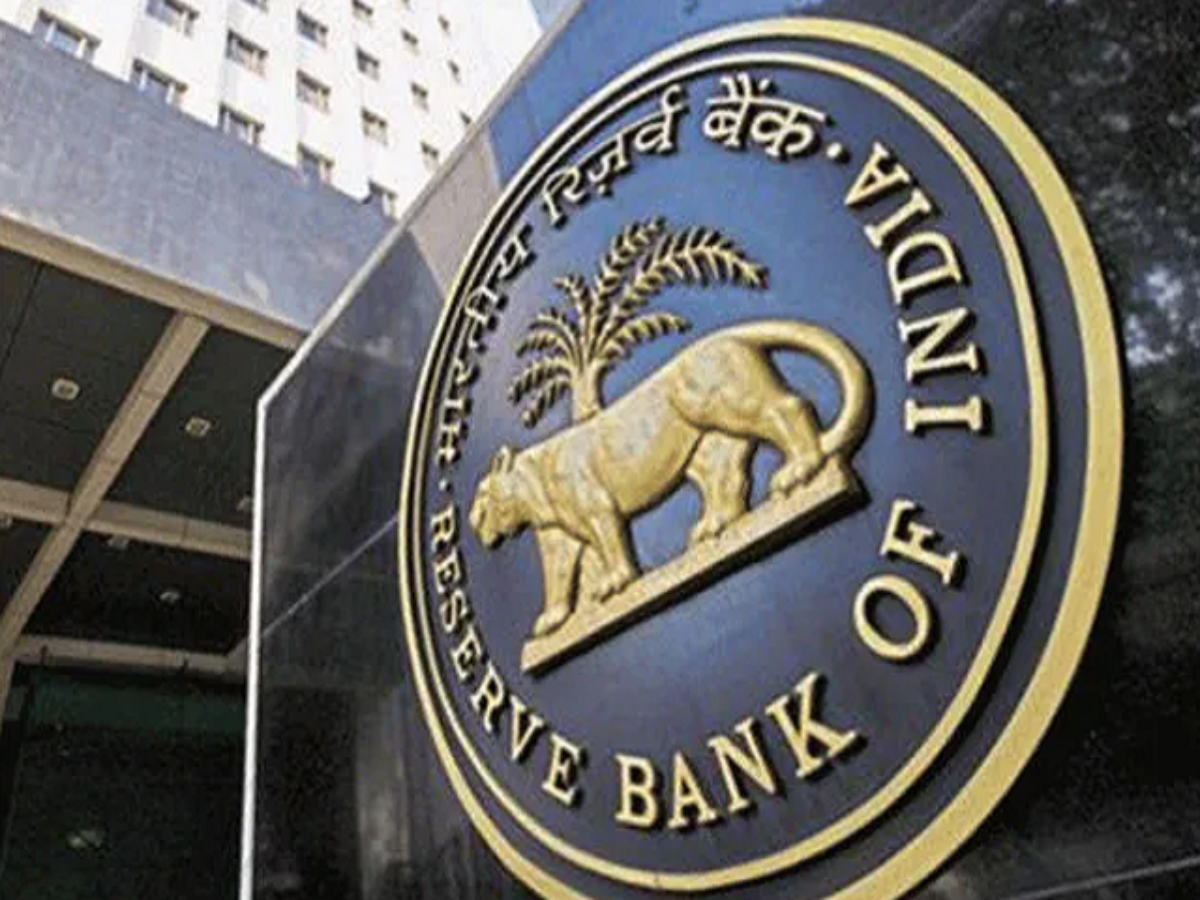
Reserve Bank of India

The Reserve Bank of India (RBI) reduced the key repo rate by 25 basis points to 5.25% on Thursday, signalling relief for borrowers as banks are expected to offer lower EMIs on home and vehicle loans. Governor Sanjay Malhotra announced the move after the conclusion of the three-day Monetary Policy Committee (MPC) meeting.

RBI prioritises growth as inflation eases

Malhotra said the decision was unanimous, with the central bank choosing to focus on supporting economic momentum despite concerns over a weak rupee. The repo rate was earlier cut in June from 6% to 5.5% amid easing inflation trends.

The RBI now projects Consumer Price Index (CPI) inflation at 2% for FY2025-26, significantly softer than earlier estimates. For the first quarter of FY2026-27, inflation is expected at 3.9%, lower than the previous projection. The governor noted that rising precious metal prices may contribute to the headline CPI, but overall risks to inflation remain balanced.

GDP outlook strengthened

In a strong upward revision, the central bank increased the GDP forecast for the current financial year to 7.3%, previously estimated at 6.8%. Growth for the October–December quarter has also been revised to 6.7%.

The last quarter registered a six-quarter high expansion of 8.2%, reflecting resilient demand and steady credit flow.

“The growth-inflation balance continues to offer policy space,” Malhotra said, reiterating that the RBI’s stance remains neutral.

Other key decisions

Alongside the repo rate cut, the RBI announced adjustments to key policy corridors:

  • Standing Deposit Facility (SDF): 5%
  • Marginal Standing Facility (MSF): 5.5%

To improve liquidity and strengthen monetary transmission, the RBI will conduct forex swaps and purchase ₹1 lakh crore worth of government bonds through Open Market Operations (OMO).

RBI reviews a challenging year

Reflecting on 2025, Malhotra said the year delivered strong growth and moderate inflation even as global trade and geopolitical uncertainties persisted. He added that bank credit and retail lending remained healthy, providing support to the economy.

Continue Reading

India News

IndiGo flight chaos deepens as over 500 services cancelled, passengers stranded for hours

Over 500 IndiGo flights were cancelled nationwide, leaving passengers stranded without food, clarity or their luggage as airports struggled to manage the disruption.

Published

on

IndiGo flight

India’s largest airline continued to face massive operational breakdowns, triggering frustration among travellers at major airports across the country. From piles of unattended suitcases to passengers waiting over 12 hours without food or clarity, the disruption stretched into its fourth consecutive day.

Long delays, no communication leave passengers anguished

Several travellers at Delhi airport described the situation as “mental torture”, as thousands of unclaimed suitcases lay scattered across the terminal. Many slept on the floor, while others expressed anger over the lack of communication from airline staff.

One flier said he had been waiting for over 12 hours without any explanation: “Every time they say one-hour or two-hour delays. We were going to a wedding but don’t even have our luggage.”

A passenger in Hyderabad recounted a similar ordeal, saying the flight was delayed indefinitely with no food, water, or updates from the airline. At the airport, some travellers blocked an Air India flight in protest over the lack of arrangements.

Goa and Chennai airports also witnessed tense moments. Videos from Goa showed fliers shouting at IndiGo staff as police attempted to calm the situation. At Chennai, CISF denied entry to IndiGo passengers due to heavy congestion.

Major metro airports impacted; cascading cancellations nationwide

Flight cancellations and delays were reported across multiple airports:

  • Over 200 flights were cancelled in Delhi
  • More than 100 each in Mumbai and Bengaluru
  • Around 90 in Hyderabad
  • Dozens more in Pune, Vishakhapatnam, Chennai and Bhopal

Pune airport stated that parking bay congestion worsened the situation, as several IndiGo aircraft remained grounded due to lack of crew. Other airlines continued operations without disruption.

Airport authorities said they had mobilised additional manpower for crowd control and passenger support.

IndiGo admits planning lapses, says more cancellations expected

The airline acknowledged a “misjudgment” in assessing crew requirements under revised night-duty norms, which it said created planning gaps. Winter weather and airport congestion further aggravated the crisis.

IndiGo informed the aviation ministry and DGCA that some regulatory changes—such as the shift in night-duty timings and a cap on night landings—have been rolled back temporarily to stabilise operations.

The airline warned that cancellations may continue for another two to three days, and from December 8, schedules will be trimmed to prevent further disruption.

In a message to employees, CEO Pieter Elbers said restoring punctuality would not be an “easy target”.

Airline issues apology amid nationwide frustration

In a late-night statement, IndiGo apologised to customers and industry partners, acknowledging the widespread inconvenience caused by the disruptions. The airline said all teams were working with authorities to bring operations back to normal.

Continue Reading

India News

Delhi to install 305 mist sprayers across 9 major pollution hotspots

Chief Minister Rekha Gupta announced that 305 mist sprayers will be installed across nine pollution hotspots in Delhi, alongside expert-led planning and coordinated measures to reduce dust and biomass-related pollution.

Published

on

Delhi-NCR air quality

The Delhi government has announced a large-scale deployment of mist sprayer technology to tackle rising air pollution, with Chief Minister Rekha Gupta confirming that 305 mist sprayers will be installed across nine pollution hotspots in the capital.

Mist sprayers to curb dust at critical locations

During an inspection at ITO, Gupta said the mist sprayers already operational at the site are performing effectively. She noted that 35 poles at ITO have been fitted with these machines, which are helping suppress dust—a major contributor to air pollution in Delhi.

According to the Chief Minister, trials conducted in certain NDMC areas have shown promising results, reinforcing confidence in the technology.

High-level committee to guide pollution-control measures

Gupta announced the formation of a high-level expert committee that will advise the government on effective measures to reduce pollution. The panel will include senior officials from various departments as well as environmental specialists, including experts from IITs. Officials stated that the committee will receive special powers to implement pollution-mitigation strategies.

Departments directed to repair roads, add greenery

The Chief Minister said departments including PWD, DSIIDC and DDA have been instructed to fix potholes, repair and carpet roads, plant foliage along dividers and islands, and take other measures to reduce pollution sources.

She urged residents to report potholes on the government portal for quicker action.

Appeal to RWAs to prevent biomass burning

To curb winter pollution, Gupta advised Resident Welfare Associations (RWAs) to distribute electric heaters to security guards to discourage biomass burning, which significantly contributes to seasonal pollution spikes.

Continue Reading

Trending

© Copyright 2022 APNLIVE.com