English हिन्दी
Connect with us

Book reviews

Eat Indian, the new health mantra

Published

on

Expect to get more knowledgeable about the Indian food ingredients by reading the book.

[vc_row][vc_column][vc_column_text]Shilpa Shetty Kundra and nutritionist Luke Coutinho’s book The Great Indian Diet – Busting the fat myth tells us that there’s no need to look beyond borders to tailor the perfect diet 

By Niti Singh Bhandari

Increasingly people are getting more and more aware about illnesses and their relationship with what we eat. All the delicacies consumed by us are converted into their basic components of carbohydrates, fats, minerals, potassium, magnesium, sodium, albumins and so on for the body to perform various functions. An imbalance in any one compound, mineral or vitamin manifests in the form of serious illnesses.

This is why the approach to food needs to be holistic and well-informed, and we must think before we jump onto the bandwagon of any food diet that is restrictive in its outlook. Also, for diets to be long-lasting, you need to relish your food and have enough for your body to feel satiated.

Accomplished yoga practitioner, actress, businesswoman and full-time mother Shilpa Shetty Kundra joins hands with her nutritionist, Luke Coutinho, who is also a fitness expert and cancer specialist, to debunk food myths and fad diets in her first book, The Great Indian Diet – Busting the Fat Myth, that promotes traditional Indian food and ingredients easily available in the Indian kitchen.

There is nothing in the Indian diet that is not healthy, and interest in foreign foods is in fact putting on our plate all that can mess with our body. The further the food is from the farm to the kitchen, the more damages it causes to us. Out goes wonder food quinoa—and others food fads promoted in the West—in favour of food that is locally grown and produced. An anecdote early on in the book concerning film actor Madhavan—who had visited a famous food camp in Austria, only to be told by the nutritionist to go back to India and consume the traditional Indian diet—puts things in perspective.

“Many Indian foods, especially whole grains, lentils, legumes, nuts, lean vegetables and healthy fats do not rapidly spike insulin levels, and instead convert your body into a fat-burning machine,” writes Shilpa. Ghee belongs to this category of fat-burning food, and Shilpa writes down her own recipe of making ghee, which should be handy for the next gen, although many Indian households have elders who have been making ghee at home.

Depending upon your age, weight and sex, the minimum daily energy requirement for an adult human being is 1,200-1,800 calories, and the book lists out non-veg and veg meal plans for this.  

At the heart of the book is an impassioned plea inspiring Indians to eat more and more healthy locally-grown food. By glorifying all ingredients commonly available in the Indian kitchen, and by enumerating the essential benefits of the spices and the food combos cooked in Indian homes, the book’s commonsensical approach is appealing.

Expect to get more knowledgeable about the Indian food ingredients by reading the book. However, for specific queries like how much of egg yolk to have (which the book strongly recommends!) is something that can be answered by only a personal consultation. At one point, the book rubbishes the benefits of soya, and strangely, elsewhere recommends soybean oil and soy foods. Also too much is made out of the art of visual realisation. It is good to remain positive at all times, though the idea that by imagining a perfect body we shall achieve that by not laying serious emphasis to what we put on our plate is rather over-optimistic.[/vc_column_text][vc_column_text]
The Great Indian Diet – Busting the fat myth
Author:
Shilpa Shetty Kundra and Luke Coutinho
Publisher:
Random House India
Printed pages:
180
Price:
Rs 299[/vc_column_text][/vc_column][/vc_row]

Book reviews

Almost 10, Raisina Chronicles reveals the leaps and challenges of Raisina Dialogue, read review

Published

on

By Subodh Gargya

Raisina Chronicles is a book based on the Raisina Dialogue, a multilateral conference on global politics and economy, which has been held every year in New Delhi since 2016.

The programme is organized by the Ministry of External Affairs and the Observer Research Foundation (ORF).

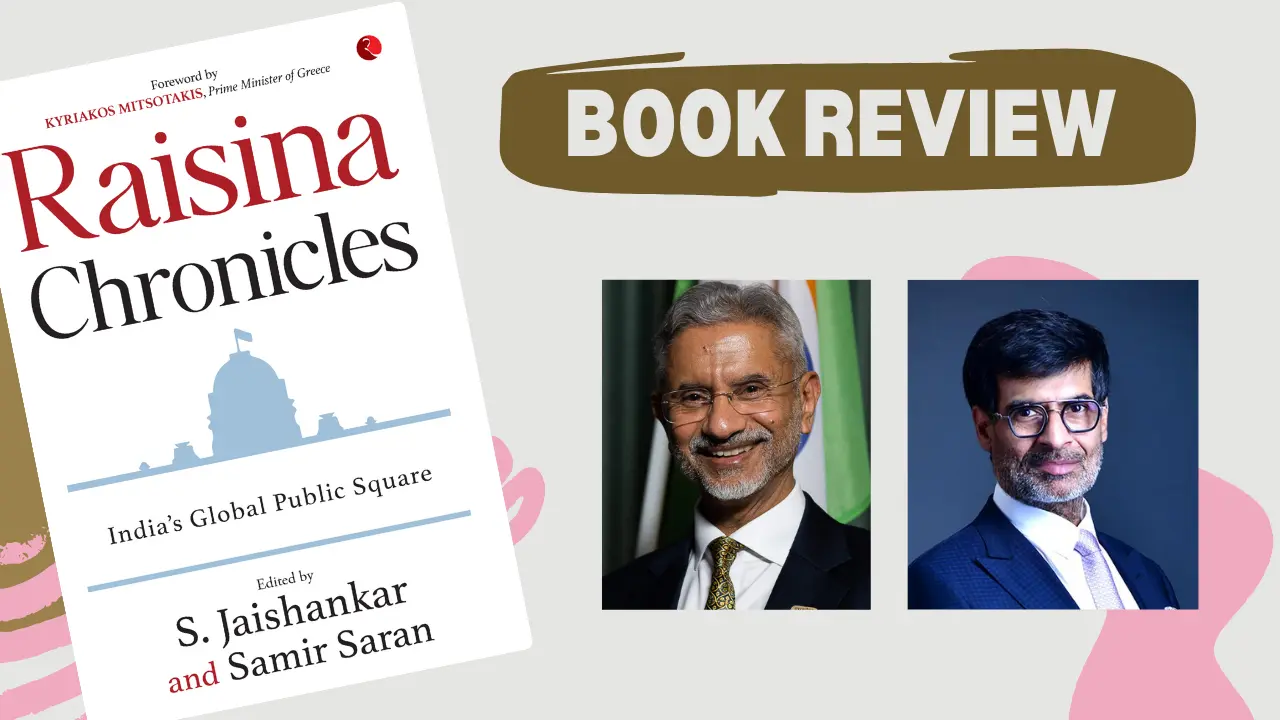
External Affairs Minister S Jaishankar and ORF President Samir Saran have edited Raisina Chronicles, a book marking the completion of 10 years of the Raisina Dialogue. It explains how the Raisina Dialogue is a medium for countries to discuss challenges facing them led by India.

The Raisina Dialogue’s message highlights India’s growing influence in the world. The book is a bird’s-eye view of geo-political events in the last decade and the views of world leaders on them. The book includes speeches given by world leaders during the Raisina Dialogue.

The first section describes the changes in the global system. This includes the speeches of PM Modi and UN Secretary General António Guterres. The second section explains how countries around the world have come together on some things. The third section dwells on new opportunities for Europe in the Indo-Pacific region. The fourth section discusses security around the world while the fifth explains how Covid-19 has given countries an opportunity to think anew. The sixth section outlines a new perspective on development. In the seventh and final section, it focuses on India’s role and the contribution of the Raisina Dialogue.

The book shares PM Narendra Modi’s view that in today’s time, listening is more important than speaking. Every idea should be heard, thus dialogue is the food of life.

Apart from communication between countries, the editors of the book clarify that its purpose is also to work on differences as the platform respects diversity in ideas. Leaders, business, media, journalists and people from civil society participate in the Raisina Dialogue.

Continue Reading

Book reviews

Walking On The Razor’s Edge: The path of the seeker

Published

on

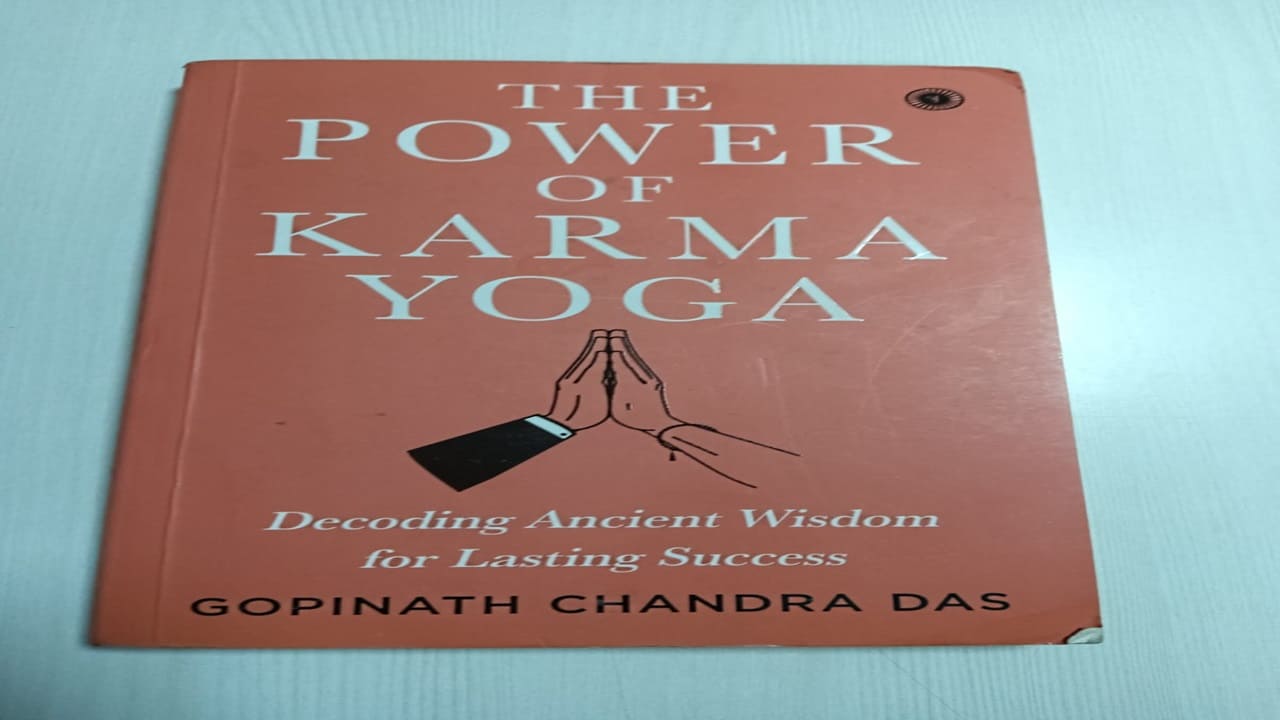
The Power of Karma Yoga by Gopi Chandra Das (Jaico Books) is an attempt to unravel the mystique of the Bhagavad Gita in the contemporary context. Is Lord Krishna’s counsel to Arjuna still relevant in today’s time and social space ? How can the timeless teachings of Lord Krishna be adopted by people struggling to cope with the stresses and challenges of modern life? Is there a key teaching which can be easily adopted by stress-torn people? These and many more questions are answered by the author in his easy-to-read style.

The basic premise is that the stress is a function of identity; identity with ego or with role-playing. We all play roles in life: in the family, the office and in the social sphere. These roles demand close identification and exact their cost by way of fear, frustration and failures.

The way out is to ease one’s sense of identity with one’s temporal roles. At the metaphysical level, it means keeping oneself in a detached state from one’s ego. This requires sustained spiritual discipline, but automatically yields to mental distancing with mundane roles as well. No wonder the Katha Upanishad compares the spiritual path to a razor’s edge.

Lord Krishna sought to instil this detached perspective in Arjuna by underlining the perishable nature of the body and the transitory nature of the world. However, the key is to strike a balance between total detachment and total attachment. The golden mean is attained by letting go with discrimination. If we detach too much, it will become difficult to perform our duties; if we cling too much, the material will become a millstone. The idea is to be in the world and yet not be of it. As the Persian saint Abu Said said, “To buy and sell and yet never forget God.”

Detachment, however, doesn’t mean irresponsibility. On the contrary, it means working with utter responsibility; with a sense that the job at hand is a moment to glorify the divine. It is not only work for work’s sake; work is taken up as a tool for self-realization. This is more deeply grasped if we acknowledge that the Gita is not only a handbook of divine knowledge or spiritualised action but essentially a guidepost for the man treading the path of enlightenment.

Sri Aurobindo says: “The Gita is not a weapon for dia­lectical warfare; it is a gate opening on the whole world of spiritual truth and experience, and the view it gives us embraces all the provinces of that supreme region. It maps out, but it does not cut up or build walls or hedges to confine our vision.”

Or as Paramahansa Yoganananda puts it: Gita sheds light on any point of life in which the devotee finds himself in.

Delving yet further, Gopinath explains in the book that letting go is made easy by the practice of apagriha, or being unattached to desires with conscious control on attachment-driven strivings. In the process, one’s motive gets transformed from want-driven to purpose-driven. The aim, at the highest level, being self-realization: the acme of spiritual strivings. For all material strivings ought to be in essence spititual strivings.

When we shift from want-driven to purpose-driven action, the need for personal validation ceases. In our quest for a spiritual-centric action mode, yagna plays an important role. The concept of yagna is transposed from a religious fire-rite to diurnal mundane acts in which personal motives are quenched. As the borderline between the spiritual and the material gets increasingly dissolved, the quest for enlightenment becomes the summum bonum of life.

The direction and blessings of a sadguru is also needed in this eternal quest for soul freedom. In the ultimate sense, the material life and its duties become a stepping stone for a higher life which man embraces to achieve the state of kaivalya. The book lucidly interweaves real-life stories with philosophical concepts, which make for interesting reading.

Continue Reading

Book reviews

The Sattvik Kitchen review: Relook at ancient food practices in modern times

If you are the one looking to embrace healthy food habits without compromising on modern delicacies, then this book is a must read!
Published

on

By

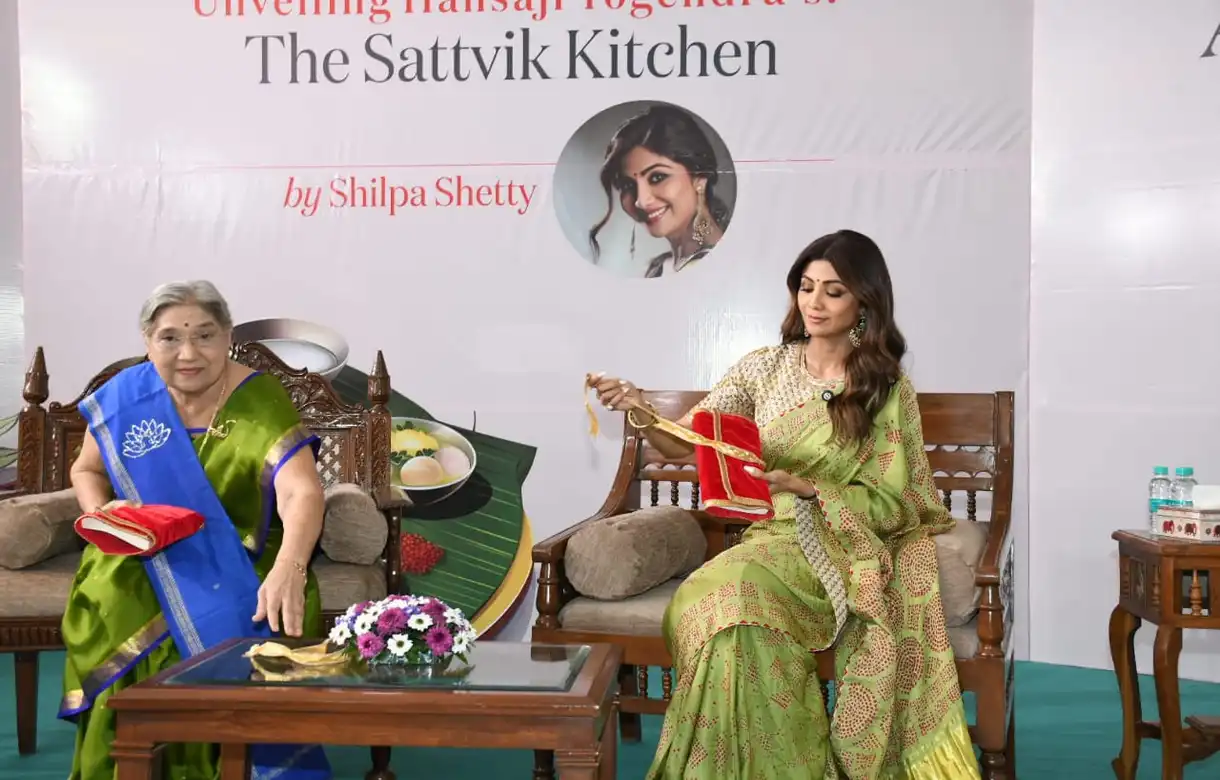
The cacophony of bizarre food combinations across the streets of India has almost taken over the concept of healthy food practices. Amid this, yoga guru Dr Hansaji Yogendra’s The Sattvik Kitchen, published by Rupa, is a forthright work that takes you back to ancient food practices and Ayurveda.

As the subtitle reads, The Art and Science of Healthy Living, the book endows a holistic approach to ayurvedic diet along with modern evidence based nutrition. From Basil-Broccoli Soup to Sprouted Green Gram Salad and Strawberry Oats Smoothie to Mixed Dal Parathas, the book not only provides you with the recipes but also stresses on healthy cooking tips together with nutritional benefits. 

Besides, Dr Hansaji Yogendra’s book emphasizes on the traditional methods of food preparation and the advantages of using traditional cookwares like iron and copper vessels. The narrative portrays a balanced approach, knitting traditional wisdom with contemporary scientific understanding.

The author, through her book, sheds light on the principles of Ayurveda and highlights the metamorphic potential of adopting ancient food practices. She explains how our body reacts to food in terms of timing, quantity, manner of consumption and seasonal considerations. The book adeptly reintroduces ancient home remedies tailored to address various contemporary health issues. 

Dr Yogendra, in her book, decodes the importance of nutritional knowledge to optimize both immediate and long-term health outcomes. It provides deep insights to understanding the intricate relationship between food choices and overall well-being, weaving Ayurveda with practical perception. 

The book not only celebrates food philosophy but also offers a practical view into weight loss, well-being, and the profound impact of dietary choices on both physical and emotional aspects of our lives.

If you are the one looking to embrace healthy food habits without compromising on modern delicacies, then this book is a must read! The book is a roadmap to navigate the challenges of the modern day kitchens. 

Continue Reading

Trending

© Copyright 2022 APNLIVE.com

Left Menu Icon