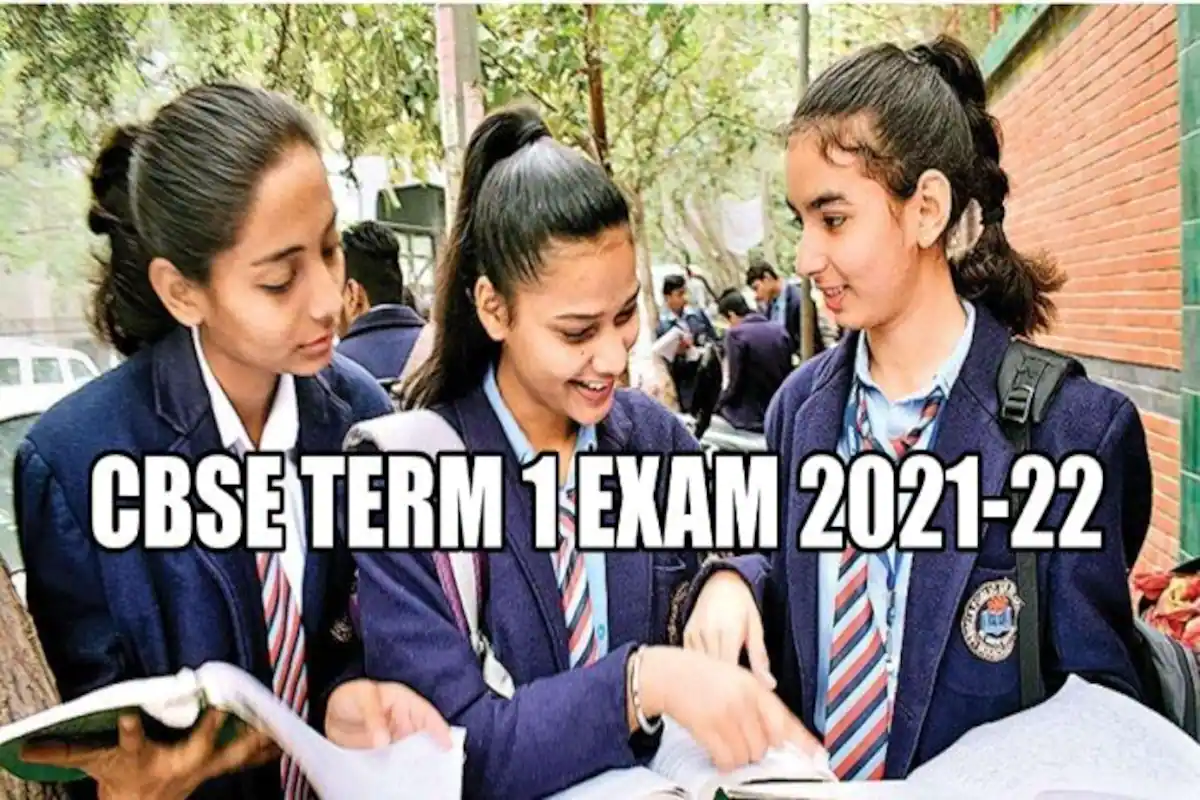
CBSE class 12th sociology term 1 board exam answer key, check here
Those who appeared for the examination want to know if their answer was correct or not. Well, if you are stressing about it then here is the answer key of the Sociology class 12th board exam.
Exams! The word which horrifies students the most. But what creates panic among students is discussing the question paper after coming out of the exam centre.
For the unversed, CBSE is conducting board exams term 1 for class 10th and class 12th students. Yesterday, CBSE conducted the first exam for class 12th which was Sociology from 11:30 am to 1 pm.
This year the format of board exams is different. The exams will be held in Multiple Choice Questions (MCQ) format. Those who appeared for the examination want to know if their answer was correct or not. Well, if you are stressing about it then here is the answer key of the Sociology class 12th exam.
1. The ways in which individuals may become cut off from full involvement in the wider society is known as
(a) Social Inclusion
(b) Social Inequality
(c) Social Exclusion
(d) Social Stratification
Answer: (c) Social Exclusion
2. What is Sex-Ratio?
(a) Number of females per thousand males
(b) Number of males per thousand females
(c) Number of females per hundred males
(d) The study of population growth
Answer: (a) Number of females per thousand males
3. A large proportion of children in a population is a result of
(a) High death rate
(b) High birth rate
(c) High life expectancy
(d) More married couples
Answer: (b) High birth rate
4. The proportion of person in different age group relative to the total population is known as
(a) Sex Ratio
(b) Age Structure
(c) Occupation Structure
(d) Age Composition
*Answer: (d) Age Composition
5. Which programme became a significant part of Congress agenda? (a) Anti caste programme (b) Anti untouchability (c) Regionalism (d) Communalism Answer: (b) Anti untouchability
6. Matrilocal and patrilocal type of family is based on (a) Authority (b) Power (c) Inheritance (d) Residence Answer: (d) Residence
7. When did the National Population Policy came into effect ? (a) 2001 (b) 1947 (c) 1952 (d) 2005
Answer: *
8. The pyramid for 2026 shows the estimated future size of the relevant age groups based on the past rates of growth of each age group. Such estimates are called (a) Age pyramid (b) Demographic dividend (c) Projections (d) Rate of natural increase Answer: (c) Projections
9. The live birth per one thousand person in one year in a particular area is known as (a) Death rate (b) Birth rate (c) Fertility rate (d) Infant mortality rate *Answer: (b) Birth rate
10. The hierarchical ordering of caste is based on the distinction between (a) Role and status (b) Religion and rituals (c) Norms and authority (d) Purity and pollution Answer: (d) Purity and pollution
11. The English word Casta is actually a borrowing from the (a) Greek word (b) Indian word (c) Portuguese word (d) None of the above Answer:* (c) Portuguese word
12. Theoretically the caste system can be understood as the combination of the two sets of principles :
(a) Differences and Separation
(b) Wholism and Hierarchy
(c) Both
(d) None of the above
Answer: (a) Differences and Separation
13. Which of the following is not a permanent trait of tribes in India
(a) Region
(b) Ecological habitat
(c) Mode of livelihood
(d) Language
14. Who was the founder of Satyashodak Samaj having its primary emphasis on truth seeking ?
(a) Raja Rammohan Roy
(b) Jyotiba Phule
(c) M.G. Ranade
(d) Dayanand Saraswati
Answer: (b) Jyotiba Phule
15. The preconceived opinion or attitudes held by members of one group towards another is known as
(a) Stereotype
(b) Social inequalities
(c) Prejudices
(d) Discrimination
Answer: (c) Prejudices
16. The ______ or tribes were believed to be people of the forest whose distinctive habitat in the hill and forest areas shaped their Economic, Social and Political attributes.
(a) Nairs
(b) Jana
(c) Dikus
(d) Khasis
Answer: (b) Jana
17. A system in which categories of people in a society are ranked in a
hierarchy.
(a) Caste
(b) Prejudices
(c) Discrimination
(d) Social stratification
Answer: (d) Social stratification
18. When religious identity overrides everything else it leads to
(a) Secularism
(b) Communalism
(c) Nation-state
(d) Diversity
Answer: (b) Communalism
19. Community Identity is based on (a) Birth (c) Class (b) Status (d) Acquired Qualification Answer: (a) Birth
20. A policy that promote aimed or encourage all citizens to adopt a uniform set of cultural values and norms is known as (a) Integrationist (b) Assimilation (c) Community Identity (d) None of the above Answer: (b) Assimilation
21. A Nation is a peculiar sort of community that is easy to __but hard to define. (a) understand (b) approach (c) define (d) describe Answer: (d) describe
19. Community Identity is based on (a) Birth (c) Class (b) Status (d) Acquired Qualification Answer: (a) Birth
20. A policy that promote aimed or encourage all citizens to adopt a uniform set of cultural values and norms is known as (a) Integrationist (b) Assimilation (c) Community Identity (d) None of the above Answer: (b) Assimilation
21. A Nation is a peculiar sort of community that is easy to __but hard to define. (a) understand (b) approach (c) define (d) describe Answer: (d) describe
22. Indian people had a brief experience of which rule during the emergency enforced between June 1975 and Jan. 1977? (a) Democratic (b) Authoritarian rule (c) Colonial (d) None of these Answer: (b) Authoritarian rule
23. The unprecedented scale and spread of anti-muslim violence in Gujarat in 2002 took place under which government? (a) Congress (b) BJP (c) Democratic (d) Republican Answer: (b) BJP
24. Which of the following statement is not true about disability? (a) People are always born with disability (b) The disabled are rendered disable because the society renders them to do. (c) There is a correlation between disability and poverty. (d) Public perception of disability is based on cultural conception. Answer: (d) Public perception of disability is based on cultural conception.
25. Stereotypes fix whole group into single ________ group. (a) Homogeneous (b) Heterogeneous (c) Broad (d) Diverse Answer: (a) Homogeneous
26. 1. According to Malthusian theory, supply of food grains increase geometric progression. 2. The population grows in arithmetic progression. Which is true? (a) 1 only (b) 2 only (c) Both 1 and 2 (d) None Answer: (d)
27. The rapid growth in _____ shows that town or city has been acting as a magnet for the rural population. (a) Modernization (b) Urbanization (c) Sanskritisation (d) Westernization Answer: (b) Urbanization
28. Which of the following helped to control epidemics in India over a period of time? (a) Improvement in communication (b) Decrease in death rate (c) Improvement in sanitation (d) Improvement in agricultural productivity Answer: (c) Improvement in sanitation
29. Who was the Chief Architect of the Indian Constitution? (a) Mahatma Gandhi (b) B.R. Ambedkar (c) J.L. Nehru (d) None of the above Answer: (b) B.R. Ambedkar
30. Assertion (A): The inequalities in the literacy rate are especially important because they tend to reproduce inequality across generations. Reason (R) : Literacy rate also vary by social group. Historically disadvantaged communities like the scheduled castes and scheduled tribes have a lower rate of literacy. (a) Both (A) and (R) are true and (R) is the correct explanation of (A). (b) Both (A) and (R) are true but (R) is not the correct explanation of (A). (c) Both (A) and (R) are false. (d) (A) is false but (R) is true. Answer:* (a)
31. The watchwords One Caste One Religion One God for all men were given by (a) Jyotirao Govindrao Phule (b) Ayyankali (c) Savitri Bai Phule (d) Sri Narayana Guru Answer: (d) Sri Narayana Guru
32. What does Amartya Sen mean by failure of entitlements? (a) The inability of people to buy or otherwise to obtain food (b) Famines (c) Vulnerability to variations in rainfall (a) Lack of adequate means of transport and communication Answer: (a) The inability of people to buy or otherwise to obtain food
33. When the difference between Birth rate and the Death rate is zero we say that the population has stabilized or has reached the (a) stabilization level (b) highest level (c) replacement level (d) highest point Answer: (c) replacement level
34. The 93rd Amendment Act has introduced the reservation for the institution in higher education for which group? (a) Scheduled Castes (b) Scheduled Tribes (c) OBC (d) Disabled Group Answer: (c) OBC
35. Assertion (A): Matriarchy unlike Patriarchy has been a theoretical rather than an empirical concept. Reason (R): There is no Historical or Anthropological evidence of matriarchy i.e. societies where women exercises dominance. (a) Both (A) and (R) are true and (R) is the correct explanation of (A). (b) Both (A) and (R) are true but (R) is not the correct explanation of (A). (c) Both (A) and (R) are false. (d) (A) is true but (R) is false. Answer: (a)
36. In regions where the non-Sanskritic castes were dominant, it was their influence that was stronger. Identify the most appropriate concept to refer this. (a) Sanskritisation (b) Westernisation (c) De-Sanskritisation (d) Modernisation Answer: (c) De-Sanskritisation
37. Out of the total tribal population how much percentage of the tribal population lives in middle India? (a) 85% (b) 11% (c) 58% (d) 74% Answer: (a) 85%
38. Which of the following is not a correct statement about the term Jati? (a) It is a local classification that varies from region to region. (b) It has a segmental organisation. (c) Membership of Jati involves rules about food and food sharing. (d) It is an all India aggregative classification. Answer: (d) It is an all India aggregative classification.
39. What are the laws that allow citizens of a particular state to simultaneously be the citizen of another state? (a) Cross border citizenship laws (b) Multiple citizenship laws (c) Dual citizenship (d) None Answer: (c) Dual citizenship
40. Assertion (A) : In Indian Nationalism, the dominant trend was marked by an inclusive and democratic vision. Reason (R) : It was democratic because it recognised Diversity and Plurality. (a) Both (A) and (R) are true and R is the correct explanation of (A). (b) Both (A) and (R) are true and (R) is not the correct explanation of (A). (c) (A) is true and (R) is false. (d) (A) is false and (R) is true. Answer: (b) Both (A) and (R) are true and (R) is not the correct explanation of (A).
41. Which of the following does not stand for secularism? (a) Separation of State and Church (b) Not favouring a particular Religion. (c) Religion identity overriding everything else. (d) Progressive retreat of religion from public life. Answer:* (c) Religion identity overriding everything else.
42. Which of the following is the major issue that challenges the diversity of India ? (a) Regionalism (b) Communalism (c) Casteism (d) All of these Answer: (d) All of these
43. Everyone has a motherland, a mother tongue, a family and a faith. This signifies an important feature of community identity, that is (a) Achieved (b) Conditional (c) Localised (d) Universal
44. Assertion (A): There is a close relationship between disability poverty. Reasoning (R): Malnutrition mothers weakened by frequent childbirth, inadequate immunisation programmes, accidents in overcrowded homes, all contribute to an incidence of disability among poor people that is higher (a) Both (A) and (R) are true and (R) is the correct explanation of (A). (b) Both (A) and (R) are true and (R) is not the correct explanation of (A). (c) Both (A) and (R) are false. (d) (A) is true and (R) is false. Answer: (a) Both (A) and (R) are true and (R) is the correct explanation of (A).
45. Asset and Income is a form of which type of capital? (a) Social capital (b) Cultural capital (c) Economic capital (d) General capital Answer: (c) Economic capital
46. What is Social about Social Inequality? (a) They are Social because they are not about individuals but about groups. (b) They are Social in the sense because they are not about Economics. (c) They are systematic and structured. (d) All of the above Answer: (d) All of the above
47. Among the following who wrote famous book Vedic Authorities for Widow Marriage ? (a) M.G. Ranade (b) Jyotiba Phule (c) Annie Besant (d) Raja Rammohan Roy Answer: (a) M.G. Ranade
48. Who said Backward Hindus to the Tribal Communities among the following? (a) M.N. Srinivas (b) G.S. Ghurye (c) A.R. Desai (d) D.P. Mukherjee Answer: (b) G.S. Ghurye
Read the given passage and answer question nos 49, 50 and 51. Tribe is a modern term for Communities that are very old, the oldest inhabitants of the subcontinent. Tribes in India have generally been defined in terms of what they were not. Tribes were communities that did not practice a religion with a written text, did not have a state or political form of the normal kind, did not have sharp class division, and most importantly, they did not have caste and were neither hindus nor peasants. The term was introduced in the colonial era. In terms of positive characteristics, tribes have been classified according to their permanent and acquired traits. 49. If we look at the share of tribals in the state population, then the North Eastern States have the highest concentration with all states except__having concentration of more than 30%. (a) Nagaland (b) Meghalaya (c) Assam (d) Arunachal Pradesh Answer: (c) Assam
50. Which of the following is not a Physical racial criterion for defining the tribes in India? (a) Austric (b) Aryan (c) Dravidian (d) Negrito Answer: (a) Austric
51. According to Census Report 2011, it is _____of the population of India, or about 104 million tribal persons in the country. (a) 8.2% (b) 8.6% (c) 11% (d) 15% Answer: (b) 8.6%
Read the following passage and answer Q. No. 52, 53, 54: What is the matter dear? She said affectionately “I feel somewhat awkward” I said in a rather apologising tone “as being a pardanashin woman I am not accustomed to walking about unveiled” “You need not be afraid of coming across a man here. This is lady land, free from sin and harm.” I became very curious to know where the men were. I met more than a hundred women while walking there but not a single man. Where are the men? I asked her. In their proper places, where they ought to be. Pray let me know what you mean by their proper places.” Oh I see my mistake you cannot know our customs, as you were never here before. We shot our men indoors” “Just as we are kept in the zenana ? Exactly so.” “How funny!” I burst into a laugh. Sister Sara laughed too.
52. Identify the author of the passage. (a) Stree Purush Tulana (b) Sultana’s dream (c) Kabir Das on Cultural Diversity (d) Three Sermons on Human
53. The above passage is a (a) Novel (b) Poetry (c) Short story (d) Film
54. In which year the Sultana’s dream published ? (a) 1805 (b) 1905 (c) 1925 (d) 1945
Read the following passage and answer questions 55, 56 and 57. The notion of minority group is widely used in Sociology and is more than a merely numerical distinction – it usually involves some sense of relative disadvantage. Thus privileged minorities such as extremely wealthy people are not referred to as minorities. If they are, the term is qualified in some way as in the Phrase Privileged minority. When minority is used without qualification it implies a relatively small but also disadvantaged group. The Sociological sense of minority also implies that the members of the minority form a collectivity that is they have a strong sense of group solidarity, a feeling of togetherness.
55. _________________ such as extremely wealthy people are not referred to as minorities. (a) Religious minorities (b) Numerical minorities (c) Linguistic minorities (d) Privileged minorities Answer: (d) Privileged minorities
56. Statistical minorities are not minorities in the Sociological sense because they do not form a (a) Collectivity (b) Identity (c) Group (d) Society Answer: (a) Collectivity
57. When minority is used without qualification, it generally implies a relatively small but also _____ group. (a) advantaged (b) disadvantaged (c) privileged (d) diverse Answer: (b) disadvantaged
Read the following passage and answer Q. 58, 59 and 60. The demographic dividend results from an increase in the proportion of workers relative to non-workers in the population. In terms of age, the working population is roughly between 15 and 64 years of age. The working age group must support itself as well as those outside this age group (i.e. Children and elderly people) who are unable to work and are therefore dependents. Changes in this age structure due to demographic transition lower the dependency ratio, or the ratio of non-working age to working age population, thus creating the potential for generating growth.
58. What is the demographic dividend ? (a) More dependents exist in a country (b) Proportion of workers is more than that of non-workers. (c) Old Age population is more (d) None of them Answer: (b) Proportion of workers is more than that of non-workers.
59. Who are dependents ? (a) Children who are too young to earn (b) Adults who are unemployed (c) Aged population above 65 years (d) Proportion of children below 14 years and aged population (64 years and above) Answer: (c) Aged population above 65 years
60. What is Economically advantageous to our country? (a) High dependency ratio (b) Low death rate (c) Low falling dependency ratio (d) All of them Answer: (c) Low falling dependency ratio
The CBSE Class 12 Sociology answer key provided here is only for reference and is not final. Following the announcement of the results, the board is scheduled to release the official CBSE Class 10 Sociology answer key.
The answers to this paper have been carefully compiled. However, there may be some queries and answers related to specific concerns (for example: where more than one option is correct, no option is correct etc). Before coming to a final decision, students should discuss the matter with their CBSE school teachers.
MCC announces NEET UG Counselling 2026 dates, check complete schedule
The Medical Counselling Committee has released the NEET UG Counselling 2026 schedule. Round 1 registration will begin on August 5, followed by four counselling phases, including the Online Stray Vacancy Round.
The Medical Counselling Committee (MCC) has released the complete counselling schedule for NEET UG 2026 admissions under the 15% All India Quota (AIQ) and 100% seats of Deemed Universities, Central Universities, AIIMS, and JIPMER institutions for the 2026-27 academic session.
The counselling process covers admissions to MBBS, BDS and BSc Nursing courses. According to the official schedule, the Round 1 registration process will begin on August 5, while verification of the tentative seat matrix by participating institutes will be completed on August 4.
Round 1 counselling schedule
Registration and fee payment for Round 1 will be available from August 5 to August 12 until 3 pm. Candidates can complete the payment process up to 6 pm on August 12.
Choice filling will begin on August 6 and continue until August 13, with the window closing at 11 am on August 13. Choice locking will be available from 4 pm on August 12 until 11 am on August 13.
The seat allotment process will be conducted between August 13 and August 16, while the Round 1 result will be announced on August 17. Candidates allotted seats must report to their respective institutes between August 18 and August 22. Institutes will verify the details of joined candidates on August 23.
Round 2 counselling dates
Verification of the tentative seat matrix for Round 2 will be conducted on August 24.
Registration and fee payment will be open from August 25 to August 29 until 3 pm, with payment accepted until 6 pm on August 29. Candidates can fill their choices from August 25 to August 30, while the choice-locking facility will remain available between 4 pm and 11 pm on August 30.
Seat allotment will take place from August 31 to September 1, and the results will be declared on September 2. Candidates can report and join their allotted institutes between September 3 and September 8, while institute verification of joined candidates will be carried out on September 9.
Round 3 schedule
For Round 3, verification of the tentative seat matrix is scheduled for September 10.
Registration and fee payment will remain open from September 11 to September 15 until 3 pm, while the payment window will close at 6 pm on September 15. Choice filling will continue from September 11 to September 16, with choice locking available from 4 pm on September 15 until 11 am on September 16.
The seat allotment process will be conducted between September 16 and September 17, and the results will be announced on September 18. Candidates allotted seats can report to their institutes from September 19 to September 26. Verification of joined candidates by institutes will take place on September 27.
Online stray vacancy round
The Online Stray Vacancy Round will begin with verification of the tentative seat matrix on September 27.
Registration and fee payment will be conducted from September 28 to September 30 until 3 pm, while payments can be completed until 6 pm on September 30. Choice filling will also be available during the same period, with choice locking scheduled between 4 pm and 11 pm on September 30.
The seat allotment process will be held on October 1 and October 2, and the result will be declared on October 3. Candidates allotted seats must report to their respective institutes between October 4 and October 10.
The MCC has also instructed all participating institutes and colleges to treat Saturdays, Sundays and gazetted holidays as working days to ensure that the counselling process is completed within the prescribed timeline.
Indian Army Agniveer CEE Result 2026 declared, ARO-wise merit list released
The Indian Army has announced the Agniveer CEE Result 2026. Candidates can now download the ARO-wise merit list and check their eligibility for the next stages of recruitment.
The Indian Army has announced the Agniveer Common Entrance Examination (CEE) Result 2026, allowing candidates to check their qualifying status through the official recruitment portal. The Army Recruitment Office (ARO)-wise merit lists have been uploaded on joinindianarmy.nic.in, where candidates can download the PDF corresponding to their recruitment region.
The merit lists contain the names and roll numbers of candidates who have successfully cleared the written examination and become eligible for the next phase of the Agniveer recruitment process.
How to check Indian Army Agniveer CEE Result 2026
Candidates can access their results by following these steps:
Visit the official Indian Army recruitment website.
Click on the Agniveer CEE Result 2026 link available on the homepage.
Select the relevant Army Recruitment Office (ARO) or recruitment region.
Download the merit list PDF.
Search for your roll number or name to confirm your qualification status.
What happens after the Agniveer CEE result?
Candidates shortlisted in the Common Entrance Examination will now have to undergo the remaining stages of the recruitment process. These include:
Physical Fitness Test (PFT)
Physical Measurement Test (PMT)
Document Verification (DV)
Medical Examination
Only candidates who successfully clear every stage will be considered for final selection under the Agniveer recruitment programme.
Candidates advised to verify details carefully
After downloading the merit list, candidates should carefully check all the information mentioned in the document. If they notice any discrepancy related to their result or personal details, they should immediately contact their respective Army Recruitment Office (ARO) for assistance.
Candidates are also advised to keep checking the official Indian Army recruitment portal for updates regarding the schedule, venue and instructions for the upcoming physical tests, document verification and medical examination.
Board exam marks may get 50% weightage in NEET, JEE admissions under proposed reforms
The Centre is considering giving 50% weightage to board exam marks in admissions based on NEET and JEE. The proposal is part of broader education reforms aimed at reducing exam stress and improving fairness in the admission process.
Board examination marks could soon carry greater significance in admissions to medical and engineering courses, with the Centre reportedly considering a proposal to assign 50% weightage to board scores alongside entrance examinations such as NEET and JEE.
The proposal is part of a broader set of education reforms aimed at reducing the pressure associated with high-stakes examinations and making the admission process more balanced.
According to sources, the proposal is being examined by the Ministry of Education’s nine-member committee that was constituted last year. The panel was tasked with studying students’ growing dependence on coaching institutes, the rise of “dummy schools”, and concerns over fairness in major entrance examinations.
The committee is exploring several measures to improve the existing admission system while reducing the emphasis on a single examination.
Why the reforms are being considered
The discussions come in the wake of multiple controversies involving the examination system, including reported evaluation errors and paper leak incidents. These developments have sparked a wider debate over the credibility and reliability of high-stakes entrance examinations.
To address these concerns, the committee is considering giving 50% weightage to board examination marks in the admission merit process.
Other changes under consideration
Apart from increasing the role of board examination scores, the panel is also examining several other reforms.
These include aligning entrance examinations more closely with school syllabi to reduce students’ dependence on coaching centres, allowing multiple attempts for entrance tests, and gradually introducing adaptive, on-demand computer-based examinations.
Current admission process
At present, admissions to medical and engineering programmes are primarily based on candidates’ performance in entrance examinations such as NEET and JEE. Students are also required to secure the prescribed qualifying marks in their board examinations to become eligible for these entrance tests.
The proposed reforms are currently under consideration, and no final decision has been announced.
APN News is today the most watched and the most credible and respected news channel in India. APN has been at the forefront of every single news revolution. The channel is being recognized for its in-depth, analytical reportage and hard hitting discussions on burning issues; without any bias or vested interests.