
Gadgets
Surge in strong earthquakes likely in 2018 as Earth’s rotation slows down


[vc_row][vc_column][vc_column_text]The slowing down of Earth’s rotational speed over last four years can cause a surge in deadly earthquakes in 2018, says a study.
The study, a paper presentation at the annual meeting of the Geological Society of America, links this rise to the periodic slowdown of Earth’s speed of rotation around its axis.
The two principal researchers on the project, Roger Bildham of the Univerity of Colorado and Rebecca Bendick of the University of Montana argue that the correlation is “intense” between this slowdown and an increase in earthquakes.
What is more, these intense earthquakes are more likely to occur in the more heavily populated tropical regions closer to the equator.
They analyzed earthquakes that were above magnitude 7 on the moment magnitude scale (see box) that have happened since 1990. They found that approximately every 32 years, there is a rise in frequency of severe earthquakes – at about 25 to 30 per year in some years – compared to the average of around 15 or so in other years.
The only factor that strongly correlates is a slight slowing of the Earth’s rotation in a five-year period before the uptick.
Although such fluctuations in rotation are small – changing the length of the day by a millisecond – they could still be implicated in the release of vast amounts of underground energy, it is argued.
It shows that when the Earth’s rotation slows somewhat, it gives a five-year warning for future earthquakes, and it has been four years since Earth started a slowing cycle.
“The correlation between Earth’s rotation and earthquake activity is strong and suggests there is going to be an increase in numbers of intense earthquakes next year,” Bilham said.[/vc_column_text][/vc_column][/vc_row][vc_row css=”.vc_custom_1511174491735{margin-bottom: 20px !important;border-bottom-width: 20px !important;padding-top: 20px !important;padding-bottom: 20px !important;background-color: #a2b1bf !important;}”][vc_column][vc_column_text]
Moment magnitude vs Richter scale
The Richter scale uses the amplitude of a waveform recorded with a Wood-Anderson seismograph at a known distance from the source to calculate the strength of an event. Unfortunately, the Richter scale and many other magnitude scales which have been proposed have some drawbacks. For one, the Richter scale is capped at a magnitude of 7.0, meaning that all larger earthquakes would always have a magnitude of 7.0 or less. Also, the Richter scale only describes the maximum wave amplitude, and does not give any indication of the total energy that is released by the event.
Moment magnitude (Mw) was introduced in 1979 by Hanks and Kanamori and has since become the most commonly used method of describing the size of a microseism. Moment magnitude measures the size of events in terms of how much energy is released. Specifically, moment magnitude relates to the amount of movement by rock (i.e. the distance of movement along a fault or fracture) and the area of the fault or fracture surface. Since moment magnitude can describe something physical about the event, calculated values can be easily compared to magnitude values for other events. The moment magnitude is also a more accurate scale for describing the size of events.
The moment magnitude uses seismograms plus what physically occurs during an earthquake (which can also be derived from seismograms), known as the “seismic moment”. The seismic moment defines how much force is needed to generate the recorded waves. That information is plugged into the moment magnitude scale to give us the amount of energy that is released during an earthquake.
Based on their magnitude, quakes are assigned to a class, according to the U.S. Geological Survey. Because of the logarithmic basis of the scale, each whole number increase in magnitude represents a tenfold increase in measured amplitude: an increase in one number, say from 5.5 to 6.5, means that a quake’s magnitude is 10 times as great. As an estimate of energy, each whole number step in the magnitude scale corresponds to the release of about 31 times more energy than the amount associated with the preceding whole number value.
The classes are as follows:
Great: Magnitude is greater than or equal to 8.0. A magnitude-8.0 earthquake is capable of tremendous damage.
Major: Magnitude in the rage of 7.0 to 7.9. A magnitude-7.0 earthquake is a major earthquake that is capable of widespread, heavy damage.
Strong: Magnitude in the rage of 6.0 to 6.9. A magnitude-6.0 quake can cause severe damage.
Moderate: Magnitude in the rage of 5.0 to 5.9. A magnitude-5.0 quake can cause considerable damage.
Light: Magnitude in the rage of 4.0 to 4.9. A magnitude-4.0 quake is capable of moderate damage.
Minor: Magnitude in the rage of 3.0 to 3.9.
Micro: Magnitude less than-3.0. Quakes between 2.5 and 3.0 are the smallest generally felt by people.[/vc_column_text][/vc_column][/vc_row][vc_row][vc_column][vc_column_text]In their study, Bilham and Bendick looked at earthquakes of magnitude 7 and greater that had occurred since 1900. They found five periods when there had been significantly higher numbers of large earthquakes compared with other times. “In these periods, there were between 25 to 30 intense earthquakes a year,” said Bilham. “The rest of the time the average figure was around 15 major earthquakes a year.”
The researchers searched to find correlations between these periods of intense seismic activity and other factors and discovered that when Earth’s rotation decreased slightly it was followed by periods of increased numbers of intense earthquakes.
Bilham and Bendick found that there had been periods of around five years when Earth’s rotation slowed by such an amount several times over the past century and a half. Crucially, these periods were followed by periods when the numbers of intense earthquakes increased.
The Earth’s rotation has been slowing down for the past four years.
“The inference is clear,” said Bilham. “Next year we should see a significant increase in numbers of severe earthquakes. We have had it easy this year. So far we have only had about six severe earthquakes. We could easily have 20 a year starting in 2018.”
“It is straightforward,” said Bilham. “The Earth is offering us a five-year heads-up on future earthquakes.”
The Earth’s rotation is known to go through regular decades-long periods in which it slows down and speeds up. Even seasonal changes, like a strong El Niño, can affect the planet’s rotation.
Exactly why decreases in day length should be linked to earthquakes is unclear although scientists suspect that slight changes in the behaviour of Earth’s core could be causing both effects.
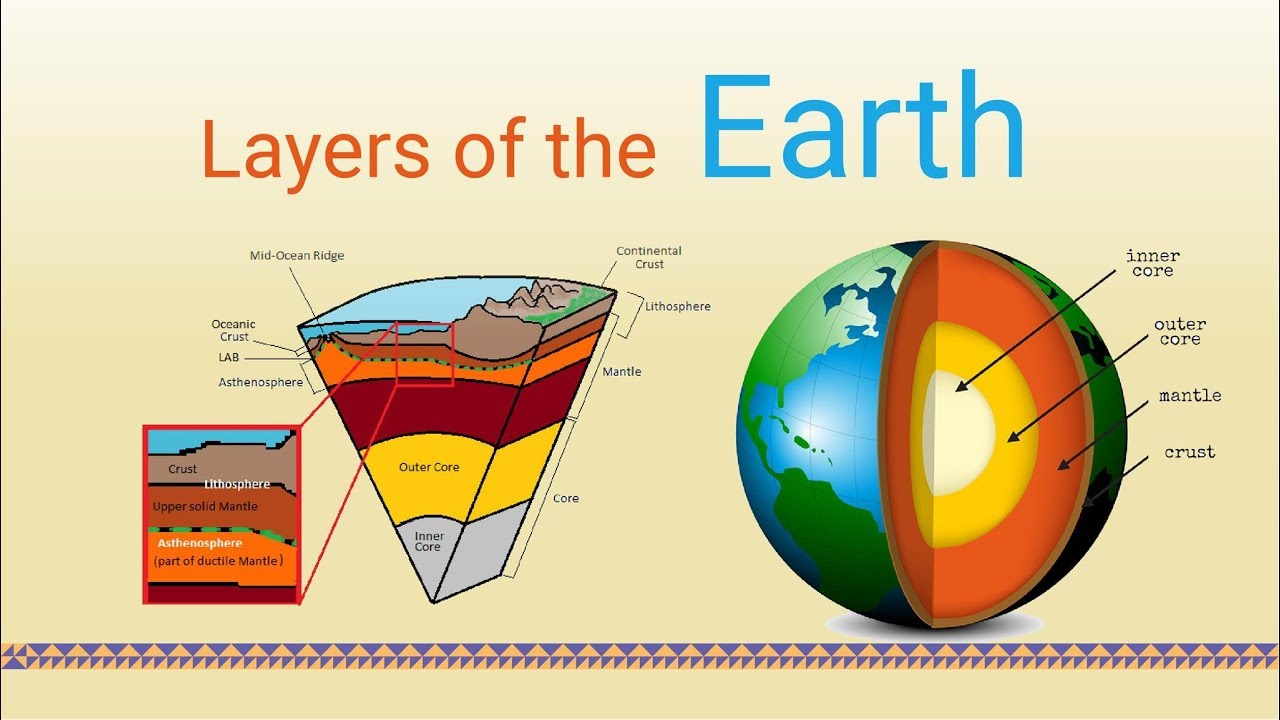
The planet is made of a solid iron and nickel “inner core,” liquid iron and nickel “outer core,” a thick liquid mantle, and finally a thin solid crust. Earthquakes occur on the crust, but the crust floats on the mantle.
Though Bilham and Bendick don’t know for sure, they believe that every so often the Earth’s mantle might stick a little more to the crust. That could change how the liquid outer core flows. And because it’s all metal down there, the change in flow will affect planet’s magnetic field, which would ever so slightly affect the Earth’s rotation and thus change the length of the day by milliseconds.
It is difficult to predict where these extra earthquakes will occur – although Bilham said they found that most of the intense earthquakes that responded to changes in day length seemed to occur near the equator. About one billion people live in the Earth’s tropical regions.[/vc_column_text][/vc_column][/vc_row]








Gadgets
OnePlus India CEO Robin Liu steps down, shutdown rumours resurface
OnePlus India confirms business continuity after CEO Robin Liu’s resignation sparks shutdown rumours online.


Gadgets
Oppo K14 5G launched in India with 7000mAh battery, starts at Rs 17,999
Oppo has launched the K14 5G in India with a 7000mAh battery, fast charging and durability features, starting at Rs 17,999.

Gadgets
OnePlus Freedom Sale 2026 brings discounts on 15, 15R, 13, Nord 5 and tablets
OnePlus Freedom Sale 2026 begins Jan 16 with discounts on phones, tablets, and audio products across online and offline stores.



India-US trade deal first phase finalised, drafting underway

Election Commission orders voter roll revision in 17 states, UTs

Delhi Police offers 11-person limit for CJP’s Connaught Place protest

Actor Imran Khan asked to leave India after CJP protest

Mallikarjun Kharge’s ‘Your Friends’ jab at Rahul Gandhi over congress exits

Magnitude 7 earthquake strikes Russia’s Kamchatka Peninsula

Delhi deploys 25,000 personnel, installs CCTV cameras ahead of CJP march
Mallikarjun Kharge’s ‘Your Friends’ jab at Rahul Gandhi over congress exits
Delhi Police offers 11-person limit for CJP’s Connaught Place protest
Actor Imran Khan asked to leave India after CJP protest

Afghan Men Try To Hang With The Jet Engine Of The Aircraft in Kabul- Afghanistan News – Kabul News
Trending Top 10 News: 10000 Crore Fine on Flipkart, Apple to Launch Unique Feature, Hdfc Bank Job Ad

Trending Top 10 News: Nokia 6310, Apple sales, Bachpan ka Pyar Video Kid, Dainik Bhaskar IT Raid

Trending Top 10 News: Canada bans Indian flights, Rain in Delhi NCR, AIMIM Twitter hacked, Raj Kundra case

Trending Top 10 News: Shein India, Apple New Service, Pocket Oxygen, Oppo Launched New Phone
-
 India News24 hours ago
India-US trade deal first phase finalised, drafting underway
-
 India News21 hours ago
Election Commission orders voter roll revision in 17 states, UTs
-
 India News20 hours ago
Delhi Police offers 11-person limit for CJP’s Connaught Place protest
-
 India News21 hours ago
Actor Imran Khan asked to leave India after CJP protest
-
 India News8 hours ago
Mallikarjun Kharge’s ‘Your Friends’ jab at Rahul Gandhi over congress exits
-
 India News8 hours ago
Delhi deploys 25,000 personnel, installs CCTV cameras ahead of CJP march
-
 Latest world news8 hours ago
Magnitude 7 earthquake strikes Russia’s Kamchatka Peninsula
