
India News
Air India flight hits Trichi airport wall on takeoff, lands at Mumbai; all 136 passengers safe


An Air India flight with 136 passengers on board hit the perimeter wall at Trichy international airport during take-off early on Thursday and had to be diverted to Mumbai.
Air India flight IX-611 took off from the Trichy airport around 1:20 am for Dubai, hit the ATC compound wall at Trichy Airport and was damaged. The flight, however, continued its journey despite damage to the aircraft with the pilots apparently unaware of the incident. No passenger suffered any injury.
An airline statement said that pilots were informed about the aircraft hitting the wall only after they were airborne, who responded that the aircraft systems were operating normally. The crew, however, decided to divert the Boeing 737 aircraft to Mumbai where it landed at 5:20 am, said media reports.
It was later declared fit for operations after inspection at Mumbai airport.
Two of the aircraft wheels hit the airport perimeter wall, which collapsed on impact, said an NDTV report quoting officials.
Later officials found that the plane’s body had tears, cracks and dents that were potentially very dangerous. Broken parts of the plane’s antenna were found on the ground at the Trichy airport, an officer said.
“They scraped the underbelly, had it been a bit lower, that would have been the end,” according to a pilot quoted by NDTV. The pilot quoted was not from the flight.

In a statement released by Air India, the airline said, “After flight IX 611 from Trichy to Dubai had taken off from Trichy at about 1.30 am today, it was reported by local airport officials at Trichy that they have observed that the aircraft might have come in contact with the airport perimeter wall. The matter was conveyed to the pilot in command. The pilot in command reported that the aircraft systems were operating normally.”
“It was decided to divert the aircraft to Mumbai as a precautionary measure. The flight was diverted to Mumbai and it landed safely at about 5.35 am in Mumbai and taxied on its own power to the parking stand. All 130 passengers and six crew members on board the aircraft were alighted safely. No one suffered any injuries,” it added.
The airline also said that refreshments were served to the passengers at the Mumbai airport following which another aircraft was arranged to continue the flight to Dubai with a fresh team of crew.
“The pilot in command was Capt. D. Ganesh Babu who has a flying experience on the B 737 aircraft of 3600 hours including about 500 hours as Commander. The First Officer was Capt. Anurag who has an experience of about 3,000 hours on the B 737. The two pilots have been de-rostered pending investigation. The matter has been duly reported to the DGCA and the airline is fully cooperating with the investigation,” the airline said.
Minister of Civil Aviation Suresh Prabhu has ordered an inquiry into the incident. Both the pilot and co-pilot have been de-rostered pending investigation.
Taking to Twitter, Union Minister Suresh Prabhu said he has spoken to the secretary and other senior officials of the civil aviation department and has ordered a high-level inquiry into the incident. “Air India has constituted a sub-committee and is looking into all safety-related issues within the organisation, including subsidiaries,” he said.
“Directorate general of civil aviation officers are present at the site for preliminary inquiry and officers from the Aircraft Accident Investigation Bureau have also been deputed into the case,” he added.




India News
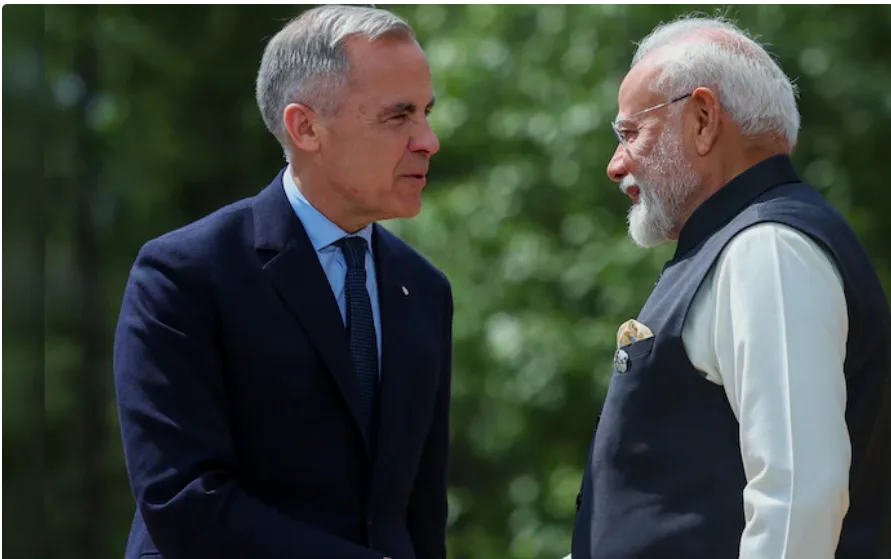
PM Modi speaks to Mark Carney as India and Canada push to strengthen ties
Prime Minister Narendra Modi held a telephone conversation with Canadian Prime Minister Mark Carney on October 13, with both leaders agreeing to strengthen India-Canada ties and pursue concrete outcomes across key areas of their strategic partnership.

India News
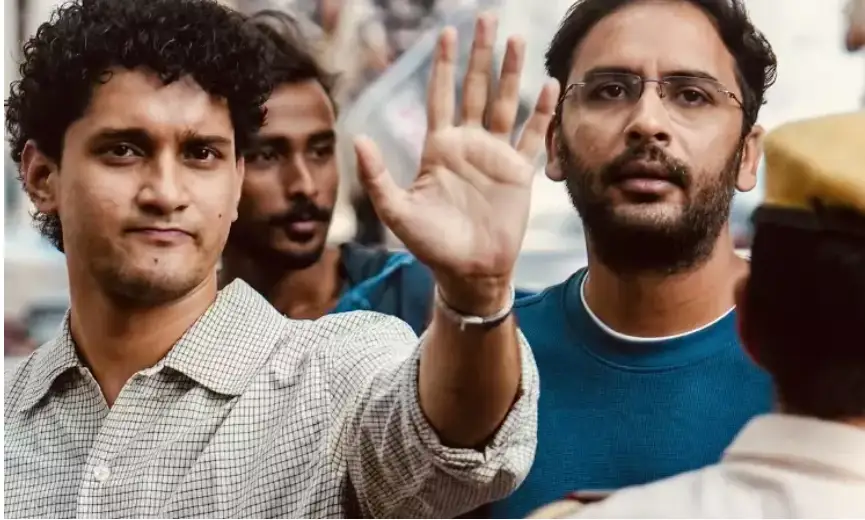
CJP leaders Saurav Das, Ashutosh Ranka, Ajinkya Shinde sent to 5-day judicial custody
Three CJP leaders, Saurav Das, Ashutosh Ranka and Ajinkya Shinde, were placed under preventive arrest following a protest at Delhi’s Jantar Mantar over Chief Election Commissioner Gyanesh Kumar.
India News
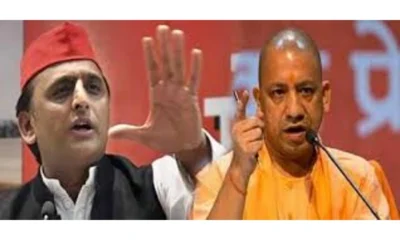
BJP focuses on religion as opposition pushes BDM strategy in UP
The BJP is emphasising religious issues ahead of the Uttar Pradesh Assembly elections, while opposition parties are seeking to consolidate Backward, Dalit and Minority voters. Recent exchanges involving Yogi Adityanath, Akhilesh Yadav and Asaduddin Owaisi have added to the political contest over the state’s electoral narrative.


Rahul Gandhi hosts high tea for INDIA bloc after Gyanesh Kumar protests

L Murugan quits Union ministry to strengthen BJP in Tamil Nadu

Amit Shah attacks Rahul Gandhi over Congress poll losses, questions SIR row

BJP focuses on religion as opposition pushes BDM strategy in UP

CJP leaders Saurav Das, Ashutosh Ranka, Ajinkya Shinde sent to 5-day judicial custody

PM Modi speaks to Mark Carney as India and Canada push to strengthen ties

S Jaishankar says India is a natural option for Russia amid Europe tensions
CJP leaders Saurav Das, Ashutosh Ranka, Ajinkya Shinde sent to 5-day judicial custody
BJP focuses on religion as opposition pushes BDM strategy in UP
L Murugan quits Union ministry to strengthen BJP in Tamil Nadu

Afghan Men Try To Hang With The Jet Engine Of The Aircraft in Kabul- Afghanistan News – Kabul News
Trending Top 10 News: 10000 Crore Fine on Flipkart, Apple to Launch Unique Feature, Hdfc Bank Job Ad

Trending Top 10 News: Nokia 6310, Apple sales, Bachpan ka Pyar Video Kid, Dainik Bhaskar IT Raid

Trending Top 10 News: Canada bans Indian flights, Rain in Delhi NCR, AIMIM Twitter hacked, Raj Kundra case

Trending Top 10 News: Shein India, Apple New Service, Pocket Oxygen, Oppo Launched New Phone
-
 India News17 hours ago
Rahul Gandhi hosts high tea for INDIA bloc after Gyanesh Kumar protests
-
 India News16 hours ago
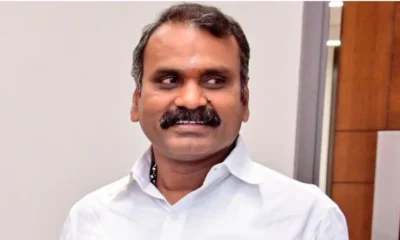
L Murugan quits Union ministry to strengthen BJP in Tamil Nadu
-
 India News17 hours ago
Amit Shah attacks Rahul Gandhi over Congress poll losses, questions SIR row
-
 India News15 hours ago
BJP focuses on religion as opposition pushes BDM strategy in UP
-
 India News5 hours ago
CJP leaders Saurav Das, Ashutosh Ranka, Ajinkya Shinde sent to 5-day judicial custody
-
 Latest world news4 hours ago
S Jaishankar says India is a natural option for Russia amid Europe tensions
-
 India News4 hours ago
PM Modi speaks to Mark Carney as India and Canada push to strengthen ties
