English हिन्दी
Connect with us

India News

Amrit Udyan opens at Rashtrapati Bhavan: Delhi’s annual floral display

The Central Lawn, Long Garden, and Circular Garden, each with its unique charm, invite leisurely strolls and moments of peaceful contemplation.

Published

on

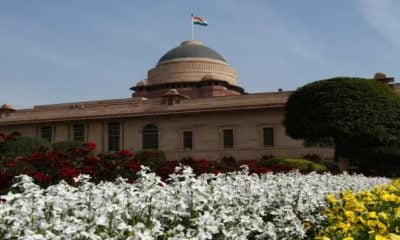
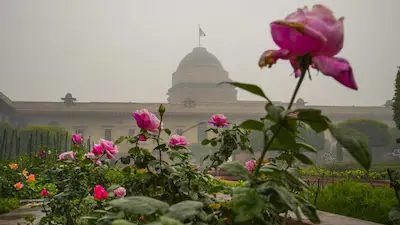
Amrit Udyan, the captivating gardens at Rashtrapati Bhavan (formerly known as the Mughal Gardens), invite visitors to experience a vibrant spectacle of floral artistry from February 2nd to March 30th, 2025. Open daily except Mondays, from 10 AM to 6 PM, the gardens offer free entry and are easily accessible via the Central Secretariat metro station (Yellow and Violet Lines).

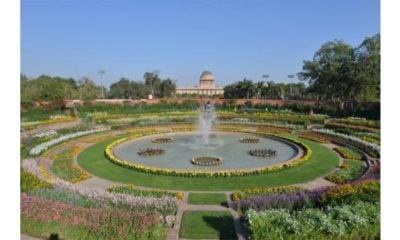
This year’s display promises an even more breathtaking experience than previous years, boasting over 50,000 tulips alongside 140 varieties of roses and 85 other captivating flower species. Spread across 15 acres, Amrit Udyan offers a diverse range of themed gardens to explore. Wander through the serene Banyan Grove, admire the meticulously crafted Bonsai Garden, or let the children loose in the delightful Bal Vatika (Children’s Garden). The Central Lawn, Long Garden, and Circular Garden, each with its unique charm, invite leisurely strolls and moments of peaceful contemplation.
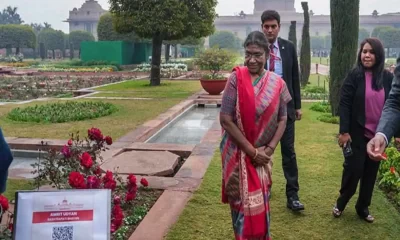
The Circular Garden, with its stunning central fountain, creates a truly mesmerizing spectacle, especially towards the end of the garden’s path. This year’s floral arrangements extend beyond simple displays; a functional floral clock adds a unique touch, while various aesthetic floral art installations punctuate the landscape, providing countless photo opportunities. For those eager to learn more, QR codes placed near each plant offer detailed information, turning the visit into an interactive learning experience.

Beyond the floral beauty, Amrit Udyan also hosts the Vividhta Ka Amrit Mahotsav from March 6th to 9th, a celebration of Southern India’s rich cultural heritage. This event features stalls showcasing handicrafts, textiles, and cuisine from all Southern states, accompanied by captivating cultural performances by invited artists. A food court and the MITTI Cafe (operated by differently-abled individuals) provide convenient refreshment options throughout your visit.

Remember that the gardens will be closed on February 5th, 20th, 21st, and March 14th. Last year’s visitor count neared nine lakh, and organizers anticipate surpassing that number this year. So, plan your visit to Amrit Udyan and immerse yourself in the breathtaking beauty and cultural richness awaiting you this spring. Don’t forget to explore the rainbow-themed walk, featuring specific flower locations arranged by colour (red roses, orange marigolds, blue pansies, etc.) for a visually delightful experience.

India News

PM Modi assures no discrimination in women’s quota, delimitation debate intensifies in Parliament

PM Narendra Modi has assured that women’s reservation will be implemented without discrimination, amid a heated debate over delimitation in Parliament.

Published

on

PM modi

Prime Minister Narendra Modi has assured that there will be no discrimination in the implementation of women’s reservation, as Parliament witnessed a sharp debate over the proposed linkage between the quota and delimitation exercise.

During the ongoing special session, the government reiterated its commitment to ensuring fair representation while addressing concerns raised by opposition parties regarding the timing and structure of the legislation.

The proposed framework aims to reserve 33 percent of seats for women in the Lok Sabha and state assemblies. However, its implementation is tied to a fresh delimitation exercise, which is expected after the next census.

Opposition questions timing and intent

Opposition leaders have raised concerns that linking the women’s quota to delimitation could delay its implementation. They argue that the process of redrawing constituencies may push the actual rollout further into the future.

The issue has triggered a broader political confrontation, with multiple parties questioning whether the move could alter representation across states.

Some critics have also alleged that the delimitation exercise could disproportionately benefit certain regions based on population, a charge the government has rejected.

Government reiterates commitment to fair implementation

Responding to these concerns, the Centre has maintained that the reforms are necessary to ensure accurate and updated representation based on population data.

Leaders from the ruling side have repeatedly emphasized that the process will be carried out transparently and without bias. The assurance that there will be “no discrimination” is aimed at addressing fears among states and opposition parties.

The debate marks a key moment in Parliament, with both sides engaging in intense exchanges over one of the most significant electoral reforms in recent years.

Continue Reading

India News

Give all tickets to Muslim women, Amit Shah says, attacking Akhilesh Yadav on sub-quota demand

A sharp exchange between Amit Shah and Akhilesh Yadav in Parliament over sub-quota for Muslim women highlights key divisions on women’s reservation implementation.

Published

on

A heated exchange broke out in Parliament during discussions on the women’s reservation framework, with Union Home Minister Amit Shah and Samajwadi Party chief Akhilesh Yadav locking horns over the demand for a sub-quota for Muslim women.

The debate unfolded as the government pushed forward key legislative measures to implement 33% reservation for women in the Lok Sabha and state assemblies.

Akhilesh Yadav argued that the proposed reservation must ensure representation for women from marginalised communities, including Other Backward Classes (OBCs) and Muslim women. He said that without such provisions, large sections could remain excluded from political participation.

He also questioned the timing of the bill, alleging that the Centre was avoiding a caste census. According to him, a census would lead to renewed demands for caste-based reservations, which the government is reluctant to address.

Government rejects religion-based quota

Responding to the demand, Amit Shah made it clear that reservation based on religion is not permitted under the Constitution.

He stated that any proposal to provide quota to Muslims on religious grounds would be unconstitutional, firmly rejecting the idea of a separate sub-quota for Muslim women within the broader reservation framework.

The government has maintained that the existing framework already includes provisions for Scheduled Castes (SC) and Scheduled Tribes (ST) women within the overall reservation structure.

Wider political divide over implementation

The issue of sub-categorisation within the women’s quota has emerged as a major flashpoint, even as most opposition parties broadly support the idea of women’s reservation.

Samajwadi Party leaders reiterated that their support for the bill depends on inclusion of OBC and minority women, while the government continues to defend its constitutional position.

The debate is part of a broader discussion during the special Parliament session, where multiple bills linked to delimitation and implementation of the women’s quota are being taken up.

Continue Reading

India News

No state will lose a seat, Centre assures as delimitation debate takes centre stage in Parliament

Parliament’s special session begins with key focus on implementing women’s reservation and delimitation, setting the stage for major electoral changes.

Published

on

Parliament

A special session of Parliament commenced on Thursday, with the Centre set to take up crucial legislation related to women’s reservation and delimitation of constituencies. The session, scheduled over three days, is expected to witness intense debate as the government pushes forward its legislative agenda.

At the centre of discussions is the proposal to operationalise the women’s reservation law, which seeks to allocate 33 percent of seats in the Lok Sabha and state assemblies to women. The law, passed earlier, requires enabling provisions before it can be implemented.

The rollout of the reservation is closely tied to the delimitation exercise — a process that redraws parliamentary constituencies based on updated population data. The implementation is expected only after the next census and delimitation process are completed.

The government is aiming to put in place the framework so that the reservation can be enforced in future elections, likely around 2029.

Delimitation and numbers at play

Delimitation is a key aspect of the proposed changes, as it will determine how seats are redistributed and which constituencies are reserved. The exercise is expected to reflect population shifts and may also involve an increase in the total number of Lok Sabha seats.

This linkage has made the issue politically sensitive, with several opposition parties backing women’s reservation in principle but raising concerns over how and when delimitation will be carried out.

Political reactions and expected debate

The session is likely to see sharp exchanges between the government and opposition. While there is broad agreement on increasing women’s representation, disagreements remain over the timing, process, and potential political implications of the delimitation exercise.

Some leaders have argued that delimitation could significantly alter the balance of representation among states, making it a contentious issue beyond the women’s quota itself.

The government, however, has framed the move as a step toward strengthening women’s participation in governance and ensuring more inclusive policymaking.

Continue Reading

Trending

© Copyright 2022 APNLIVE.com