English हिन्दी
Connect with us

India News

Bursting of crackers on Diwali: No blanket ban, but SC lays down restrictions for all festivals

Published

on

Bursting of crackers on Diwali: No blanket ban, but SC lays down restrictions for all festivals

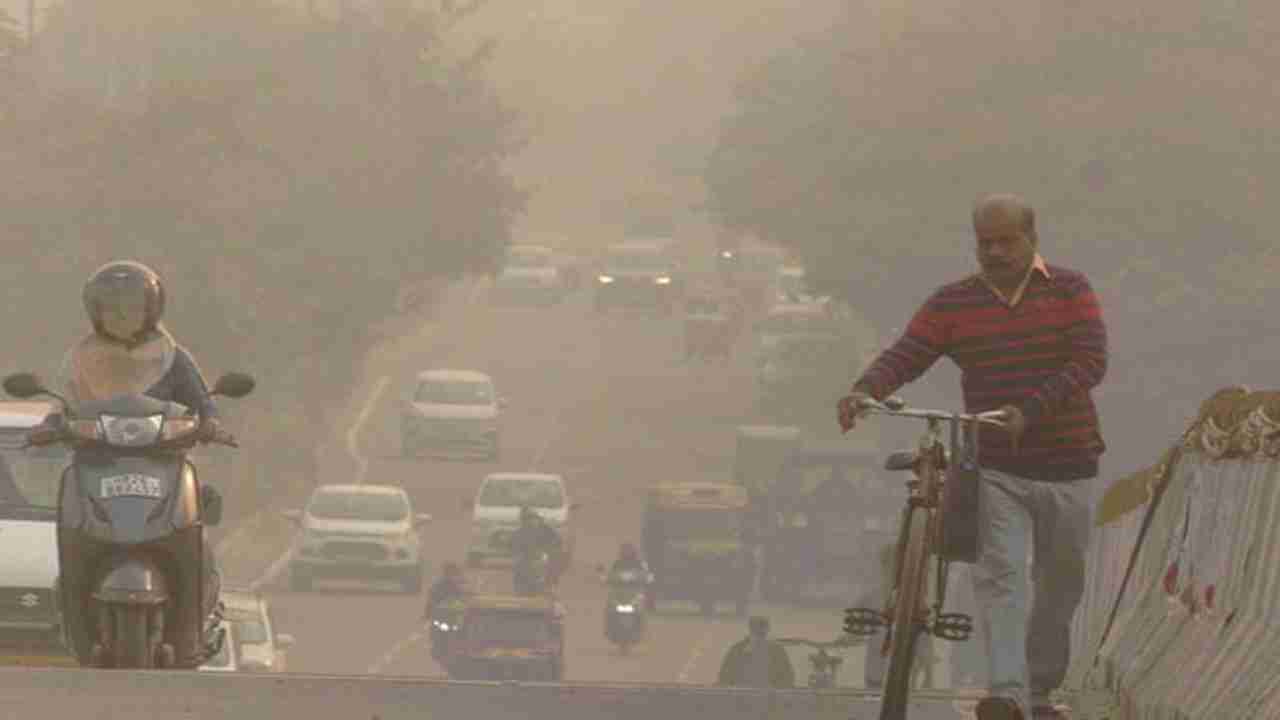
[vc_row][vc_column][vc_column_text]Amid the precarious air pollution situation in Delhi and several other parts of the country and Diwali approaching, the Supreme Court today (Tuesday, October 23) laid down restrictions to be followed for bursting of crackers applicable across the board for all festivals.

However, to the relief of citizens, the top court declined to issue a blanket, country-wide ban on fireworks.

A Supreme Court bench of Justices AK Sikri and Ashok Bhushan was hearing a bunch of petitions – including one filed by minors Arjun Gopal, Aarav Bhandari and Zoya Rao Bhasin (all aged below four years) through senior advocate Gopal Sankaranarayanan – which had sought a complete ban on the manufacturing, transportation and sale of fire crackers.

The court clarified that on festivals, including Diwali, the bursting of firecrackers will be allowed only between 8 pm and 10 pm. On Christmas and New Year’s Eve, the bench said, crackers can be burst between 11:45 pm and 12:45 am.

“We make it clear that we are concerned not only with Diwali… be it Gurpurab or Christmas, our directions will work across the board,” said Justice Sikri.

No fire crackers would be burst during the day, said the SC.

The SC said “improved and green” crackers can be manufactured and sold only by the licensed holders. The court imposed a complete ban on the sale of firecrackers by e-commerce firms, including Amazon and Flipkart.

It added that firecrackers will also have to comply with the prescribed noise levels and also barred the use of some chemicals, including barium salt, in the manufacturing.

The SC ordered the Petroleum and Explosives Safety Organisation (PESO) to give clearances to crackers only if they meet noise and emission standards. The court order made it clear that the existing stock of crackers would become redundant.

The court added that the Centre and state governments should promote community bursting of firecrackers by designating such spots.

In the national capital, the Supreme Court said the Aam Aadmi Party government should look into the possibility of community fireworks to reduce the pollution load. If the government goes for this, the judges said this should be done within the next week so that people do not end up buying firecrackers.

Local police officers shall be personally liable if there is a violation of the court orders and will be hauled up for contempt.[/vc_column_text][/vc_column][/vc_row][vc_row][vc_column][vc_column_text css=”.vc_custom_1540286805313{border-top-width: 10px !important;border-right-width: 10px !important;border-bottom-width: 10px !important;border-left-width: 10px !important;padding-top: 10px !important;padding-right: 10px !important;padding-bottom: 10px !important;padding-left: 10px !important;background-color: #e5e5e5 !important;border-radius: 10px !important;}”]Main points

* People can burst low-emission firecrackers for 2 hours on Diwali (8pm to 10 pm), 35 minutes on Christmas and New Year’s eve (11.55 pm to 12.30 am).

* The top court asks Centre to encourage community cracker-bursting during Diwali and other festivals in Delhi-NCR.

* SC bans the online sale of firecrackers and puts a stay on the e-commerce portals from selling firecrackers.

* The top court asks the Central Pollution Control Board to monitor air quality 7 days before and 7 days after Diwali.

* Firecrackers can be sold only through licence holders.

* The area Station house officers will be held accountable if banned firecrackers are sold in their area.

* PESSO (Petroleum and Explosives Safety Organization) asked review the clinical composition of fireworks and give the suggestion within two weeks.

* The court ruling shall apply to all festivals and marriages.[/vc_column_text][/vc_column][/vc_row][vc_row][vc_column][vc_column_text]The judge said that this judgment has tried to strike a balance and has relied majorly on the suggestions and guidelines proposed by the central government.

The bench had reserved its verdict on the PILs on August 28 following elaborate arguments which saw Chairman, Centre for Chest Surgery & Lung Transplantation, Sir Ganga Ram Hospital and chief of Lung Foundation Dr Arvind Kumar make a passionate appeal before the judges in favour of banning fire crackers completely. Dr Kumar had placed on record graphic images of lungs of his patients, and explained to the court how, “everyone had turned a smoker” because of the high level of air pollution. He had established that the spike in air pollutants during Diwali, primarily due to bursting of fire crackers, could turn fatal for people with lung conditions.

Standing counsel for the Central Pollution Control Board, Supreme Court advocate Vijay Panjwani, who had supported the appeal for a complete ban on fire crackers during the court proceedings told reporters after the apex court’s verdict that though the “order is not very strict, it will regulate the sale and use of crackers to some extent”.

“All state pollution control boards and the Central Pollution Control Board will measure particulate matters (PM) 2.5 and 10 in the air seven days ahead of Diwali and seven days after Diwali,” Panjwani said.

Last year the top court had imposed a complete ban on sale of firecrackers in the national capital region and today’s decision brings relief for many Delhites wanting to celebrate Diwali the way have been accustomes to.

For the rest of the country, it will be the first time that the festival of lights would be celebrated under strict restrictions.

The top court had earlier said all aspects, including the fundamental right of livelihood of firecracker manufacturers and the right to health of over 1.3 billion people in the country, needs to be taken into account while considering a plea for the ban.

It had asked the Centre to suggest measures to be taken to curb the pollution and the effect of firecrackers on the public at large.

Manufacturers earlier told the court that the use of firecrackers should not be completely banned and it should instead be strictly regulated. They said firecrackers are not the reason for the increase in air pollution and there are other factors, like wind and temperature, which contribute to it.

India’s poor air quality causes over one million premature deaths every year, according to a joint report by two US-based health research institutes earlier this year. Delhi’s Air Quality Index (AQI) continued to be ‘very poor’ on Monday with an average reading of 318 of PM (particulate matter) 2.5 at 9 am, according to data of System of Air Quality and Weather Forecasting And Research (SAFAR).

Last October, the Supreme Court suspended the sale of firecrackers in Delhi-NCR till November 1 in the run up to Diwali which was celebrated on October 19 in 2017. But the use of firecrackers in the city was still rampant on Diwali day, according to an analysis of CPCB data by the Centre for Science and Environment (CSE).

The average PM2.5 concentration during Diwali and the morning after (12pm-12am, October 19-20) was 397 microgramme per cubic metre — 6.6 times higher than the safe limit and is in the ‘emergency’ zone. The day before Diwali (October 18), the 24-hour average was 184 microgramme per cubic metres.[/vc_column_text][/vc_column][/vc_row]

India News

Case registered against Mamata Banerjee over controversial 2025 religion remark

A formal police case has been registered against Trinamool Congress supremo Mamata Banerjee in Siliguri, West Bengal. The complaint alleges that her 2025 “Ganda Dharm” remark targeted Hinduism and hurt the religious sentiments of the community.

Published

on

Mamata Banerjee

A formal police complaint has been lodged against Trinamool Congress (TMC) chief Mamata Banerjee in West Bengal’s Siliguri. The legal action stems from an alleged derogatory remark regarding Hinduism made during an Eid congregation in Kolkata in 2025.

The case was registered following a complaint filed by a local lawyer, Rinki Chatterjee, who alleged that the former Chief Minister’s comments deeply hurt the religious sentiments of Hindus globally.

Legal charges and complaint details

The police have invoked multiple sections under the Bharatiya Nyaya Sanhita (BNS) against Banerjee, including Section 351(1) for criminal intimidation, Section 352 for intentional insult with intent to provoke breach of peace, and Section 353 for promoting feelings of enmity, hatred, or ill will between different communities.

According to the complaint, the controversy traces back to an Eid event organized on Kolkata’s iconic Red Road in 2025. While delivering a speech targeting the Bharatiya Janata Party (BJP), Banerjee purportedly referred to the version of Hinduism championed by the political rival as “Ganda Dharm” (filthy religion).

Chatterjee stated in her complaint that labeling Sanatan Dharma in such a manner at a religious gathering was “absolutely unacceptable”. The complainant also pointed to other instances where senior TMC leaders allegedly targeted Hinduism, adding that Banerjee made indirect threats to the Hindu community during the 2026 West Bengal Assembly election campaign to influence voters through intimidation.

Political responses to the FIR

The reported statements had previously drawn sharp criticism from the state BJP leadership last year, including strong objections from current Chief Minister Suvendu Adhikari. However, this FIR represents the first formal legal action taken regarding the speech.

When approached for a response, Atri Sharma, a lawyer and general secretary of the TMC’s Darjeeling unit, declined to comment officially as a party spokesperson. However, he noted that many within the party internal circles found the remarks inappropriate at the time they were spoken. Sharma acknowledged that holding a high public office required restraint and affirmed that every individual holds the moral right to pursue legal remedies.

Continue Reading

India News

Enforcement Directorate raids former Kerala Chief Minister Pinarayi Vijayan’s residence in money laundering probe

The Enforcement Directorate on Wednesday carried out searches at the Thiruvananthapuram residence of former Kerala Chief Minister Pinarayi Vijayan and 11 other locations in connection with a money-laundering probe registered in 2024.

Published

on

The Enforcement Directorate on Wednesday conducted extensive searches at the Thiruvananthapuram residence of former Kerala Chief Minister Pinarayi Vijayan. The action comes as part of an ongoing money-laundering investigation, with the central probe agency executing simultaneous raids at 12 separate locations across the state under the Prevention of Money Laundering Act (PMLA).

Broad Crackdown in Financial Probe

The central agency’s operations focused significantly on Vijayan’s rented residence in the state capital, alongside eleven other locations, including premises in Kochi, Kozhikode, Kannur, and Bengaluru. This major enforcement action was initiated shortly after the Kerala High Court dismissed a petition on Tuesday, which had been filed by Cochin Minerals And Rutile Ltd (CMRL) seeking to quash the ongoing ED proceedings.

The roots of the financial investigation trace back to a PMLA case registered in 2024. The core allegation involves an estimated illegal payment of ₹1.72 crore made between 2017 and 2019 by a private entity, Cochin Minerals And Rutile Ltd (CMRL), to Exalogic Solutions, an IT firm owned by Vijayan’s daughter, T Veena.

According to investigators, the financial transactions took place despite the IT firm allegedly rendering no services to the private company. Apart from the financial probe agency’s scrutiny, the Serious Fraud Investigation Office (SFIO) is also independently conducting an inquiry into the wider financial transactions of the matter.

Political Developments

The searches also covered locations linked to other political and executive figures associated with the matter, including premises connected to senior CMRL executives. While the ruling party has previously described the investigations as politically motivated, the central agency has intensified its probe following the high court’s refusal to grant interim relief to the private firm. The case has sparked intense political debate, with opposition parties using the findings to allege financial irregularities, while local party leaders maintain that the transactions were part of a legitimate business arrangement.

Continue Reading

India News

IPL 2026 Qualifier 1: Rajat Patidar, Virat Kohli shatter playoff records as RCB crush GT to reach final

Defending champions Royal Challengers Bengaluru advanced to their second consecutive IPL final after a historic 92-run demolition of Gujarat Titans in Qualifier 1, powered by Rajat Patidar’s breathtaking 93*

Published

on

Defending champions Royal Challengers Bengaluru (RCB) created history in the Indian Premier League (IPL) 2026 Qualifier 1 against Gujarat Titans (GT), sealing their spot in a second consecutive final with a clinical 92-run victory on Tuesday.

Riding on captain Rajat Patidar’s blistering, unbeaten 93 off just 33 balls, Bengaluru piled up a colossal 254 for 5 in their 20 overs after being asked to bat first at the scenic Dharamsala stadium. The monumental total surpassed the previous playoff benchmark of 233 for 3, set by GT against Mumbai Indians in 2023, making it the highest-ever score in IPL playoff history. In response, a ruthless RCB bowling assault dismantled the Gujarat Titans batting line-up, bowling them out for 162 in 19.3 overs.

Patidar blitzkrieg anchors historic RCB innings

After GT skipper Shubman Gill won the toss and opted to field, RCB’s top order asserted early dominance by racing to 76 for 1 within the powerplay. Venkatesh Iyer provided a quickfire 19 off seven balls, while Devdutt Padikkal struck 30 off 19 deliveries to set a brisk tempo.

The foundation allowed Virat Kohli to maintain the middle-order momentum with a fluent 43 off 25 balls. With this knock, Kohli carved out another historic milestone, becoming the first player in IPL history to accumulate over 600 runs in four consecutive seasons. Jason Holder briefly checked RCB’s charge by removing both Kohli and Padikkal in the 10th over to leave them at 99 for 3.

However, skipper Rajat Patidar took complete control from there on. Surviving two dropped catches early on, Patidar launched a brutal counter-attack, smashing five fours and nine towering sixes at an astonishing strike rate of 281.81. He combined forces with Krunal Pandya, who played a crucial anchoring role with 43 off 28 balls, putting together a blistering 90-run partnership. Patidar turned particularly merciless in the death overs, hammering a massive over from Kulwant Khejroliya as RCB finished their death overs on an absolute high.

Gujarat Titans collapse under scoreboard pressure

Faced with a steep mountain to climb, the Gujarat Titans chase imploded right from the start, losing five wickets inside the powerplay against a lethal pace battery. Openers Sai Sudharsan and skipper Shubman Gill were dismissed in the third and fourth overs respectively.

Sudharsan, the tournament’s leading run-scorer, suffered a bizarre and unfortunate dismissal when his bat slipped during a cut shot, knocking back his own stumps to be out hit-wicket off Jacob Duffy. Gill followed shortly after, cleaned up by an excellent delivery from Bhuvneshwar Kumar.

Jos Buttler offered a brief, aggressive resistance by hitting four boundaries and two sixes in a quick 29, but Australian pacer Josh Hazlewood exacted quick revenge by clean-bowling him in the fifth over. From a precarious position, the Titans slipped further as Jacob Duffy tore through the middle order, dismissing Washington Sundar and Rashid Khan.

Rahul Tewatia was the lone warrior for the Titans, waging a solitary battle to smash a fighting 68. His aggressive hitting brought up the team’s hundred in the 13th over and dragged the side past the 150-mark. However, the target proved far too distant. Krunal Pandya claimed the final wicket in the final over, dismissing GT’s tailender Mohammed Siraj—who was caught by Tim David—to bundle out GT for 162, securing the second-largest victory margin in IPL playoff history for RCB.

While RCB marches straight into the grand finale with ultimate momentum, Gujarat Titans remain alive in the tournament. They will get another opportunity to reach the final when they play the winner of the Eliminator clash between Sunrisers Hyderabad and Rajasthan Royals in Qualifier 2.

Continue Reading

Trending

© Copyright 2022 APNLIVE.com