
India News
Amritsar: Train rams into Dussehra crowd, 61 killed


At least 61 people were feared killed in a tragic accident when speeding train rammed into a crowd watching Ravana’s effigy burning on Dussehra in Amritsar on Friday evening. Fatalities may rise as several others with serious injuries were being treated.
S S Srivastava, the commissioner of police, Amritsar, confirmed the death toll. He said they were trying to clear the bodies from the tracks and transfer the injured people to the nearby hospitals.
Kamaldeep Singh Sangla, the deputy commissioner of city police said, “All hospitals in the city have been alerted about the injured patients and ambulances from the neighbouring districts have also been requisitioned to carry the injured and dead.”
According to reports, the tragedy took place at the Joda Fatak area as the firecrackers went off, the organisers asked people to move back. A large number of people moved towards the railway tracks behind them.
On Saturday, the officials have confirmed that seven of the 70-odd injured people were in critical conditions.
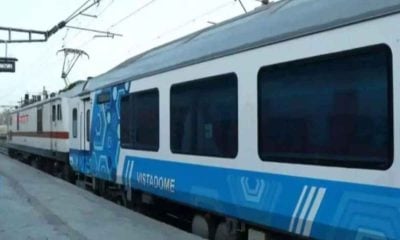
In an unprecedented accident, the Jalandhar-Amritsar DMU rammed into the crowd. Police officials claimed that the people in the crowd could not hear the train approaching because of the loud explosions from the Ravana effigy and hence were run over by the train.

Minutes before, as eyewitnesses described, the Amritsar-Howrah train had crossed the spot. Had the two trains crossed at the same time, the casualties would have been much higher, the report said.
Meanwhile, Navjot Singh Sidhu, the Minister in the Congress government in the state said that it was an accident and that nobody had done it intentionally. He said there was a “big negligence” and asked his political rivals not to do politics over the incident.
He was quoted saying,”It was an unfortunate incident. I talked to a few people who told me that some people were standing on the rail track and some were sitting on a stone near the track.”
Defending his wife Navjot Kaur Sidhu, who was accused of leaving the accident site without bothering about the victims, the state culture minister said she was attending to patients at the hospital when allegations were being levelled against her.









India News
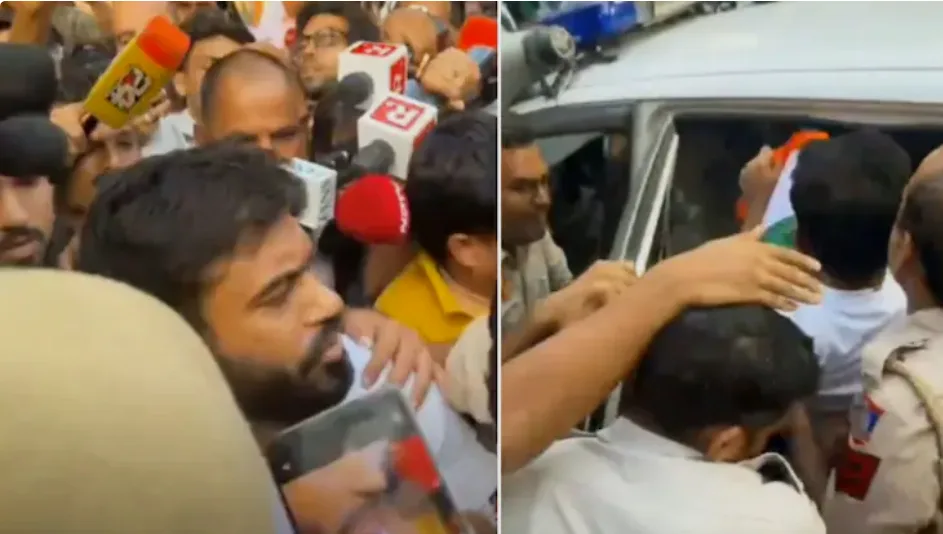
Abhijeet Dipke detained ahead of CJP’s national flag march in Delhi
Cockroach Janta Party founder Abhijeet Dipke was detained by Delhi Police on October 16, 2026, shortly before a planned national flag march. The proposed rally followed the judicial custody of two CJP members who had waved the Tricolour at Jantar Mantar.

India News
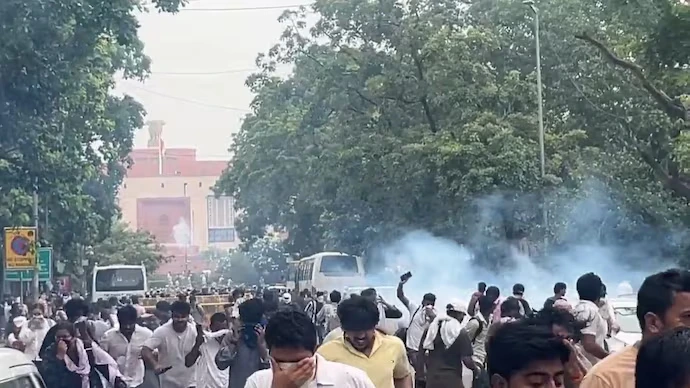
Delhi deploys 25,000 personnel, installs CCTV cameras ahead of CJP march
More than 25,000 police and paramilitary personnel have been deployed in Delhi ahead of the CJP’s planned protest march at Connaught Place. Authorities have also imposed restrictions and stepped up CCTV surveillance.
India News
Mallikarjun Kharge’s ‘Your Friends’ jab at Rahul Gandhi over congress exits
Congress president Mallikarjun Kharge took a dig at Rahul Gandhi after the Leader of the Opposition reportedly described former party leaders Jyotiraditya Scindia and Ghulam Nabi Azad as among those who had left the Congress.


Election Commission orders voter roll revision in 17 states, UTs

Delhi Police offers 11-person limit for CJP’s Connaught Place protest

Actor Imran Khan asked to leave India after CJP protest

Magnitude 7 earthquake strikes Russia’s Kamchatka Peninsula

Mallikarjun Kharge’s ‘Your Friends’ jab at Rahul Gandhi over congress exits

Abhijeet Dipke detained ahead of CJP’s national flag march in Delhi
Magnitude 7 earthquake strikes Russia’s Kamchatka Peninsula

Delhi deploys 25,000 personnel, installs CCTV cameras ahead of CJP march
Mallikarjun Kharge’s ‘Your Friends’ jab at Rahul Gandhi over congress exits
Delhi Police offers 11-person limit for CJP’s Connaught Place protest

Afghan Men Try To Hang With The Jet Engine Of The Aircraft in Kabul- Afghanistan News – Kabul News
Trending Top 10 News: 10000 Crore Fine on Flipkart, Apple to Launch Unique Feature, Hdfc Bank Job Ad

Trending Top 10 News: Nokia 6310, Apple sales, Bachpan ka Pyar Video Kid, Dainik Bhaskar IT Raid

Trending Top 10 News: Canada bans Indian flights, Rain in Delhi NCR, AIMIM Twitter hacked, Raj Kundra case

Trending Top 10 News: Shein India, Apple New Service, Pocket Oxygen, Oppo Launched New Phone
-
 India News23 hours ago
Election Commission orders voter roll revision in 17 states, UTs
-
 India News21 hours ago
Delhi Police offers 11-person limit for CJP’s Connaught Place protest
-
 India News23 hours ago
Actor Imran Khan asked to leave India after CJP protest
-
 Latest world news9 hours ago
Magnitude 7 earthquake strikes Russia’s Kamchatka Peninsula
-
 India News10 hours ago
Mallikarjun Kharge’s ‘Your Friends’ jab at Rahul Gandhi over congress exits
-
 India News10 hours ago
Delhi deploys 25,000 personnel, installs CCTV cameras ahead of CJP march
-
 India News22 mins ago
Abhijeet Dipke detained ahead of CJP’s national flag march in Delhi
