English हिन्दी
Connect with us

India News

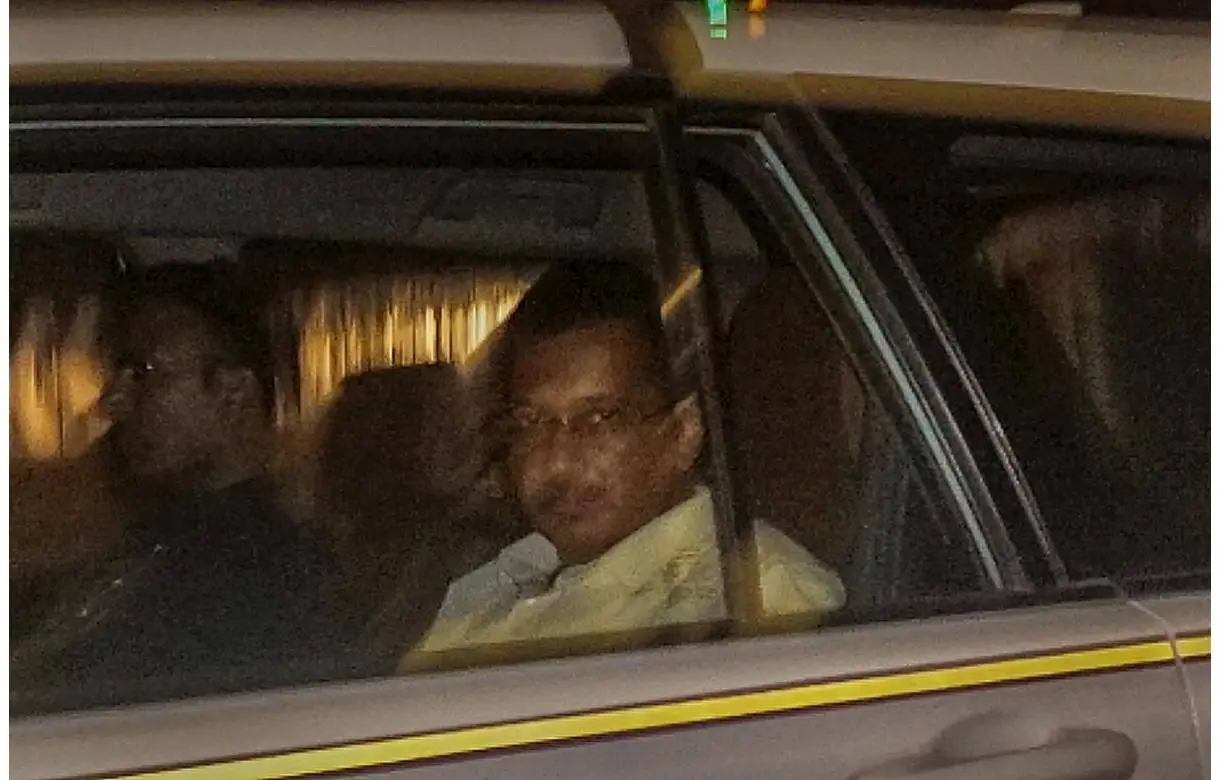
Delhi CM Arvind Kejriwal moves High Court, urgent hearing denied

Showing no confidence in the Supreme Court, the Delhi Chief on March 22 withdrew his petition in the apex court against his arrest by the ED.

Published

on

Delhi Chief Minister Arvind Kejriwal on Saturday moved High Court challenging his arrest and the order of remand passed by the trial court on Friday, March 22. The plea in Delhi High Court stated that both the arrest and the remand order are illegal and Kejriwal is entitled to be released from custody immediately.

The High Court denied an urgent listing of the plea filed by AAP convener Kejriwal. The matter will be now listed on Wednesday, as per reports.

According to the Delhi Chief Minister’s legal team, an immediate hearing has been sought from the acting Chief Justice, Justice Manmohan, preferably by March 24.

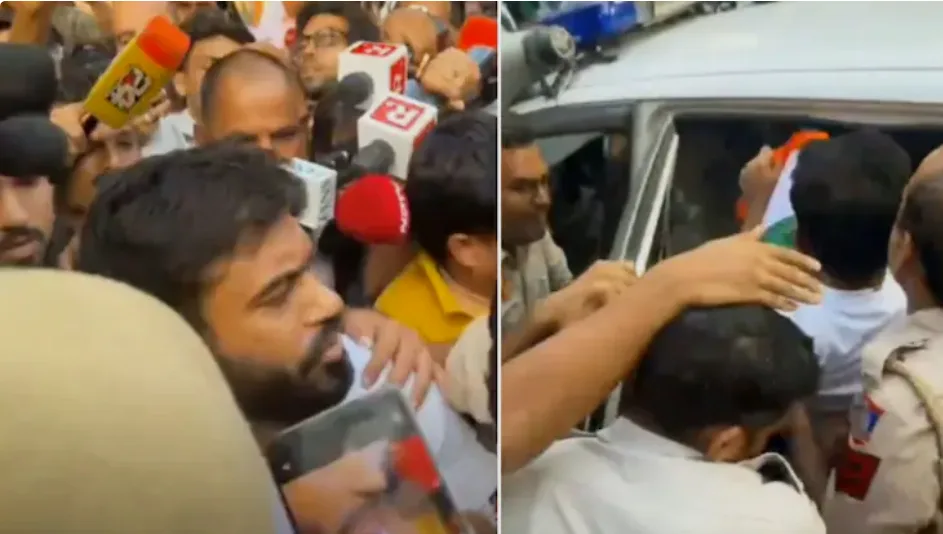
On March 21, Kejriwal was interrogated by the Enforcement Directorate (ED) at the Delhi CM’s residence in the 2021-2022 Delhi liquor policy case. During ED’s search operation, Kejriwal was arrested amidst dramatic circumstances as the AAP chief failed to obtain interim protection from arrest in the Delhi excise policy case from the Delhi High Court earlier.

The city court on March 22 granted seven days of custody of Delhi Chief Minister Kejriwal to ED till March 28 for Kejriwal’s detailed and sustained interrogation regarding his role in the alleged Delhi excise policy case.

The Delhi CM on March 22 withdrew his petition in the apex court against his arrest by the ED, as the party decided to contest the ED custody first.

Earlier in the day, Delhi Minister Atishi said that ED has failed to establish a money trail against any AAP leader despite multiple raids, arrests and a two-year-long investigation into the alleged liquor policy scam.

During the press conference, Atishi claimed that the money trail was in fact found in the BJP’s account and challenged Prime Minister Narendra Modi and ED to arrest the BJP national president JP Nadda.  

The AAP leader also said that P Sarath Chandra Reddy, head of Aurobindo Pharma, was arrested by the ED in November in connection with the Delhi excise policy case. He has donated crores of money to the BJP through electoral Bonds, Atishi claimed.

India News

INDIA bloc likely to meet on September 30 over Gyanesh Kumar row

INDIA bloc parties are likely to meet in New Delhi on September 30 amid growing opposition to Chief Election Commissioner Gyanesh Kumar and the Special Intensive Revision of electoral rolls.

Published

on

Rahul-Gandhi

Opposition parties belonging to the INDIA bloc are set to meet in New Delhi on September 30 to discuss concerns surrounding the Election Commission, the Special Intensive Revision (SIR) of electoral rolls and a proposed removal motion against Chief Election Commissioner Gyanesh Kumar.

The proposed meeting comes amid growing coordination among opposition parties over the functioning of the poll panel and demands for action against Chief Election Commissioner Gyanesh Kumar. The parties are also discussing a possible joint response to the developments.

Why is the INDIA bloc meeting being planned?

The INDIA bloc meeting on September 30 comes amid reports of objections within the Election Commission over certain decisions and orders related to the SIR exercise. 

According to the report, Opposition leaders have been discussing a coordinated response to their concerns over the Election Commission and the electoral-roll revision process. 

The issue is also expected to be discussed at the Congress Working Committee meeting scheduled for September 29, a day before the proposed INDIA bloc meeting.

Gyanesh Kumar removal demand in focus

The demand for the removal of Chief Election Commissioner Gyanesh Kumar has become a major point of contention between the Opposition and the Election Commission.

The CPI(M), CPI and CPI(ML)-Liberation have demanded Kumar’s removal and an immediate halt to the SIR exercise. Congress has also intensified its criticism of the CEC.

Opposition parties are also working on a fresh removal motion against Gyanesh Kumar. The September 30 meeting is expected to finalise the strategy for the motion, including the collection of signatures. According to the report, this would be the Opposition’s third such attempt. 

What is the SIR controversy?

The political dispute is linked to the Special Intensive Revision of electoral rolls, or SIR.

The controversy intensified following a report that Election Commissioners Sukhbir Singh Sandhu and Vivek Joshi had recorded objections on several occasions concerning decisions and orders related to the SIR process.

The Election Commission has said that differing views and observations are part of normal deliberations in a multi-member constitutional body. The poll panel has also maintained that its orders have legal sanction and follow statutory procedures, while stating that the final decisions on the SIR were taken unanimously. 

TMC and Left parties coordinate over the issue

The developments have also brought the Trinamool Congress and the CPI(M) together on the Election Commission issue, despite their political differences in West Bengal.

CPI(M) general secretary M A Baby proposed an immediate meeting to discuss a joint strategy. According to the report, Mamata Banerjee spoke with M A Baby and Leader of Opposition Rahul Gandhi, after which the leaders settled on September 30 for the meeting. 

What could be discussed at the September 30 meeting?

The proposed meeting is expected to focus on:

  • Concerns surrounding the Election Commission
  • The Special Intensive Revision of electoral rolls
  • Opposition demands concerning CEC Gyanesh Kumar
  • A possible fresh removal notice against the CEC
  • A coordinated response by INDIA bloc parties

The exact agenda and participation will depend on the discussions among the opposition parties before the proposed meeting.

Continue Reading

India News

“Will die but won’t give up”: Sahil Wakode’s parents urge IIT students to continue fight 

Sahil Wakode’s parents have appealed to IIT Bombay students to continue their fight for justice amid the ongoing investigation into their son’s death.

Published

on

Sahil Wakode

The parents of IIT Bombay student Sahil Wakode have appealed to students to continue raising their voices and fighting for justice following their son’s death.

Sahil Wakode, a second-year student at IIT Bombay, died in his hostel room on September 18. His death has led to student protests and an ongoing investigation by the Mumbai Crime Branch.

What Sahil Wakode’s parents have alleged

Sahil’s parents have alleged that their son faced caste-based discrimination and harassment at IIT Bombay before his death. They have sought action against those they hold responsible and have demanded a thorough investigation into the circumstances surrounding his death.

The family has also called for a CBI inquiry and has sought the arrest of officials named in the case. These remain allegations and are part of the ongoing investigation.

The Mumbai Crime Branch took over the probe after an FIR was registered following the complaint by Sahil’s parents.

IIT Bombay’s position

IIT Bombay has said that Sahil was allegedly caught using a mobile phone during a mid-semester examination and had uploaded the question paper to ChatGPT to seek answers.

The institute has maintained that no disciplinary action had been initiated against him. It said the matter had been discussed with him by the instructor and the Head of the Department, who counselled him and assured him that the incident would not adversely affect his academic career.

The circumstances surrounding Sahil’s death are being investigated by the appropriate authorities.

Investigation continues

The case remains under investigation, with the Mumbai Crime Branch examining the circumstances surrounding Sahil’s death and the allegations made by his family.

His parents have continued to demand justice and action against those they believe were responsible, while the investigation is expected to establish the facts surrounding the case.

Continue Reading

India News

Gyanesh Kumar meets election commissioners amid poll panel row

Chief Election Commissioner Gyanesh Kumar met Election Commissioners Sukhbir Singh Sandhu and Vivek Joshi amid a controversy over reported objections to Election Commission decisions.

Published

on

Chief Election Commissioner Gyanesh Kumar held a meeting with Election Commissioners Sukhbir Singh Sandhu and Vivek Joshi amid an ongoing controversy over the functioning and decision-making process of the Election Commission of India.

The meeting comes days after a report raised questions over formal objections allegedly recorded by the two Election Commissioners regarding several decisions and orders of the poll panel.

The Election Commission has maintained that differing views, observations and suggestions are part of its normal deliberative process. It has also said that all decisions taken by the full Commission over the past year were unanimous.

What is the Election Commission controversy?

The controversy followed a report that Election Commissioners Sukhbir Singh Sandhu and Vivek Joshi had raised objections on at least 14 occasions over a 10-month period.

The reported objections included issues concerning changes to Form 6, the handling of additions and deletions from electoral rolls and the centralisation of electoral-roll data.

Form 6 is the statutory form used for applying for registration as a voter.

The Election Commission, however, has disputed the suggestion that the objections amounted to dissent over final decisions. The poll body said written notes, observations, technical suggestions and internal checks and balances are standard parts of its functioning.

ECI says decisions were unanimous

The poll panel has said that all decisions taken by it during the past year were the outcome of unanimous decisions of the full Commission.

It also said that operational queries or inputs raised during the drafting stage are part of the normal administrative process and are intended to improve electoral procedures and safeguard voter rights.

The issue has gained significance because the Election Commission is conducting electoral-roll revisions, including the Special Intensive Revision (SIR), in several parts of the country.

Opposition parties have questioned the functioning of the poll panel and have cited the reported objections by the two Election Commissioners in their criticism of Chief Election Commissioner Gyanesh Kumar.

Political parties seek clarification

The controversy has also prompted calls for greater clarity from political parties, including some parties that are allies of the BJP-led NDA.

LJP (Ram Vilas) chief Chirag Paswan, TDP Lok Sabha floor leader Lavu Srikrishna Devarayalu and Rashtriya Lok Morcha chief Upendra Kushwaha have sought clarification from the Election Commission regarding concerns surrounding the voter-list revision and the reported objections.

The Election Commission has continued to maintain that its decisions have followed the applicable laws, rules and established procedures.

Continue Reading

Trending

© Copyright 2022 APNLIVE.com