English हिन्दी
Connect with us

India News

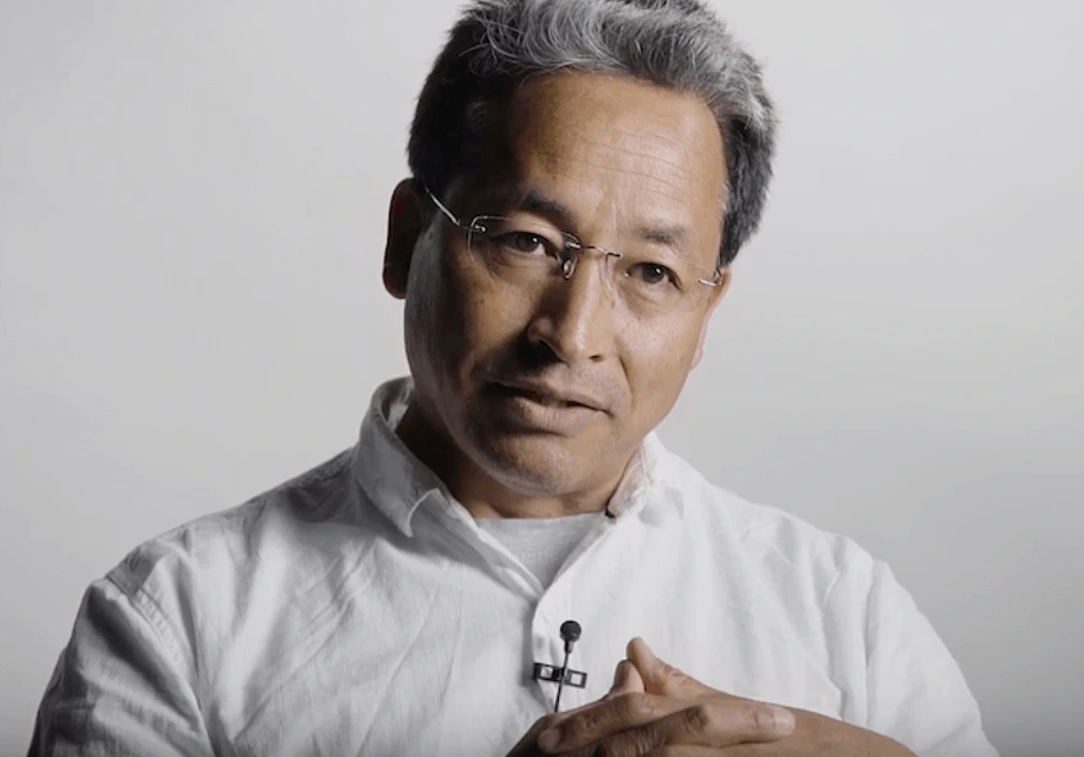
Sonam Wangchuk shifted to hospital after 21-day hunger strike at Jantar Mantar

Activist Sonam Wangchuk was shifted to hospital after remaining on a hunger strike for over 20 days at Delhi’s Jantar Mantar. Delhi Police cited the High Court’s directions and expert medical advice amid concerns over his deteriorating health.

Published

on

songm wangchuk

    Delhi Police said the activist was moved for medical treatment following the Delhi High Court’s directions and expert medical advice as his health reportedly deteriorated during the prolonged fast.

Activist Sonam Wangchuk was shifted to a hospital by Delhi Police on Saturday after remaining on an indefinite hunger strike for more than 20 days at Delhi’s Jantar Mantar.

Wangchuk has been observing the fast while demanding the resignation of Union Education Minister Dharmendra Pradhan over the alleged NEET paper leak.

Police cite High Court order and medical advice

According to Delhi Police, the decision to move Wangchuk to a hospital was taken in compliance with the Delhi High Court’s directions and based on expert medical advice due to his worsening health condition.

In an official statement, the police said Wangchuk had been shifted for essential medical care. Authorities also appealed to protesters gathered at Jantar Mantar to vacate the protest site peacefully.

Police further stated that while implementing the High Court’s orders, some protesters allegedly attempted to obstruct the process, leading to a brief commotion. However, officials said maximum restraint was exercised during the operation.

High Court had ordered regular health monitoring

The police action came ahead of a scheduled hearing in the Delhi High Court regarding Wangchuk’s health.

Earlier this week, the court directed authorities to conduct daily medical examinations of the activist. Stressing that every citizen’s life is valuable, the High Court instructed authorities to ensure regular health monitoring and provide all necessary medical intervention to safeguard his life.

Doctors warned of serious health risks

Medical updates issued during Wangchuk’s fast had repeatedly raised concerns about his health.

Doctors who examined him on Friday reportedly described his condition as an emergency and expressed fears of possible organ failure if his condition continued to worsen. Earlier medical bulletins had also stated that the 59-year-old activist had lost more than eight kilograms during the prolonged hunger strike.

Opposition leaders express support

Over the past few days, several Opposition leaders visited Wangchuk at the protest site and appealed to him to end his fast in view of his declining health.

Among those who met him were Congress leader Pawan Khera, Samajwadi Party MP Dimple Yadav, and Aam Aadmi Party chief Arvind Kejriwal, who expressed solidarity with his demands while urging him to prioritise his health.

Protest organisers plan Parliament march

The protest at Jantar Mantar was organised by the online satirical movement Cockroach Janta Party (CJP), led by founder Abhijeet Dipke. The group is seeking educational reforms and has demanded the resignation of the Union Education Minister over the alleged NEET paper leak, arguing that he should accept moral responsibility for the controversy.

The protesters have also announced a march to Parliament on July 20, the first day of the Monsoon Session, and have appealed to political parties to participate.

Meanwhile, Dharmendra Pradhan had earlier criticised the CJP and its supporters, describing them as a “B-team of disruptive elements” that, according to him, does not have faith in the country’s progress.

India News

Centre tightens ISRO exit rules amid rise in resignations from scientists

Published

on

By

The Government of India’s Department of Space (DoS) has issued an internal memorandum tightening the process for accepting resignations and voluntary retirement requests from scientists and engineers working on critical Indian Space Research Organisation (ISRO) projects. The move comes amid a rise in exit requests from personnel associated with key national missions, including Gaganyaan.

Issued on July 14, the memorandum directs all ISRO centres not to independently approve resignation or voluntary retirement applications submitted by Group ‘A’ scientific and technical personnel engaged in strategically important programmes. Instead, such requests must be forwarded to the Department of Space, along with detailed recommendations from the respective Centre Director or Head of Unit, for a final decision.

According to officials, the revised procedure was introduced after a significant increase in resignation and voluntary retirement requests from experienced scientists and engineers. Reports indicate that more than 100 personnel have sought to leave the organisation in recent months, raising concerns over the continuity of several high-priority space missions.

The directive modifies the decentralised approval process introduced in 2020, under which directors of individual ISRO centres were authorised to process certain resignation and voluntary retirement requests. Under the revised system, the DoS will make the final decision in cases involving personnel working on critical national programmes.

ISRO Chairman V. Narayanan acknowledged that the organisation has witnessed an increase in exit requests but maintained that ongoing missions remain on track. Officials said the revised policy is intended to retain experienced scientific talent and ensure that strategically important projects are not affected by the departure of key personnel.

The decision comes as ISRO prepares for several major missions, including the Gaganyaan human spaceflight programme, while advancing a number of satellite launches and scientific initiatives. The revised policy reflects the government’s effort to maintain continuity in India’s space programme by retaining skilled personnel engaged in projects of national importance.

Continue Reading

India News

60 US Senators back bill proposing 100% tariffs on countries buying Russian oil, including India

Published

on

By

 A bipartisan group of 60 US Senators has backed a bill proposing 100 per cent tariffs on imports from countries that continue to purchase Russian oil, a move that could have significant implications for India, one of Moscow’s largest crude oil buyers since the outbreak of the Russia-Ukraine war.

The legislation, introduced by late Republican Senator Lindsey Graham and Democratic Senator Richard Blumenthal, is intended to increase economic pressure on Russia by discouraging other countries from continuing to buy its energy exports. If enacted, the bill would authorise the US President to impose steep tariffs on goods imported from nations that continue purchasing Russian crude oil and other petroleum products.

India has sharply increased its imports of discounted Russian crude since the Russia-Ukraine conflict began in February 2022. The Indian government has consistently maintained that its energy procurement decisions are based on national interest, energy security and the need to ensure affordable fuel supplies for its consumers. Officials have repeatedly stated that India will continue sourcing oil from the most economically viable markets.

The proposed legislation has not yet become law. It needs to pass both chambers of Congressthe US Senate and the House of Representativesbefore it can be presented to the US President for approval. Until then, the proposed tariffs will have no legal effect.

The development comes as the United States and its allies continue efforts to tighten economic pressure on Russia over the Ukraine conflict. If passed, the legislation could have far-reaching implications for trade relations with countries that continue importing Russian oil, including India, and may also influence global energy markets and diplomatic ties.

Neither the US administration nor the Indian government has announced any policy change following the introduction of the bill. The proposal is expected to remain under close scrutiny as it moves through the US legislative process.

Continue Reading

India News

Parliament’s Monsoon Session likely to bring five new bills and two pending legislations

The upcoming Monsoon Session of Parliament is expected to take up five new bills and two pending legislations, with proposals covering FCRA, MSMEs, Supreme Court judges and births and deaths registration.

Published

on

Parliament

Parliament’s Monsoon Session, expected to begin in the last week of July, is likely to feature five new bills along with two pending legislations for consideration and passage, according to sources. The government is also expected to brief political parties on the proposed legislative agenda during the customary all-party meeting ahead of the session.

Notably, the tentative agenda does not include any Constitution Amendment Bill, even as speculation continues over measures related to delimitation and women’s reservation.

Two pending bills likely to come up for consideration

Among the pending legislations is the Foreign Contribution (Regulation) Amendment Bill, 2026, which was introduced in the Lok Sabha on March 25. The proposed amendments aim to improve transparency in the regulation of foreign funds received in India.

The Viksit Bharat Education Establishment Bill, 2025, introduced in December 2025, is also expected to move forward after the Joint Committee of Parliament submits its report during the Monsoon Session.

Two bills to replace ordinances

The government is expected to introduce the Income Tax (Amendment) Bill, 2026, replacing an ordinance issued earlier. According to sources, the legislation seeks to strengthen India’s sovereign debt market, attract global investments and improve market liquidity amid geopolitical uncertainties, volatile crude oil prices and global supply chain disruptions.

Another ordinance replacement is the Supreme Court (Number of Judges) Amendment Bill, 2026, which proposes increasing the sanctioned strength of Supreme Court judges from 33 to 37, excluding the Chief Justice of India, to help speed up the disposal of pending cases.

Three new bills on the legislative agenda

The remaining proposed legislations expected to be introduced during the session include:

  • Registration of Births and Deaths (Amendment) Bill, 2026, aimed at tightening and streamlining rules governing delayed registration of births and deaths.
  • Prevention of Insults to National Honour (Amendment) Bill, 2026, which seeks stricter provisions against acts considered disrespectful to national symbols or national honour.
  • Micro, Small and Medium Enterprises Development (Amendment) Bill, 2026, intended to improve ease of doing business, strengthen mechanisms for addressing delayed payments and provide greater powers to states.

Supplementary grants also on Parliament agenda

Apart from legislative business, the government is expected to present the Demands for Supplementary Grants for the financial year 2022-23 for discussion and voting in Parliament.

Meanwhile, sources said there is speculation that the government may take up Constitution Amendment Bills related to delimitation and women’s reservation only after it is confident of securing the required two-thirds majority in Parliament.

The government is also expected to introduce Constitution Amendment Bills aimed at disqualifying jailed leaders from holding powers and advancing the proposed ‘One Nation, One Election’ framework.

Continue Reading

Trending

© Copyright 2022 APNLIVE.com