Officials from the Angami Sports Association (ASA) in an exclusive interview with APN News in Kohima informed that it would organise the 50th anniversary of ASA sports meet on February 2022 even as they hope the state would pass off through the pandemic before the games and sports commence.

ASA president Lhoubeizo Kesiyie said, “The ASA was formed in the year 1967, so we have celebrated our golden Jubilee in the year 2017 as per the formation of the year. So the upcoming event in 2022 would not be celebrated as golden jubilee but 50th anniversary sports meet celebration”. He also announced that a total of 480 contingents from the four affiliating units of sports and youth associations — Northern Angami Sports Association, Southern Angami Sports Association, Western Angami Youth Association and Chakhroma Youth Organisation — will be taking part in the 50th ASA Sports Meet 2022
He informed that all forms of athletic events, indoor and outdoor games including traditional Naga wrestling will be conducted. For the first time, he added, “indigenous games like bamboo walk, tug of war, war cry and cultural song competition will also be organised.Our meet will be a span of seven days and we will be using two outdoor ground and four indoor grounds for the games and sports.”
It was informed that three venues — Kohima Local Ground, State Indoor Stadium and Indira Gandhi Stadium in the state capital would be utilised to conduct the mega events.
Seyielhouvi Nagi, general secretary of ASA, updated that total prize money of Rs 4, 63,000 have been set aside for athletics, games and other events while Rs 8, 70,000 has been earmarked for the Naga style wrestling. He added, “The total prize money for all the events for the 50th ASA meet 2022 comes to 13, 33,000. During the meet, all the Covid Sop’s and guidelines given by the government will be strictly maintained and followed”.
Kesiyie have urged all the sportspersons of Angami community to prepare themselves mentally and physically to dignify the “special sports meet” scheduled for next year.
NAGALAND CELEBRATES 75TH INDIA’S INDEPENDENCE DAY
As Nagaland celebrate the 75th Independence Day at the Nagaland Civil Secretariat Plaza on Sunday in Kohima chief minister Neiphiu Rio hoisted the National Flag at the venue before taking the Rashtriya Salute and inspected the parade contingents consisting of Assam Rifles, 78th CRPF Bn, 37th BSF, DEF Kohima, 4th NAP Bn, 10th NAP (IR) Bn, 15th NAP (IR) Mahila Bn, STF, Home Guards and Civil Defence, Nagaland Police Central Brass Band, PTS and 14th Assam Rifles Pipe Band.
Speaking during the occasion, chief minister Neiphiu Rio stated that the 13th Nagaland Legislative Assembly has come together, irrespective of party affiliations, on the Naga Political Issue and common peoples issues. While taking this spirit of collectiveness further, in the recently concluded session of the Nagaland Legislative Assembly, he informed that the members unanimously passed a resolution appealing to the negotiating parties on the same lines as resolved by the Core Committee. “The House appealed to the Naga Political negotiating groups to come together in order to hammer out their differences, and give the people an inclusive solution, which is honourable and acceptable,” he said.
Meanwhile, he maintained that the artists, musicians and cultural ambassadors from Nagaland have added much to the vibrant diversity of the country and in the fields of public affairs, bureaucracy, judiciary, sports and the fourth estate, while the citizens of the state have served the country with exemplary distinction.
On Covid-19 preparedness, he asserted that they have taken preventive measures in time, infrastructure while moving swiftly to augment the health infrastructure, particularly the availability of oxygen across the state, “the most critical element in the fight against Covid-19”. From modest oxygen facilities since last year, the chief minister informed that they have 6 functional PSA Oxygen Plants with a daily capacity of 3.7 Metric Ton and another 19 plants are under installation in various District Hospitals and some Community Health Centres.
He also apprised that a total of 1816 oxygen concentrators and 6082 oxygen cylinders of various capacities have been made available in the state. He maintained that they have provided equipment to the government as well as private health facilities so that sufficient oxygen supported beds including ICU and HDU beds are available to meet any emergency.
Besides the 3 BSL laboratories, he said they have also established 25 Truenat and 362 Rapid Antigen Testing facilities for Covid-19 across the state, adding that they are also building a 200 bedded hospital for acute medical care in CIHSR Dimapur which is likely to get operational in a few weeks time.
Sonia Gandhi calls weakening of MGNREGA a collective moral failure, targets Centre in op-ed
Sonia Gandhi has accused the Centre of weakening MGNREGA, calling it a collective moral failure with serious consequences for crores of working people.
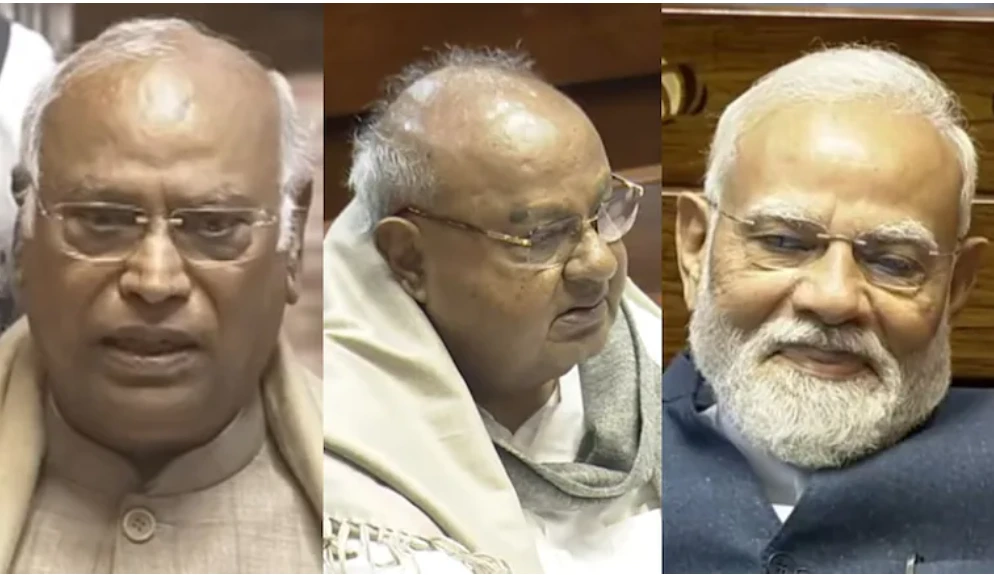
Congress Parliamentary Party chairperson Sonia Gandhi has sharply criticised the Central government over what she described as the steady dismantling of rights-based legislation, with a particular focus on the Mahatma Gandhi National Rural Employment Guarantee Act (MGNREGA).
In a recent opinion article published in a leading English daily, Sonia Gandhi argued that MGNREGA was envisioned as more than a welfare measure. She said the rural employment scheme gave legal backing to the constitutional right to work and was rooted in Mahatma Gandhi’s idea of Sarvodaya, or welfare for all.
Calling its weakening a serious failure, she wrote that the decline of MGNREGA represents a “collective moral failure” that will have lasting financial and human consequences for crores of working people across India. She stressed that safeguarding such rights-based frameworks is crucial at a time when, according to her, multiple protections are under strain.
Concerns raised over education, environment and land laws
Sonia Gandhi also flagged concerns beyond rural employment. Referring to education policy, she claimed that the Right to Education has been undermined following the National Education Policy 2020, alleging that it has led to the closure of around one lakh primary schools across the country.
On environmental and land-related legislation, she stated that the Forest Rights Act, 2006, was weakened through the Forest (Conservation) Rules, 2022. According to her, these changes removed the role of the gram sabha in decisions related to the diversion of forest land.
She further alleged that the Right to Fair Compensation and Transparency in Land Acquisition, Rehabilitation and Resettlement Act has been significantly diluted, while adding that the National Green Tribunal has seen its authority reduced over the years.
Warning on agriculture and food security laws
Touching upon agriculture reforms, Sonia Gandhi referred to the now-repealed three farm laws, claiming they were an attempt to deny farmers the right to a minimum support price. She also cautioned that the National Food Security Act, 2013, could face similar threats in the future.
Reiterating her central argument, she urged unity to protect statutory rights, stating that the erosion of such laws has implications that extend well beyond policy, affecting livelihoods and dignity on the ground.
Thick smog engulfs Delhi, flights and trains delayed as air quality slips to very poor
Delhi remained under a thick smog cover as air quality dipped into the very poor category, causing delays in flights and train services due to low visibility.
A dense blanket of smog covered Delhi on Saturday morning, pushing air quality into the ‘very poor’ category and disrupting flight and train operations across the national capital and adjoining areas. Reduced visibility due to smog led to delays in air and rail traffic, while authorities warned that pollution levels could worsen further in the coming days.
The Air Quality Index (AQI) in Delhi was recorded at 380, placing it in the ‘very poor’ bracket. Visuals from Bhairav Marg near Pragati Maidan showed motorists using headlights during early hours, as visibility remained low. At around 7 am, the AQI at this location stood at 433.
Nearly half of Delhi’s air quality monitoring stations reported ‘severe’ pollution levels. Anand Vihar recorded an AQI of 428 with PM2.5 as the dominant pollutant, while Jahangirpuri reported an AQI of 425.
Transport services hit by low visibility
Flight operations at Delhi airport were impacted due to low visibility conditions. The airport issued an advisory asking passengers to check with their respective airlines for updated flight information, as low visibility procedures were in place. Runway visibility was reported to be between 800 and 1,200 metres.
Live flight tracking data showed multiple flights running behind schedule. One airline also warned passengers about possible disruptions at several airports in northern and eastern India, including Delhi, due to dense fog conditions. Travellers were advised to verify flight status before heading to the airport, with options offered on select flights to reschedule or seek refunds without additional charges.
Rail services were also affected, with more than 30 trains running late by an average of three to four hours. Some long-distance trains reported delays of over six to eight hours, causing inconvenience to passengers travelling to and from the capital.
Air quality likely to worsen
The weather department had earlier forecast dense to very dense fog at isolated places over Delhi and several parts of north and central India. According to the Air Quality Early Warning System for Delhi, pollution levels are expected to remain in the ‘very poor’ category on Saturday and may slip into the ‘severe’ category on Sunday and Monday. In view of the deteriorating conditions, an ‘orange’ alert has been issued for Saturday.
PM Modi inaugurates India’s first nature-themed airport terminal in Assam
Prime Minister Narendra Modi inaugurates the new nature-themed terminal at Guwahati airport, the largest in Northeast India, built around bamboo, orchids and regional heritage.
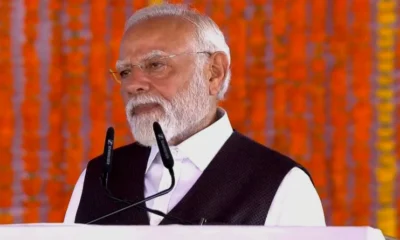
Prime Minister Narendra Modi is set to inaugurate the new terminal building of Lokapriya Gopinath Bordoloi International (LGBI) Airport in Guwahati today, marking a major milestone for aviation infrastructure in the Northeast. Built at an estimated cost of around Rs 4,000 crore, the facility is being projected as the largest airport terminal in the region and a key boost to connectivity, tourism and economic activity in Assam.
The Prime Minister is scheduled to arrive in Guwahati around 3 pm as part of his two-day visit to the state.
Northeast’s largest airport terminal takes shape in Guwahati
The newly constructed terminal is nearly seven times larger than the existing one and has been designed to cater to the region’s rapidly growing air traffic. Once fully operational, it is expected to handle up to 13.1 million passengers annually by 2032.
Officials said the terminal is planned as a regional connectivity hub, with a focus on strengthening air links between India and Southeast Asia. The airport will be capable of handling up to 34 air traffic movements per hour, the highest capacity among airports in the Northeast. The facility will also be equipped with one of the most advanced Instrument Landing Systems to support safer and more efficient operations.
Nature-inspired design rooted in Assam’s identity
What sets the Guwahati terminal apart is its distinctive nature-themed architecture. Conceptualised under the theme “Bamboo Orchids”, it is being described as India’s first airport terminal inspired entirely by natural and cultural elements.
The interiors draw from the landscapes of Northeast India, with design elements reflecting indigenous orchids, locally known as Kopou Phool, and the flow of the Brahmaputra river. The terminal incorporates more than 2,000 species of plants, includes a dedicated zone inspired by Kaziranga National Park, and features artefacts representing Majuli Island.
A key architectural highlight is the expansive bamboo vault, created using around 140 metric tonnes of locally sourced bamboo. The space has been envisioned as a multifunctional cultural centre aimed at encouraging community interaction and showcasing the region’s heritage. Design elements such as japi motifs, the iconic rhino symbol and 57 orchid-inspired columns further reinforce the cultural narrative.
Arriving passengers will also experience a unique “Sky Forest”, featuring nearly one lakh plants of indigenous species, designed to create an immersive forest-like ambience within the terminal.
Focus on digital integration and passenger convenience
Spread over nearly 1.4 lakh square metres, the integrated new terminal has been designed to handle around 1.3 crore passengers annually. It is supported by significant upgrades to the runway, airfield systems, aprons and taxiways.
The terminal places strong emphasis on digital integration, with 14 entry points, including four DigiYatra gates, aimed at easing passenger movement. Facilities such as full-body scanners for non-intrusive security checks, automated baggage handling systems, fast-track immigration and AI-driven airport operations have been incorporated to ensure smoother travel experiences.
Other engagements during PM Modi’s Assam visit
During his two-day stay, the Prime Minister will also lay foundation stones for multiple development projects and address public gatherings. He is scheduled to visit the Swahid Smarak Kshetra to pay tribute to the martyrs of the historic Assam Movement.
Later in the day, PM Modi will perform the bhoomipujan for a new brownfield Ammonia-Urea Fertiliser Project at Namrup in Dibrugarh district, within the existing premises of the Brahmaputra Valley Fertiliser Corporation Limited.
APN News is today the most watched and the most credible and respected news channel in India. APN has been at the forefront of every single news revolution. The channel is being recognized for its in-depth, analytical reportage and hard hitting discussions on burning issues; without any bias or vested interests.