English हिन्दी
Connect with us

India News

BJP CM in Tripura Biplab Deb: Internet, satellite tech used in Mahabharata times lakhs of years ago

Published

on

BJP CM in Tripura Biplab Deb: Internet, satellite tech used in Mahabharata times lakhs of years ago

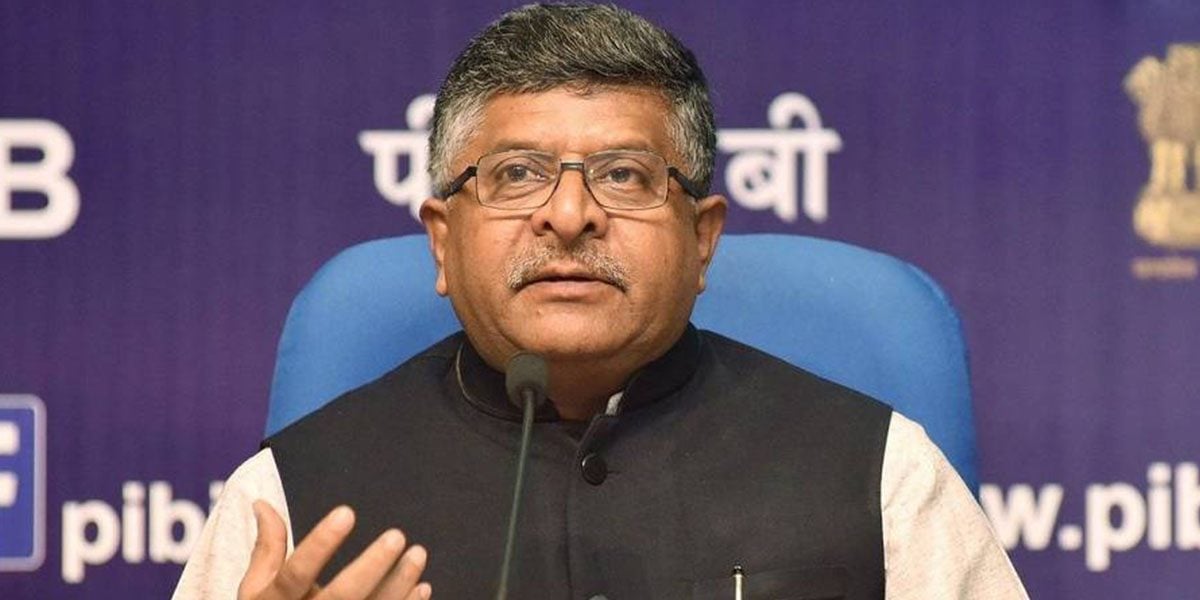
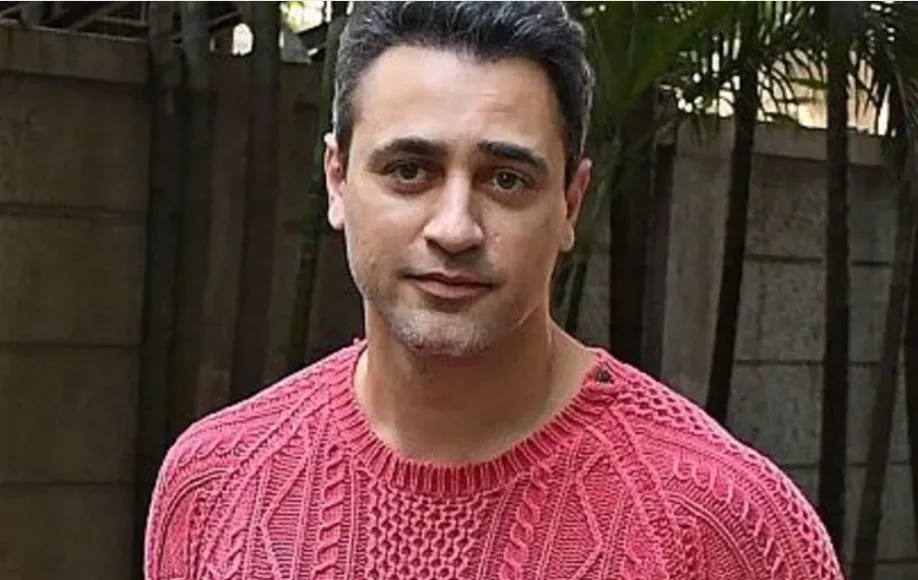
BJP’s recently elected chief minister of Tripura, Biplab Deb has contributed his bit to the growing compendium of Hindutva knowledge of science in India, asserting that the internet was invented in India “lakhs of years ago” and that the technology and satellites were present during the period of Mahabharata.

Only yesterday, noted economist Kaushik Basu had commented in a tweet: “The tragedy of religious fundamentalists & hypernationalists is that instead of spending time trying to do mathematics, philosophy, literature or science, they spend their time trying to show that 5000 years ago their ancestors did mathematics, philosophy, literature and science.”

Addressing a regional workshop on Public Distribution System (PDS), the CM said, “Not US and other western countries, but the internet was invented by India lakhs of years ago.”

“Many may decline the fact, but if the internet was not there, how Sanjay could see the war in Kurukshetra and describe it to Dhritarashtra? It means internet was there, the satellites and that technology was there in this country at that time,” Deb was quoted as saying by Tripura Infoway.

The CM said, “I feel proud that I am born in a country with such an advanced technology, the countries which claim themselves to be technologically advanced are hiring Indian talent to upgrade their software mechanism.”

“Even today in internet and software technology, we are ahead. See Microsoft, it may be a U.S. company but most of its engineers are all from our country,” the Tripura CM said.

The BJP leader said India lost technological prowess after the era of Mahabharata but the country has once again started to regain its position. “It can be proved from the fact that a large number of software engineers play a vital role in the US companies,” Deb said.

Deb’s statements set off a wave of jokes and sarcastic comments, but an unruffled Deb stuck to his guns, not embarrassed in the least.

He  told ANI: “Narrow-minded people find it tough to believe this. They want to belittle their own nation and think highly of other countries. Believe the truth. Don’t get confused and don’t confuse others.”

Deb has been brought up in tradition and values of Rashtriya Swayamsevak Sangh (RSS), BJP’s ideological mentor, where he received his training. He was BJP’s prime choice for the top job in Tripura when the BJP stormed to power in the state with a promise for development after three terms of Left rule.

Deb was following in the footsteps of his illustrious seniors. Union Minister for Science Dr Harsh Vardhan had already claimed that the late Stephen Hawking had stated that Vedic shlokas contained scientific knowledge and formulations more profound that Albert Einstein’s theory of relativity.

In January this year, Union Minister of State for Human Resource Development responsible for Higher Education, Satypal Singh, questioned Charles Darwin’s theory of evolution and said, “Darwin’s theory (of evolution of man) is scientifically wrong. It needs to change in the school and college curriculum. Since (the time that) man is seen on Earth, he has always been a man. Nobody, including our ancestors, in written or oral, said they saw an ape turning into a man.”

Singh added he knows because he has a postgraduate degree in science.

He also said certain Vedic ‘mantras’ codified the laws of motion much before they were discovered by Isaac Newton.

Last year, he minister said the first flying machine was invented by Indian scholar Shivkar Bapuji Talpade and not the Wright Brothers. This, he said, should be taught in the Indian Institutes of Technology and other engineering institutes.

Y Sudershan Rao, the chairman of India’s leading historical organisation, has maintained that Ramayana and Mahabharata indicated that Indians were flying aeroplanes, carrying out stem cell research and using cosmic weapons 5,000 years ago. Horrified by such views, many academics have described his appointment as a blow for the 40-yera-old history organisation.

In October 2014, Prime Minister Narendra Modi’s comments that Lord Ganesha was the product of plastic surgery, prompted the Indian History Congress, to pass a stern resolution to “resist interested distortions of our past.” The next January, PM Modi had said the account of Karna’s birth in Mahabharata indicated that “people were aware of genetic science”.

India News

PM Modi assures no discrimination in women’s quota, delimitation debate intensifies in Parliament

PM Narendra Modi has assured that women’s reservation will be implemented without discrimination, amid a heated debate over delimitation in Parliament.

Published

on

PM modi

Prime Minister Narendra Modi has assured that there will be no discrimination in the implementation of women’s reservation, as Parliament witnessed a sharp debate over the proposed linkage between the quota and delimitation exercise.

During the ongoing special session, the government reiterated its commitment to ensuring fair representation while addressing concerns raised by opposition parties regarding the timing and structure of the legislation.

The proposed framework aims to reserve 33 percent of seats for women in the Lok Sabha and state assemblies. However, its implementation is tied to a fresh delimitation exercise, which is expected after the next census.

Opposition questions timing and intent

Opposition leaders have raised concerns that linking the women’s quota to delimitation could delay its implementation. They argue that the process of redrawing constituencies may push the actual rollout further into the future.

The issue has triggered a broader political confrontation, with multiple parties questioning whether the move could alter representation across states.

Some critics have also alleged that the delimitation exercise could disproportionately benefit certain regions based on population, a charge the government has rejected.

Government reiterates commitment to fair implementation

Responding to these concerns, the Centre has maintained that the reforms are necessary to ensure accurate and updated representation based on population data.

Leaders from the ruling side have repeatedly emphasized that the process will be carried out transparently and without bias. The assurance that there will be “no discrimination” is aimed at addressing fears among states and opposition parties.

The debate marks a key moment in Parliament, with both sides engaging in intense exchanges over one of the most significant electoral reforms in recent years.

Continue Reading

India News

Give all tickets to Muslim women, Amit Shah says, attacking Akhilesh Yadav on sub-quota demand

A sharp exchange between Amit Shah and Akhilesh Yadav in Parliament over sub-quota for Muslim women highlights key divisions on women’s reservation implementation.

Published

on

A heated exchange broke out in Parliament during discussions on the women’s reservation framework, with Union Home Minister Amit Shah and Samajwadi Party chief Akhilesh Yadav locking horns over the demand for a sub-quota for Muslim women.

The debate unfolded as the government pushed forward key legislative measures to implement 33% reservation for women in the Lok Sabha and state assemblies.

Akhilesh Yadav argued that the proposed reservation must ensure representation for women from marginalised communities, including Other Backward Classes (OBCs) and Muslim women. He said that without such provisions, large sections could remain excluded from political participation.

He also questioned the timing of the bill, alleging that the Centre was avoiding a caste census. According to him, a census would lead to renewed demands for caste-based reservations, which the government is reluctant to address.

Government rejects religion-based quota

Responding to the demand, Amit Shah made it clear that reservation based on religion is not permitted under the Constitution.

He stated that any proposal to provide quota to Muslims on religious grounds would be unconstitutional, firmly rejecting the idea of a separate sub-quota for Muslim women within the broader reservation framework.

The government has maintained that the existing framework already includes provisions for Scheduled Castes (SC) and Scheduled Tribes (ST) women within the overall reservation structure.

Wider political divide over implementation

The issue of sub-categorisation within the women’s quota has emerged as a major flashpoint, even as most opposition parties broadly support the idea of women’s reservation.

Samajwadi Party leaders reiterated that their support for the bill depends on inclusion of OBC and minority women, while the government continues to defend its constitutional position.

The debate is part of a broader discussion during the special Parliament session, where multiple bills linked to delimitation and implementation of the women’s quota are being taken up.

Continue Reading

India News

No state will lose a seat, Centre assures as delimitation debate takes centre stage in Parliament

Parliament’s special session begins with key focus on implementing women’s reservation and delimitation, setting the stage for major electoral changes.

Published

on

Parliament

A special session of Parliament commenced on Thursday, with the Centre set to take up crucial legislation related to women’s reservation and delimitation of constituencies. The session, scheduled over three days, is expected to witness intense debate as the government pushes forward its legislative agenda.

At the centre of discussions is the proposal to operationalise the women’s reservation law, which seeks to allocate 33 percent of seats in the Lok Sabha and state assemblies to women. The law, passed earlier, requires enabling provisions before it can be implemented.

The rollout of the reservation is closely tied to the delimitation exercise — a process that redraws parliamentary constituencies based on updated population data. The implementation is expected only after the next census and delimitation process are completed.

The government is aiming to put in place the framework so that the reservation can be enforced in future elections, likely around 2029.

Delimitation and numbers at play

Delimitation is a key aspect of the proposed changes, as it will determine how seats are redistributed and which constituencies are reserved. The exercise is expected to reflect population shifts and may also involve an increase in the total number of Lok Sabha seats.

This linkage has made the issue politically sensitive, with several opposition parties backing women’s reservation in principle but raising concerns over how and when delimitation will be carried out.

Political reactions and expected debate

The session is likely to see sharp exchanges between the government and opposition. While there is broad agreement on increasing women’s representation, disagreements remain over the timing, process, and potential political implications of the delimitation exercise.

Some leaders have argued that delimitation could significantly alter the balance of representation among states, making it a contentious issue beyond the women’s quota itself.

The government, however, has framed the move as a step toward strengthening women’s participation in governance and ensuring more inclusive policymaking.

Continue Reading

Trending

© Copyright 2022 APNLIVE.com