English हिन्दी
Connect with us

India News

BJP unites Left, loses JNU Students Union elections

Published

on

[vc_row][vc_column][vc_column_text]ABVP failed to win elections for any major post in the premier institution but emerged as the second biggest political force in a traditional Left citadel

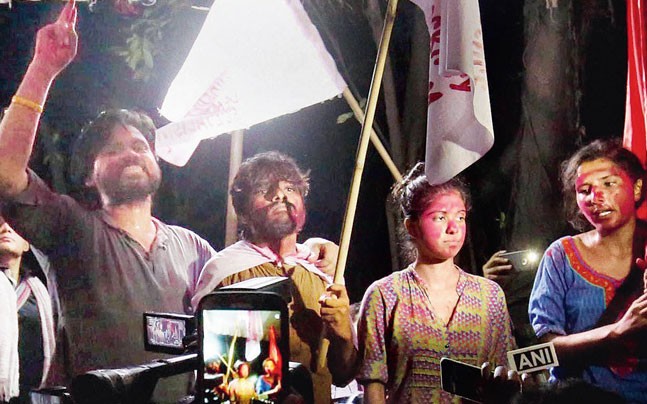
Despite sustained efforts of the Bharatiya Janata Party (BJP) to ‘saffronise’ at least the politics of Jawaharlal Nehru University (JNU), if not its syllabus and social ambience, a United Left once again trumped in painting the premier institution ‘red’, as the results of the varsity’s students union elections were declared late on Sunday night.

A United Left – brought together in its common resistance to the rising clout of the BJP through its students’ wing, the Akhil Bharatiya Vidhyarthi Parishad (ABVP) and also a Vice Chancellor who has been criticised for pursuing a ‘saffron agenda’ – swept the JNUSU polls for all four major posts of president, vice president, general secretary and vice president. However, the ABVP – which has seen a gradual rise in its political clout in the otherwise traditionally Left-leaning varsity – registered a strong vote-base, coming second in all seats, while the Amberkarite party – Birsa Phule Ambedkar Students’ Association (BAPSA) stood third.

In an expected setback for the Congress-affiliated National Students Union of India (NSUI), all its candidates who were in the running for the top four posts finished a poor fourth – securing fewer votes than those polled for the NOTA (None of the above) option.

Although the Left Unity panel of student bodies AISA-SFI-DSF (All India Students’ Association, Students’ Federation of India, and Democratic Students’ Federation respectively) managed to keep the ABVP away from winning the polls, the significant jump in the NOTA votes should be a cause of concern for those who have won the polls, as it also showcases a growing resentment among students at the varsity against its dominant Left politics. Similarly, for the ABVP, the NOTA votes presents an opportunity – of reaching out to these voters and convincing them to vote for the saffron brigade if red isn’t their colour.

The rise in NOTA votes aside, another cause of concern for the Left candidates in the future should be the dip in voter turnout per cent. This year’s JNUSU polls saw a 56 per cent voter turnout, three per cent less than the previous year’s polls. However, in real terms, this year’s turn out indicates a massive dip since the JNU administration had slashed the number of seats for students at the varsity in the current academic session by a 1,000.

This aside, the Left Unity panel shouldn’t forget that it managed to retain its hold on all key JNUSU posts only because individual Left-affiliated parties managed to set aside their personal differences and contested as a united coalition to take on the BJP-affiliate, which still managed to retain – like the previous year’s elections – the largest vote share polled for one party. If all votes polled were broken down to an average, the ABVP would have secured 950-odd votes for every central post, and over 10 councillor posts at the school-level, primarily from science. And though this is a decline when compared to last year’s 1,200 votes for the ABVP, the dip can also be attributed to greater Left unity, lower voter turnout and a general sentiment among JNU students of resisting the BJP’s interference in the running of the varsity through writs by the Centre that are purportedly executed by a controversial vice chancellor who has on more than a few occasions established his proclivity for the saffron ideology – the latest being his demand for installing a defunct Army tank in the JNU campus to “instill patriotism” in students.[/vc_column_text][/vc_column][/vc_row][vc_row css=”.vc_custom_1505121363370{margin-bottom: 20px !important;border-top-width: 20px !important;border-bottom-width: 20px !important;background-color: #a2b1bf !important;}”][vc_column][vc_column_text]The result:

Out of 4,620 votes polled for the president’s post, AISA’s Geeta Kumari secured 1,506 votes, trouncing Nidhi Tripathi of ABVP by almost 460 votes.

Left Unity panel’s candidates Simone Zoya Khan, Duggirala Srikrishna and Shubhanshu Singh were elected as vice president, general secretary and joint secretary respectively. Srikrishna, an SFI member, with 2,082 votes cast in his favour grabbed the highest number of individual votes for any post and also secured the highest margin of victory.[/vc_column_text][/vc_column][/vc_row][vc_row][vc_column][vc_column_text]A key takeaway of the result is also the rise of the relatively new student outfit BAPSA, which finished third – but with the ABVP ahead by a very narrow lead – on all key seats. By effectively raising Dalit causes and with its combative anti-Left rhetoric, BAPSA has showed that it is now a force to reckon with in JNU students’ politics. In just a few years of formation, they have emerged with a concrete cadre base and a stable vote bank (800-1000 votes of SC/ST and some of the OBC vote, along with the vote of those dissatisfied with the Left parties). BAPSA and ABVP could, in the near future, stand a shot at victory if the Left alliance crumbles or the incumbents don’t perform as per expectations of the students.[/vc_column_text][/vc_column][/vc_row]

India News

Congress protests after Supreme Court raps Madhya Pradesh over Vijay Shah case

Congress workers protested in Bhopal after the Supreme Court asked the Madhya Pradesh government to decide within two weeks on prosecuting minister Vijay Shah for his remarks against Colonel Sofiya Qureshi.

Published

on

The Congress staged a protest in Bhopal on Tuesday, escalating pressure on the Madhya Pradesh government after the Supreme Court sharply criticised the delay in taking action against state minister Kunwar Vijay Shah over his derogatory remarks against Indian Army officer Colonel Sofiya Qureshi.

The demonstration followed the apex court’s direction to the Mohan Yadav-led government to take a decision within two weeks on granting sanction for Shah’s prosecution. The court observed that the state had been sitting on the report submitted by a special investigation team for several months.

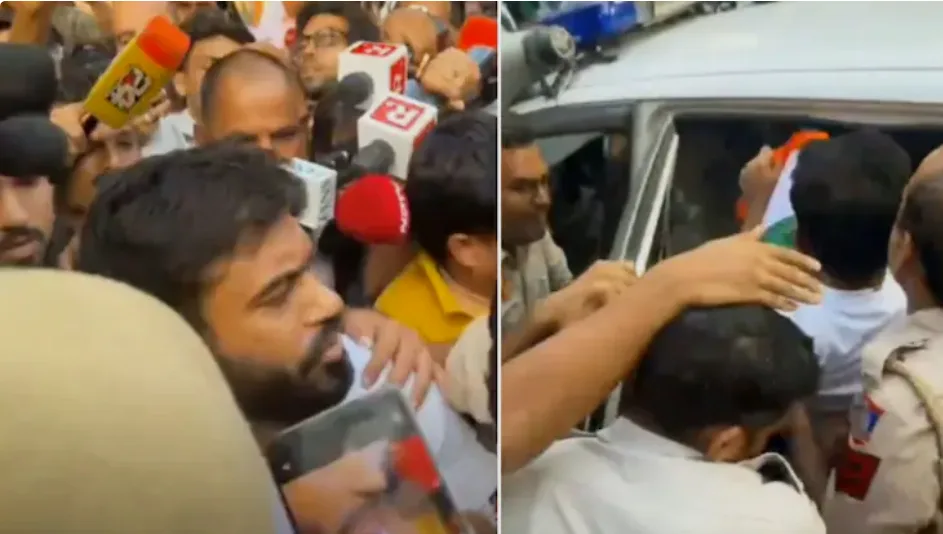
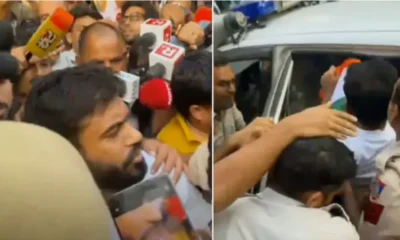
Led by Congress state general secretary Amit Sharma, party workers carried out a symbolic protest by parading a man wearing a mask resembling Vijay Shah, with his hands tied, outside the Pradesh Congress office. The protesters later marched to a nearby police station and symbolically “handed over” the masked man, demanding immediate legal action against the minister.

Addressing reporters, Sharma accused the government of shielding Shah despite the gravity of his remarks. He said Colonel Qureshi was a “daughter of the nation” who brought honour to the country and alleged that the BJP government was protecting a minister who insulted a woman officer of the Indian Army. Sharma demanded Shah’s immediate removal from the cabinet.

Background of the controversy

Vijay Shah came under fire in May last year for making derogatory and discriminatory remarks while speaking at a public event in Indore. Referring to Operation Sindoor, Shah said, “They stripped and killed our Hindus, and Modi ji sent their sister to their house to teach them a lesson.” The comment triggered widespread outrage, with critics accusing him of disrespecting Colonel Qureshi.

Shah later described the remark as a “linguistic mistake” and said he was prepared to apologise multiple times. A Supreme Court-appointed team investigated the matter and submitted its report, but the state government has yet to grant sanction for prosecution.

During a recent hearing, the Supreme Court told the Madhya Pradesh government that it had been holding on to the SIT report since August 19, 2025, despite the statute placing an obligation on it to act.

Congress leaders described the court’s remarks as a moral and political setback for the ruling dispensation. Sharma said the Supreme Court’s order showed that the truth had prevailed and accused the government of deliberately delaying action to protect a minister.

Protests intensify in Bhopal

Separately, Youth Congress workers protested outside Vijay Shah’s bungalow in Bhopal, smearing black paint on the nameplate and raising slogans against him.

Reacting to the developments, Leader of the Opposition in the state assembly Umang Singhar said on social media that the issue went beyond a single statement and reflected an “insensitive and hateful mindset flourishing under the protection of power”. He added that there could be no compromise on the honour of the Indian Army and its women, and that the law must apply equally to ministers as well.

During the Supreme Court hearing, senior advocate Maninder Singh, appearing for Shah, informed the bench that the minister had apologised and was cooperating with the investigation. However, the bench rejected the apology, with Chief Justice of India Surya Kant remarking that it was delayed and inadequate, and that the court had already commented on its nature.

Neither Chief Minister Mohan Yadav nor the BJP has issued an official response to the Supreme Court’s observations so far.

Continue Reading

India News

Congress to contest Assam polls alone, rules out any tie-up with AIUDF

The Congress has ruled out any alliance with AIUDF for the Assam Assembly elections, with Gaurav Gogoi saying the party will contest independently and continue targeting the BJP government over corruption.

Published

on

The Congress has categorically ruled out any alliance with the All India United Democratic Front (AIUDF) for the upcoming Assam Assembly elections, making it clear that the party will contest independently.

Addressing reporters in Guwahati on Tuesday, Assam Congress chief Gaurav Gogoi said there is no understanding or agreement with the AIUDF, either at present or in the future. He added that the Congress is focused on strengthening its organisation at the grassroots level and reaching out directly to voters.

Congress targets BJP government over corruption allegations

Gogoi also launched a sharp attack on Chief Minister Himanta Biswa Sarma, accusing him of corruption during the execution of major infrastructure projects in the state. He alleged that projects such as elevated corridors and flyovers were being showcased as symbols of development while corruption remained deeply entrenched in their implementation.

According to Gogoi, the Congress will continue to raise questions over what it termed as misgovernance by the BJP-led government. He said people in Assam are increasingly aware of these issues and are seeking transparency, accountability, and development that benefits ordinary citizens.

Bhupesh Baghel joins attack on Assam Chief Minister

Former Chhattisgarh Chief Minister and senior Congress leader Bhupesh Baghel also targeted the Assam government during a press conference in Dispur. He alleged that corruption had reached alarming levels under the present administration and claimed the state was being pushed towards “ruins”.

Baghel recalled the 2021 Assam Assembly elections, when he served as an observer, and referred to discussions about a political “syndicate” operating in the state. He claimed that corruption had expanded so much over the years that earlier allegations now appeared insignificant in comparison.

Allegations over assets and land acquisitions

Raising questions over asset declarations, Baghel alleged that Himanta Biswa Sarma’s wealth had increased sharply over the years. He cited figures from declared assets, stating that Sarma’s wealth rose from around Rs 1 crore in 2006 to Rs 17 crore in 2021.

He further alleged that land acquisitions, subsidies, and policy changes were carried out to benefit select individuals and business interests, including families of ministers. Baghel also referred to land-related issues in tea garden areas and changes in rules concerning elephant corridors, claiming these were altered to serve private interests.

According to him, large tracts of land were acquired over the past five years across districts such as Majuli, Kamrup, Guwahati, Nagaon, Golaghat, and Karbi Anglong, adding that the total value of such properties could not be easily assessed.

Continue Reading

India News

Nitin Nabin’s first appointments as BJP chief offer clues to party’s future

Nitin Nabin’s first decisions as BJP national president include appointing key election in-charges for Kerala, Bengaluru and Telangana, hinting at the party’s future leadership direction.

Published

on

Nitin Nabin

Taking charge as the Bharatiya Janata Party’s national president on Tuesday, Nitin Nabin moved swiftly to shape his leadership footprint by announcing a series of key organisational appointments linked to upcoming Assembly and municipal elections. The decisions are being viewed within party circles as an early indication of Nabin’s priorities and the team he may rely on going forward.

One of Nabin’s first decisions was appointing BJP national general secretary Vinod Tawde as the election in-charge for the Kerala Assembly elections. Tawde has also been named an observer for the Chandigarh mayoral elections. Among the most senior leaders in the party’s organisational setup, Tawde currently oversees Bihar, where the NDA registered a sweeping victory in the recent Assembly elections.

His expanded role is being seen as a sign of growing trust and a possible elevation in stature within the party’s central leadership. Alongside him, Union Minister of State Shobha Karandlaje has been appointed as the co-in-charge for the Kerala polls.

Ram Madhav returns to organisational spotlight

Another notable appointment is that of Ram Madhav as the in-charge for the Bengaluru municipal corporation elections. Madhav previously served as a national general secretary during Amit Shah’s tenure as BJP president and played a key role in Jammu and Kashmir politics, including during the formation of the BJP–PDP alliance in 2015.

After being sent back to the RSS in 2020, Madhav’s return to active organisational responsibilities became clearer when he was appointed election in-charge for the Jammu and Kashmir Assembly elections in 2024. His latest assignment is being interpreted as a signal of a larger role ahead and renewed backing from the RSS.

Former Rajasthan BJP president Satish Poonia has been named co-in-charge for the Bengaluru civic polls, along with Maharashtra MLA Sanjay Upadhyay. Poonia, who has been seeking a political comeback after his Assembly election defeat, has recently handled responsibilities in Haryana and Bihar.

Focus on younger leadership in Telangana

In another significant move, Maharashtra minister Ashish Shelar has been appointed in-charge for the Telangana municipal corporation elections. Considered one of the younger faces in the Maharashtra BJP, Shelar is known to be close to Chief Minister Devendra Fadnavis and has previously led the Maharashtra Yuva Morcha.

Former Rajasthan BJP president Ashok Parnami and Rajya Sabha MP Rekha Sharma will assist Shelar as co-in-charges. Shelar’s appointment is also being seen as a reflection of his close working relationship with Nitin Nabin and an emphasis on grooming leaders with organisational experience.

Together, these early appointments suggest that Nabin’s tenure may focus on blending senior organisational hands with relatively younger leaders, as the BJP prepares for a series of crucial electoral battles.

Continue Reading

Trending

© Copyright 2022 APNLIVE.com