
India News
BJP’s Janaraksha Yatra projects BJP-RSS as victims of CPI(M) in mutual killings in Kerala

[vc_row][vc_column][vc_column_text]The BJP’s Jan Raksha Yatra program in Kerala is a reflection of its earnest efforts to push its ‘Vistar’ (expansion) campaign in a state where it had negligible presence.
Pepped up by its performance in last Kerala Assembly elections when its vote share entered double digits (14.6%) and it won a seat while coming second in six others, the BJP under Amit Shah is focusing on making a headway in the state to add to its tally in 2019 Lok Sabha polls.
It seeks to do this through using its USP of hard Hindutva. The 15-day Janaraksha Yatra launched by BJP president Amit Shah against “Red Jihadi Terror” seeks to mobilise people along these lines. The march, a show of strength by the BJP and the RSS, will pass through 11 of the 14 districts in Kerala and end in capital Thiruvananthapuram on October 17.
The BJP would also organise daily marches to CPI(M) office in Delhi as well till the conclusion of the campaign on October 17. In Bhubaneswar, too, BJP workers protested against Kerala government and CPM over killings of BJP and RSS workers in Kerala.
The campaign seeks to highlight killings of RSS-BJP workers and sympathisers by CPI(M) cadres as a communist terror, glossing over counter killings of CPI(M) workers by RSS which are nearly equal in number, as per various media reports.
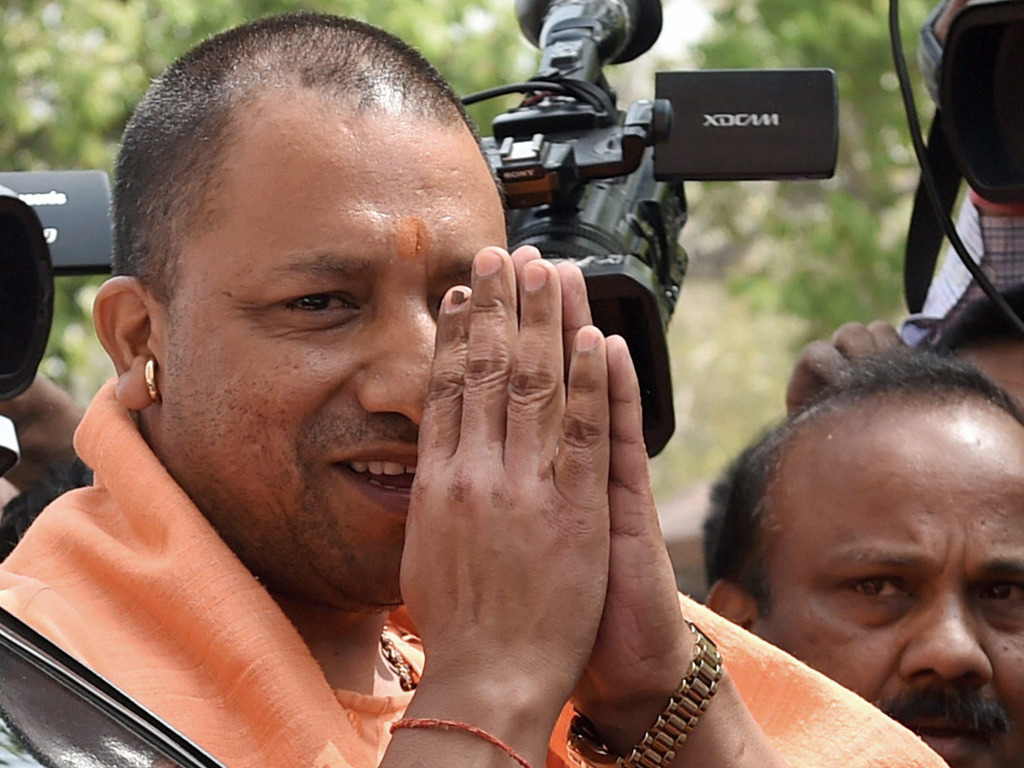
After Shah kicked on Tuesday, Oct 3, flagged off the Janaraksha Yatra led by BJP state president Kummanam Rajasekharan, at Payyannur in the northern district of Kasargod, party’s Hindutva icon and Uttar Pradesh (UP) Chief Minister Yogi Aditynatah joined in on Wednesday.
Slamming the “political killings” of BJP-RSS cadres in Kerala, UP CM Yogi Adityanath on asserted that violence under Chief Minister Pinarayi Vijayan an environment of Jihadi terrorism is prospering in the state. He said the rally intends to show a mirror to the governments of Kerala, West Bengal and Tripura, who speak of democracy but in reality believe in violence which has no place in a democracy.
“Political killings are taking place in the state. Especially, the way the Bharatiya Janata Party (BJP) and RSS workers are being targeted, we are here to create awareness in the regard. Through this road show, we are trying to show mirror to the government of Kerala, west Bengal and Tripura. We, through this initiative, want that these governments repent and introspect their deeds and stop violence. Killings of innocent people should stop,” said Adityanath.
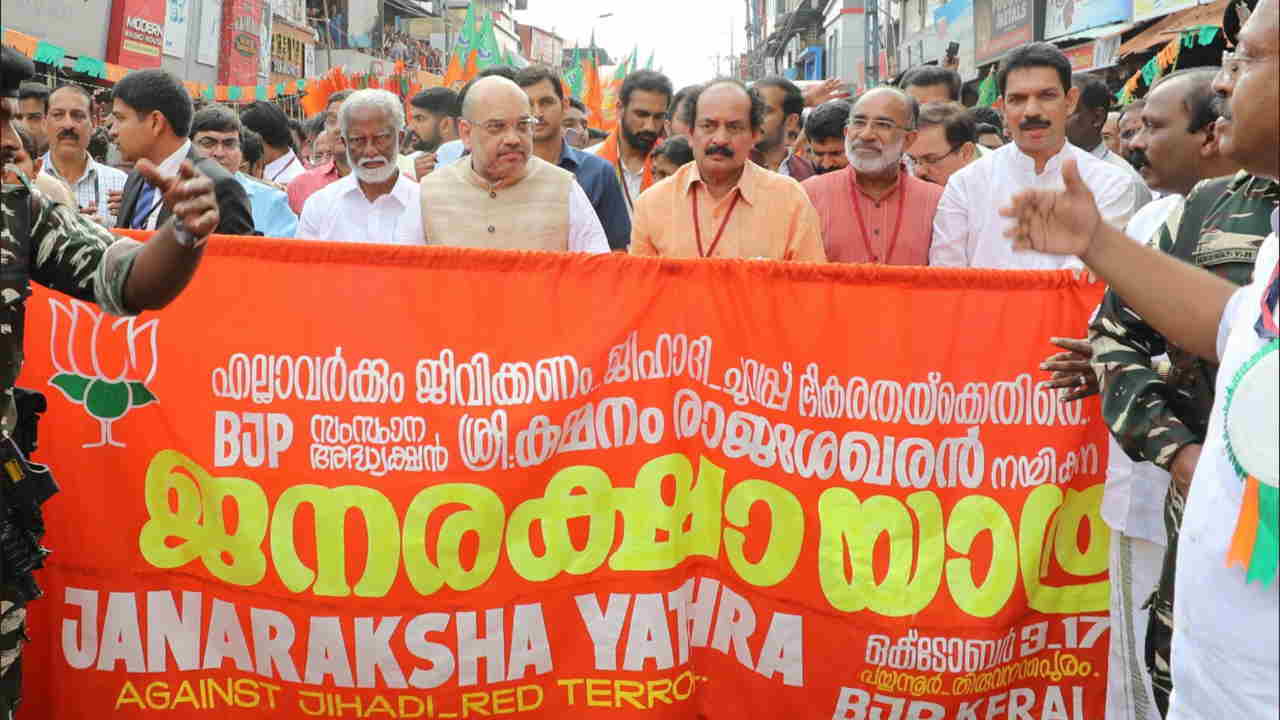
To highlight the campaign, the theme of the march was taken up by Union Minister Ravi Shankar Prasad on Wednesday. He questioned the Communist Party of India (Marxist) (CPI-M)-led Kerala Government as to why they were not taking any action against the “cycle of violence and murderer of opponents” in the state.
“We are very proud for our party president that he has taken the lead in giving a peaceful opposition to the politics of murder massacre unleashed by the CPI-M led government. 100 of our workers have been killed in Kannnor,” Prasad told ANI.
“Since P Vijayan became the Chief Minister of Kannoor, 13 BJP and Sangh workers have been killed. The police are under him. Then why no action has been taken? Why is the left party only the biggest patron of the cycle of violence and murderer of opponents,” he added.
On Tuesday, BJP chief Amit Shah held Chief Minister Vijayan directly responsible for killing of party and RSS workers in the state. He said that party’s ambitious ‘Janaraksha Yatra’ is to create awareness against political murders.
Addressing a gathering, Shah said, “End of the CPI-M will herald the end of political violence. Wherever CPI-M ruled – be it Kerala, West Bengal or Tripura – political violence followed. Also, more than 120 workers of the BJP had succumbed to death in Kerala due to political violence.”
Challenging CM Vijayan, Shah said the “bloodstains of those 84 RSS/BJP workers killed in Kannur are on your clothes.” He added: “Vijayanji, I want to tell you, no matter how much muck you are creating out of violence here, you should know that the lotus will bloom in that mud.” He also criticised “human rights activists” for being “selective” in their condemnation of violence.
The BJP has roped in Union Minister Alphons Kannanthanam, MPs Suresh Gopi and Richard Hey, former Karnataka Education Minister C T Ravi, BJP Puducherry president V Swaminathan, and many other BJP leaders and workers for the march. In the next few days, Maharashtra Chief Minister Devendra Fadnavis and Goa’s Manohar Parrikar, Defence Minister Nirmala Sitaraman, Petroleum Minister Dharmendra Pradhan and Minister of State for External Affairs VK Singh are expected to go to Kerala for the march.[/vc_column_text][/vc_column][/vc_row]











India News
Journalist files police complaint against Rahul Gandhi over push allegation
Journalist Richa Parashar has filed a criminal complaint against Rahul Gandhi and others, alleging that she was pushed while covering the Opposition’s march to the Supreme Court. The Congress has denied the allegation.

India News
Delhi court orders release of CJP founder Abhijeet Dipke
A Delhi court on Saturday ordered the conditional release of Cockroach Janta Party founder Abhijeet Dipke, who was detained and subsequently arrested ahead of a planned protest march at Connaught Place.
India News
Anirudh Ravichander to marry Kavya Maran in November, reception on November 21
Anirudh Ravichander and Kavya Maran are set to marry in November, with their Chennai wedding reception scheduled for November 21.


Anirudh Ravichander to marry Kavya Maran in November, reception on November 21

Delhi court orders release of CJP founder Abhijeet Dipke

Journalist files police complaint against Rahul Gandhi over push allegation
Journalist files police complaint against Rahul Gandhi over push allegation
Delhi court orders release of CJP founder Abhijeet Dipke
Anirudh Ravichander to marry Kavya Maran in November, reception on November 21

ED summons Pinarayi Vijayan in money laundering case

LK Advani, 98, hospitalised in Delhi with chest infection

Afghan Men Try To Hang With The Jet Engine Of The Aircraft in Kabul- Afghanistan News – Kabul News
Trending Top 10 News: 10000 Crore Fine on Flipkart, Apple to Launch Unique Feature, Hdfc Bank Job Ad

Trending Top 10 News: Nokia 6310, Apple sales, Bachpan ka Pyar Video Kid, Dainik Bhaskar IT Raid

Trending Top 10 News: Canada bans Indian flights, Rain in Delhi NCR, AIMIM Twitter hacked, Raj Kundra case




