
India News
MP: 6-yr-old boy, trapped in 400 feet deep borewell in Betul, dies, was pulled out by rescue team after 84 hours
The rescue team has tried day and night, but somewhere they got late, child’s uncle said, adding that if they had the resources to get the child out on the same day, he would have survived.


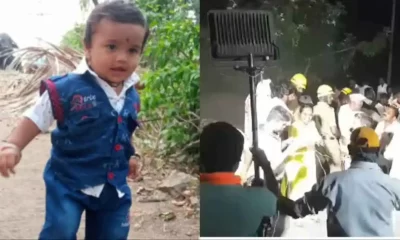
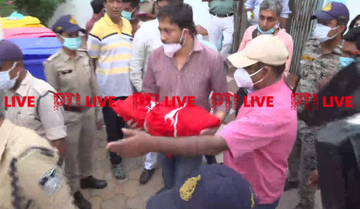
The 6-year-old boy, who was trapped in a borewell in Madhya Pradesh’s Betul, has died. The body of the child was taken out after 84 hours. The rescue team reached close to the child at 3 am. The body could be taken out till 5 in the morning. The dead body was brought to the district hospital in Betul at 7 o’clock. The body had rotten due to water in the bore. A team of 5 doctors performed the post-mortem of the dead body.
The child’s uncle Rajesh Sahu said that the last rites will be performed at Tapti Ghat in village Mandvi. He added that they had thought that Tanmay would be successfully rescused out and that they would get their child back. The rescue team has tried day and night, but somewhere they got late, he said, adding that if they had the resources to get the child out on the same day, he would have survived.

There was an injury in the child’s rib, chest congestion too
ADM Shyamend Jaiswal said that when Tanmay’s body was taken out, it had begun to decompose. In the information received, in the post-mortem report, chest congestion (chest tightness) and rib injury have been revealed. Financial assistance will be provided to the family for the funeral. Collector Amanbir Singh Bains said that the bore is 400 feet deep. The child was trapped at a depth of about 39 feet. The rescue team dug a 44-feet-deep pit parallel to the bore and after that a 9 feet horizontal tunnel was dug.
Read Also: Agra men rip road apart with their hands, video of poorly laid road goes viral

61 NDRF and DSRF personnel were trying to rescue the child
Home Guard Commandant SR Azmi, who was supervising the rescue operation, said that Tanmay was trapped at 39-feet in the borewell. Considering the normal height of the child as three to four feet, they had dug a pit up to 44 feet. 61 personnel of NDRF and DSRF were engaged in building the tunnel.

School Education Minister Inder Singh Parmar inspected the rescue site in Betul. He also spoke to the parents of the child who fell in the borewell.
People of four villages had gathered to help
The people of Mandvi village where the incident took place as well as of 4 nearby villages have extended their helping hand. From free food to all kinds of arrangements are being made by the villagers for more than 200 people involved in the rescue. The villagers say that the administration is constantly engaged in relief work. Therefore, we are also extending cooperation to help at every level.
There will be an FIR against the farm owner
ADM Shyamendra Jaiswal said that getting the child out safely is a priority. After this FIR will be lodged against the farm owner. SDRF and NDRF teams are constantly trying to reach the child. Very hard stones are coming in the pit being dug, so there is difficulty in removing them. The child has not responded since Tuesday evening.
CM Shivraj Singh Chouhan, who is monitoring the whole matter himself, said that the administration has been instructed to take all necessary steps. On Wednesday, the officials told the CM that the NDRF-SDERF team is continuously working.
Child’s voice came from inside the borewell
The incident took place on Tuesday evening around 5 pm in Mandvi village of Aathner in Betul district. 6-year-old Tanmay was playing with other children. Meanwhile, he fell into the borewell of the neighbour. On this, the family members immediately informed the Betul and Aathner police.
BJP’s Gujarat landslide win marred by Himachal Pradesh hiccup







India News
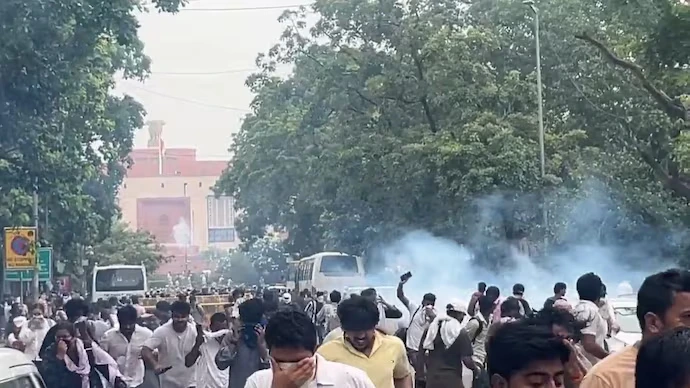
Delhi deploys 25,000 personnel, installs CCTV cameras ahead of CJP march
More than 25,000 police and paramilitary personnel have been deployed in Delhi ahead of the CJP’s planned protest march at Connaught Place. Authorities have also imposed restrictions and stepped up CCTV surveillance.

India News
Mallikarjun Kharge’s ‘Your Friends’ jab at Rahul Gandhi over congress exits
Congress president Mallikarjun Kharge took a dig at Rahul Gandhi after the Leader of the Opposition reportedly described former party leaders Jyotiraditya Scindia and Ghulam Nabi Azad as among those who had left the Congress.

India News
Delhi Police offers 11-person limit for CJP’s Connaught Place protest
Delhi Police has offered to facilitate a group of 11 people at Central Park in Connaught Place for the Cockroach Janata Party’s October 16 protest, while warning that violations of prohibitory orders could invite legal action.


India-US trade deal first phase finalised, drafting underway

Election Commission orders voter roll revision in 17 states, UTs

Actor Imran Khan asked to leave India after CJP protest

Delhi Police offers 11-person limit for CJP’s Connaught Place protest

Mallikarjun Kharge’s ‘Your Friends’ jab at Rahul Gandhi over congress exits

Magnitude 7 earthquake strikes Russia’s Kamchatka Peninsula

Delhi deploys 25,000 personnel, installs CCTV cameras ahead of CJP march
Mallikarjun Kharge’s ‘Your Friends’ jab at Rahul Gandhi over congress exits
Delhi Police offers 11-person limit for CJP’s Connaught Place protest
Actor Imran Khan asked to leave India after CJP protest

Afghan Men Try To Hang With The Jet Engine Of The Aircraft in Kabul- Afghanistan News – Kabul News
Trending Top 10 News: 10000 Crore Fine on Flipkart, Apple to Launch Unique Feature, Hdfc Bank Job Ad

Trending Top 10 News: Nokia 6310, Apple sales, Bachpan ka Pyar Video Kid, Dainik Bhaskar IT Raid

Trending Top 10 News: Canada bans Indian flights, Rain in Delhi NCR, AIMIM Twitter hacked, Raj Kundra case

Trending Top 10 News: Shein India, Apple New Service, Pocket Oxygen, Oppo Launched New Phone
-
 India News20 hours ago
India-US trade deal first phase finalised, drafting underway
-
 India News17 hours ago
Election Commission orders voter roll revision in 17 states, UTs
-
 India News17 hours ago
Actor Imran Khan asked to leave India after CJP protest
-
 India News16 hours ago
Delhi Police offers 11-person limit for CJP’s Connaught Place protest
-
 India News4 hours ago
Mallikarjun Kharge’s ‘Your Friends’ jab at Rahul Gandhi over congress exits
-
 India News4 hours ago
Delhi deploys 25,000 personnel, installs CCTV cameras ahead of CJP march
-
 Latest world news4 hours ago
Magnitude 7 earthquake strikes Russia’s Kamchatka Peninsula
