English हिन्दी
Connect with us

India News

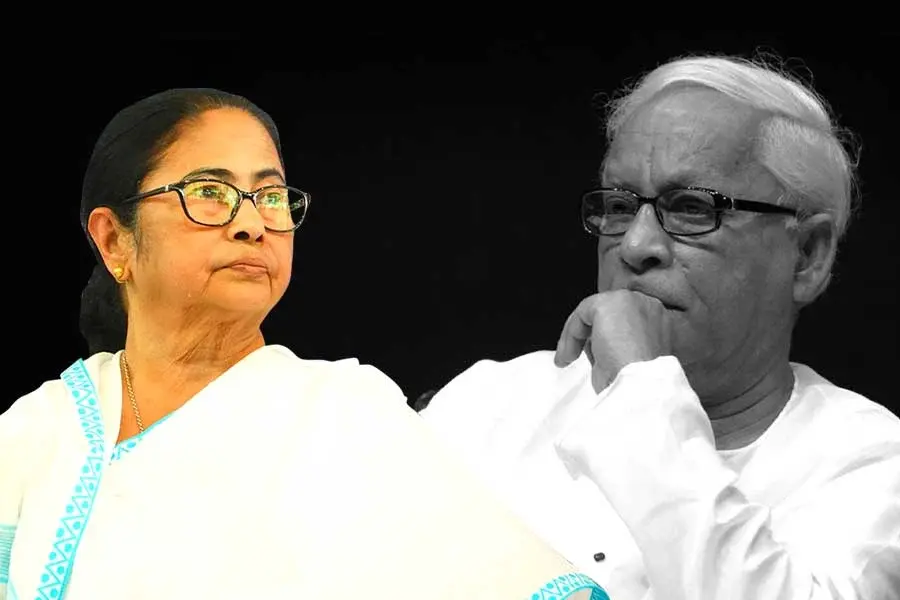
Mamata Banerjee condoles demise of former West Bengal Chief Minister Buddhadeb Bhattacharjee

Banerjee said she has known him for the last several decades and visited him a few times when he was ill and effectively confined to home in the last few years.

Published

on

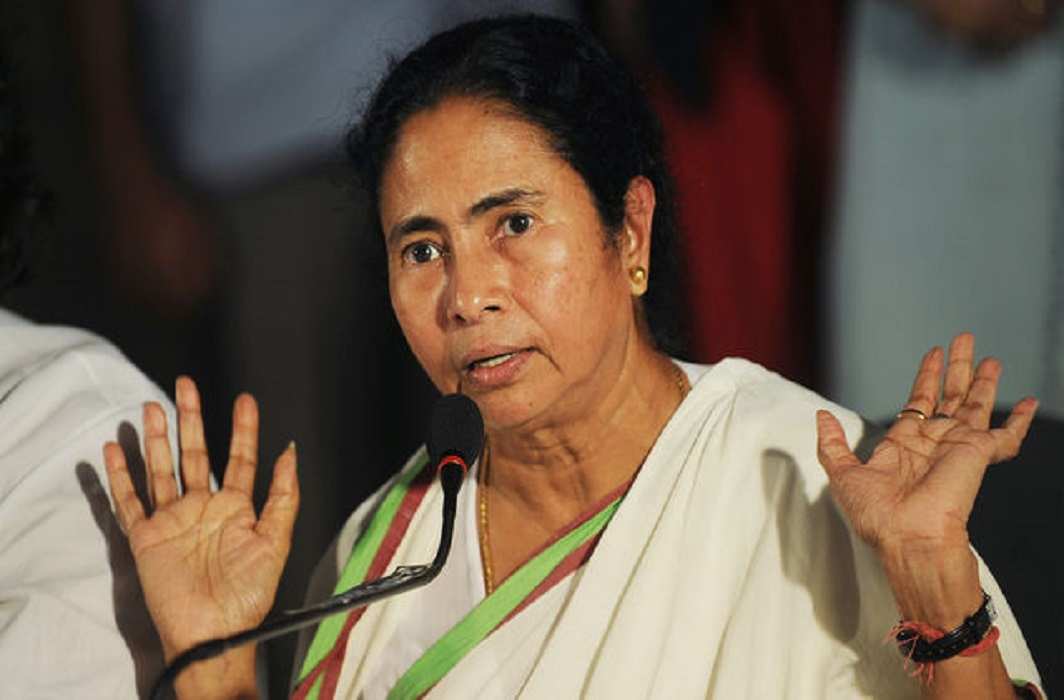
West Bengal Chief Minister Mamata Banerjee on Thursday condoled the demise of former Chief Minister of State Buddhadeb Bhattacharjee and said she was shocked and saddened by the sudden demise of the former CM.

Banerjee said she has known him for the last several decades and visited him a few times when he was ill and effectively confined to home in the last few years.
“My very sincere condolences to Meeradi and Suchetan at this hour of grief. I communicate my condolences to the members of the CPI(M) party and all his followers. We have already taken a decision that we shall give him full respect and ceremonial honour during his last journey and rites”, West Bengal CM said in a post on X.

Veteran Left leader Bhattacharjee died at his south Kolkata residence early this morning. He was 80. He had been suffering from ill-health for several years, chiefly against respiratory problems that often landed him in hospitals. Last year, he was put on life support when a bout of pneumonia hit him, but the fightful CPM leader he was, made a remarkable recovery. He leaves behind his wife Meera and son Suchetan.

A former politburo member of the apex decision-making body of the CPM, Bhattacharjee led the Bengal Chief Ministership between 2000 to 2011 succeeding Jyoti Basu. Under his leadership, CPM fought the 2011 state elections, which the Mamata Banerjee-led TMC convincingly won ending the 34-year Communist regime in the state.

The 77-year-old Bhattacharjee, known for his austere life, died at the simple two-room house on Palm Avenue where, ironically, he had led the administration of the state. His organs would be donated for medical research in accordance with his wish. His body would be taken to the CPI headquarters for people to pay homage. The last rites would be performed on Saturday.

Bhattacharjee is an alumnus of Presidency College, Kolkata, and became a full-time politician after starting his career as a school teacher. An MLA and a state minister, he was being groomed for greater things to come as he was elevated as Deputy Chief Minister soon after Basu’s resignation in 2000. As Chief Minister, he led the CPM to electoral victories in the 2001 and 2006 Assembly polls.

His tenure has taken a comparatively liberal stand toward business, as compared with that of the Jyoti Basu era. Ironically, it was precisely this policy, coupled with the controversial land acquisitions for industrialization, that caused the Left to suffer an ignominious defeat in the 2011 election.

The Trinamool Congress, which managed to win only 30 seats in the 2006 polls, led the fight against the Tata Motors project at Singur. It was finally shifted out of the State to Gujarat in 2008 by Ratan Tata, who cited Banerjee’s agitation as the reason. The development marked a severe embarrassment to Bhattacharjee’s Government. No less damaging was the Nandigram violence, in which 14 people died when police fired on those protesting acquisition of land for a chemical hub.

The benefiting party, Banerjee’s Trinamool Congress, rode to power in 2011 with 184 seats on the wave of anti-incumbency sentiment against the Left Front and the negative perception of the land acquisition policies of the state government. The defeat completed the slide into a decline from which it has yet to recover. A decade later, the BJP is now the principal Opposition, pushing the Left to a minor force in a state it once ruled unchallenged for decades.

Condoling his death, Bengal Governor CV Ananda Bose said that it marked the end of an era of politics. Chief Minister Banerjee said in her condolence message: “I am deeply saddened. My condolences to Meera di, Suchetan, and all CPM supporters. We have decided to accord him full respect and ceremonial honours during his last journey and rites.”.

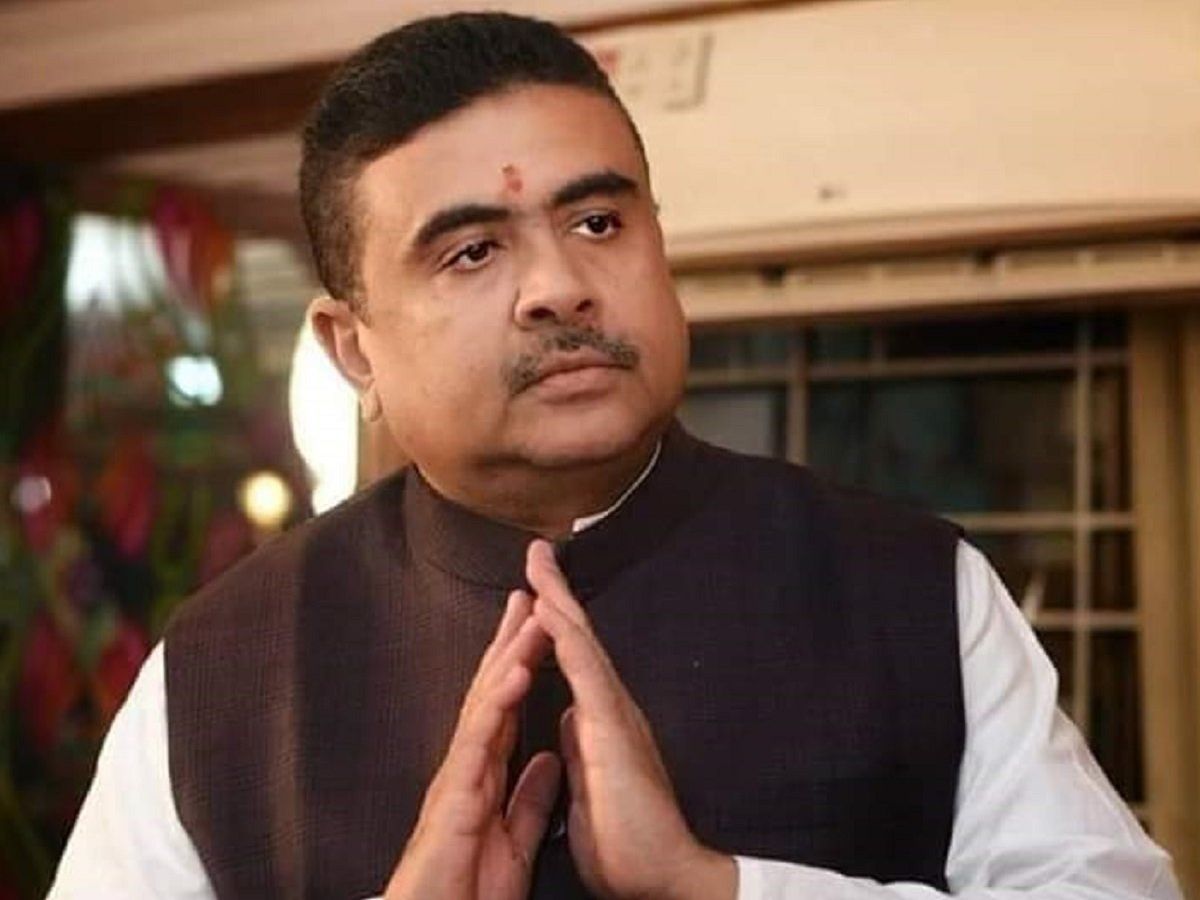
Leader of the Opposition, BJP’s Suvendu Adhikari, took to Twitter to condone his “deep sadness over the death to the family and fans” of Bhattacharjee.

Long-time fellow and CPM general secretary, Sitaram Yechury, described the news of Bhattacharjee’s passing as “shattering”. “His commitment to the party, West Bengal, our shared ideals and his foresight will always be a guiding star,” he said.

India News

Delhi to install 305 mist sprayers across 9 major pollution hotspots

Chief Minister Rekha Gupta announced that 305 mist sprayers will be installed across nine pollution hotspots in Delhi, alongside expert-led planning and coordinated measures to reduce dust and biomass-related pollution.

Published

on

Delhi-NCR air quality

The Delhi government has announced a large-scale deployment of mist sprayer technology to tackle rising air pollution, with Chief Minister Rekha Gupta confirming that 305 mist sprayers will be installed across nine pollution hotspots in the capital.

Mist sprayers to curb dust at critical locations

During an inspection at ITO, Gupta said the mist sprayers already operational at the site are performing effectively. She noted that 35 poles at ITO have been fitted with these machines, which are helping suppress dust—a major contributor to air pollution in Delhi.

According to the Chief Minister, trials conducted in certain NDMC areas have shown promising results, reinforcing confidence in the technology.

High-level committee to guide pollution-control measures

Gupta announced the formation of a high-level expert committee that will advise the government on effective measures to reduce pollution. The panel will include senior officials from various departments as well as environmental specialists, including experts from IITs. Officials stated that the committee will receive special powers to implement pollution-mitigation strategies.

Departments directed to repair roads, add greenery

The Chief Minister said departments including PWD, DSIIDC and DDA have been instructed to fix potholes, repair and carpet roads, plant foliage along dividers and islands, and take other measures to reduce pollution sources.

She urged residents to report potholes on the government portal for quicker action.

Appeal to RWAs to prevent biomass burning

To curb winter pollution, Gupta advised Resident Welfare Associations (RWAs) to distribute electric heaters to security guards to discourage biomass burning, which significantly contributes to seasonal pollution spikes.

Continue Reading

India News

PM Modi welcomes Vladimir Putin with warm hug as Russian President begins India visit

Russian President Vladimir Putin began a high-profile visit to India on Thursday, welcomed by PM Narendra Modi as both nations prepare to discuss defence, energy and trade cooperation.

Published

on

Vladimir Putin rides in Indian PM Narendra Modi's car on India visit

Russian President Vladimir Putin arrived in New Delhi on Thursday evening for a 27-hour visit focused on strengthening defence, energy and trade cooperation. The visit, marked by a warm embrace and a brief car ride shared with Prime Minister Narendra Modi, underscores the continuity of the India-Russia strategic partnership amid shifting global geopolitics.

Putin receives ceremonial welcome and packed schedule ahead

Putin landed in Delhi around 6:35 pm, where PM Modi personally received him at Palam airport. The two leaders shared a hug before leaving together, with the Prime Minister set to host a private dinner in honour of the visiting President — a reciprocal gesture to the hospitality extended during Modi’s Moscow visit last year.

On Friday, Putin will begin his official engagements with a ceremonial welcome at Rashtrapati Bhavan, followed by a visit to Rajghat to pay homage to Mahatma Gandhi. He is also scheduled to attend the India-Russia Annual Summit at Hyderabad House, where both sides will hold a working lunch.

The Russian President will later inaugurate a new India-based channel of Russia’s state broadcaster and attend a state banquet hosted by President Droupadi Murmu, before departing India on Friday night.

Defence, energy and trade to dominate agenda

Officials have indicated that discussions will centre on defence, energy and trade — the three pillars of the bilateral relationship. Agreements are expected across sectors including shipping, healthcare, fertilisers and connectivity.

Ahead of the summit, defence ministers from both countries held extensive talks, covering additional procurement of S-400 air defence systems and delayed military hardware shipments affected by the Ukraine war. The S-400 platform, procured under a USD 5 billion deal, played a major role during Operation Sindoor.

The Kremlin has also hinted that Russia may propose the Su-57 fifth-generation fighter jet, which would put Moscow in direct competition with Western aircraft makers.

Energy ties face renewed pressure

India remains among the largest buyers of discounted Russian crude. However, fresh US sanctions on key Russian oil producers have led to a dip in purchases.

Putin’s visit also comes at a time of strain in India-US ties, with Washington recently imposing steep tariffs on Indian goods — including measures linked directly to India’s continued oil trade with Russia.

Massive security deployment in Delhi

Delhi Police have stationed over 5,000 personnel across central and New Delhi districts, supported by SWAT teams, anti-terror units, snipers, quick-reaction teams, anti-drone systems, HD-CCTV networks and layered surveillance measures for the visit.

Continue Reading

India News

Rahul Gandhi attacks Centre ahead of Vladimir Putin’s India visit

Rahul Gandhi alleged that the government discourages visiting foreign dignitaries from meeting Opposition leaders, calling it a sign of “insecurity,” hours before Russian President Vladimir Putin arrives in Delhi.

Published

on

Rahul Gandhi

As Russian President Vladimir Putin arrives in Delhi today for the India-Russia Annual Summit, Leader of the Opposition Rahul Gandhi has renewed his charge that the Centre discourages visiting foreign leaders from meeting Opposition representatives. He called it a sign of “insecurity” within the government.

Rahul Gandhi alleges break in long-followed tradition

Speaking outside Parliament, Rahul Gandhi said that it has traditionally been the norm for visiting foreign leaders to meet the Leader of the Opposition, a practice he claims continued during the tenures of Atal Bihari Vajpayee and Manmohan Singh.

He alleged that the present government advises foreign dignitaries against such meetings. “When foreign leaders come, the government suggests they should not meet the Leader of the Opposition. This is their policy,” Gandhi said. He added that a meeting with the Opposition offers visiting leaders a broader perspective, as “we too represent India.”

Gandhi further stated that this approach reflects the government’s reluctance to allow engagement between the Opposition and foreign guests.

Former Foreign Secretary counters Gandhi’s remarks

Responding to Gandhi’s allegations, former Foreign Secretary and Rajya Sabha MP Harsh Vardhan Shringla said visiting leaders operate on very tight schedules and there is no protocol mandating a meeting with the Leader of the Opposition. He stressed that such interactions depend entirely on the guest’s time and preference, noting that the required meetings are those with the President and the Prime Minister.

Putin’s schedule packed with bilateral engagements

Russian President Vladimir Putin is set to land in Delhi this evening on Prime Minister Narendra Modi’s invitation. His itinerary includes:

  • A private dinner with PM Modi
  • Visit to Mahatma Gandhi’s memorial at Raj Ghat
  • Engagements at Bharat Mandapam and Hyderabad House
  • A banquet hosted by President Droupadi Murmu

The visit forms part of the 23rd India-Russia Annual Summit.

Continue Reading

Trending

© Copyright 2022 APNLIVE.com