English हिन्दी
Connect with us

India News

Bulandshahr violence: indications of conspiracy to stoke communal violence

Published

on

[vc_row][vc_column][vc_column_text]It would seem the Uttar Pradesh (UP) police was not completely wrong in saying that probe into the cow slaughter was of higher priority than the killing of its inspector, Subodh Kumar Singh, in the ensuing violence in Bulandshahr.

Perhaps it is not going the way it was intended to, when UP chief minister Yogi Adityanath asked the state police to give more importance to the issue of cow slaughter.

A probe by the Additional Director General (Intelligence) SB Shirodkar, reported News18, found that the Bulandshahr mob violence in which a police inspector and a youngster were killed was a larger conspiracy, with the likely intent to clash with the Muslim procession passing through Bulandshahr-Garhmukteshwar State Highway on Monday.

The report, submitted to the UP police chief and to be given to chief minister Yogi Adityanath at the time of the report, said that the biggest sign of the violence being a pre-planned conspiracy was that the cow carcass found at the spot, which was the trigger for the violence, was 48 hours old and was most likely not slaughtered in Sayana village as claimed by Barjrang Dal’s district head Yogeshraj Singh, who had in his police complaint stated that he witnessed the cow being killed.

It further said that the mob behaviour suggests that some in the crowd were deliberately trying to escalate the situation and ensure violence.

“They didn’t lift the road blockade even after an FIR was registered (based on Yogeshraj’s complaint. When inspector Subodh Kumar Singh informed them that a case was lodged, some in the mob fled with the tractor and left the trolley with remains of dead animal parked on the road to block it,” reads the report.

The ADG said this is when inspector Subodh and some officers, including the tehsildar, realised that the intent could be to confront the crowd that was shortly to return from the Muslim convention that had just got over some 30 km away.

Sensing trouble, they tried to remove the trolley with the carcass, but encountered stiff resistance and this is when the violence escalated.

Calling it a failure of intelligence, Shirodkar asked why there was no prior warning about a possible conspiracy to stage a riot after spreading rumours of cow slaughter.

“Though force was sent on spot including 25 men of PAC, more force should have been sent during the crucial hours between 9 am and 1 pm,” the report added.

From this, it appears Inspector Subodh Kumar Singh was killed by people who were trying to start a communal clash – and considering the violence they indulged in, had prepared for it. Moreover, it is clear that the BJP and Sangh parivar outfits had been gunning for the police Inspector for some time. (More on this comes below).

The UP government had also ordered a separate SIT probe, whose report is also awaited.

The police have arrested four Muslim men — Sarfuddin, Sajid, Asif and Nanhe — under sections of the UP Prevention of Cow Slaughter Act 1955 for cow slaughter, despite holes in Yogeshraj’s version.

He had first claimed to have seen the men slaughtering the cow, but later in a video released from hiding, stated that he went to the spot where the cow carcasses were hung after receiving a phone call. The men named in his complaint also included two minors, aged 11 and 12, and three men who live in Delhi-NCR.

Earlier, Additional Superintendent of Police (Bulandshahr) Rayees Akhtar told The Indian Express (IE): “Our main concern at this moment is to find out who killed those cows. After all, it was the killing of the cows that led to the protest, which resulted in Inspector Subodh Kumar Singh’s murder. Our belief is that once we solve that case, it will throw light on how the murder occurred. The cow-killers are our top priority. The murder and rioting case is on the backburner for now.”

So far, police have arrested four persons — Chaman, Devendra, Ashish Chauhan and Satish — for their alleged involvement in Singh’s murder. But they are yet to nab the main accused, Yogeshraj Singh, a Bajrang Dal activist who is on the run.

 Local BJP functionary accused in Inspector’s killing blames him for violence, alleges he was corrupt

Meanwhile, a day after Yogeshraj posted a video on social media claiming his innocence, another video of Accused No.9 in the FIR on Singh’s killing — BJP’s Syana unit youth wing president Shikhar Agarwal — surfaced in which he alleged that the slain SHO had threatened him.

Agarwal, a resident of Siyana, claimed in the video: “I was told of a commotion in Mahwa and when we reached there, I saw that cows had been slaughtered. We put the carcasses in the tractor and went towards Chingravati Police Station where we were stopped by Subodh Kumar Singh. He asked us to bury the carcass there and threatened to shoot us. I informed Sub-Divisional Magistrate of Siyana, Avinash Chandra Maurya, about the conversation who assured that an FIR will be filed.”

Agarwal claimed that the SHO was to blame for the violence. “It was only because Subodh Kumar Singh refused to file an FIR that things got out of hand and a riot-like situation was created.”

Questioning Singh’s integrity, Shikhar Agarwal said: “Everyone in Siyana knows… I have full faith in the Yogi Adityanath government… If I am guilty I will be hanged, if not I will go free.”

Asked about Agarwal’s claims, Bulandshahr SP (City) Pravin Ranjan Singh told IE: “An accused will say whatever he has to say in his defence. It does not matter. Subodh was an honest officer.”

Local saffron leaders had wanted Inspector transferred

A three-month-old letter that has now surfaced indicates that local saffron leaders had sought the officer’s transfer, reported The Times of India (TOI).

In a letter written to Bulandshahr MP Bhola Singh on September 1, BJP functionaries of Syana had accused the officer of putting obstacles in the way of Hindus’ religious functions.

Sanjay Shrotiya, BJP’s Bulandshahr city general secretary and one of the signatories, confirmed that such a letter had been sent to the local MP against the “high-handed attitude” of the Syana SO, the TOI report said.

The handwritten letter was reportedly signed by six BJP leaders of Syana, including local block pramukh Pramendra Yadav.

Alongside this, according to a report in The Hindustan Times (HT), Inspector Subodh Kumar Singh’s wife, Rani, told chief minister Yogi Adityanath on Thursday her husband, who was handling complaints against cow slaughter, used to get threatening calls over the phone.

In a video circulated to the media after her meeting with Adityanath, Rani, who met the UP CM along with her sons in Lucknow, is heard saying, “There is one more thing, Sir. My husband used to call me to the police station (Syana) and I used to go there. The last time when I was there, three people had been arrested for cow slaughter.”

“There was a call from Syana MLA (Devendra Singh Lodhi) when my husband was in the bathroom. He asked me to pick up the call and inform that he was inside,” she says.

However, the HT report said, there is no clarity about what she said further as the video was disconnected – significantly, just at the crucial point.

A senior officer present at the meeting said she only informed the chief minister about the threats her husband used to receive and there was nothing beyond that.

“I have informed the chief minister about all this and he has assured us of a fair inquiry,” Rajni said while speaking to the Hindustan Times over the phone after the meeting.

Slain Inspector was key witness in Dadri lynching case

The murder of police inspector Subodh Kumar Singh in Bulandshahr will affect the Dadri lynching case, the counsel for the victim Mohammad Akhlaq told News18.

“He was one of our most important witnesses. His murder will definitely be a setback,” said Yusuf Saifi, who has been fighting the case in a trial court on behalf of the victim’s family. Singh was witness number 7 in the case.

[/vc_column_text][/vc_column][/vc_row]

India News

Delhi Police offers 11-person limit for CJP’s Connaught Place protest

Delhi Police has offered to facilitate a group of 11 people at Central Park in Connaught Place for the Cockroach Janata Party’s October 16 protest, while warning that violations of prohibitory orders could invite legal action.

Published

on

CJP protest to continue

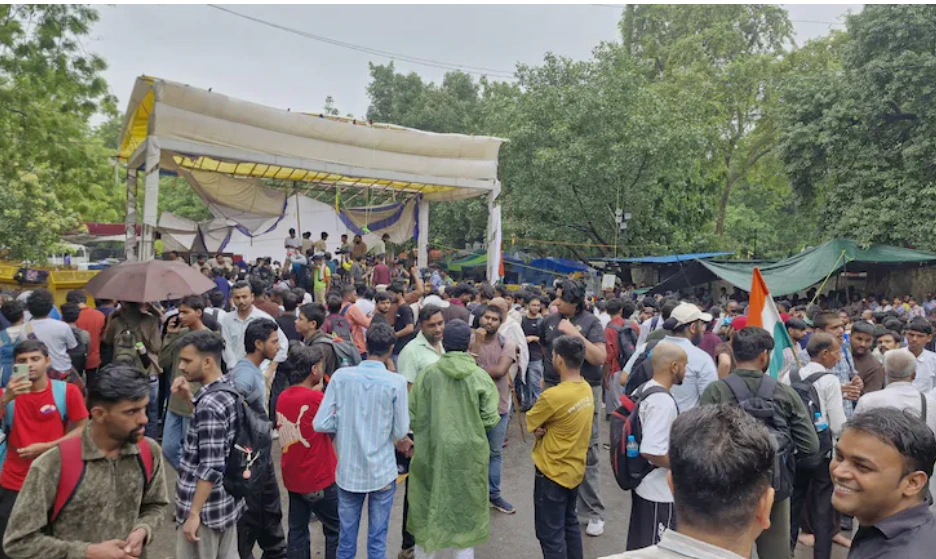
Delhi Police has proposed allowing a group of 11 people to carry the national flag and sing the national anthem at Central Park in Connaught Place on October 16, ahead of a protest called by the Cockroach Janata Party (CJP) over alleged electoral fraud.

The police said it could facilitate the group at a suitable place in the park, while appealing to the public not to join the proposed gathering in large numbers. The offer comes amid prohibitory orders in Connaught Place and adjoining areas under Section 163 of the Bharatiya Nagarik Suraksha Sanhita (BNSS).

CJP founder Abhijeet Dipke has called on people to assemble at Central Park at 5 pm on Friday with the national flag. The proposed demonstration, named “Lehra Do Tiranga”, follows the detention of CJP members Saurav Das and Ashutosh Ranka during an earlier protest.

Why Delhi Police proposed limiting the gathering

In its statement, Delhi Police cited the prevailing security and law-and-order situation in the area. It also referred to information from the New Delhi Municipal Council (NDMC) that Central Park would remain closed on October 16 and 17 for administrative reasons.

Deputy Commissioner of Police Neha Yadav said the NDMC had informed the police about the closure and had asked that no gathering be allowed near the park.

The police also cited representations from trader and market associations in Connaught Place and surrounding areas. According to the police, the associations had raised concerns about unlawful assemblies and their impact on businesses, particularly during the festive season.

Police warned that violations of Section 163 BNSS would invite appropriate legal action. It also stressed that the national flag must be displayed and carried, and the national anthem sung, in the prescribed manner with due respect and dignity.

Delhi High Court declines to stop CJP protest

The proposed gathering reached the Delhi High Court after a vendor sought intervention over concerns about disruption to businesses and public movement in Connaught Place.

On Thursday, the court declined to restrain the CJP from holding the protest. It recorded the police’s assurance that all possible measures under the law would be taken to regulate the gathering and maintain peace.

The petition was filed by a vendor at Palika Bazar in Connaught Place, who raised concerns about the potential impact of the demonstration on traders and others working in the area.

Additional Solicitor General Chetan Sharma, appearing for the authorities, told the court that steps had already been taken to regulate the proposed protest.

CJP’s protest call follows detention of party members

Dipke’s October 16 protest call follows earlier demonstrations over alleged electoral fraud. CJP members Saurav Das and Ashutosh Ranka are in jail on trespass charges after raising the national flag at Jantar Mantar earlier this week, according to the report.

The party has been protesting over alleged electoral fraud and has raised questions about the Election Commission.

Dipke has urged people to gather at Central Park with the national flag, arguing that raising the Tricolour should not be treated as a crime.

The police’s proposal to facilitate a group of 11 people came as the authorities sought to prevent a larger gathering at the site. The CJP’s response to the police’s offer was still awaited in the report published on October 15.

Continue Reading

India News

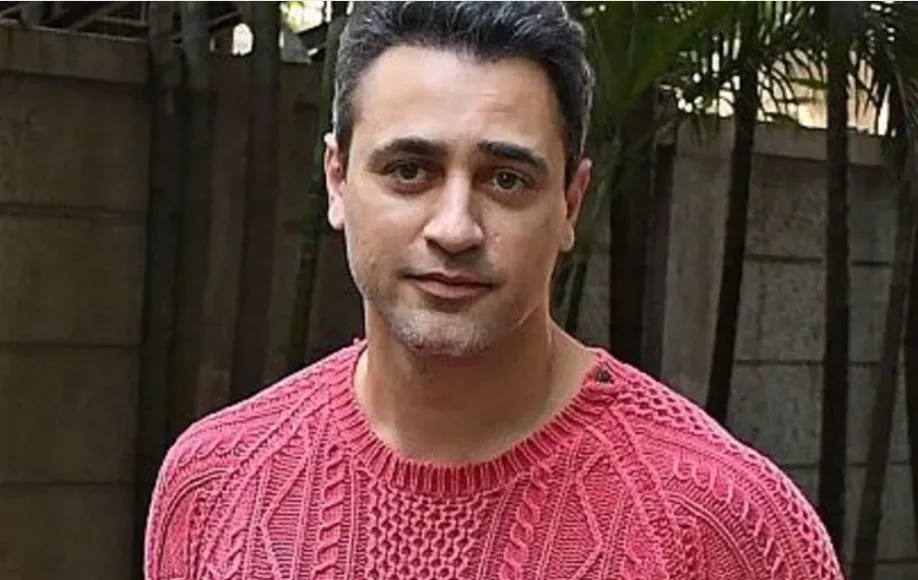
Actor Imran Khan asked to leave India after CJP protest

Actor Imran Khan has been asked to leave India by October 28, days after participating in a protest called by the Cockroach Janta Party (CJP) in Mumbai.

Published

on

Actor Imran Khan, nephew of Bollywood star Aamir Khan, has been asked to leave India by the Mumbai Police, days after participating in a protest organised by the Cockroach Janta Party (CJP) in Mumbai.

According to the notice, the actor has been given until October 28 to leave the country. The development follows his participation in the demonstration, which brought the actor into the spotlight over his involvement in a political protest.

Imran Khan is believed to hold US citizenship and an Overseas Citizen of India (OCI) card rather than full Indian citizenship, according to the report.

What led to the notice against Imran Khan?

The notice came days after Imran Khan joined a protest called by the CJP in Mumbai. The group, described as a satirical political organisation, had called for the demonstration.

The actor’s participation was followed by action from the authorities, with the Mumbai Police directing him to leave India by the specified deadline.

The notice does not, by itself, mean that the actor has already left the country or has been deported. October 28 is the deadline mentioned for his departure.

Imran Khan and his citizenship status

Imran Khan is known for his work in Hindi films, including Jaane Tu… Ya Jaane Na and Delhi Belly. He is also the nephew of actor Aamir Khan.

The report states that Imran Khan is believed to be a US citizen and hold an OCI card. OCI status does not confer Indian citizenship, although it provides eligible foreign citizens of Indian origin with specified privileges under Indian law.

The notice directing the actor to leave India follows his participation in the Mumbai protest. The reported development has brought attention to the intersection of immigration rules and the participation of foreign nationals in political demonstrations.

Continue Reading

India News

Election Commission orders voter roll revision in 17 states, UTs

The Election Commission has ordered a Special Summary Revision of electoral rolls in 17 states and Union Territories. Draft rolls are scheduled for November 12, with final rolls due on January 4, 2027.

Published

on

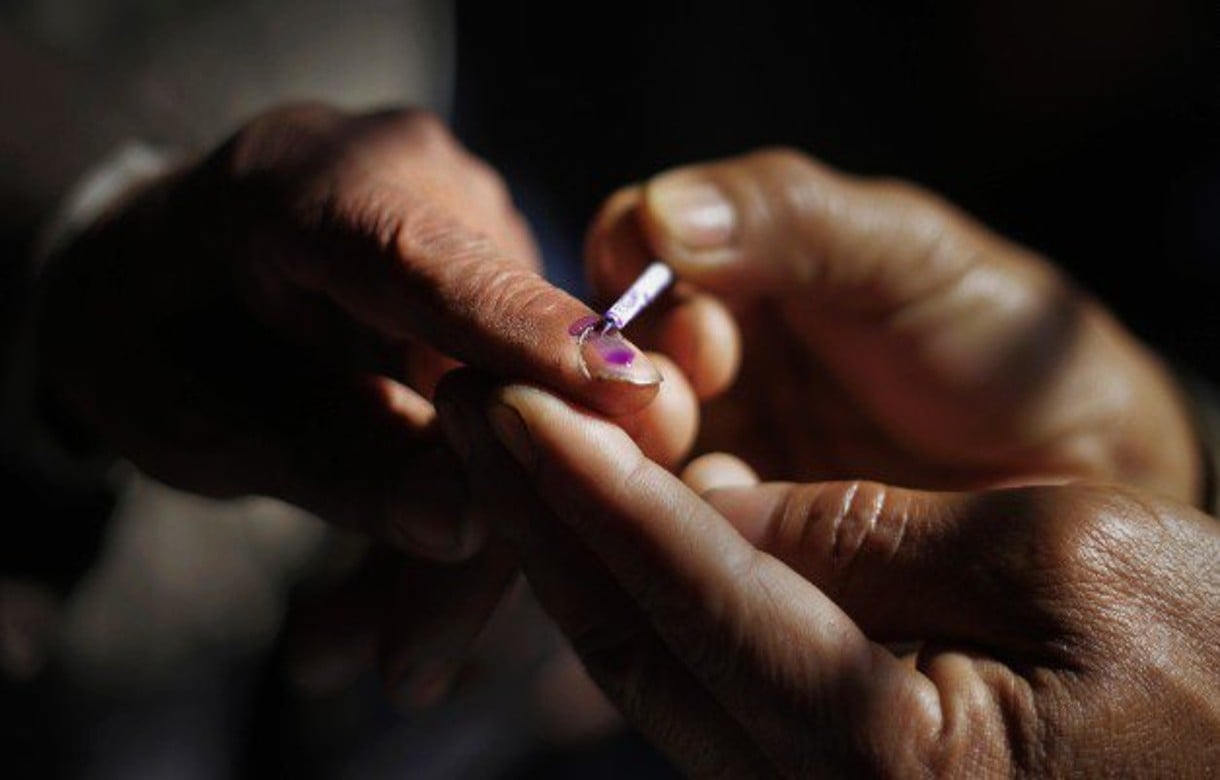
The Election Commission of India (ECI) has ordered a Special Summary Revision (SSR) of electoral rolls in 17 states and Union Territories, with the exercise aimed at facilitating voter registration and including eligible electors who may have been left out during the Special Intensive Revision (SIR).

The order was issued on Thursday, October 15, amid continuing political controversy over the SIR process and concerns raised by opposition parties regarding the exclusion of names from electoral rolls.

Under the announced schedule, January 1, 2027, will be the qualifying date for the revision. The draft electoral rolls are scheduled to be published on November 12, while the final rolls are due on January 4, 2027. Uttar Pradesh and Punjab, two states included in the exercise, are scheduled to go to the polls by February 2027.

Which states and Union Territories are covered?

The Special Summary Revision will cover the following 17 states and Union Territories:

  • Andaman and Nicobar Islands
  • Assam
  • Bihar
  • Chhattisgarh
  • Goa
  • Gujarat
  • Kerala
  • Lakshadweep
  • Madhya Pradesh
  • Manipur
  • Puducherry
  • Punjab
  • Rajasthan
  • Tamil Nadu
  • Uttar Pradesh
  • Uttarakhand
  • West Bengal

The Election Commission’s order follows earlier instructions issued to state election officials on September 29 to undertake a special drive to enrol eligible voters who had been left out, along with young and first-time electors.

Why has the Election Commission ordered the revision?

The announcement comes amid protests and political disagreements over the Special Intensive Revision of electoral rolls. Opposition parties have raised concerns about names being excluded during the exercise.

Another point of contention has been an additional declaration required from applicants submitting Form 6 for voter enrolment while the SIR was underway. The declaration required applicants to map their parents to the last SIR, which was conducted around 20 years ago.

The Election Commission had clarified on October 7 that the additional declaration applied only in states and Union Territories where the SIR was being conducted. It said the regular forms prescribed under the Registration of Electors Rules, 1960, would apply outside the SIR period.

The latest SSR order refers to applications for inclusion through Form 6 but does not mention the additional declaration.

What happens in states not covered by the current schedule?

The Election Commission has said that the schedule for the Special Summary Revision will be announced later in states and Union Territories where the SIR is ongoing or has recently been completed.

These include Andhra Pradesh, Arunachal Pradesh, Chandigarh, Dadra and Nagar Haveli, Daman and Diu, Haryana, Jharkhand, Karnataka, Maharashtra, Meghalaya, Mizoram, Nagaland, the National Capital Territory of Delhi, Odisha, Sikkim, Tripura and Telangana.

For Himachal Pradesh, Jammu and Kashmir, and Ladakh, where the SIR has not yet started, the schedule for electoral roll revision will be announced in due course, taking local weather conditions into account.

The Election Commission’s latest order sets out a separate timeline for the 17 states and Union Territories covered by the current SSR exercise, while leaving the schedules for the other regions to be announced later.

Continue Reading

Trending

© Copyright 2022 APNLIVE.com