English हिन्दी
Connect with us

India News

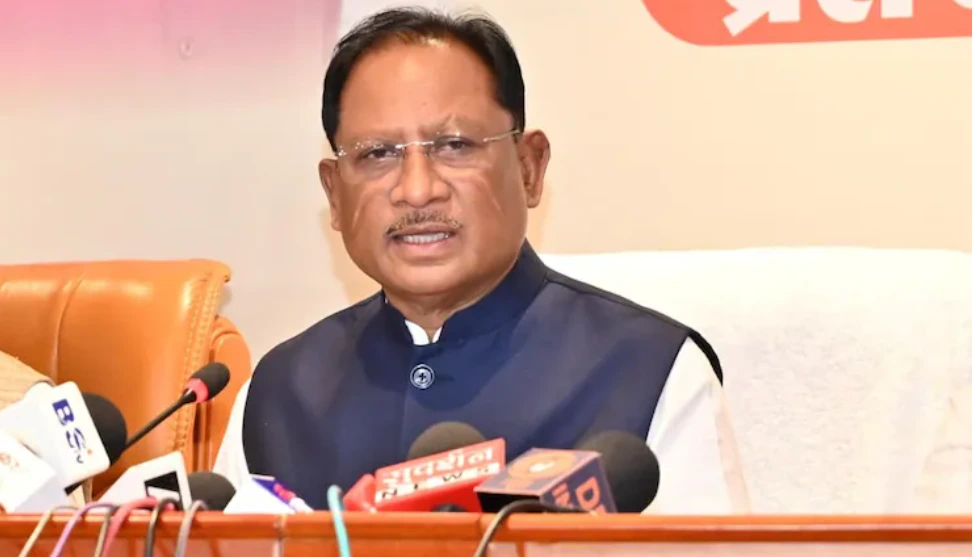
Over 2,000 Maoists surrender under Chhattisgarh rehabilitation policy, says CM Vishnu Deo Sai

Chhattisgarh Chief Minister Vishnu Deo Sai said more than 2,000 Maoists have surrendered under the state’s rehabilitation policy, which offers skill training, financial assistance and land support.

Published

on

CM surrender Maoist

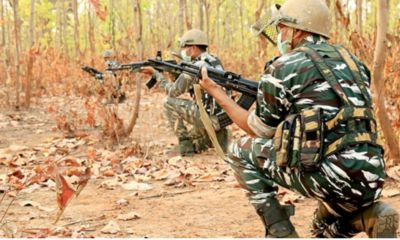
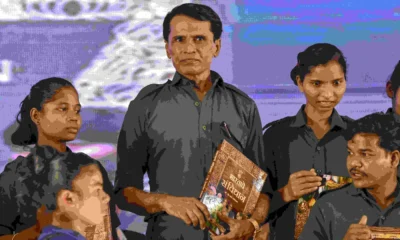
Chhattisgarh Chief Minister Vishnu Deo Sai on Friday said that more than 2,000 Maoists have surrendered so far under the state’s rehabilitation policy, asserting that the government is committed to treating surrendered cadres fairly and supporting their reintegration into society.

Addressing the issue, the Chief Minister said the state government has repeatedly appealed to Maoists to abandon violence and gunfire and return to the mainstream of development. He said the impact of these efforts is now visible, with a large number of cadres laying down arms.

According to Vishnu Deo Sai, the rehabilitation framework focuses on long-term welfare. Surrendered Maoists are being provided skill training along with monthly financial assistance of Rs 10,000. He added that the new policy also includes provisions for allotment of land for farming and land to build houses in urban areas, aimed at securing their future and livelihood.

Fresh surrenders reported from Bijapur

Earlier, 34 Naxals surrendered in Chhattisgarh’s Bijapur district under the state government’s rehabilitation initiative titled Poona Margham: Punarvas Se Punarjeevan (Return to the Mainstream: Social Reintegration through Rehabilitation). Police officials said the surrendered cadres were carrying a cumulative reward of Rs 84 lakh.

Officials noted that the latest surrenders reflect the growing impact of sustained anti-Naxal measures combined with confidence-building initiatives focused on welfare and reintegration.

Centre’s target to eliminate Naxalism by March 2026

The Chief Minister’s remarks come amid the Central Government’s stated goal to eradicate Naxalism from the country by March 2026 under the leadership of Prime Minister Narendra Modi. Authorities believe that rehabilitation-driven policies, along with security operations, are playing a key role in weakening the influence of Left-wing extremism in affected regions.

India News

PM Modi welcomes US-Iran peace deal

Published

on

pm modi followers

Prime Minister Narendra Modi expressed support for the peace agreement between the United States and Iran, anticipating that it would “restore peace” and “ensure freedom of navigation” in the region. The agreement aims to conclude their ongoing conflict and facilitate the reopening of the Strait of Hormuz, with a signing scheduled in Switzerland on June 19.

Though still in the framework phase, this initiative marks significant progress in a conflict that has resulted in thousands of casualties and disrupted global energy markets after the US-Israeli strikes on Iran in February.

The reopening of the Strait is expected to alleviate concerns in Asia, which previously depended on 90% of its oil supplies routed through this crucial passage.

In a statement on X, Modi highlighted the deal’s importance in addressing the economic chaos and loss of life caused by the conflict in West Asia. He expressed hope for the agreement’s implementation to bolster regional stability and facilitate commerce.

The United States and Iran reached this initial agreement on Monday, which includes extending a fragile ceasefire. Mediator Pakistan announced the deal, stating that both sides agreed to stop military operations and that meetings would occur to set the stage for technical talks.

US President Donald Trump confirmed the agreement and announced the cessation of the US naval blockade on Iranian ports, encouraging a resumption of oil transport.

The parties involved are still determining representation for the signing event. Iran’s deputy foreign minister confirmed the agreement but stated that implementation would begin only after the formal signing. The talks involved mediators from Qatar, contributing to the breakthrough. After the announcement of the deal, Israel’s national security minister went on record that Jerusalem will not hold back on its attacks on Lebanon. That would leave this agreement which took weeks in the works a hostage to Israeli intentions.

Continue Reading

India News

Lt Gen Dhiraj Seth appointed next Army chief, to take charge on June 30

The government has appointed Lt Gen Dhiraj Seth, currently the Vice Chief of Army Staff, as the next Army chief. He will succeed General Upendra Dwivedi on June 30.

Published

on

The Centre has appointed Lieutenant General Dhiraj Seth as the next Chief of the Army Staff (COAS), paving the way for a leadership transition in the Indian Army later this month. Lt Gen Seth, who currently serves as the Vice Chief of the Army Staff, will succeed General Upendra Dwivedi upon the latter’s retirement on June 30, 2026.

The appointment was announced on Saturday, with the government confirming that Lt Gen Seth will assume office from the afternoon of June 30. He will take over command after General Dwivedi completes his tenure as the Army’s 30th chief.

Veteran Armoured Corps officer

An officer of the Armoured Corps, Lt Gen Seth was commissioned into the Indian Army in December 1986 after graduating from the National Defence Academy. Over nearly four decades of service, he has held a range of operational, command, staff and strategic appointments across the Army.

Before becoming Vice Chief on April 1, 2026, he served in several senior leadership roles, including heading the Southern Command and South Western Command. He has also commanded formations such as the Delhi Area and the XXI Corps during his military career.

Leadership transition in the Army

Lt Gen Seth’s elevation comes as the Army prepares for a change of command at the highest level. His appointment follows his move to Army Headquarters as Vice Chief earlier this year, a role he assumed on April 1.

The Ministry of Defence said the incoming Army chief brings extensive experience from command, operational and strategic assignments across diverse military domains.

With the appointment, Lt Gen Seth is set to lead the Indian Army through the next phase of its modernisation and operational preparedness efforts after taking charge at the end of the month.

Continue Reading

India News

IAF AN-32 aircraft crashes while landing at Assam’s Jorhat airbase, five personnel killed

Five Indian Air Force personnel were killed after an AN-32 transport aircraft crashed while landing at Jorhat Air Force Station in Assam. The IAF has ordered a court of inquiry into the accident.

Published

on

An Indian Air Force (IAF) AN-32 transport aircraft crashed while attempting to land at Jorhat Air Force Station in Assam on Saturday, resulting in the deaths of five Air Force personnel. The accident occurred during a routine sortie and triggered an emergency response at the airbase.

According to the IAF, the aircraft met with the accident during the landing phase at Jorhat. The force later confirmed the loss of five personnel and expressed condolences to their families. A court of inquiry has been ordered to determine the circumstances that led to the crash.

Court of inquiry ordered

The Indian Air Force said a formal investigation will examine the cause of the accident. Officials have not yet disclosed what may have led to the crash, and the inquiry is expected to review technical, operational and environmental factors.

Reports indicated that the co-pilot survived the accident and is undergoing medical treatment.

Personnel who lost their lives

The IAF identified the five personnel killed in the accident as:

  • Squadron Leader Prashant Singh
  • Flight Lieutenant Shubham Kumar
  • Sergeant Jitendra Sharma
  • Agniveervayu Khemaram Kumawat
  • Agniveervayu Danish Alam

The Air Force said it stands with the bereaved families during this difficult time.

AN-32’s role in the Air Force

The AN-32 is a twin-engine transport aircraft that has been a key part of the Indian Air Force’s logistics operations for decades. It is widely used to transport personnel, equipment and supplies, particularly in remote and high-altitude regions. India remains one of the largest operators of the aircraft type.

The crash comes months after a Sukhoi Su-30MKI fighter aircraft accident in Assam that claimed the lives of two IAF pilots.

Continue Reading

Trending

© Copyright 2022 APNLIVE.com