English हिन्दी
Connect with us

India News

Constitution Day: Its history, significance, importance

The Constitution of India was drafted by the Dr Ambedkar-led committee which had other members K.M. Munshi, Muhammed Saadulla, Alladi Krishnaswamy Iyer, N. Gopalswami Ayyangar, D.P. Khaitan, and L. Mitter.

Published

on

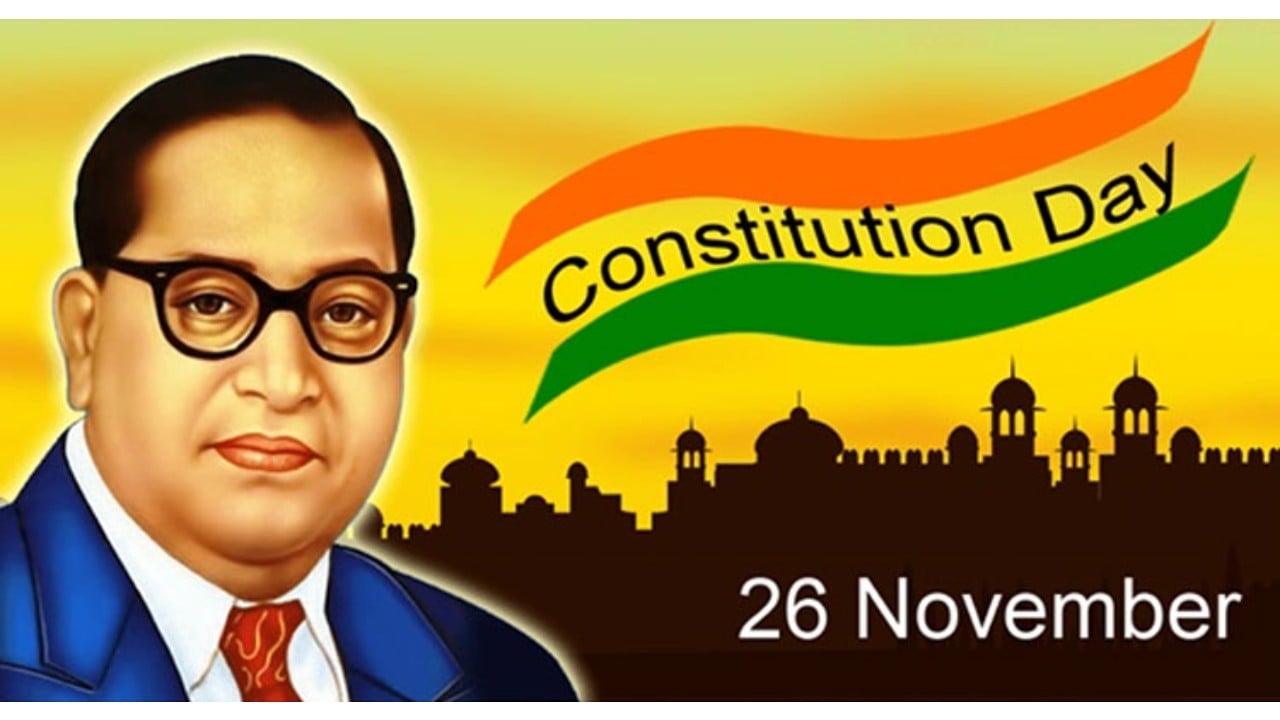
Constitution Day or Samvidhan Diwas is celebrated every year on November 26 from 2015 to commemorate the adoption of the Constitution by the constituent assembly. The document was drafted by Dr B.R Ambedkar-led committee and plays the essential role in empowering and allowing citizens of India to have fundamental rights.

The Constitution doesn’t only give citizens their rights, it also instills responsibilities for them to follow and respect in order to maintain the supremacy of the Constitution. On November 26, 1949, the Constituent Assembly of India adopted the constitution, however, it took until January 26,1950 for it to come into force.

Constitution Day or Samvidhan Day was earlier also known as National Law Day.

History of Constitution Day

The Constitution of India was drafted by the Dr Ambedkar-led committee which had other members K.M. Munshi, Muhammed Saadulla, Alladi Krishnaswamy Iyer, N. Gopalswami Ayyangar, D.P. Khaitan, and L. Mitter. After the drafting, the Constitution was duly adopted by the Constituent Assembly and came into force on January 26, 1950.

However, It was not until 2015 under the Narendra Modi government that the country started the tradition of celebrating November 26 as Constitution Day.

Significance of the Day

After British rule of over 200 years, India’s awakening to freedom was incomplete until the State had a rule of law, that empowered and gave rights to every citizen while establishing the supremacy of the Constitution by which the country was run. The Constitution came as a respite that not only united the country but also protected the citizens regardless of caste, gender, religion, etc, and promised them equal rights.

The Constitution also made a historic change by declaring the country to be a sovereign, secular, socialist, democratic republic and also included the promise of equality, liberty, and justice to its citizens. The original document did not have the words socialist and secular which were added by the 42nd Amendment in 1976 during the Emergency.

The making of the Constitution

The Constituent Assembly set up a Drafting Committee headed by Dr. B.R. Ambedkar and with six members in the drafting process. The Constitution came into force on January 26, 1950, after all the members of the Constituent Assembly signed it. The celebration of the Constitution not only celebrates it but also the people who made it. Dr Ambedkar, who is known as the Father of the Constitution, was an important figure in guiding the Constitution of India in giving the citizens their rights, as well as government and political principles, and procedures in the constitution.

The Draft of the Constitution is still lauded and praised for inspiring other countries which faces issues similar to what independent India faced. The Constitution of India is also considered to be the longest-written constitution in the world.

India News

Pralhad Joshi appointed Education Minister after Dharmendra Pradhan’s resignation

Pralhad Joshi has been entrusted with the additional charge of the Education Ministry after President Droupadi Murmu accepted Dharmendra Pradhan’s resignation amid the prolonged student protests over alleged examination paper leaks.

Published

on

Union Minister Pralhad Joshi has been given the additional charge of the Ministry of Education after President Droupadi Murmu accepted the resignation of Dharmendra Pradhan.

The President’s office confirmed the appointment through an official communique issued on Saturday evening. Joshi will continue to hold his existing portfolio as Union Minister of Food and Consumer Affairs while also overseeing the Education Ministry.

Dharmendra Pradhan resigns amid prolonged protests

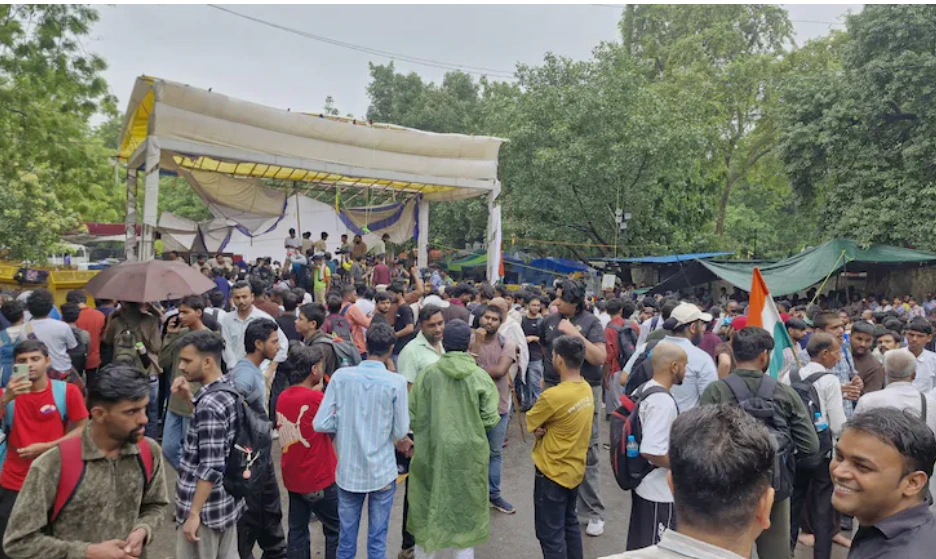
Dharmendra Pradhan submitted his resignation on the 35th day of the student protests at Delhi’s Jantar Mantar over alleged examination paper leaks.

In his resignation letter, the 57-year-old leader said he chose to step down to prevent anti-national forces from exploiting the situation.

“For over four decades, I have dedicated myself to the cause of students, teachers, and educational reform. I have always believed that a robust, inclusive, and visionary education system forms the cornerstone of a strong nation,” Pradhan said.

CJP ends protest after Centre’s assurance

Hours after Pradhan’s resignation, CJP spokespersons Saurav Das and Ashutosh Ranka, during a joint press conference with Union ministers JP Nadda and Jitendra Singh, announced that the organisation was ending its protest in good faith after receiving assurances from the Centre that its demands would be addressed.

The resignation of Dharmendra Pradhan had been the principal demand of the organisation founded by Abhijeet Dipke, a Boston University graduate who returned to India to lead the campaign against alleged examination paper leaks.

Joshi reiterates government’s stand on students

A day before taking charge of the Education Ministry, Pralhad Joshi said the Centre remained committed to protecting students’ interests and ensuring strict action against irregularities affecting examinations.

He also alleged that anti-social elements were attempting to exploit the CJP-led protests and urged students to remain vigilant while continuing peaceful demonstrations.

“The Modi government has always stood with students and the youth. It remains committed to taking strict action against any irregularities or injustices that affect their future,” Joshi had said.

He added that while students have every right to protest peacefully, they should ensure that their genuine concerns are not misused by anti-social elements.

Continue Reading

India News

Dharmendra Pradhan submits resignation to PM Modi amid student protests

Education Minister Dharmendra Pradhan has submitted his resignation to Prime Minister Narendra Modi, hours before the third round of talks between the Centre and the Cockroach Janta Party.

Published

on

Dharmendra Pradhan

Education Minister Dharmendra Pradhan on Saturday submitted his resignation to Prime Minister Narendra Modi, marking a major development amid the ongoing student protests at Delhi’s Jantar Mantar.

Pradhan announced the decision through a post on X, just hours before the Centre was scheduled to hold the third round of talks with the Cockroach Janta Party (CJP), which has been leading the agitation over alleged irregularities in competitive examinations.

The resignation of the Education Minister had remained the primary demand of the protesters, who have been camping at Jantar Mantar for more than a month seeking accountability and reforms in the examination system.

The latest development comes at a crucial time as both sides prepare for another round of discussions aimed at resolving the prolonged standoff.

As of now, there has been no official announcement from the Prime Minister’s Office on whether Pradhan’s resignation has been accepted. Further details are awaited.

Resignation comes before key Centre-CJP meeting

The announcement was made only hours before representatives of the Centre and the Cockroach Janta Party were expected to meet for the third round of negotiations.

The talks are being closely watched as the government attempts to end the month-long protest, with the resignation of Dharmendra Pradhan remaining one of the protesters’ central demands.

Continue Reading

India News

CJP says Dharmendra Pradhan’s resignation non-negotiable ahead of third round of talks

CJP has hardened its stand before the third round of talks with the Centre, insisting that Education Minister Dharmendra Pradhan’s resignation remains its primary and non-negotiable demand.

Published

on

The Cockroach Janta Party (CJP) has reiterated that the resignation of Union Education Minister Dharmendra Pradhan remains its top demand, just hours before the third round of discussions with the Centre on Saturday.

CJP spokesperson Ashutosh Ranka said the organisation would see little purpose in continuing negotiations if the government was unwilling to remove the minister.

In a post on X, Ranka said Dharmendra Pradhan’s resignation was “non-negotiable” and added that there was no point in holding further discussions if the government rejected the demand.

The third round of talks is scheduled for Saturday afternoon after Union Ministers JP Nadda and Jitendra Singh met CJP representatives for nearly two hours during the second round of discussions on Friday.

According to the CJP, it has placed three key demands before the Centre:

  • Resignation of Education Minister Dharmendra Pradhan.
  • A guarantee that no legal action will be taken against protesting students.
  • Compensation of Rs 1 crore for the families of students who allegedly died by suicide following the NEET paper leak.

During Friday’s meeting, the Centre agreed in principle to two of the demands — ensuring no legal action against protesting students and providing compensation. However, the demand for the Education Minister’s resignation remains unresolved.

Speaking after the meeting, JP Nadda said the protesters had also submitted five suggestions for reforms to the examination system. He said the government would hold internal discussions before responding during Saturday’s meeting.

Government sources, however, indicated that Dharmendra Pradhan’s resignation is not under consideration. According to the sources, the government believes resignation is not the appropriate course of action and continues to back the minister.

Meanwhile, the Centre has announced several measures aimed at tackling examination paper leaks. Prime Minister Narendra Modi has announced the establishment of fast-track courts to hear paper leak cases, while the government is preparing amendments to strengthen the law with stricter punishments and higher fines.

The Centre has also replaced the Education Secretary and removed 47 officials of the National Testing Agency (NTA), while promising broader reforms within the examination body.

Responding to the action against NTA officials, Ashutosh Ranka said the move alone was insufficient. He maintained that accountability ultimately rests with the Education Minister and reiterated that Dharmendra Pradhan must resign.

Continue Reading

Trending

© Copyright 2022 APNLIVE.com