
India News
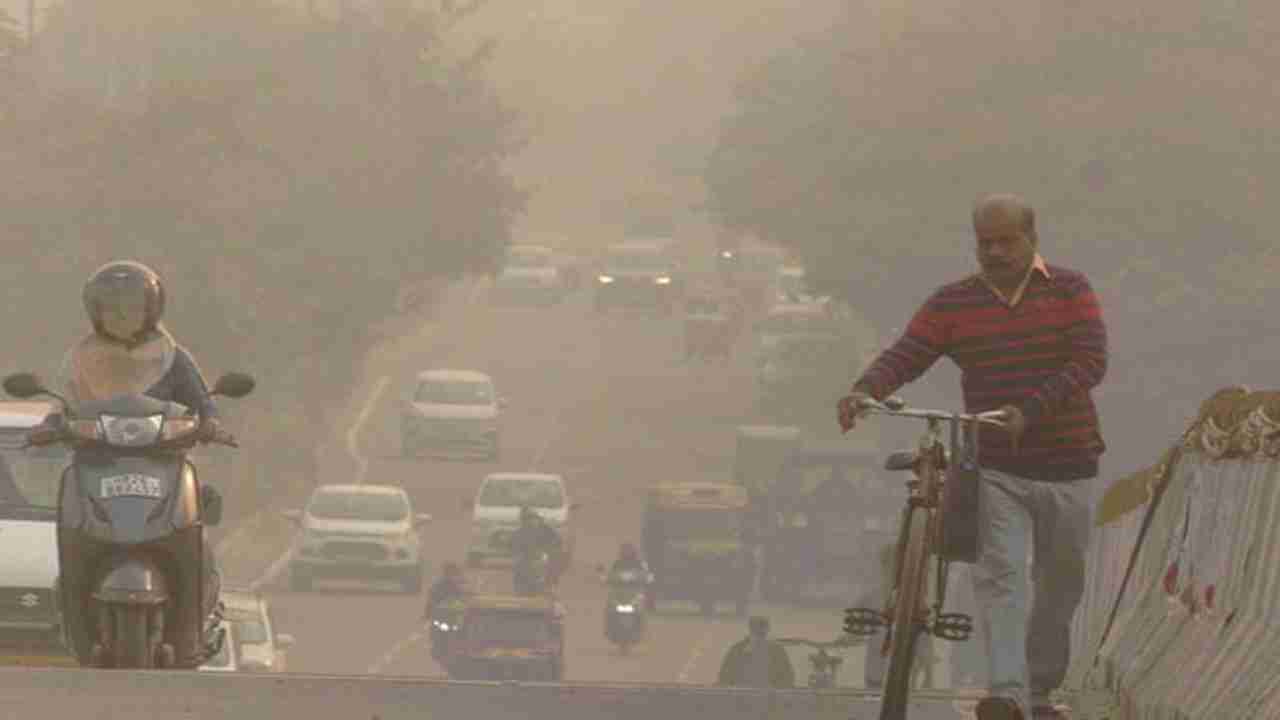
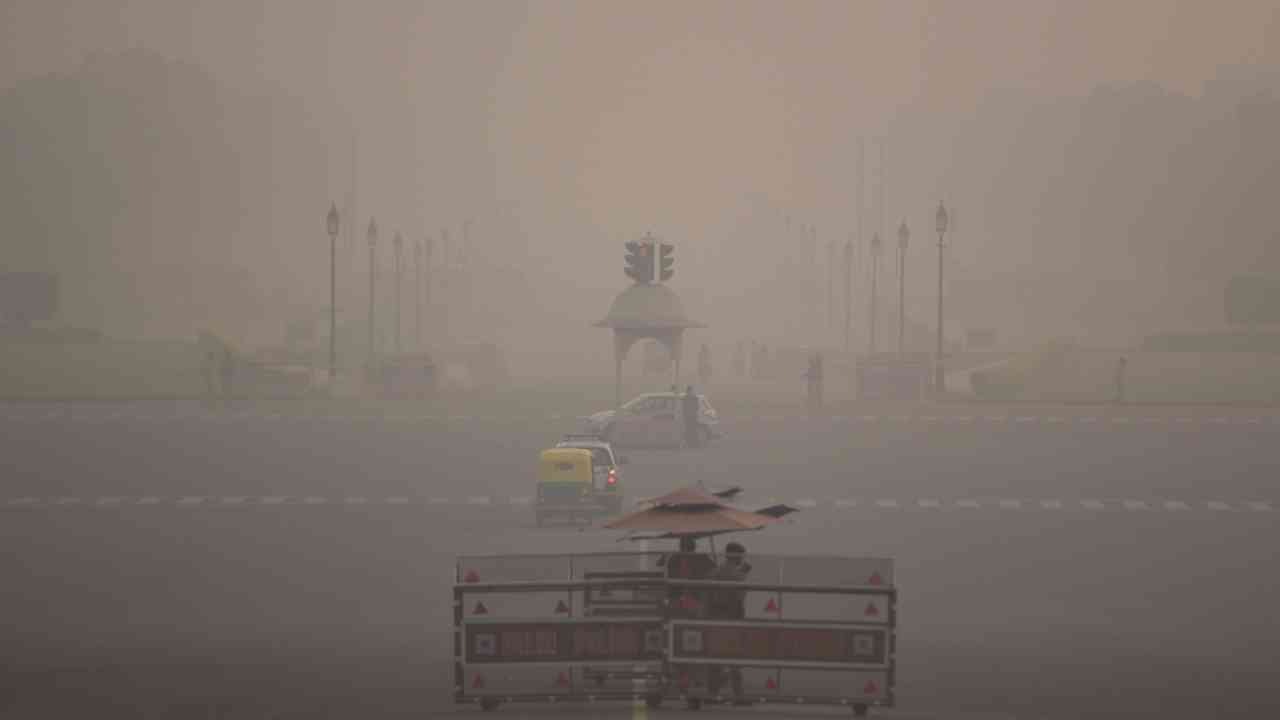
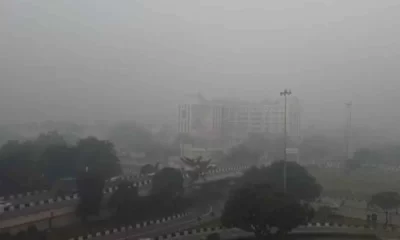
Delhi air pollution reaches Hazardous levels before Diwali, both PM10 and PM2.5 above 600


[vc_row][vc_column][vc_column_text]After a day’s brief respite, New Delhi’s air quality deteriorated today (Monday, November 5) with pollution level breaching the ‘hazardous’ category. The Air Quality Index (AQI) around Mandir Marg recorded PM 10 levels at 707 and PM 2.5 at 663, while PM 10 levels were 681 and 676 around Jawaharlal Nehru Stadium and Major Dhyan Chand National Stadium, respectively, news agency ANI tweeted.
This is way more than 20 times the safe limit prescribed by the WHO.
AQI between 0 and 50 is considered ‘good’, 51 and 100 ‘satisfactory’, 101 and 200 ‘moderate’, 201 and 300 ‘poor’, 301 and 400 ‘very poor’ and 401 and 500 ‘severe’. It was hovering between 650-700 on Monday.


 Sunday had brought a short-lived relief to Delhiites when the pollution level came down to ‘poor’ category after oscillating between ‘very poor’ and ‘severe’ for days. The overall AQI was recorded at 231 on Sunday which falls in the ‘poor’ category.
The System of Air Quality Forecasting and Research (SAFAR) on Saturday predicted deterioration of air quality in the city from Monday. Warning that the high level of moisture in Delhi’s atmosphere and a fall in temperature and upper winds from stubble burning sites will “adversely impact air quality,” the report said “AQI will touch the upper level of very poor from November 5 afternoon onwards” as per the SAFAR-forecasting model.
Meanwhile, schools in Delhi have moved the morning assembly of students indoors and made it mandatory for them to wear masks during outdoor activities. Few schools in the NCR region have also started distributing gooseberries to students, which, according to health experts, minimize effects of air pollution on lungs.
The Supreme Court-appointed Environment Pollution Control Authority (EPCA) has urged Delhiites to use public transport for the first 10 days of November to keep a check on pollution. Noting that private vehicles contribute to 40 per cent pollution in Delhi-NCR, the EPCA urged people to reduce the use of private vehicles during this period and use public transport or other means.
The contribution of stubble-burning to pollution in the national capital is expected to be 24 per cent today, said an NDTV report quoting a weather official.
An aggressive 10-day-long ‘Clean Air Campaign’ from November 1-10 has also been launched to monitor and report polluting activities as well as to ensure quick action.
A penalty of over Rs 83 lakh was imposed on violators in a single day on Sunday by the teams deployed to monitor implementation of measures to combat pollution in the Delhi NCR under the Clean Air Campaign, the CPCB said.
The highest number of complaints related to illegal construction and demolition activities.
An aggressive ten-day-long ‘Clean Air Campaign’ from November 1 to 10 has been launched by Union Environment Minister Harsh Vardhan to monitor and report polluting activities as well as to ensure quick action.
These teams are visiting different parts of Delhi and adjacent towns of Faridabad, Gurugram, Ghaziabad and Noida.
Based on 368 complaints, a total fine of Rs 83,55,000 was imposed on Sunday itself by 52 teams in the national capital, said the Central Pollution Control Board.
A total of 119 complaints of construction and demolition activities were received. Other complaints included that of vehicular emission, traffic congestion, industrial emission, open or garbage burning, leaf burning, road dust, unpaved road, fire in landfill sites, air pollution from generators among others, it said.
A total of 52 complaints were received through social media and e-mail while 316 complaints were received through the ‘Sameer app’ that has been developed by the CPCB.
About 43 teams visited sites of 248 complaints in Delhi while two teams attended to 11 complaints in Gurgaon, two teams to 31 complaints in Faridabad, two teams to 5 complaints in Noida and Greater Noida and three teams for 21 complaints in Ghaziabad.
The Delhi Pollution Control Committee (DPCC) has also directed the Transport Department and the Traffic Police to intensify checking of polluting vehicles and control travel congestion in the region during November 1-10.[/vc_column_text][/vc_column][/vc_row]





India News
BJP focuses on religion as opposition pushes BDM strategy in UP
The BJP is emphasising religious issues ahead of the Uttar Pradesh Assembly elections, while opposition parties are seeking to consolidate Backward, Dalit and Minority voters. Recent exchanges involving Yogi Adityanath, Akhilesh Yadav and Asaduddin Owaisi have added to the political contest over the state’s electoral narrative.


India News
L Murugan quits Union ministry to strengthen BJP in Tamil Nadu
L Murugan has resigned from his Union ministerial post and Rajya Sabha membership, saying he wants to return to grassroots politics and dedicate himself to strengthening the BJP in Tamil Nadu before the 2029 Lok Sabha elections.
India News
Amit Shah attacks Rahul Gandhi over Congress poll losses, questions SIR row
Union Home Minister Amit Shah criticised Rahul Gandhi over the Opposition’s allegations concerning the Special Intensive Revision (SIR) of electoral rolls. Shah argued that the Congress had been losing elections before the exercise began after 2024 and cited the BJP’s victories in Gujarat’s civic polls.

CJP claims Saurav Das, Ashutosh Ranka detained at Jantar Mantar

Supreme Court stays defamation case against Rahul Gandhi over PM Modi remarks

Rahul Gandhi hosts high tea for INDIA bloc after Gyanesh Kumar protests

L Murugan quits Union ministry to strengthen BJP in Tamil Nadu

Amit Shah attacks Rahul Gandhi over Congress poll losses, questions SIR row

BJP focuses on religion as opposition pushes BDM strategy in UP
L Murugan quits Union ministry to strengthen BJP in Tamil Nadu
Amit Shah attacks Rahul Gandhi over Congress poll losses, questions SIR row
Rahul Gandhi hosts high tea for INDIA bloc after Gyanesh Kumar protests
Supreme Court stays defamation case against Rahul Gandhi over PM Modi remarks

Afghan Men Try To Hang With The Jet Engine Of The Aircraft in Kabul- Afghanistan News – Kabul News
Trending Top 10 News: 10000 Crore Fine on Flipkart, Apple to Launch Unique Feature, Hdfc Bank Job Ad

Trending Top 10 News: Nokia 6310, Apple sales, Bachpan ka Pyar Video Kid, Dainik Bhaskar IT Raid

Trending Top 10 News: Canada bans Indian flights, Rain in Delhi NCR, AIMIM Twitter hacked, Raj Kundra case

Trending Top 10 News: Shein India, Apple New Service, Pocket Oxygen, Oppo Launched New Phone
-
 India News21 hours ago
CJP claims Saurav Das, Ashutosh Ranka detained at Jantar Mantar
-
 India News19 hours ago
Supreme Court stays defamation case against Rahul Gandhi over PM Modi remarks
-
 India News11 hours ago
Rahul Gandhi hosts high tea for INDIA bloc after Gyanesh Kumar protests
-
 India News10 hours ago
L Murugan quits Union ministry to strengthen BJP in Tamil Nadu
-
 India News11 hours ago
Amit Shah attacks Rahul Gandhi over Congress poll losses, questions SIR row
-
 India News9 hours ago
BJP focuses on religion as opposition pushes BDM strategy in UP
