English हिन्दी
Connect with us

India News

CIC notice to RBI for dishonouring Supreme Court order to disclose wilful defaulters’ list

Published

on

[vc_row][vc_column][vc_column_text]The CIC recalled that RBI had earlier disclosed, in response to an RTI application, that bad debt stood at Rs 15,551 crore for the financial year ending March 2012 and that it had shot up by over three times to Rs 52,542 crore by the end of March 201.

The Central Information Commission (CIC) has issued a show-cause notice to RBI Governor Urjit Patel for “dishonouring” a Supreme Court judgment on disclosure of wilful defaulters’ list and told the Prime Minister’s Office (PMO), the Finance Ministry and the Reserve Bank of India (RBI) to make public the letter of former RBI governor Raghuram Rajan on bad loans.

Irked over the denial of information on the disclosure of the names of wilful defaulters who have taken bank loans of Rs 50 crore and above by the RBI in spite of a Supreme Court order, the CIC has asked Patel to explain why a maximum penalty be not imposed on him for “dishonouring” the verdict which had upheld a decision taken by then Information Commissioner Shailesh Gandhi, calling for disclosure of names of wilful defaulters.

Central Information Commissioner M Sridhar Acharyulu, according to ANI, said, “We got RTI for disclosing list of names of wilful defaulters who defaulted on loans beyond Rs 50Cr. A similar RTI was filed earlier in which the earlier Information Commissioner had given an order that names of defaulters can be disclosed along with action taken.”

“In the RTI, RBI bank inspection reports were demanded, RBI resisted & took the matter to the CIC, CIC ordered that info should be given & around a dozen appeals were transferred to SC. SC said that the info has to be disclosed. RBI has the duty to implement the SC orders.”

A PTI report said the CIC pointed out that Patel, speaking on September 20 at the Central Vigilance Commission (CVC), had said the guidelines on vigilance, issued by the CVC, were aimed at achieving greater transparency, promoting a culture of honesty and probity in public life and improving the overall vigilance administration in the organisations within its purview.

“The Commission feels that there is no match between what RBI Governor and Deputy Governor say and their website regarding their RTI policy, and great secrecy of vigilance reports and inspection reports is being maintained with impunity in spite of the Supreme Court confirming the orders of the CIC in the Jayantilal case”, Information Commissioner Sridhar Acharyulu said.

He concluded that it did not serve any purpose in punishing the CPIO for this defiance, because he acted under the instructions of the top authorities.

“The Commission considers the Governor as deemed PIO responsible for non-disclosure and defiance of SC orders and CIC orders and directs him to show cause why maximum penalty should not be imposed on him for these reasons, before November 16, 2018,” Acharyulu said.

He rejected the arguments of Santosh Kumar Panigrahy of the RBI that section 22 of the Right to Information (RTI) Act would not override various laws he quoted, prohibiting disclosure of names and details of wilful defaulters and hence, the RBI should be discharged from the obligations of disclosure.

“His contention that unless the above referred enactments are repealed, the RBI cannot disclose the details of defaulters is also absurd,” Acharyulu said.

He added that another contention of Panigrahy that the pendency of a PIL before the Supreme Court on the issue would prevent him from disclosure was also baseless as he did not present any interim order passed by the Supreme Court preventing the disclosure of names of wilful defaulters or against the proceedings before the CIC.

“These submissions of the RBI show that its legal wing did not bring to the notice of the CPIO that in the RBI vs Jayantilal N Mistry case, a Supreme Court bench consisting of M Y Eqbat and C Nagappan JJ, on December 16, 2015 [Transferred Cases (Civil) Nos. 91 to 101 of 2015], gave a landmark decision, upholding the direction of the CIC to disclose the inspection reports of the RBI and the names of wilful defaulters in many cases, rejecting all the above referred contentions of the RBI,” Acharyulu said.

The information commissioner said in that case, the counsel for the RBI had raised the same contentions, referring to the same cases referred by Panigrahy, and those were straightaway rejected by the Supreme Court.

“The commission finds no merit in hiding the names of, details and action against wilful defaulters of big bad loans worth hundreds of crores of rupees.

“The RBI shall disclose the bad debt details of defaulters worth more than Rs 1,000 crore at the beginning, of Rs 500 crore or less at a later stage within five days and collect such information from the banks in due course to update their voluntary disclosures from time to time as a practice under section 4(1)(b) of the RTI Act,” he said.

In his order, Acharyulu also recalled how the RBI had “lost all their cases and contentions” when they had moved the Supreme Court against the directions of former CIC Shailesh Gandhi. Calling upon administrative officers of CIC to pursue these contempt of court cases against top management of RBI, he asked: “If the banking regulatory like RBI will not honour the constitutional directions, what will be the effect of constitution on securing rule of law?”

Acharyulu also made a fervent appeal to the RBI governor – to remember the farmers who die as they fail to repay their debt – “before defying the transparency law and directions”. He also asked Patel to immediately discontinue the non-disclosure policy saying it would seriously harm the economy of the nation. As per the National Crime Records Bureau, in 2015 along over 3,000 farmers had committed suicide across the country as they were unable to repay their loans.

In his order, Acharyulu also recalled that RBI had earlier disclosed, in response to an RTI application, that bad debt stood at Rs 15,551 crore for the financial year ending March 2012 and that it had shot up by over three times to Rs 52,542 crore by the end of March 2015.[/vc_column_text][/vc_column][/vc_row]

India News

PM Modi assures no discrimination in women’s quota, delimitation debate intensifies in Parliament

PM Narendra Modi has assured that women’s reservation will be implemented without discrimination, amid a heated debate over delimitation in Parliament.

Published

on

PM modi

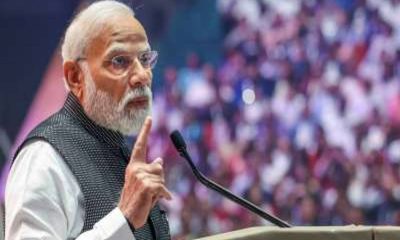
Prime Minister Narendra Modi has assured that there will be no discrimination in the implementation of women’s reservation, as Parliament witnessed a sharp debate over the proposed linkage between the quota and delimitation exercise.

During the ongoing special session, the government reiterated its commitment to ensuring fair representation while addressing concerns raised by opposition parties regarding the timing and structure of the legislation.

The proposed framework aims to reserve 33 percent of seats for women in the Lok Sabha and state assemblies. However, its implementation is tied to a fresh delimitation exercise, which is expected after the next census.

Opposition questions timing and intent

Opposition leaders have raised concerns that linking the women’s quota to delimitation could delay its implementation. They argue that the process of redrawing constituencies may push the actual rollout further into the future.

The issue has triggered a broader political confrontation, with multiple parties questioning whether the move could alter representation across states.

Some critics have also alleged that the delimitation exercise could disproportionately benefit certain regions based on population, a charge the government has rejected.

Government reiterates commitment to fair implementation

Responding to these concerns, the Centre has maintained that the reforms are necessary to ensure accurate and updated representation based on population data.

Leaders from the ruling side have repeatedly emphasized that the process will be carried out transparently and without bias. The assurance that there will be “no discrimination” is aimed at addressing fears among states and opposition parties.

The debate marks a key moment in Parliament, with both sides engaging in intense exchanges over one of the most significant electoral reforms in recent years.

Continue Reading

India News

Give all tickets to Muslim women, Amit Shah says, attacking Akhilesh Yadav on sub-quota demand

A sharp exchange between Amit Shah and Akhilesh Yadav in Parliament over sub-quota for Muslim women highlights key divisions on women’s reservation implementation.

Published

on

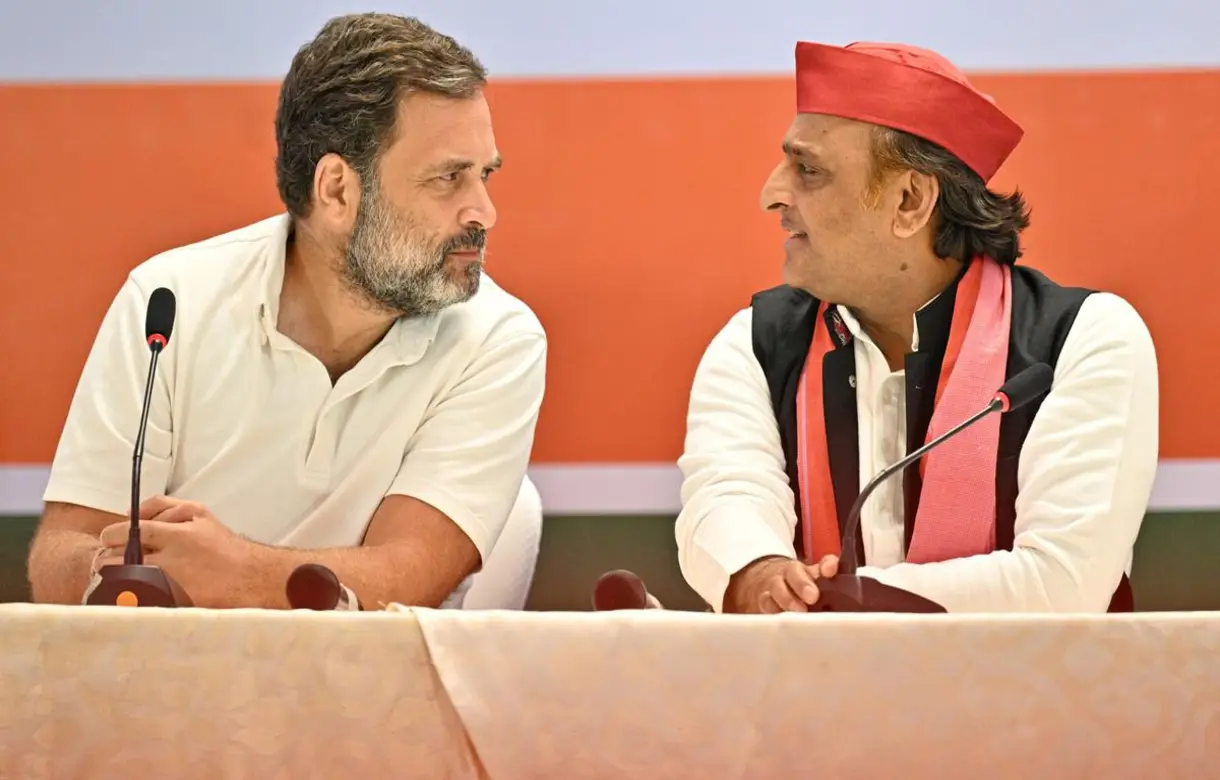
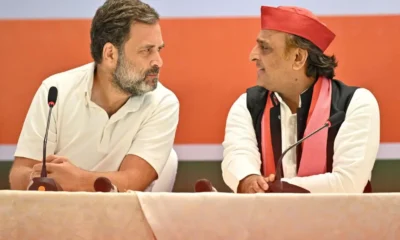
A heated exchange broke out in Parliament during discussions on the women’s reservation framework, with Union Home Minister Amit Shah and Samajwadi Party chief Akhilesh Yadav locking horns over the demand for a sub-quota for Muslim women.

The debate unfolded as the government pushed forward key legislative measures to implement 33% reservation for women in the Lok Sabha and state assemblies.

Akhilesh Yadav argued that the proposed reservation must ensure representation for women from marginalised communities, including Other Backward Classes (OBCs) and Muslim women. He said that without such provisions, large sections could remain excluded from political participation.

He also questioned the timing of the bill, alleging that the Centre was avoiding a caste census. According to him, a census would lead to renewed demands for caste-based reservations, which the government is reluctant to address.

Government rejects religion-based quota

Responding to the demand, Amit Shah made it clear that reservation based on religion is not permitted under the Constitution.

He stated that any proposal to provide quota to Muslims on religious grounds would be unconstitutional, firmly rejecting the idea of a separate sub-quota for Muslim women within the broader reservation framework.

The government has maintained that the existing framework already includes provisions for Scheduled Castes (SC) and Scheduled Tribes (ST) women within the overall reservation structure.

Wider political divide over implementation

The issue of sub-categorisation within the women’s quota has emerged as a major flashpoint, even as most opposition parties broadly support the idea of women’s reservation.

Samajwadi Party leaders reiterated that their support for the bill depends on inclusion of OBC and minority women, while the government continues to defend its constitutional position.

The debate is part of a broader discussion during the special Parliament session, where multiple bills linked to delimitation and implementation of the women’s quota are being taken up.

Continue Reading

India News

No state will lose a seat, Centre assures as delimitation debate takes centre stage in Parliament

Parliament’s special session begins with key focus on implementing women’s reservation and delimitation, setting the stage for major electoral changes.

Published

on

Parliament

A special session of Parliament commenced on Thursday, with the Centre set to take up crucial legislation related to women’s reservation and delimitation of constituencies. The session, scheduled over three days, is expected to witness intense debate as the government pushes forward its legislative agenda.

At the centre of discussions is the proposal to operationalise the women’s reservation law, which seeks to allocate 33 percent of seats in the Lok Sabha and state assemblies to women. The law, passed earlier, requires enabling provisions before it can be implemented.

The rollout of the reservation is closely tied to the delimitation exercise — a process that redraws parliamentary constituencies based on updated population data. The implementation is expected only after the next census and delimitation process are completed.

The government is aiming to put in place the framework so that the reservation can be enforced in future elections, likely around 2029.

Delimitation and numbers at play

Delimitation is a key aspect of the proposed changes, as it will determine how seats are redistributed and which constituencies are reserved. The exercise is expected to reflect population shifts and may also involve an increase in the total number of Lok Sabha seats.

This linkage has made the issue politically sensitive, with several opposition parties backing women’s reservation in principle but raising concerns over how and when delimitation will be carried out.

Political reactions and expected debate

The session is likely to see sharp exchanges between the government and opposition. While there is broad agreement on increasing women’s representation, disagreements remain over the timing, process, and potential political implications of the delimitation exercise.

Some leaders have argued that delimitation could significantly alter the balance of representation among states, making it a contentious issue beyond the women’s quota itself.

The government, however, has framed the move as a step toward strengthening women’s participation in governance and ensuring more inclusive policymaking.

Continue Reading

Trending

© Copyright 2022 APNLIVE.com