English हिन्दी
Connect with us

India News

DMK chief MK Stalin sworn in as Tamil Nadu Chief Minister

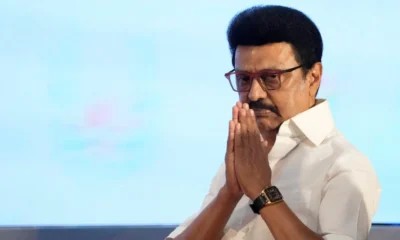
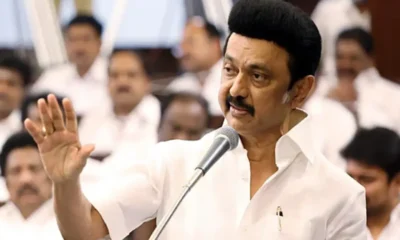
DMK president MK Stalin on Friday took oath as the new Chief Minister of Tamil Nadu for the time, along with 33 members of his cabinet, at the Raj Bhavan in Chennai.

Published

on

MK Stalin

DMK president MK Stalin on Friday took oath as the new Chief Minister of Tamil Nadu for the time, along with 33 members of his cabinet, at the Raj Bhavan in Chennai.
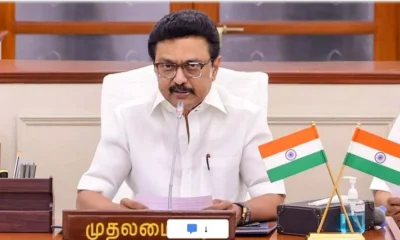
Governor Banwarilal Purohit administered the oath of office and secrecy to Stalin and his Cabinet ministers in an oath-taking ceremony which saw AIADMK’s top leader O Panneerselvam, leaders from alliance parties including Congress’s P Chidambaram, MDMK chief Vaiko, and top state officials in attendance.

This will be Stalin’s first term, and he takes charge when the state is battling a severe second Covid wave. Also, this is the sixth time the chief minister will be from the DMK since 1967, when party founder C N Annadurai was first elected to the post. Thereafter, Stalin’s father M Karunanidhi held the post. This time, DMK won 133 seats in the Assembly polls and along with allies, and got an absolute majority on its own.

Stalin will also hold several other portfolios including Home, General Administration, Special Initiatives, Special Programme Implementation and Welfare of Differently-Abled Persons. The Stalin-led cabinet has retained many former ministers with some of them being given different portfolios this time around, 15 members shall be ministers for the first time. Stalin’s son Udhayanidhi does not figure in the list of ministers. 

Party veteran and general secretary Duraimurugan, who had held portfolios like Public Works earlier, would be Minister for Water Resources in charge of irrigation projects and others including mines and minerals. Former Chennai Mayor Ma Subramanian and party’s north Chennai strongman, P K Sekarbabu. Thiagarajan, Poyyamozhi are among the 15 who would be first time Ministers. 

Read Also: PM Modi spoke his mann ki baat, did not listen, Jharkhand CM Hemant Soren on PM phone call

Here is the list of Tamil Nadu Cabinet and Council of Ministers:

DuraimuruganMinister for Water ResourcesIrrigation Projects including small Irrigation, Legislative Assembly, Governor and Ministry, Elections and Passports, Minerals and Mines.
K.N. NehruMinister for Municipal AdministrationMunicipal Administration, Urban and Water Supply.
I. PeriyasamyMinister for Co-operationCo-operation, Statistics and Ex-Servicemen Welfare
K. PonmudiMinister for Higher EducationHigher Education including Technical Education, Electronics, Science and Technology
E.V. VeluMinister for Public WorksPublic Works (Buildings, Highways and Minor Ports)
M.R.K. PanneerselvamMinister for Agriculture and Farmer’s WelfareAgriculture, Agricultural Engineering, Agro Service Co-operatives, Horticulture, Sugarcane Excise, Sugarcane Development and Waste Land Development
K.K.S.S.R RamachandranMinister for Revenue and Disaster ManagementRevenue, District Revenue Establishment, Deputy Collectors, Disaster Management
Thangam ThennarasuMinister for IndustriesIndustries, Tamil Official Language and Tamil Culture, Archeology.
S. ReghupathyMinister for LawLaw, Courts, Prisons and Prevention of Corruption
S. MuthusamyMinister for Housing and Urban DevelopmentHousing, Rural Housing, Town Planning projects and Housing Development, Accommodation Control, Town Planning, Urban Development and Chennai Metropolitan Development Authority.
K.R. PeriakaruppanMinister for Rural DevelopmentRural Development, Panchayats and Panchayat Unions, Poverty Alleviation Programmes, Rural Indebtedness.
T.M. AnbarasanMinister for Rural IndustriesRural Industries including cottage industries, small Industries, Slum Clearance Board.
M.P. SaminathanMinister for Information & PublicityInformation & Publicity, Film Technology and Cinematograph Act, Newsprint Control, Stationery and Printing, Government Press.
P. Geetha JeevanMinister for Social Welfare & Women EmpowermentWomen and Children Welfare including Social Welfare, Orphanages and Correctional Administration, Integrated Child Development Scheme and Beggar Homes and Social Reforms & Nutritious Meal Programme
Anitha R. RadhakrishnanMinister for Fisheries – Fishermen Welfare and Animal HusbandryFisheries and Fisheries Development Corporation and Animal Husbandry
S.R. RajakannappanMinister for TransportTransport, Nationalised Transport and Motor Vehicles Act.
K. RamachandranMinister for ForestsForests
R. SakkarapaniMinister for Food and Civil SuppliesFood and Civil Supplies, Consumer Protection and Price Control
V. SenthilbalajiMinister for Electricity, Prohibition & ExciseElectricity, Non Conventional Energy Development, Prohibition and Excise, Molasses
R. GandhiMinister for Handlooms and TextilesHandlooms and Textiles, Khadi and Village Industries Board, Boodhan and Gramadhan.
Ma. SubramanianMinister for Medical and Family WelfareHealth, Medical Education and Family Welfare
P. MoorthyMinister for Commercial Taxes and RegistrationCommercial Taxes, Registration and Stamp Act, Weights and Measures, Debt Relief including legislation on Money lending, Chits and Registration of Companies
S.S. SivasankarMinister for Backward Classes WelfareBackward Classes Welfare, Most Backward Classes Welfare and Denofied Communities Welfare
P.K. SekarbabuMinister for Hindu Religious and Charitable EndowmentsHindu Religious and Charitable Endowments
Palanivel ThiagarajanMinister for Finance and Human Resources ManagementFinance, Planning, Personnel and Administrative Reforms, Pensions and Pension allowances.
S.M. NasarMinister for Milk & Dairy DevelopmentMilk and Diary Development
Gingee K.S. MasthanMinister for Minorities Welfare and Non Resident Tamils WelfareMinorities Welfare, Non Resident Tamils Welfare, Refugees & Evacuees and Wakf Board
Anbil Mahesh PoyyamozhiMinister for School EducationSchool Education
Siva. V. MeyyanathanMinister for Environment – Climate Change and Youth Welfare and Sports DevelopmentEnvironment and Pollution Control, Youth Welfare and Sports Development
C.V. GanesanMinister for Labour Welfare and Skill DevelopmentLabour Welfare, Population, Employment and Training, Census, Urban and Rural Employment
T. Mano ThangarajMinister for Information TechnologyInformation Technology
M. MathiventhanMinister for TourismTourism and Tourism Development Corporation
N. Kayalvizhi SelvarajMinister for Adi Dravidar WelfareAdi Dravidar Welfare, Hill Tribes and Bonded Labour Welfare.

India News

Four militants killed as rival Naga groups clash in Manipur village

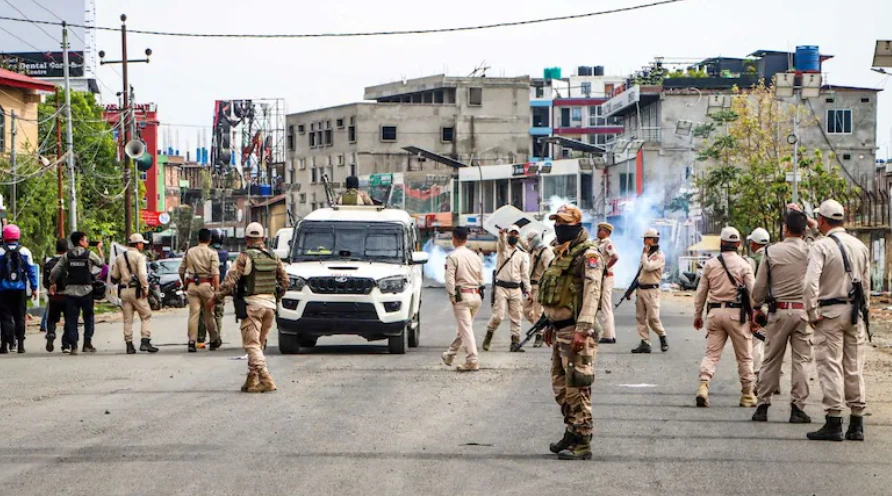
Four militants were killed in a gunfight between suspected rival Naga groups at Taodaijang village in Manipur’s Noney district on Wednesday.

Published

on

Manipur violence

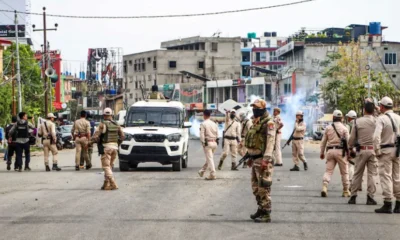
At least four militants were killed in a gunfight between suspected rival Naga militant groups in Manipur’s Noney district on Wednesday, November 4.

The exchange of fire took place at Taodaijang village in the Khoupum area of the Naga-majority district. According to officials, the cadres involved were suspected to belong to rival Naga militant outfits, including the Zeliangrong United Front-Jenchui (ZUF-J) and the Zeliangrong United Front-Kamson (ZUF-K).

Initial reports indicated that the gunfight continued for several hours, leaving three cadres of ZUF-J and one cadre of ZUF-K dead.

The bodies of the deceased militants were subsequently recovered by local residents.

Residents appeal to armed groups to stop firing

Following the gunfight, local residents, including women, reached the spot in an attempt to prevent further violence between the rival groups.

They also used a public address system to appeal to the armed cadres to stop firing and prevent the situation from escalating further.

Further details about the circumstances surrounding the clash were awaited.

Manipur government reviews security situation

In a separate development, Manipur Chief Minister Yumnam Khemchand Singh directed senior security officials to identify active armed groups suspected of involvement in recent incidents of violence in the state.

The directive excluded groups engaged in peace talks with the state government.

The Chief Minister issued the instructions during a review meeting on the state’s law and order situation on Tuesday night.

He also asked security agencies, including the Army and central paramilitary forces, to submit a detailed report on the involvement of the suspected groups.

The Chief Minister said the state Cabinet could consider declaring such groups unlawful if their involvement in violence against innocent civilians was established.

He also emphasised that necessary action would be initiated against groups continuing to perpetrate violence against civilians.

Continue Reading

India News

Agnipath scheme gets 2-year extension for Agniveers, tenure may rise to 6 years

The Centre has introduced a two-year extension for the remaining 75% of Agniveers under the Agnipath scheme, creating another opportunity for them to seek enrolment in the regular armed forces.

Published

on

The Centre has introduced a significant change to the Agnipath recruitment scheme, offering a two-year extension to Agniveers who were earlier expected to leave the armed forces after completing their initial four-year service.

Chief of Defence Staff (CDS) General NS Raja Subramani announced the decision on Wednesday following a Union Cabinet meeting. Under the revised arrangement, the 75% of Agniveers who were not initially selected for absorption into the regular armed forces will be offered an additional two-year engagement period.

The development creates another opportunity for these personnel to continue serving in the armed forces beyond their original four-year tenure.

What changes under the revised Agnipath scheme?

Under the original Agnipath framework, Agniveers were recruited for a four-year service period, including training. At the end of this tenure, up to 25% of each batch could be selected for permanent enrolment into the regular armed forces, while the remaining 75% were expected to return to civilian life.

The revised arrangement introduces an additional two-year engagement for the latter group. This means their potential service period could increase from four to six years.

The extension also creates another opportunity for Agniveers to seek enrolment into the regular armed forces after completing the additional two years.

What happens after the additional two years?

According to General NS Raja Subramani, Agniveers completing the extended engagement period and willing to continue serving will be considered for enrolment in the regular armed forces.

Their selection will be based on objective criteria.

This creates an additional pathway for those who are not absorbed into the regular forces after their initial four-year tenure. However, the revised arrangement does not mean that every Agniveer will automatically receive permanent enrolment.

Why has the decision been taken now?

The announcement comes as the first batch of Agniveers recruited under the scheme approaches the completion of its initial four-year service period.

The Agnipath scheme was introduced on June 14, 2022, to recruit personnel into the Indian Army, Navy and Air Force for a fixed four-year engagement.

General Raja Subramani said the scheme had been undergoing periodic reviews, with the performance of Agniveers being continuously evaluated. He also indicated that feedback on their performance had been very positive.

The latest Cabinet decision creates an additional route for retaining personnel beyond the initial engagement period.

What was the original Agnipath arrangement?

Under the original framework, the armed forces could retain up to 25% of Agniveers in the regular cadre after their four-year service period, subject to selection.

The remaining 75% were to complete their engagement and transition to civilian life.

With the latest revision, this group will receive an additional two-year engagement opportunity before being considered for enrolment into the regular armed forces under the prescribed selection criteria.

The change therefore modifies the earlier arrangement by providing an additional opportunity for Agniveers to continue their military careers.

Continue Reading

India News

Hardeep Singh Puri set to win Rajya Sabha bypoll unopposed

Union Minister Hardeep Singh Puri is set to be elected unopposed to the Rajya Sabha from Madhya Pradesh after the returning officer rejected the nomination papers of two independent candidates.

Published

on

Hardeep Puri

Union Petroleum Minister Hardeep Singh Puri is set to enter the Rajya Sabha unopposed from Madhya Pradesh after the nomination papers of two independent candidates were rejected during scrutiny on Tuesday.

The two candidates whose nominations were rejected were Kante Sayanna and Rajkumar Lohani, the latter being backed by the Congress. Their rejection leaves Puri as the only candidate in the contest for the vacant Rajya Sabha seat.

According to an official, the result will be announced on November 5, which is also the last date for withdrawal of nominations.

The Returning Officer, Umesh Sharma, examined the nomination papers on the last day of scrutiny and rejected the two independent candidates’ applications.

Objections raised against Hardeep Puri’s nomination

The nomination papers submitted by Puri also faced objections from the two independent candidates and Congress leader Hemant Katare.

They questioned the validity and completeness of Puri’s affidavit filed in Form 26, raising concerns over whether the mandatory details had been properly furnished.

However, after examining the objections, Returning Officer Umesh Sharma concluded that Puri had not violated any requirements under the Representation of the People Act.

Sharma stated in his order that no defect had been found in Puri’s nomination papers that could justify their rejection.

Following the decision, Katare and Congress MLA Atif Aqeel announced that they would approach the court against the order.

Calling the decision an attack on Indian democracy, the Congress leaders said in a statement that Puri’s nomination should have been rejected despite what they described as significant errors.

Why the Madhya Pradesh Rajya Sabha seat fell vacant

The by-election was necessitated by the resignation of Union Minister L Murugan, which left a Rajya Sabha seat vacant in Madhya Pradesh.

With the nomination papers of both independent candidates rejected and Puri’s nomination cleared, the Union minister is set to be elected unopposed.

The final announcement is expected on November 5, the last day for withdrawal of nominations.

Continue Reading

Trending

© Copyright 2022 APNLIVE.com