English हिन्दी
Connect with us

India News

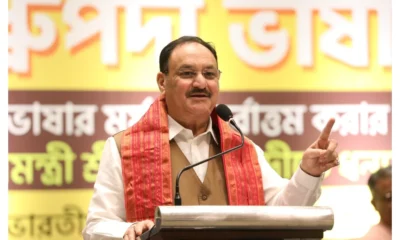
BJP chief JP Nadda hits out at Rahul Gandhi over his fighting Indian state remark

During his address, Gandhi criticised RSS leader Mohan Bhagwat’s assertion that India’s independence should be celebrated on the day of the Ram temple’s consecration rather than on August 15.

Published

on

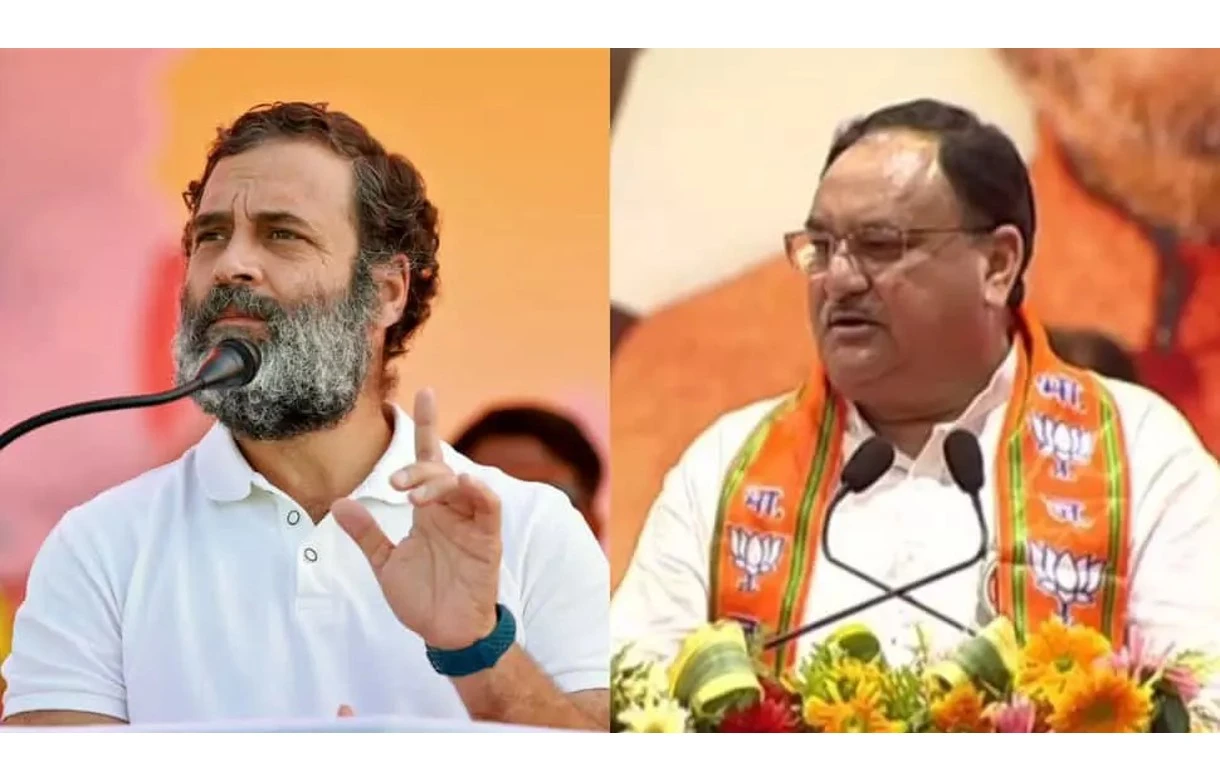
BJP president and Union Health Minister JP Nadda on Wednesday hit out at Congress leader Rahul Gandhi after he said his party was fighting the Indian state itself and not just the BJP or RSS’s ideology, which had proven harmful to democracy.

In a post on X, Nadda said, “No longer hidden, the ugly truth of the Congress is now exposed by their own leader. I ‘compliment’ Mr. Rahul Gandhi for clearly stating what the nation knows — that he is fighting against the Indian state!”

He further accused Gandhi of having connections to urban naxals and the deep state, claiming that he was attempting to incite division and discredit India.

Other BJP leaders, including Union Minister Hardeep Singh Puri and Finance Minister Nirmala Sitharaman, also reacted strongly to Rahul Gandhi’s remarks during the inauguration of the Congress party’s new headquarters in Delhi. In response to Gandhi’s comments, Hardeep Singh Puri suggested that Rahul Gandhi should “get his mental stability checked.”

During his address, Gandhi criticised RSS leader Mohan Bhagwat’s assertion that India’s independence should be celebrated on the day of the Ram temple’s consecration rather than on August 15.

Gandhi labelled Bhagwat’s statements as treasonous, asserting that Congress was not only contesting the BJP and RSS’s ideology, which he deemed harmful to democracy, but was also fighting against the Indian state itself.

Finance Minister Nirmala Sitharaman questioned Gandhi, who serves as the Leader of the Opposition in the Lok Sabha, saying, “The LoP, who took an oath on the Constitution, is now declaring, ‘We are fighting the BJP, the RSS, and the Indian State itself.’ So why do you carry a copy of the Constitution?”

Amit Malviya, BJP’s IT cell chief, shared a clip of Gandhi’s speech on X, stating, “Rahul Gandhi has now declared an open war against the Indian State itself. This is straight out of George Soros’s playbook.”

During his address, Gandhi asserted, “Those in power today do not salute the tricolour, nor do they believe in the national flag or the Constitution; they have a vastly different vision for India. They want to control India through a secretive society led by one person, silencing the voices of our nation.”

He also emphasised that the Congress party remains the only viable alternative to the BJP-led central government, adding, “The people in this room are facing systematic attacks and assaults on their lives because they belong to the Congress party and refuse to surrender to the BJP and the RSS.”

India News

Give all tickets to Muslim women, Amit Shah says, attacking Akhilesh Yadav on sub-quota demand

A sharp exchange between Amit Shah and Akhilesh Yadav in Parliament over sub-quota for Muslim women highlights key divisions on women’s reservation implementation.

Published

on

A heated exchange broke out in Parliament during discussions on the women’s reservation framework, with Union Home Minister Amit Shah and Samajwadi Party chief Akhilesh Yadav locking horns over the demand for a sub-quota for Muslim women.

The debate unfolded as the government pushed forward key legislative measures to implement 33% reservation for women in the Lok Sabha and state assemblies.

Akhilesh Yadav argued that the proposed reservation must ensure representation for women from marginalised communities, including Other Backward Classes (OBCs) and Muslim women. He said that without such provisions, large sections could remain excluded from political participation.

He also questioned the timing of the bill, alleging that the Centre was avoiding a caste census. According to him, a census would lead to renewed demands for caste-based reservations, which the government is reluctant to address.

Government rejects religion-based quota

Responding to the demand, Amit Shah made it clear that reservation based on religion is not permitted under the Constitution.

He stated that any proposal to provide quota to Muslims on religious grounds would be unconstitutional, firmly rejecting the idea of a separate sub-quota for Muslim women within the broader reservation framework.

The government has maintained that the existing framework already includes provisions for Scheduled Castes (SC) and Scheduled Tribes (ST) women within the overall reservation structure.

Wider political divide over implementation

The issue of sub-categorisation within the women’s quota has emerged as a major flashpoint, even as most opposition parties broadly support the idea of women’s reservation.

Samajwadi Party leaders reiterated that their support for the bill depends on inclusion of OBC and minority women, while the government continues to defend its constitutional position.

The debate is part of a broader discussion during the special Parliament session, where multiple bills linked to delimitation and implementation of the women’s quota are being taken up.

Continue Reading

India News

No state will lose a seat, Centre assures as delimitation debate takes centre stage in Parliament

Parliament’s special session begins with key focus on implementing women’s reservation and delimitation, setting the stage for major electoral changes.

Published

on

Parliament

A special session of Parliament commenced on Thursday, with the Centre set to take up crucial legislation related to women’s reservation and delimitation of constituencies. The session, scheduled over three days, is expected to witness intense debate as the government pushes forward its legislative agenda.

At the centre of discussions is the proposal to operationalise the women’s reservation law, which seeks to allocate 33 percent of seats in the Lok Sabha and state assemblies to women. The law, passed earlier, requires enabling provisions before it can be implemented.

The rollout of the reservation is closely tied to the delimitation exercise — a process that redraws parliamentary constituencies based on updated population data. The implementation is expected only after the next census and delimitation process are completed.

The government is aiming to put in place the framework so that the reservation can be enforced in future elections, likely around 2029.

Delimitation and numbers at play

Delimitation is a key aspect of the proposed changes, as it will determine how seats are redistributed and which constituencies are reserved. The exercise is expected to reflect population shifts and may also involve an increase in the total number of Lok Sabha seats.

This linkage has made the issue politically sensitive, with several opposition parties backing women’s reservation in principle but raising concerns over how and when delimitation will be carried out.

Political reactions and expected debate

The session is likely to see sharp exchanges between the government and opposition. While there is broad agreement on increasing women’s representation, disagreements remain over the timing, process, and potential political implications of the delimitation exercise.

Some leaders have argued that delimitation could significantly alter the balance of representation among states, making it a contentious issue beyond the women’s quota itself.

The government, however, has framed the move as a step toward strengthening women’s participation in governance and ensuring more inclusive policymaking.

Continue Reading

India News

Delimitation and women’s quota bills set to be tabled in Parliament today, key numbers explained

The Centre will table key bills on women’s reservation and delimitation, proposing a major expansion of Lok Sabha and changes in seat allocation based on updated census data.

Published

on

Lok Sabha

The Centre is set to introduce a set of crucial bills in Parliament aimed at implementing women’s reservation and redrawing electoral constituencies, marking a major shift in India’s political framework.

According to details accessed from official drafts, three separate legislations are expected to be tabled during the ongoing session. These include a constitutional amendment to operationalise 33% reservation for women, a delimitation bill to redraw constituencies, and changes to laws governing Union Territories.

The move is seen as a coordinated effort to align women’s reservation with a fresh delimitation exercise based on updated population data.

How the numbers may change

One of the most significant proposals is the expansion of the Lok Sabha. The draft legislation suggests increasing the maximum strength of the House to around 815 members, with up to 35 seats allocated to Union Territories.

Currently, the Lok Sabha has 543 elected members. The increase is aimed at ensuring proportional representation after decades of population changes across states.

The proposed delimitation exercise would rely on the latest available census figures, likely the 2011 Census, replacing the long-standing reliance on 1971 data.

Women’s reservation linked to delimitation

The proposed framework makes it clear that the 33% reservation for women in Parliament and state assemblies will only be implemented after the delimitation process is completed.

The reservation is expected to apply across general, Scheduled Caste, and Scheduled Tribe seats, with constituencies being rotated periodically to ensure broader representation.

The reform is likely to come into effect ahead of the 2029 general elections, depending on the completion of the delimitation exercise.

Why delimitation is central to the plan

Delimitation has remained frozen for decades, leading to imbalances in representation due to population growth, migration, and urbanisation.

The new bill proposes setting up a Delimitation Commission, which would be tasked with redrawing constituency boundaries and reallocating seats based on updated population data.

This process is expected to significantly alter the political map of the country and could trigger debates over regional representation.

Continue Reading

Trending

© Copyright 2022 APNLIVE.com