English हिन्दी
Connect with us

India News

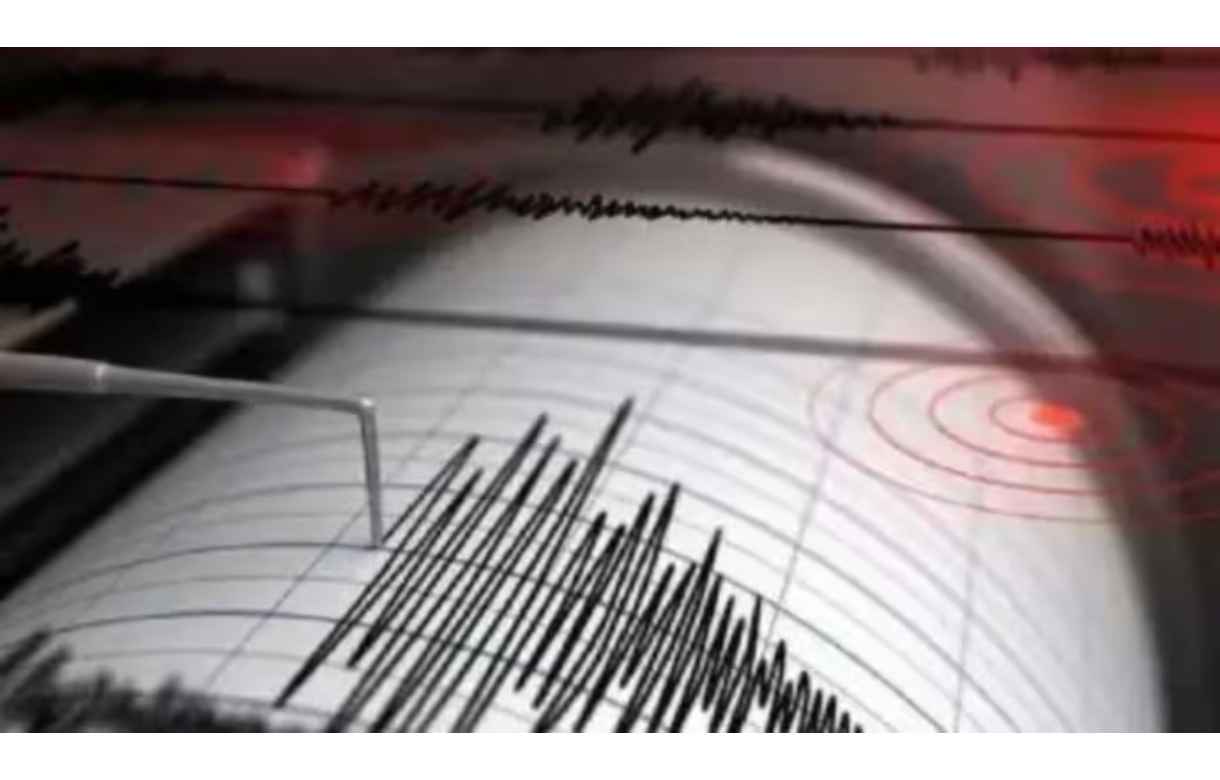
Earthquake of 5.3 magnitude on richter scale shakes up Nepal, tremors felt in Delhi-NCR

According to IndiaMetSkyWeather the quake in Nepal shook the entire Indo-Gangetic plains.  The National Centre for Seismology (NCS) the earthquake occurred at a depth of 10 kilometres. There are no reports of any casualties in the earthquake

Published

on

Earthquake of 5.3 magnitude on richter scale shakes up Nepal, tremors felt in Delhi-NCR

An earthquake of magnitude 5.3 struck Nepal on Sunday morning. The National centre of Seismology (NCS) said the earthquake took place at  7:24 am on Sunday at a depth of 10 km. As the earthquake shook Nepal, tremors were also felt in Delhi-NCR and many parts of India. Taking to X (formerly Twitter). Many people said the earthquake tremors were felt in Delhi-NCR, Haryana, Bihar and Uttar Pradesh

According to IndiaMetSkyWeather the quake in Nepal shook the entire Indo-Gangetic plains.  The National Centre for Seismology (NCS) the earthquake occurred at a depth of 10 kilometres. There are no reports of any casualties in the earthquake. Similarly October 7, an earthquake of magnitude 4.9 on richter scale shook Nepal.

According to the National Centre of Seisemology the earthquake occurred at a depth of 10 kilometres. The tremors were also felt in parts of Haryana, Punjab, Rajasthan, Uttar Pradesh and Uttarakhand just after 2.45 pm.

According to the Delhi Disaster Management Authority website, Delhi is located in zone IV which has fairly high seismicity where the general occurrence of earthquakes is of 5-6 magnitude, a few of magnitude 6-7 and occasionally of 7-8 magnitude. Delhi thus lies among the high-risk areas. The site adds that Delhi and the union territory region has already seen five earthquakes of the 5.5 to 6.7 scale since 1720.

There has been no report of damage to life and property as of now and reports are awaited on the situation in Nepal. Seismologists said the epicentre was 10 km underground in Nepal. The Himalayan country has already faced a massive quake on April 25, 2015 of 7.8 magnitude. Some 9,000 people died and injured more than 20,000. 

India News

TMC and DMK recalibrate poll campaign strategy as I-PAC faces scrutiny

TMC and DMK are recalibrating poll strategies as I-PAC faces scrutiny, though on-ground campaign activities remain steady.

Published

on

Assembly elections

Campaign activities continue on ground while engagement with I-PAC leadership reportedly declines after recent developments

Amid ongoing assembly election campaigns, the Trinamool Congress (TMC) and the Dravida Munnetra Kazhagam (DMK) are recalibrating their poll strategies as political consultancy firm Indian Political Action Committee comes under scrutiny.

According to media reports, campaign activities at the ground level remain largely unaffected in both states. Party workers continue voter outreach, rallies, and booth-level coordination without any visible slowdown.

However, there has been a noticeable reduction in engagement with I-PAC’s senior leadership following recent developments, including investigative actions involving the firm.

Sources indicate that while the broader campaign machinery remains intact, both TMC and DMK are making internal adjustments to ensure continuity and minimise dependence on external strategists. This includes greater reliance on party cadres and local leadership for campaign execution.

The developments come at a crucial time, with elections underway and political parties aiming to maintain momentum. Despite the situation surrounding I-PAC, both parties appear focused on sustaining their outreach efforts and adapting strategies as needed.

Continue Reading

India News

Heatwave days to rise across northern plains, Gujarat and Maharashtra, warns IMD

IMD warns of increased heatwave days across northern plains and western India, with temperatures expected to exceed 40°C in many regions.

Published

on

heatwave

Higher-than-normal heatwave days likely between April and June, with temperatures expected to cross 40°C in several regions

Large parts of India, including the northern Indo-Gangetic plains and western states such as Gujarat and Maharashtra, are expected to experience a higher-than-normal number of heatwave days during the summer months, according to the India Meteorological Department (IMD).

The IMD chief stated that regions in north India, eastern coastal areas, and adjoining western parts are likely to witness frequent heatwave conditions between April and June.

Temperatures in several climatologically prone regions are expected to rise above 40 degrees Celsius. Areas such as Vidarbha in Maharashtra typically record temperatures of around 41–42°C during this period, while states like Uttar Pradesh and Haryana may see temperatures reaching 40–44°C in May.

The weather office noted that heatwave conditions are likely across multiple regions, including Haryana, Uttar Pradesh, Bihar, Jharkhand, parts of Rajasthan, Gujarat, Madhya Pradesh, and Maharashtra. Eastern states such as Odisha, West Bengal, Andhra Pradesh, Chhattisgarh, and Telangana are also expected to face similar conditions.

Officials emphasised the need for preparedness as high temperatures are a recurring feature during April, May, and early June before the onset of the monsoon, although variations may occur year to year.

To mitigate risks, the IMD has been expanding its outreach efforts, especially for vulnerable populations such as outdoor workers. Alerts and forecasts are being shared through mobile-based systems, display boards, and coordinated communication channels to ensure timely access to heat-related advisories.

The department also provides seasonal forecasts in advance, along with weekly and district-level updates, to help authorities and the public prepare for extreme weather conditions during the summer months.

Continue Reading

India News

Liquor ban extended to 96 hours in West Bengal ahead of phase 1 polls

Election Commission enforces 96-hour liquor ban in West Bengal ahead of phase 1 polls after detecting unusual rise in sales.

Published

on

Election Commission of India

Extended restriction comes after election authorities flag unusual spike in liquor sales ahead of voting

The Election Commission has extended the duration of the liquor ban to 96 hours in parts of West Bengal ahead of the first phase of Assembly elections scheduled for April 23.

Typically, the sale of liquor is prohibited 48 hours before polling. However, authorities decided to enforce the restriction earlier than usual this time, effectively doubling the dry period. The ban has already come into effect in constituencies going to polls in the first phase.

According to the poll body, the decision was taken after monitoring agencies observed an unusual surge in liquor sales across the state. Officials noted a sharp increase in the lifting of packaged liquor by retailers from state-run depots during April 2026 compared to the same period last year.

The Election Commission also pointed to a rise in the number of “sensitive” liquor outlets identified under its monitoring framework. Data gathered from surveillance and reporting systems indicated patterns that raised concerns about possible misuse during the election period.

Authorities believe that such spikes in liquor sales could potentially be linked to attempts to influence voters, prompting stricter enforcement measures to ensure a level playing field.

The extended ban aims to maintain law and order and prevent inducements during the electoral process. Officials reiterated that steps are being taken to ensure free, fair, and transparent polling, with strict monitoring across districts.

The elections in West Bengal are expected to witness a high-stakes contest, with major political parties gearing up for a closely fought battle.

Continue Reading

Trending

© Copyright 2022 APNLIVE.com