English हिन्दी
Connect with us

India News

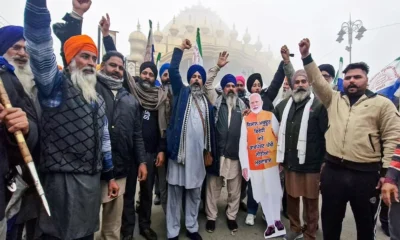
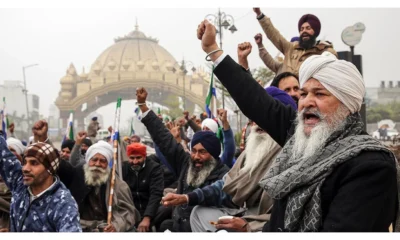
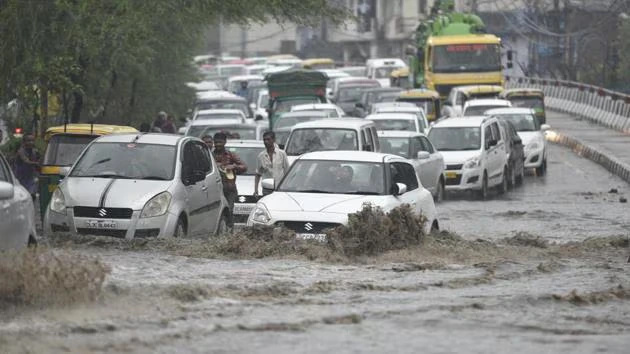
Farmers Protest: Police put up barricades, massive traffic on Noida-Delhi roads

The farmers’ leader criticized the BJP-led government, stating that it has not engaged in any talks with the farmers since February 18.

Published

on

Farmers Protest: Police put up barricades, massive jam on Noida-Delhi roads

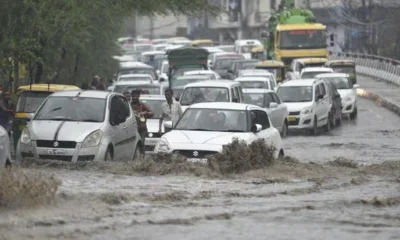
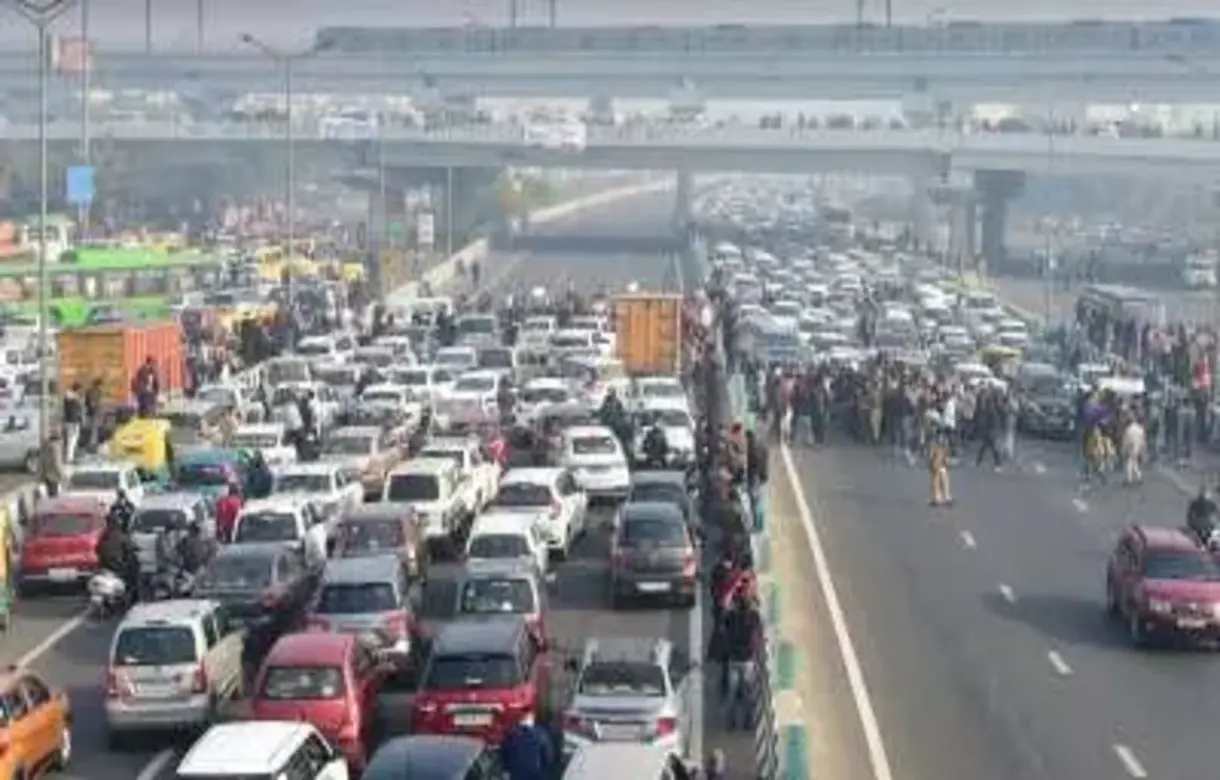
The farmers from Punjab have announced that they will march to the national capital this week to demand a discussion on Minimum Support Price (MSP). Following this, the police have put up barricades and issued advisory for commuters travelling from Noida to Delhi today, as the first group of farmers, led by the Bharatiya Kisan Parishad (BKP), will begin their march today.

Reports said, the protesting farmers will start their march from the Maha Maya flyover in Noida at noon. Several photos from the spot showed massive traffic jams on the road leading to Delhi. The protestors under the banners of the Samyukta Kisan Morcha (non-political) and Kisan Mazdoor Morcha (KMM), have been protesting at the Shambhu and Khanauri border points between Punjab and Haryana since February 13, after their attempt to march to Delhi was blocked by security forces.

Furthermore, many other farmers will join the protest from December 6, with the march proceeding daily from 9 am to 5 pm. The agitating farmers will spend the nights on the road. While addressing the media on Sunday, Kisan Mazdoor Morcha (KMM) leader Sarwan Singh Pandher said farmers have been protesting at Shambhu and Khanauri for 293 days.

The farmers’ leader criticized the BJP-led government, stating that it has not engaged in any talks with the farmers since February 18. He further accused the Centre of avoiding dialogue and reaffirmed that the farmers reject contract farming, demanding instead a legal guarantee on the MSP for crops.

Notably, a three-member panel of Union ministers – Arjun Munda, Piyush Goyal and Nityanand Rai – had met with farmer representatives on February 18, but the farmers rejected the Centre’s proposal to purchase pulses, maize, and cotton at the MSP for five years.

Apart from a legal guarantee on the MSP, the protesters are demanding farm loan waiver, pension for farmers and farm labourers, no hike in the electricity tariff, withdrawal of police cases and justice for the victims of the 2021 Lakhimpur Kheri violence, reinstatement of the Land Acquisition Act, 2013 and compensation to the families of the farmers who died during a previous agitation in 2020-21.

Another farmer leader, Guramneet Singh Mangat mentioned that when the first group of farmers begins its march towards Delhi on December 6, other farmer bodies in Kerala, Uttarakhand, and Tamil Nadu will also stage marches towards their respective state assemblies.

India News

Budget 2026 signals India’s strategy to shield economy from global tariff shocks

Budget 2026 highlights India’s cautious approach to global trade tensions, focusing on defence, infrastructure and strategic self-reliance while sticking to fiscal discipline.

Published

on

pm modi

Prime Minister Narendra Modi’s economic strategy to protect India from rising global trade tensions became clearer with the presentation of the Union Budget 2026, which focused on strengthening strategic sectors, supporting exporters and maintaining fiscal stability.

The spending plan comes at a time when India faces an uncertain external environment, marked by tariff pressures from the United States and disruptions to global supply chains. The budget announced fresh support for exporters affected by overseas trade barriers and increased backing for critical sectors such as rare earths, semiconductors and critical minerals.

A key highlight of the budget was a significant push towards national security and infrastructure. The government announced an 18% increase in defence expenditure alongside new infrastructure outlays, positioning the move as a safeguard against regional security challenges involving China and Pakistan.

Despite higher spending in select areas, the government largely adhered to its fiscal roadmap. Overall expenditure remained controlled, with no major tax cuts for households and no large-scale stimulus measures. The budget also avoided major populist announcements in a year when the ruling party faces electoral contests in several states.

According to policy analysts, the approach reflects caution amid global uncertainty. The emphasis is on insulating the economy while keeping a close watch on external risks rather than pursuing aggressive expansion.

Market reaction to the budget was muted, with equities declining after the announcement. Investors attributed the fall mainly to a tax increase on equity market transactions aimed at curbing speculation, rather than dissatisfaction with the broader spending plan. The government’s decision to borrow more than expected in the next fiscal year also raised concerns about potential pressure on the bond market.

Setting the tone for the budget speech in Parliament, Finance Minister Nirmala Sitharaman highlighted the challenges posed by weakening multilateral trade systems and disruptions in access to resources and supply chains. She stressed the need for India to remain integrated with global markets while boosting exports and attracting long-term investment.

Although not named directly, the budget addressed challenges arising from recent tariff measures imposed by the US, including steep duties affecting labour-intensive sectors such as textiles and furniture. These measures have added pressure on industries dependent on overseas demand.

The government’s response has been to strengthen domestic capabilities. Over the past year, steps have been taken to boost consumption, simplify labour regulations and open up sectors such as nuclear energy and finance to investors. The latest budget builds on that direction by deepening reforms and improving productivity across sectors.

At the same time, India is seeking to diversify its trade relationships. Recent free trade agreements with the European Union, the UK and New Zealand aim to reduce dependence on any single market and provide exporters with greater stability.

Focus on self-reliance and strategic sectors

The budget placed strong emphasis on self-reliance, announcing new initiatives to promote domestic manufacturing in semiconductors and pharmaceuticals. It also outlined plans to develop mining, processing and manufacturing capacity for rare earth minerals, particularly in mineral-rich eastern and southern states.

Industry leaders described the initiatives as essential for building a resilient industrial ecosystem capable of withstanding global shocks.

However, questions remain over whether the cautious spending approach will be sufficient to support growth and generate employment for India’s young workforce. While the government has projected growth between 6.8% and 7.2% for the coming fiscal year, market estimates are slightly lower.

Opposition leaders criticised the budget for not addressing issues such as youth unemployment and declining household savings. The government, however, appears focused on navigating geopolitical and economic uncertainty while staying committed to fiscal discipline.

Continue Reading

India News

Union Budget 2026: What the middle class gains despite no income tax slab changes

Union Budget 2026 retains income tax slabs but offers indirect relief to the middle class through TCS cuts, simpler tax filing, cheaper medicines and higher job-creating expenditure.

Published

on

Union Budget 2026: what the middle class gains despite no income tax slab changes

Union Budget 2026 may not have delivered direct income tax relief to salaried taxpayers, but the government has introduced several indirect measures aimed at easing financial pressure on middle-class households.

While tax slabs remain unchanged, the Budget outlines steps to simplify compliance, reduce taxes on overseas spending, lower the cost of essential medicines, and support job creation through higher public spending.

Income tax status quo continues

The government has retained the existing income tax framework for individuals. Annual income up to Rs 12 lakh continues to remain tax-free, and with the Rs 75,000 standard deduction, effective tax-free income rises to Rs 12.75 lakh.

No changes have been announced in income tax slabs, signalling policy continuity rather than immediate relief for salaried taxpayers.

Compliance relief and tax rationalisation measures

A key focus of Budget 2026 is reducing compliance burdens and improving the taxpayer experience.

The government has proposed a reduction in Tax Collected at Source (TCS) on overseas tour programme packages to 2%, down from the earlier rates of 5% and 20%. TCS under the Liberalised Remittance Scheme (LRS) for education and medical expenses has also been cut to 2% from 5%, providing relief to families sending money abroad for essential purposes.

To ease return filing pressure, timelines have been staggered. Individual taxpayers filing ITR-1 and ITR-2 can continue to file returns till July 31, while non-audit businesses and trusts will now get time till August 31.

Protection for small investors

The Budget proposes taxing all share buybacks as capital gains instead of dividends, a move aimed at protecting minority retail investors.

In another relief measure, interest awarded by Motor Accident Claims Tribunal (MACT) to individuals will be exempt from income tax, and the applicable TDS will be removed.

A single-window system will also be introduced for submitting Form 15G and Form 15H through depositories for TDS on dividends and interest, simplifying compliance for senior citizens and small savers.

Cheaper medicines and essential products

Healthcare costs may ease slightly as the government has announced duty exemptions on about 17 cancer medicines. Personal imports of medicines for seven rare diseases will also be allowed duty-free.

In addition, customs duty relief has been extended to critical components used in the manufacture of microwave ovens, television equipment, leather goods and footwear, which could help moderate consumer prices.

Job creation through higher spending

The government has raised capital expenditure to over Rs 12 lakh crore, with allocations for railways, tourism, logistics and technology sectors. These investments are expected to support employment generation and long-term economic activity, indirectly benefiting middle-class households.

Continue Reading

India News

Budget 2026 balances high capex and growth, says PM Modi

Prime Minister Narendra Modi said Union Budget 2026 strikes a balance between high capital expenditure and strong growth while reinforcing reforms and fiscal discipline.

Published

on

pm modi

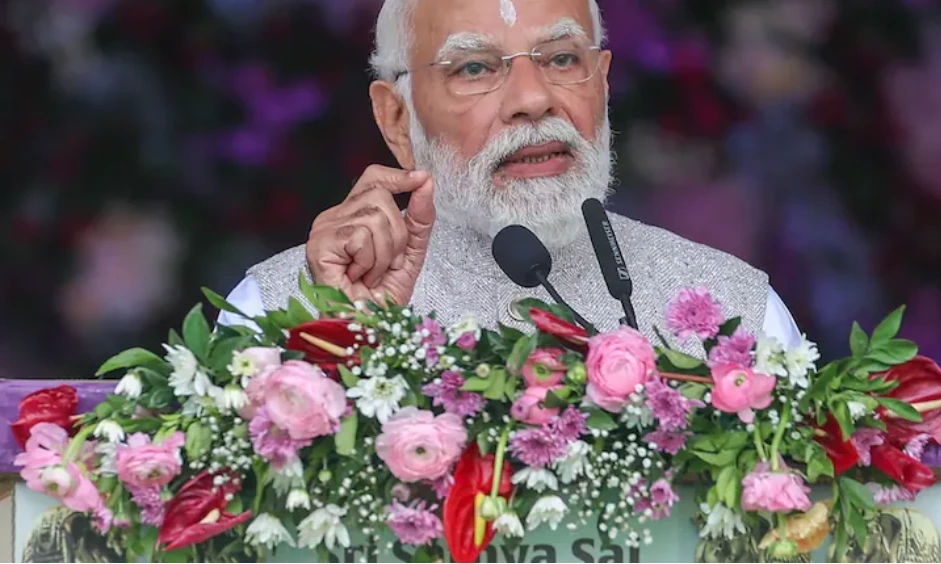
Prime Minister Narendra Modi on Saturday said the Union Budget 2026 strikes a fine balance between high capital expenditure and sustained economic growth, calling it a roadmap for long-term national development.

Speaking after Finance Minister Nirmala Sitharaman presented her ninth consecutive Budget, the prime minister said the proposals reflect a vision of trust-based governance and a human-centric economic framework. He added that India is not just focused on being the fastest-growing economy but is working towards becoming the world’s third-largest economy.

PM Modi said the Budget also reinforces India’s strong global standing and will provide fresh momentum to the country’s reform agenda. According to him, the measures announced will energise what he described as India’s “reform express”.

The prime minister highlighted the Budget’s focus on promoting tourism in the northeastern region, noting that it would create new opportunities and support regional development.

On fiscal management, the finance minister retained the states’ share in the divisible pool of central taxes at 41 per cent. She announced that Rs 1.4 lakh crore has been provided to states as Finance Commission grants for 2026–27, in line with the recommendations of the commission.

The Finance Commission, chaired by Arvind Panagariya, had submitted its report to the President in November 2025 after consultations with states and Union Territories, several of which had sought a higher share.

Sitharaman pegged the fiscal deficit for 2026–27 at 4.3 per cent of GDP, lower than the revised estimate of 4.4 per cent for 2025–26. She also said the debt-to-GDP ratio is projected to decline to 55.6 per cent in 2026–27 from 56.1 per cent in the previous fiscal.

A gradual reduction in the debt burden will help free up resources for priority sectors by lowering interest outgo, the finance minister said.

Continue Reading

Trending

© Copyright 2022 APNLIVE.com