English हिन्दी
Connect with us

India News

Nirbhaya case: Dec 16 rapists to hang, Supreme Court rejects review petitions of death row convicts

Published

on

Nirbhaya case accused

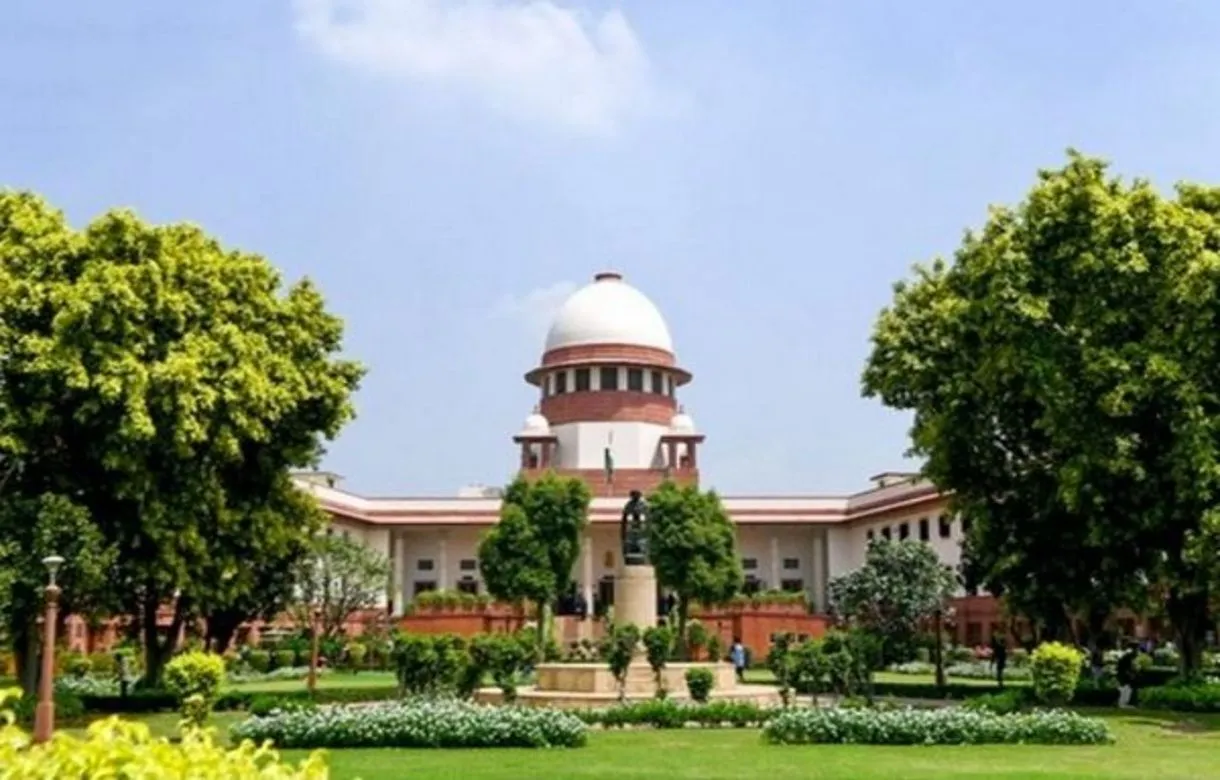
The Supreme Court on Monday upheld its judgment on the death sentence of three of the four convicts in the December 16, 2012 Delhi gangrape case that came to called also as the ‘Nirbhaya’ case after the name given to the victim.

A bench headed by Chief Justice Dipak Misra and comprising Justices Ashok Bhushan and R Banumathi, delivering its verdict on the pleas filed by Mukesh (31), Pawan Gupta (31) and Vinay Sharma (25), said the convicts had failed to point out “error” in the judgment. The court added that the convicts were heard elaborately during appeals and no grounds were made out for review of the verdict.

The fourth convict, Akshay Thakur (31), did not file a review plea. Advocate AP Singh, representing Akshay Thakur, had told PTI, “Akshay has not filed a review petition yet. We will be filing it.” He has been granted three weeks by the top court to do so.

Last year, the top court had upheld the death sentence awarded to the four convicts by the Delhi High Court and the trial court in the gangrape and murder of a 23-year-old paramedic student on December 16, 2012, in the national capital. The 23-year-old paramedic student, returning from a movie, boarded a chartered bus in New Delhi’s Saket area and was subsequently brutally raped and murdered by six people.

While one of the accused, Ram Singh, allegedly committed suicide in Tihar jail, another accused, a juvenile, was convicted by the juvenile justice and sent to three years in probation to a reform home. The juvenile, whose name is not known (legally, he cannot be named) is already out and has melted into the population, carrying his criminal mind and past. Ironically, the juvenile, who was said to be the most cruel of the lot in the murder, has also been given enough vocational training to support himself independently.

Backgrounder

While the 2012 Nirbhaya case has become the centrepiece of all judgments related to violence on women in India, the first instance of the Supreme Court’s capital punishment (to all four accused) verdict, delivered on May 5, 2017, went through several petitions.

While the Nirbhaya case saw expression of massive outrage, protests and a movement, in the six years since things appear to have taken a turn for the worse with gang rapes, torture and murders, even on girls as young as 8 (the Kathua gang rape and murder case) as horrific as the Nirbhaya case and more, have been reported from across the country.

The general perception was that deterrent legal action was so slow in India that the fear of punishment has all but vanished. Today’s judgment could be one in a series of final verdicts that the public wants to be fast-tracked.

Timeline

December 16, 2012: 23-year-old paramedic student, now known as Nirbhaya, returning home with her friend in Delhi got a lift from a chartered bus (empty, except for driver and helpers) and is gang-raped, brutally assaulted by six men and dumped in a grievously injured state. Her friend was brutally beaten up and left for dead.

December 17, 2012: Delhi Police identify four men who raped and assaulted her — bus driver Ram Singh, his brother Mukesh, Vinay Sharma and Pawan Gupta. Doctors declared the woman suffered grave internal injuries.

December 18, 2012: Ram Singh and three others are arrested.

December 29, 2012: Nirbhaya succumbs to her injuries at Mount Elizabeth Hospital in Singapore where she was transported by the government for further treatment.

December 21, 2012: Accused juvenile is arrested from Anand Vihar bus terminal in Delhi. The woman’s friend identifies Mukesh as one of the culprits. Police conduct raids in Haryana and Bihar to nab the sixth accused, Akshay Thakur.

December 22, 2012: Akshay Thakur is arrested in Bihar and brought to Delhi. Victim records her statement before the SDM in hospital.

January 2, 2013: The then Chief Justice of India Altamas Kabir inaugurates fast track court for speedy trial in sexual offence cases.

January 3, 2013: Police files charge-sheet against five adult accused for offences including murder, gang rape, attempt to murder, kidnapping, unnatural offences and dacoity.

February 28, 2013: Juvenile Justice Board (JJB) frames rape, murder charges against the juvenile accused.

March 11, 2013: Bus driver Ram Singh is found hanging in his cell in Tihar jail.

August 31, 2013: JJB convicts the juvenile for gang rape and murder and awards three years term at a probation home.

September 13, 2013: Fast track court awards death to all four convicts. Trial court refers the case to Delhi High Court for confirmation of death sentence.

March 13, 2014: The Delhi High Court justices Reva Khetrapal and Pratibha Rani uphold the death sentences awarded to the four convicts.

December 18, 2015: Delhi High Court refuses to stay the release of the juvenile. He walks out of a correction home after spending three years.

April 3, 2016: Supreme Court begins hearing in the case.

April 8, 2016: Senior advocates Raju Ramchandran and Sanjay Hegde appointed amicus curiae.

May 5, 2016: SC upholds death penalty of four accused – Akshay Thakur, Vinay Sharma, Pawan Gupta and Mukesh Singh.

November 7, 2016: Advocate Raju Ramchandran argues for sentencing order to be set aside.

November 28, 2016: Advocate Sanjay Hegde argues against reliability of evidence in the case.

February 3, 2017: Supreme Court decides to rehear the case on the sentencing aspect, after the petitioners contend that there has been violation in procedure.

March 6, 2017: All the accused submit additional affidavits in court.

March 27, 2017: The SC reserves verdict after nearly a year of hearing the case.

May 5, 2017: The Supreme Court pronounces judgement in the case upholding the death sentence of all 4 accused.

November 13, 2017: The convicts appeal to the Supreme Court to review their sentence claiming that it was cold-blooded killing in the name of justice.

May 4, 2018: Supreme Court upholds the order on the plea of two convicts seeking a review of its 2017 verdict upholding the death penalty awarded to them.

India News

Lt Gen NS Raja Subramani appointed as India’s next Chief of Defence Staff

Lieutenant General NS Raja Subramani has been appointed as India’s next Chief of Defence Staff and will succeed General Anil Chauhan later this month.

Published

on

Lt Gen NS Raja Subramani appointed as India’s next Chief of Defence Staff

The Centre has appointed Lieutenant General NS Raja Subramani as India’s next Chief of Defence Staff (CDS), succeeding General Anil Chauhan, whose tenure will conclude on May 30.

According to the government announcement, Lieutenant General NS Raja Subramani will also serve as Secretary to the Government of India in the Department of Military Affairs from the date he assumes charge and until further orders.

Lt Gen Subramani is currently serving as the Military Adviser at the National Security Council Secretariat, a role he has held since September 2025. Before that, he served as Vice Chief of the Army Staff between July 2024 and July 2025.

A senior officer from the Garhwal Rifles, he was commissioned into the Indian Army in December 1985 and has held several important operational and command positions during his military career. He has commanded formations in Jammu and Kashmir, the Northeast and along the western front.

Lt Gen NS Raja Subramani is an alumnus of the National Defence Academy and the Indian Military Academy. He also studied at the Joint Services Command and Staff College in the United Kingdom and the National Defence College in New Delhi. He holds a Master’s degree from King’s College London and an MPhil in Defence Studies from the University of Madras.

The post of Chief of Defence Staff was created in 2020 to improve coordination among the Army, Navy and Air Force. General Bipin Rawat became India’s first CDS, followed by General Anil Chauhan in 2022. Lt Gen NS Raja Subramani will become the country’s third CDS after assuming office.

Continue Reading

India News

Bengal to get BJP’s first CM as Suvendu Adhikari set to take oath today

Suvendu Adhikari will be sworn in as West Bengal Chief Minister, marking the BJP’s first government formation in the state.

Published

on

Suvendu Adhikari is set to take oath as the Chief Minister of West Bengal, becoming the first leader from the Bharatiya Janata Party to head the state government.

The swearing-in ceremony is scheduled to take place at Brigade Parade Ground in Kolkata and is expected to witness the presence of several senior BJP leaders and supporters from across the state.

Adhikari was unanimously elected as the BJP legislature party leader after the party secured a decisive victory in the 2026 West Bengal Assembly elections. His appointment marks a significant political change in the state, where the BJP is forming the government for the first time.

Prime Minister Narendra Modi, Union Home Minister Amit Shah and several Union ministers are expected to attend the ceremony. Reports also indicate that the oath event has been planned on a large public scale to underline the BJP’s breakthrough in Bengal politics.

Adhikari emerged as one of the BJP’s key faces in Bengal after defeating Mamata Banerjee in the high-profile Nandigram contest in 2021 and later consolidating his position within the party’s state leadership.

Security arrangements have been tightened around the oath venue, while party workers have gathered in large numbers ahead of the ceremony. The event is being viewed as a landmark moment in West Bengal’s political history.

Continue Reading

India News

PM Modi to lead Somnath Amrit Parv celebrations with grand roadshow in Gujarat

PM Modi is set to visit Somnath Temple in Gujarat for the Somnath Amrit Parv celebrations marking 75 years of the temple’s reconstruction, with a roadshow and religious ceremonies planned.

Published

on

PM Modi

Prime Minister Narendra Modi is set to visit the Somnath Temple in Gujarat on May 11 to lead the ‘Somnath Amrit Parv’ celebrations marking the 75th anniversary of the temple’s reconstruction.

According to state ministers and senior officials, the Prime Minister will take part in religious rituals, lead a public roadshow, and address a gathering during the celebrations.

The visit comes months after PM Modi attended the Somnath Swabhiman Parv held earlier this year, which commemorated 1,000 years since the first recorded attack on the temple in 1026.

Grand roadshow and cultural programmes planned

Officials said PM Modi will arrive in Somnath from Jamnagar and lead a one-kilometre roadshow from the Triveni Helipad to the statue of Veer Hamirji Gohil. The procession is expected to feature cultural dance performances from different Indian states along with displays representing the 12 Jyotirlingas.

A Suryakiran Air Show and a flower petal shower over the temple spire are also planned during the event. The Prime Minister is expected to be welcomed by Rishikumars and members of local communities dressed in traditional attire.

During his visit, PM Modi will perform rituals including Kumbhabhishek, Dhvaja Puja and Mahapuja at the temple before addressing a public gathering at Sadbhavna Ground.

Somnath reconstruction anniversary

The celebrations mark 75 years since the reconstructed Somnath Temple was inaugurated in 1951 in the presence of India’s first President Rajendra Prasad. The reconstruction effort after Independence was led under the vision of Sardar Vallabhbhai Patel and supported by leaders including K.M. Munshi.

State minister Jitu Vaghani said the temple’s restoration remains a symbol of national self-respect and resilience.

After the Somnath events, PM Modi is scheduled to travel to Vadodara to inaugurate the Sardardham Educational Complex. Preparations are also underway for a possible roadshow in the city later in the day.

Continue Reading

Trending

© Copyright 2022 APNLIVE.com