
India News
Sushma Swaraj meets South Korean President Moon


Delegation level meeting with PM Modi will be held on Tuesday
External Affairs Minister Sushma Swaraj met South Korean President Moon Jae-in New Delhi on Monday where both the dignitaries shared commitment to values of democracy, open society and liberal international order. South Korean President arrived on Sunday evening on a four day official visit.
According to sources, Swaraj and President Moon had positive discussion on further elevating the special strategic partnership by expanding ties across several sectors. The meeting held at Hotel Oberoi, where the visiting dignitary is staying.
Raveesh Kumar, spokesperson of Ministry of External Affairs posted a tweet on the meeting:
Shared commitment to values of democracy, open society & liberal international order! EAM @SushmaSwaraj called on President of Republic of Korea, Moon Jae-in. Positive discussion on further elevating the Special Strategic Partnership by expanding ties across several sectors. pic.twitter.com/EI1S5DTSHr
— Raveesh Kumar (@MEAIndia) July 9, 2018
South Korean President Moon Jae-In and his wife, Kim Jung-sook, were received by Minister of State for External Affairs General VK Singh at the capital’s airport. On Sunday, South Korean President Moon paid a visit to the landmark Akshardham Temple in East Delhi.
 The South Korean President is leading a delegation comprising senior members of his cabinet, officials as well as industry captains. This is President Moon’s first-ever state visit to India after he took over as the President last year.
In the afternoon President Moon will next visit the Gandhi Smriti with Prime Minister Narendra Modi, from where the two leaders will head to a Samsung plant in Noida. President Moon is also scheduled to attend the India-Korea Business Forum later in the day. Vice President Venkaiyah Naidu will also call on the visiting dignitary on Monday evening.
Read More: India, major powers welcome Trump-Kim summit
On Tuesday, he will be accorded a ceremonial reception at the Rashtrapati Bhawan which will be followed by his visit to Raj Ghat for paying floral tributes to Mahatma Gandhi.
Prime Minister Modi will then hold official talks with the South Korean President at Hyderabad House. The two leaders will also address the India-South Korea CEOs Roundtable. A number of agreements are likely to be signed during the visit.
In the evening, President Moon will meet his Indian counterpart Ram Nath Kovind, who will also host a banquet for the visiting dignitary and his delegation at the Rashtrapati Bhawan. He will return on Wednesday morning.
Prime Minister Narendra Modi visited South Korea in 2015 during which the bilateral partnership was elevated to a special strategic partnership. Since then, the relationship has expanded in several areas.









India News
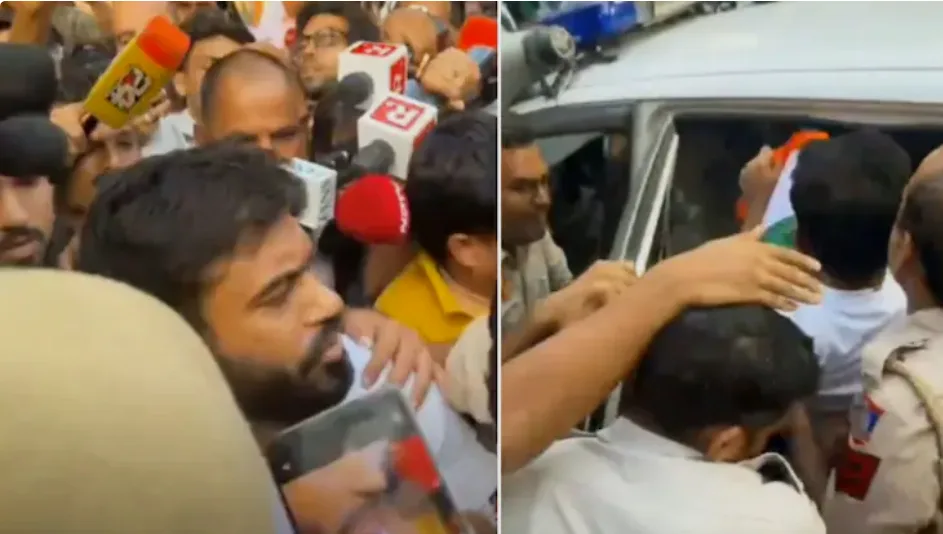
Abhijeet Dipke detained ahead of CJP’s national flag march in Delhi
Cockroach Janta Party founder Abhijeet Dipke was detained by Delhi Police on October 16, 2026, shortly before a planned national flag march. The proposed rally followed the judicial custody of two CJP members who had waved the Tricolour at Jantar Mantar.

India News
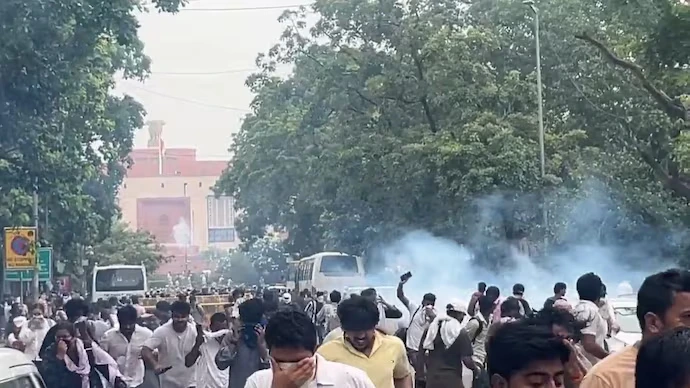
Delhi deploys 25,000 personnel, installs CCTV cameras ahead of CJP march
More than 25,000 police and paramilitary personnel have been deployed in Delhi ahead of the CJP’s planned protest march at Connaught Place. Authorities have also imposed restrictions and stepped up CCTV surveillance.
India News
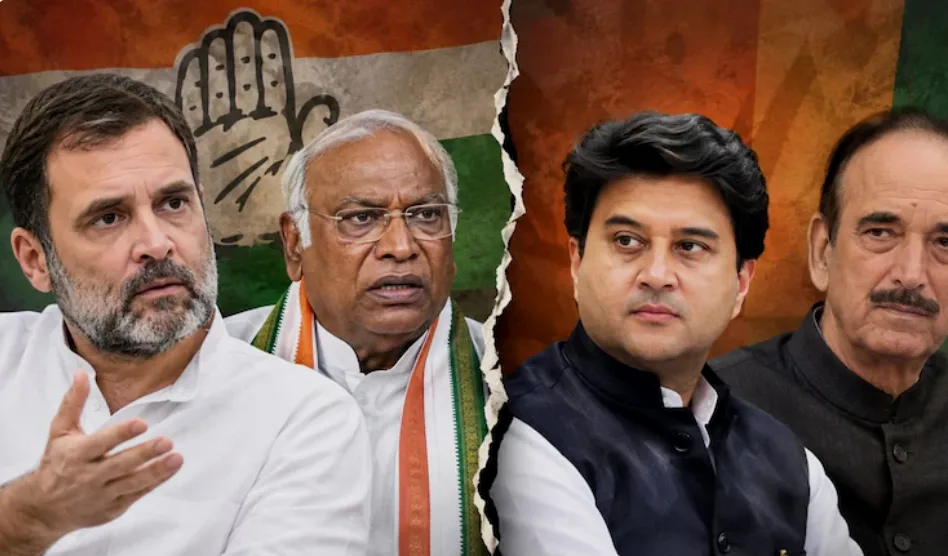
Mallikarjun Kharge’s ‘Your Friends’ jab at Rahul Gandhi over congress exits
Congress president Mallikarjun Kharge took a dig at Rahul Gandhi after the Leader of the Opposition reportedly described former party leaders Jyotiraditya Scindia and Ghulam Nabi Azad as among those who had left the Congress.

Election Commission orders voter roll revision in 17 states, UTs

Actor Imran Khan asked to leave India after CJP protest

Delhi Police offers 11-person limit for CJP’s Connaught Place protest

Mallikarjun Kharge’s ‘Your Friends’ jab at Rahul Gandhi over congress exits

Magnitude 7 earthquake strikes Russia’s Kamchatka Peninsula

Abhijeet Dipke detained ahead of CJP’s national flag march in Delhi
Magnitude 7 earthquake strikes Russia’s Kamchatka Peninsula

Delhi deploys 25,000 personnel, installs CCTV cameras ahead of CJP march
Mallikarjun Kharge’s ‘Your Friends’ jab at Rahul Gandhi over congress exits
Delhi Police offers 11-person limit for CJP’s Connaught Place protest

Afghan Men Try To Hang With The Jet Engine Of The Aircraft in Kabul- Afghanistan News – Kabul News
Trending Top 10 News: 10000 Crore Fine on Flipkart, Apple to Launch Unique Feature, Hdfc Bank Job Ad

Trending Top 10 News: Nokia 6310, Apple sales, Bachpan ka Pyar Video Kid, Dainik Bhaskar IT Raid

Trending Top 10 News: Canada bans Indian flights, Rain in Delhi NCR, AIMIM Twitter hacked, Raj Kundra case

Trending Top 10 News: Shein India, Apple New Service, Pocket Oxygen, Oppo Launched New Phone
-
 India News23 hours ago
Election Commission orders voter roll revision in 17 states, UTs
-
 India News23 hours ago
Actor Imran Khan asked to leave India after CJP protest
-
 India News22 hours ago
Delhi Police offers 11-person limit for CJP’s Connaught Place protest
-
 India News10 hours ago
Mallikarjun Kharge’s ‘Your Friends’ jab at Rahul Gandhi over congress exits
-
 Latest world news10 hours ago
Magnitude 7 earthquake strikes Russia’s Kamchatka Peninsula
-
 India News10 hours ago
Delhi deploys 25,000 personnel, installs CCTV cameras ahead of CJP march
-
 India News55 mins ago
Abhijeet Dipke detained ahead of CJP’s national flag march in Delhi
