English हिन्दी
Connect with us

India News

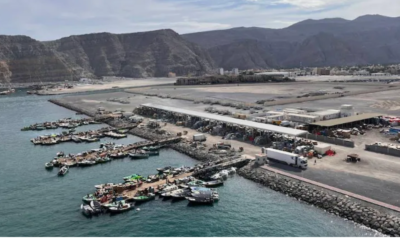
Houses of five terrorists razed in Jammu and Kashmir after Pahalgam attack

Following the Pahalgam terror attack, security forces demolished the houses of five terrorists across Shopian, Kulgam, and Pulwama districts in Jammu and Kashmir.

Published

on

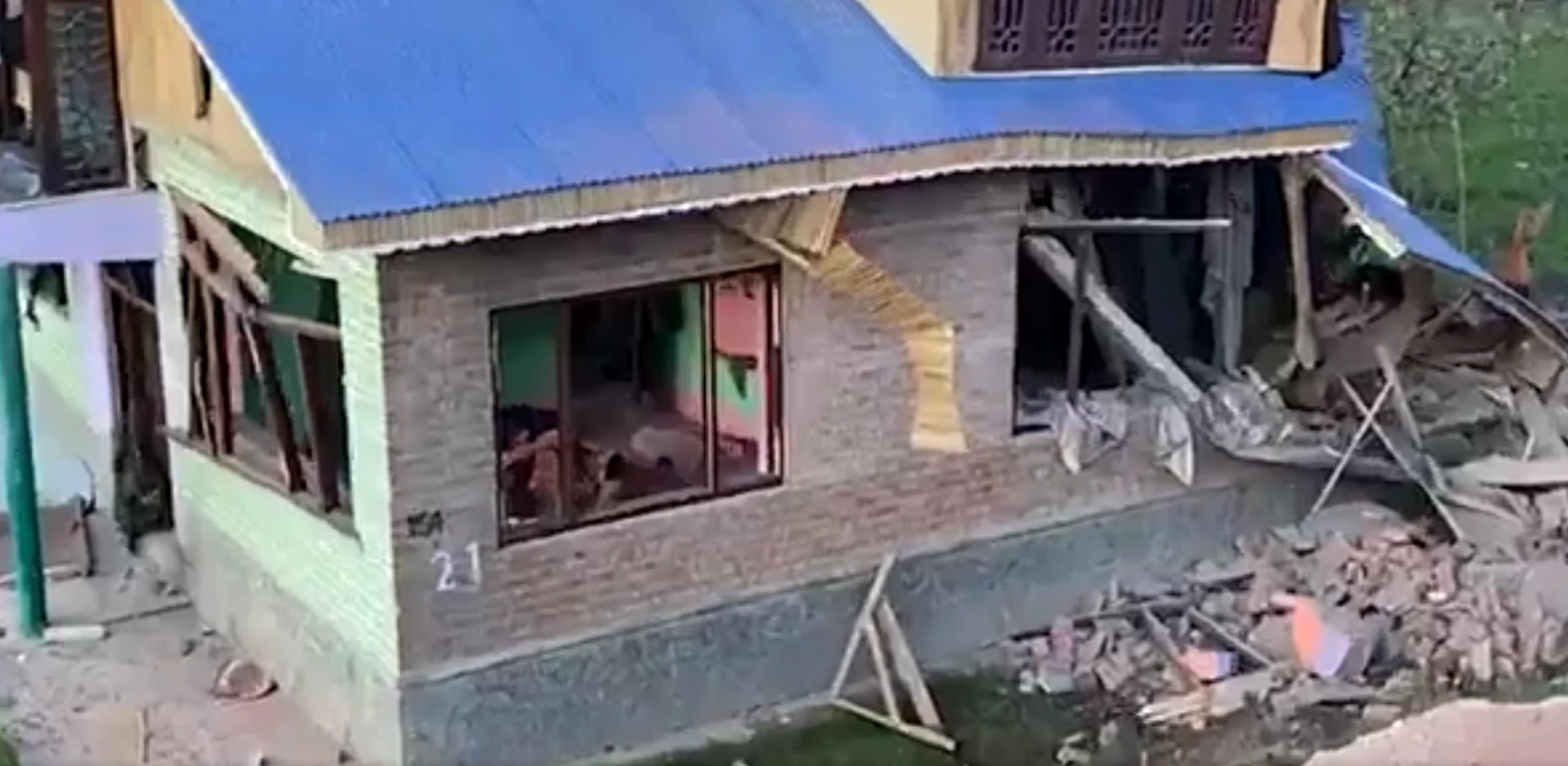
Houses of terrorists demolished in Jammu and Kashmir after Pahalgam attack

In a stringent move following the deadly Pahalgam terror attack, security forces destroyed the houses of five terrorists across Jammu and Kashmir on Friday night. The operation targeted properties in Shopian, Kulgam, and Pulwama districts, as authorities intensified their crackdown on Lashkar-e-Taiba (LeT) operatives and suspects linked to the assault that claimed 26 lives.

According to officials, the house of LeT commander Shahid Ahmed Kutte in Chotipora village of Shopian was among those demolished. Kutte, reportedly active in terror activities for the past three to four years, is accused of playing a major role in orchestrating anti-national operations.

In Kulgam’s Matalam area, the residence of active terrorist Zahid Ahmed was also torn down. Meanwhile, in Pulwama’s Murran area, security forces demolished the house of Ahsan Ul Haq, a terrorist trained in Pakistan in 2018 who had recently re-entered the Valley, raising alarms among intelligence agencies.

Further actions included the demolition of the double-storey house belonging to LeT terrorist Ehsan Ahmad Sheikh, active since June 2023, and the razing of Haris Ahmad’s residence in Kachipora, Pulwama, who has also been operating since last year.

Officials confirmed that cases have been registered against all the individuals whose properties were destroyed.

This follows similar actions on Thursday night when security forces demolished the houses of LeT operatives Adil Hussain Thoker and Asif Sheikh, believed to be directly involved in the Pahalgam attack. Reports indicated that explosives were found placed inside their houses.

Meanwhile, Anantnag Police released sketches of Thoker and two Pakistani nationals — Hashim Musa alias Suleman and Ali Bhai alias Talha Bhai — suspected to be involved in the attack. Authorities have announced a reward of ₹20 lakh for information leading to their capture.

The Pahalgam attack unfolded on Tuesday when multiple terrorists opened fire at tourists visiting Baisaran Valley, known as “Mini Switzerland,” resulting in widespread panic. In the wide-open spaces of the valley, tourists struggled to find cover as the gunmen continued their assault.

In the wake of the attack, a massive manhunt involving the Army, CRPF, and Jammu and Kashmir Police has been launched to apprehend the perpetrators. Additionally, India has suspended the Indus Water Treaty, citing “sustained cross-border terrorism by Pakistan.” Prime Minister Narendra Modi has vowed to “identify, track, and punish” all terrorists and their supporters behind the attack.

India News

Delhi-NCR sees second spell of rain and thunderstorms in four days

Delhi-NCR experienced another spell of rain and thunderstorms on March 18, with IMD forecasting more showers over the next few days.
Published

on

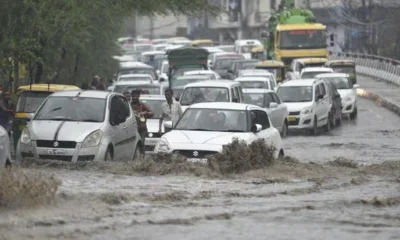
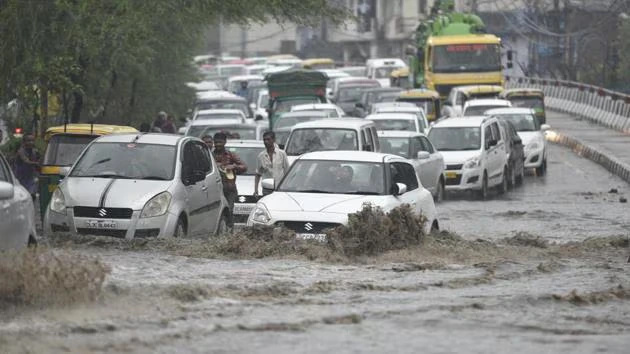
Delhi and parts of the National Capital Region witnessed another spell of rain, thunderstorms, and strong winds on Wednesday evening, marking the second such weather event in the past four days.

The sudden change brought relief from unusually high temperatures recorded earlier this month. According to officials, the temperature at Safdarjung — the city’s base weather station — was recorded at 24 degrees Celsius at 7 pm.

The India Meteorological Department had earlier issued an alert predicting light to moderate rainfall accompanied by thunderstorms and lightning on March 18. Several areas across the capital experienced gusty winds along with brief but intense showers.

More rain likely over next two days

The weather department has forecast partly cloudy skies for March 19 and 20, with chances of light rain or thundershowers occurring once or twice during the day. On March 21, skies are expected to remain cloudy with the possibility of light showers continuing.

Conditions are likely to stabilise from March 23 onwards, with forecasts indicating a return to partly cloudy to clear skies across the region.

Weather activity across India to intensify

The IMD has also indicated widespread weather activity across multiple regions of the country in the coming days. Rainfall is expected to intensify in several states, accompanied by thunderstorms, lightning, and gusty winds.

In the northeastern region, heavy rainfall is likely over Arunachal Pradesh, Assam, and Meghalaya during the early part of the week.

Meanwhile, the western Himalayan region is also set to witness a shift in weather patterns. Himachal Pradesh is likely to receive heavy rainfall on March 19 and 20, while Uttarakhand and Jammu and Kashmir may experience heavy showers around March 20.

Continue Reading

India News

Centre pushes states to cut levies to boost PNG adoption

The Centre has asked states to reduce local levies and streamline approvals to accelerate PNG adoption and city gas infrastructure growth.
Published

on

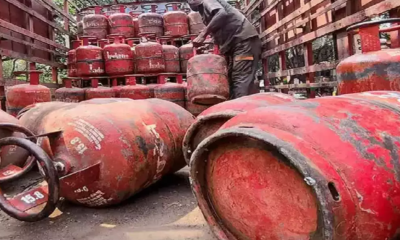
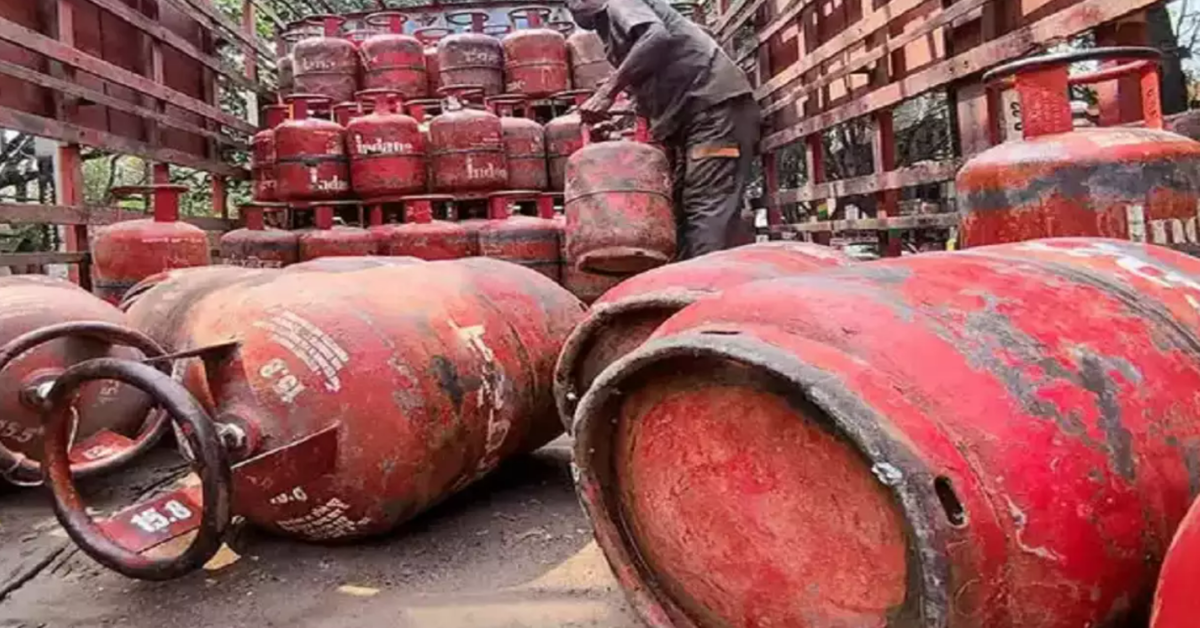
LPG Cylinder

The Ministry of Petroleum and Natural Gas has urged states and Union Territories to ease local levies and procedural barriers affecting City Gas Distribution (CGD) projects, in a bid to accelerate the adoption of piped natural gas (PNG) as a cleaner fuel alternative.

In a communication sent to Chief Secretaries, Petroleum and Natural Gas Secretary Neeraj Mittal highlighted that high right-of-way charges, road cutting fees, lease rentals and other local levies imposed by urban bodies are discouraging investments in CGD infrastructure.

High costs slowing expansion

The ministry pointed out that the CGD sector, particularly PNG supply to households and commercial establishments, does not receive direct subsidies. As a result, it depends heavily on viable returns, which are being impacted by excessive and inconsistent local charges across states.

It noted that these financial and procedural hurdles are slowing down infrastructure expansion and affecting the broader adoption of natural gas.

Gap between connections and usage

According to the government, while around 12.63 crore PNG connections have been recorded, only about 1.6 crore are currently active. The ministry stressed that improving ease of doing business at state and local levels could help bridge this gap and expand the consumer base.

Officials believe that rationalising levies may initially reduce local revenues but could lead to higher long-term gains through increased gas consumption and economic activity.

LPG shortage adds urgency

The push for PNG adoption comes amid supply constraints in liquefied petroleum gas (LPG), linked to ongoing tensions in the Middle East. Oil marketing companies are currently supplying only 20 per cent of normal commercial LPG demand to states.

To address this, the ministry has proposed increasing LPG allocation to 30 per cent for states that implement reforms supporting PNG and CGD expansion.

Reform-linked incentives for states

The Centre has suggested a set of measures that states can adopt to qualify for higher LPG allocations. These include:

  • Setting up empowered state and district-level committees for faster approvals
  • Introducing single-window clearance with deemed approvals within 24 hours
  • Implementing a dig-and-restore model using bank guarantees instead of restoration charges
  • Eliminating annual rental or lease charges for CGD infrastructure

The ministry said compliance with these reforms would be verified before granting additional LPG allocations.

Industry support measures

The communication also noted that GAIL and its subsidiaries have already allocated full gas supply to the commercial PNG segment to support businesses affected by reduced LPG availability.

The government reiterated that expanding natural gas usage aligns with its broader push for cleaner and domestically sourced energy.

Continue Reading

India News

BJP seals Assam seat-sharing pact, Modi to hold 3 rallies in April

BJP has finalised its Assam seat-sharing plan with allies and is gearing up for an intense campaign led by PM Modi and Amit Shah.
Published

on

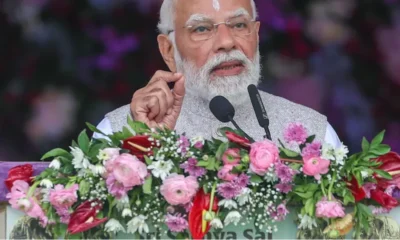
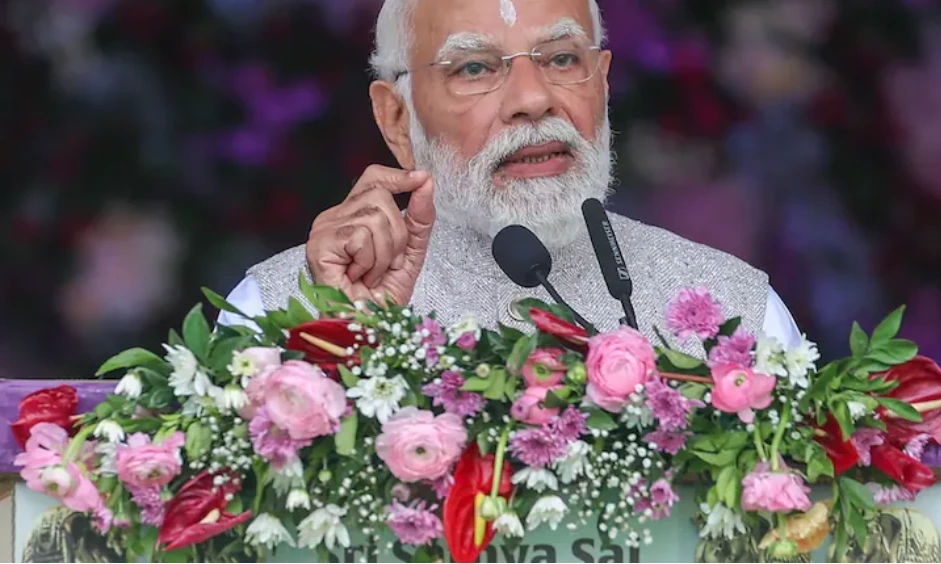
pm modi

The Bharatiya Janata Party has finalised its seat-sharing arrangement for the upcoming Assam Assembly elections, firming up its strategy alongside National Democratic Alliance partners as campaigning gathers pace in the state.

Under the agreement, the BJP will contest 89 seats, while its allies — Asom Gana Parishad and Bodoland People’s Front — will field candidates in 26 and 11 constituencies respectively. The distribution has been decided after internal deliberations, with the focus now shifting to candidate announcements and campaign execution.

Campaign push led by top leadership

Prime Minister Narendra Modi is expected to address three rallies in Assam during the final leg of the campaign. Tentative dates for the rallies are April 1, April 3 and April 6, with events likely to be held in key constituencies.

Union Home Minister Amit Shah is also set to spearhead an extensive campaign across the state through March, aiming to energise party workers and strengthen voter outreach.

Candidate selection underway

The party’s Central Election Committee is currently meeting to finalise candidates. Sources indicate that approvals for most constituencies are expected soon, and the BJP may release its complete list of candidates within the next two days.

Ticket distribution remains a crucial exercise, with internal discussions highlighting its potential impact on local political dynamics. Party leaders have also touched upon the proposed delimitation exercise scheduled for 2027, which is expected to have long-term implications for Assam’s electoral landscape.

Polling and counting dates

Voting for all 126 Assembly seats in Assam is scheduled for April 9, while the votes will be counted on May 4.

Continue Reading

Trending

© Copyright 2022 APNLIVE.com