English हिन्दी
Connect with us

Education

HRD ISSUES GUIDELINES FOR ONLINE TEACHING

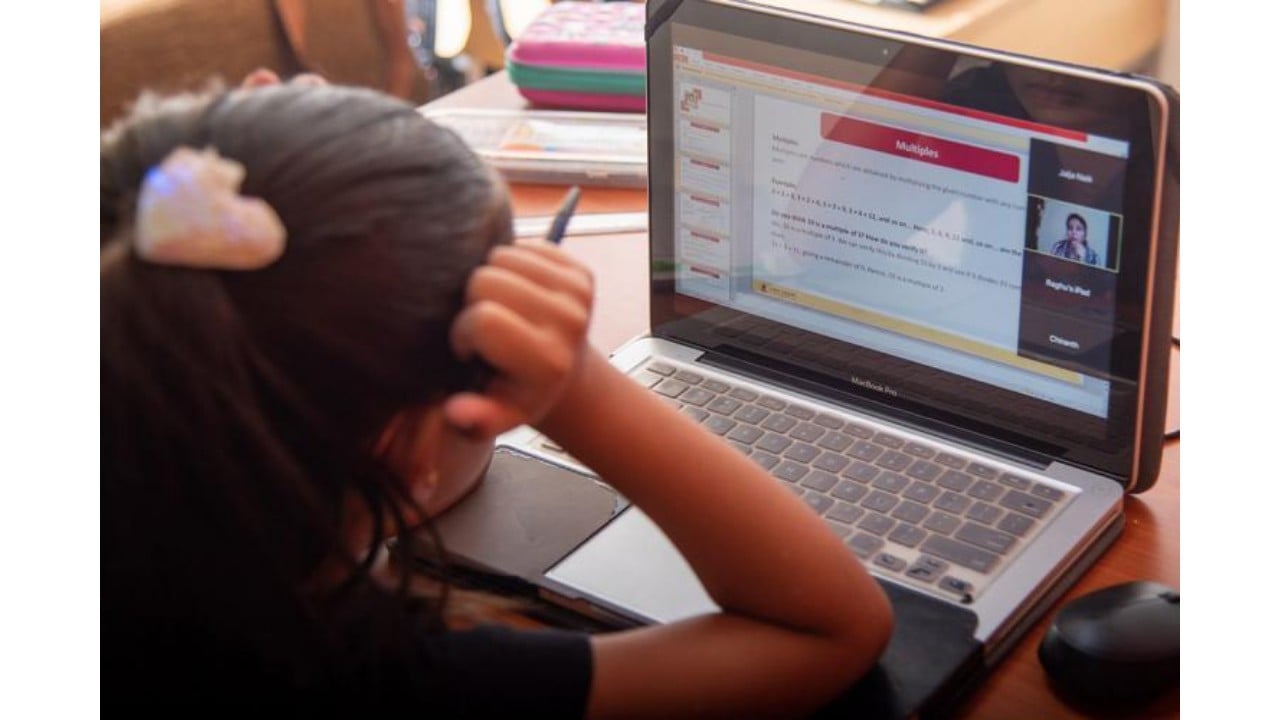
Releasing the “Pragyata” guidelines for online classes, the HRD Ministry recommended that the duration for online classes for pre-primary students should not be for more than 30 minutes, for classes I to VIII, two online sessions of up to 45 minutes each are suggested and for classes IX to XII, four sessions of 30-45 minutes durations have been recommended.

Published

on

Major relief to students! NCERT to cut syllabus by half

Releasing the “Pragyata” guidelines for online classes, the HRD Ministry recommended that the duration for online classes for pre-primary students should not be for more than 30 minutes, for classes I to VIII, two online sessions of up to 45 minutes each are suggested and for classes IX to XII, four sessions of 30-45 minutes durations have been recommended.

The ministry framed the guidelines following concerns being raised by parents on schools conducting online classes like regular schools thereby increasing children’s exposure to digital screens manifold since the closure of schools from March 16, 2020 after the Covid-19 outbreak. They were released by the ministry of human resource development on Tuesday to help schools remodel their strategy.

The guidelines highlighted that “it is important to have presentations which are easily readable, slides must follow certain rules like not more than five bullet points, maximise use of infographics, graphs, charts, avoid tables as much as possible”.

Stating that Covid-19 pandemic has led to secure disruptions in normal life, including closure of schools impacting over 240 million children of the country, it said that schools will have to introduce a suitable method of delivering quality education through a healthy mix of schooling at home and school as extended school closures may cause loss of learning. The guidelines have been developed from the perspective of learners, with a focus on online, blended, digital education for students who are presently at home due to the lockdown.

The guidelines also made specific recommendations based on the accessibility of digital resources across households – right from those with access to 4G connections with laptop, smartphone and TV to those with no digital device.

Noting that in a country like India characterised by multifarious diversity, switching over to digital modes of education needs various states, UTs and national-level organisations to join hands for a change that will sustain post-Covid-19 also.

The guidelines include eight steps of online or digital learning – plan, review, arrange, guide, talk, assign, track and appreciate. These steps guide the planning and implementation of digital education step by step with examples.

Education

CBSE makes three languages mandatory for Classes 9 and 10 from July 1

CBSE has announced that students in Classes 9 and 10 must study three languages from July 1, 2026, though no board examination will be conducted for the third language during the initial rollout.

Published

on

CBSE

The Central Board of Secondary Education has announced that students in Classes 9 and 10 will be required to study three languages from July 1, 2026, as part of the implementation of the National Education Policy (NEP) 2020 and the National Curriculum Framework for School Education (NCFSE) 2023.

Under the revised structure, students will study languages under the R1, R2 and R3 format. The board has clarified that two of the three languages must be Indian languages.

However, CBSE has stated that there will be no Class 10 board examination for the third language, also referred to as R3, during the initial phase of implementation.

What the new language structure means

According to the updated curriculum framework, students will choose three different languages. The same language cannot be selected at more than one level simultaneously.

The board has explained the structure as:

  • R1: Any language offered by CBSE
  • R2: A language different from R1
  • R3: A third language different from both R1 and R2

The move is aimed at promoting multilingual education in line with NEP 2020 recommendations.

No board exam for third language initially

CBSE has clarified that although the third language will become mandatory for Classes 9 and 10, students will not immediately face a board examination for R3 in Class 10.

Reports said the full implementation of the three-language board examination structure is expected to happen gradually over the coming years.

Schools asked to prepare for rollout

The board has already directed schools to finalise language options and upload details on the OASIS portal to ensure smooth implementation of the revised policy.

CBSE has also indicated that temporary textbook arrangements and interim measures for language teacher shortages may be introduced during the transition phase.

Continue Reading

Education

NEET UG 2026 re-exam to be held on June 21 after paper leak row

NTA has scheduled the NEET UG 2026 re-exam for June 21 after cancelling the earlier test over alleged paper leak concerns.

Published

on

NEET Exam

The National Testing Agency (NTA) has announced that the NEET UG 2026 re-examination will be conducted on June 21 following the cancellation of the earlier exam amid allegations of a paper leak.

The original NEET UG 2026 examination, held on May 3, was scrapped after investigative agencies flagged concerns regarding the integrity of the exam process. The matter is currently under investigation by the Central Bureau of Investigation (CBI).

NTA issues fresh schedule

According to the official announcement, candidates who had registered for the cancelled examination will not be required to submit fresh applications for the re-test. Existing registrations will remain valid for the June 21 examination.

The agency has also advised students and parents to rely only on official NTA communication channels for updates related to admit cards, examination centres and other examination-related notifications.

Paper leak investigation underway

The NEET UG paper leak case has triggered a nationwide probe, with the CBI making multiple arrests in connection with the alleged leak network. Investigators are examining how question papers were allegedly circulated before the examination.

Reports have suggested that handwritten copies of the question paper were allegedly scanned and circulated through messaging networks and intermediaries ahead of the examination.

Students await admit cards and city slips

The NTA is expected to release fresh city intimation slips and admit cards ahead of the June 21 examination date. Candidates have been advised to regularly check the official NEET website for updates regarding examination centres and instructions.

Continue Reading

Education

CBSE Class 12 result 2026 declared: 85.20% students pass, direct link and official websites to check scorecard

CBSE has declared the Class 12 result 2026 with an overall pass percentage of 85.20%. Students can check results online using official websites and apps.

Published

on

CBSE Result

The Central Board of Secondary Education (CBSE) has officially declared the Class 12 board examination results for 2026. This year, the overall pass percentage stands at 85.20%, marking a key academic milestone for lakhs of students across India.

Students who appeared for the examination can now check and download their scorecards from the official CBSE result portals and other designated platforms.

Official websites to check CBSE Class 12 result 2026

Candidates can access their results through the following official websites:

  • cbseresults.nic.in
  • results.cbse.nic.in
  • cbse.gov.in
  • cbse.nic.in

Apart from these websites, students can also use DigiLocker and the UMANG app to download their digital marksheets.

How to download CBSE Class 12 scorecard

To view and download the result, students need to:

  1. Visit the official CBSE result website
  2. Click on the “Class 12 Result 2026” link
  3. Enter roll number, school number, and admit card ID
  4. Submit details to view scorecard
  5. Download and save the marksheet for future use

Digital marksheet availability

CBSE has also made digital marksheets available through DigiLocker, allowing students to securely access their academic documents online. These digital records can be used for admission and verification purposes.

Key highlight of CBSE result 2026

  • Overall pass percentage: 85.20%
  • Result released for Class 12 board exams 2026
  • Multiple online platforms activated for result access

Continue Reading

Trending

© Copyright 2022 APNLIVE.com