
India News
IIT Ropar: Dalit student from Telangana dies by suicide, students learn of his death a week after he consumed poison

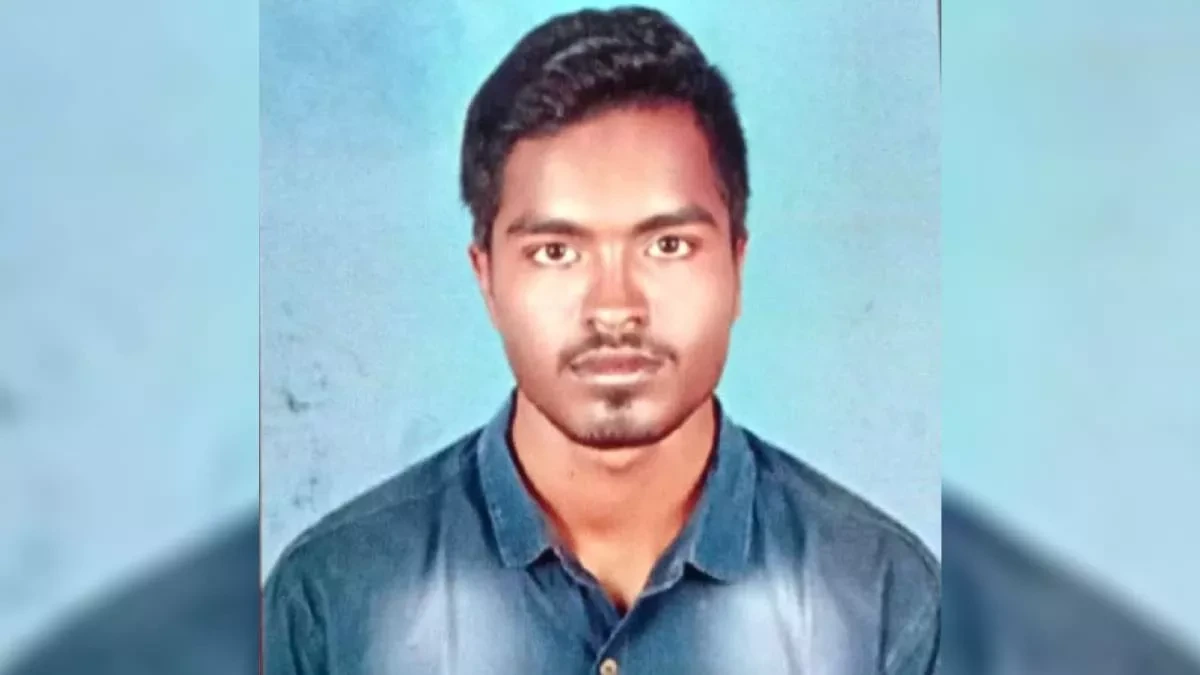
By Vikram Kilpady
A Dalit student at IIT Ropar, who consumed poison in his hostel room two weeks ago, died last Saturday in Chandigarh’s PGIMER.
The student, Marimesi Arun, hailed from Telangana and was in his fourth year studying Metallurgical and Materials Engineering. He would have graduated in barely three months.
A Hindi news report in the Jagran quoted unnamed sources saying Arun died by suicide owing to constant academic performance pressure and placement anxiety. The report added the news of his death broke in the IIT campus only this Monday, after a message was circulated for organising a condolence meeting.
Barring this report and the initial Jagran story, no news outlet has covered the incident, leave alone mentioning it in English media. The Jagran report added no official was willing to come on record about it. The Department of Metallurgical and Materials Engineering that Arun was studying in is said to have the most stringent grading system. Though Arun came through the preparatory batch for admission to the course and was given additional study for further assistance, the fear of not landing a placement has been named as a possible reason for his ending his life.
An IIT Ropar faculty member told APNLive.com on condition of anonymity that the condolence meeting was held at 12.30pm on Monday only after the deceased student’s body was sent with his parents to his hometown near Hyderabad, Telangana.
“Arun was doing poorly. His CGP was 5-point something out of 10. He had undergone the one-year preparatory course in English, Mathematics and Physics for students from marginalized and deprived backgrounds,” the faculty member said. He added that IIT Ropar authorities have downplayed the matter ever since Arun consumed poison and are now trying to hush it up.
Further, the authorities told Jagran that Arun was beset by personal problems and that academic pressure was not the reason why he chose death by suicide.
The faculty member said, “He was struggling against the toxic caste system prevalent in IITs. It is obviously why he didn’t get help to improve his scores. Nobody will speak the truth.”
“There was also a note he wrote in Telugu. Nobody has access. I am not sure whether his parents saw it. May be, it’s with the authorities. That letter will bring clarity,” the faculty member said.
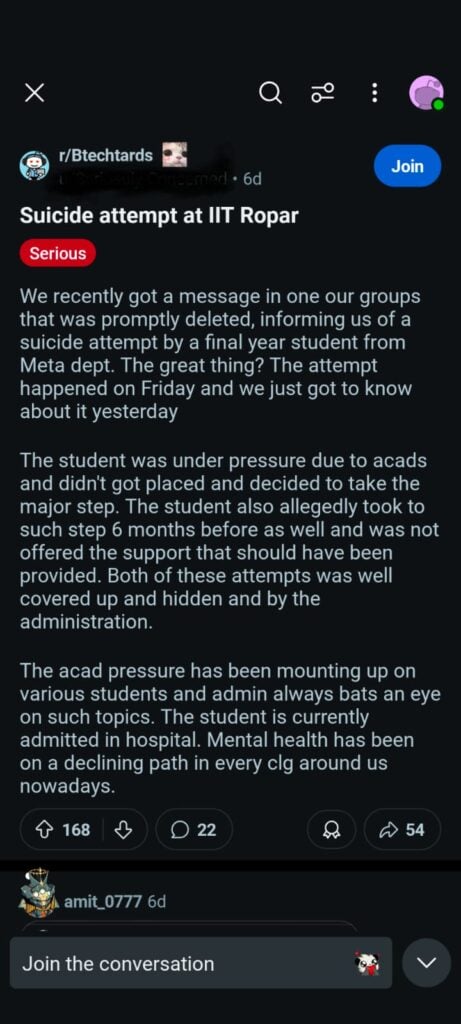
The first news of Arun’s suicide, however, was posted on Reddit on March 19 under the thread Btechtards by an IIT Ropar student. It noted the pressure Arun was under and also that he had attempted suicide six months ago as well. The post said he was not offered the support that should have been provided. The post added both incidents were covered up by the administration.
Here’s the full Reddit post: “We recently got a message in one our groups that was promptly deleted, informing us of a suicide attempt by a final year student from Meta dept. The great thing? The attempt happened on Friday and we just got to know about it yesterday
“The student was under pressure due to acads and didn’t got placed and decided to take the major step. The student also allegedly took to such step 6 months before as well and was not offered the support that should have been provided. Both of these attempts was well covered up and hidden and by the administration.
“The acad pressure has been mounting up on various students and admin always bats an eye on such topics. The student is currently admitted in hospital. Mental health has been on a declining path in every clg around us nowadays.”
Comments on this post note Arun’s death after news broke in the campus.
If one goes by the Reddit post, Arun consumed poison on Holi, March 14. This was also the day a fire led to the discovery of large sums of cash in a Delhi bungalow. The story itself came to light later but is now all over the press and has breaking news coverage even after ten days. But Marimesi Arun, like other Dalit youngsters who die by their own hand in India’s IITs, remains unmourned.
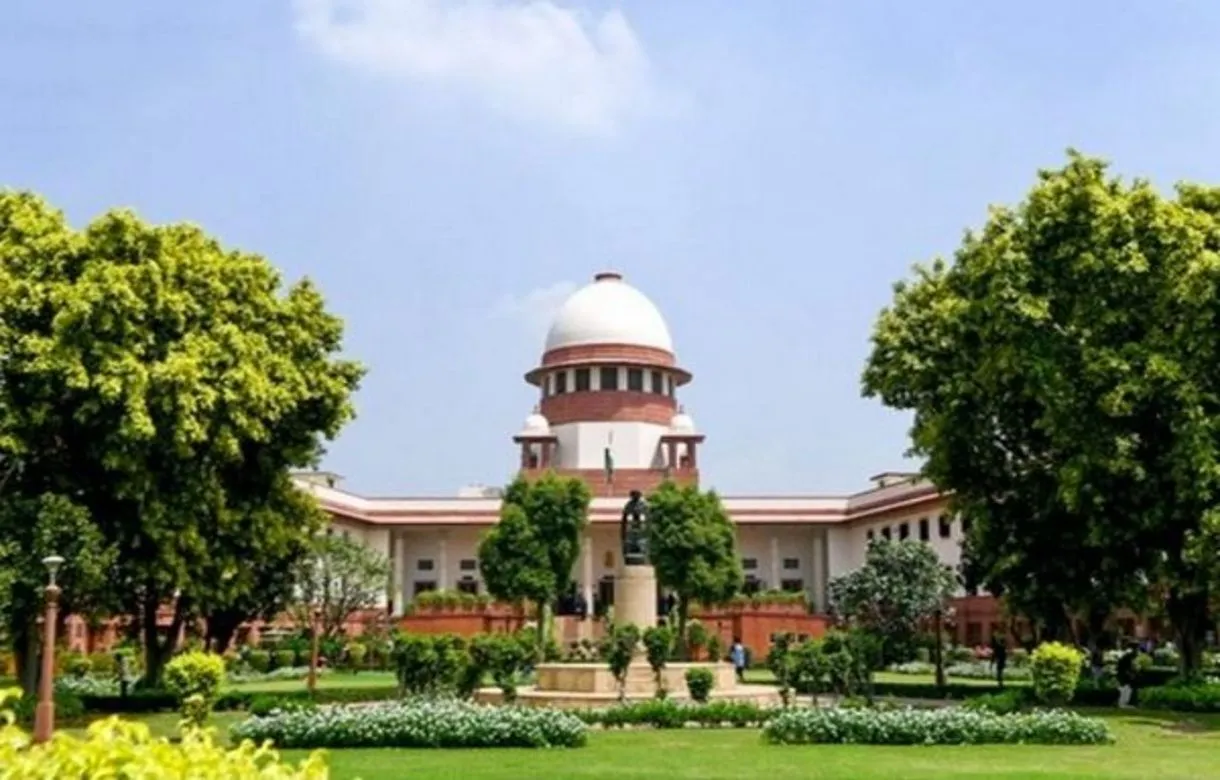
The fact that deaths by suicide of Dalit IIT students receive barely any media attention is borne out by yesterday’s Supreme Court order directing the Delhi Police to register an FIR some two years after two Dalit students killed themselves at IIT Delhi.
B.Tech student Ayush Ashna was found hanging in his hostel room on 9 July, 2023. Within two months, B.Tech student Anil Kumar of Uttar Pradesh’s Banda district was found dead in his hostel room on September 1, 2023. The parents of the students had said the police did not register an FIR, although the suicides resulted from caste discrimination by IIT faculty and staff.
The government told the Lok Sabha in March 2023 that 33 IIT students had committed suicide in the last five years due to academic stress, family reasons, personal reasons and causes arising from mental health.











India News
Supreme Court questions EC over missing records in Sringeri election dispute
The Supreme Court questioned the Election Commission over missing video footage of the 2023 counting in Karnataka’s Sringeri constituency. The case involves a revised result following a recount of postal ballots.

India News
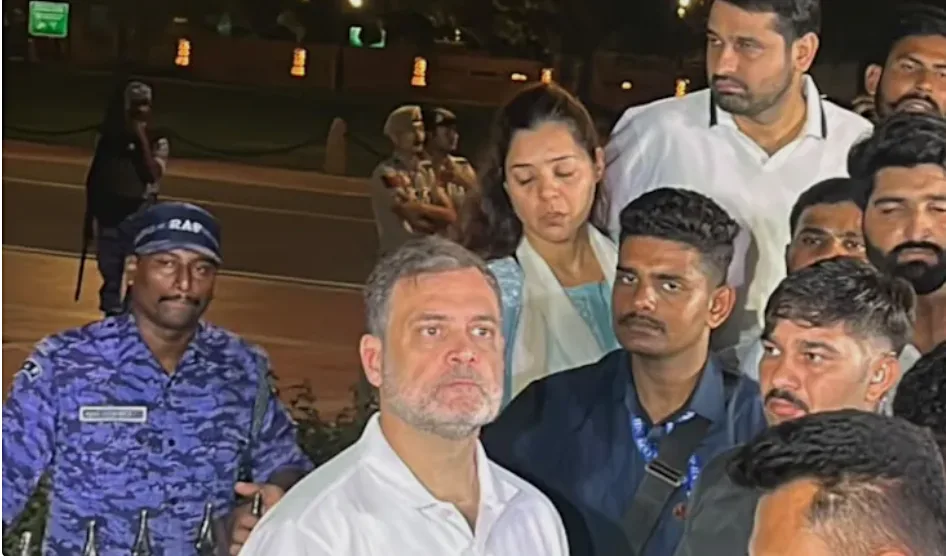
Rahul Gandhi joins India Gate protest by Ankita Bhandari’s parents
Rahul Gandhi joined the protest by Ankita Bhandari’s parents at India Gate in New Delhi on October 14. The demonstration has brought renewed attention to the 2022 murder case and the family’s concerns following Dushyant Gautam’s appointment as Sikkim Governor.
India News
Meerut murder: Muskaan Rastogi and Sahil Shukla get death sentence
A Meerut court has sentenced Muskaan Rastogi and Sahil Shukla to death in the blue drum murder case involving the killing of merchant navy officer Saurabh Rajput in March 2025.

CJP leaders Saurav Das, Ashutosh Ranka, Ajinkya Shinde sent to 5-day judicial custody

PM Modi speaks to Mark Carney as India and Canada push to strengthen ties

S Jaishankar says India is a natural option for Russia amid Europe tensions

Meerut murder: Muskaan Rastogi and Sahil Shukla get death sentence

Rahul Gandhi joins India Gate protest by Ankita Bhandari’s parents

Supreme Court questions EC over missing records in Sringeri election dispute
Rahul Gandhi joins India Gate protest by Ankita Bhandari’s parents
Meerut murder: Muskaan Rastogi and Sahil Shukla get death sentence
PM Modi speaks to Mark Carney as India and Canada push to strengthen ties
S Jaishankar says India is a natural option for Russia amid Europe tensions

Afghan Men Try To Hang With The Jet Engine Of The Aircraft in Kabul- Afghanistan News – Kabul News
Trending Top 10 News: 10000 Crore Fine on Flipkart, Apple to Launch Unique Feature, Hdfc Bank Job Ad

Trending Top 10 News: Nokia 6310, Apple sales, Bachpan ka Pyar Video Kid, Dainik Bhaskar IT Raid

Trending Top 10 News: Canada bans Indian flights, Rain in Delhi NCR, AIMIM Twitter hacked, Raj Kundra case

Trending Top 10 News: Shein India, Apple New Service, Pocket Oxygen, Oppo Launched New Phone
-
 India News20 hours ago
CJP leaders Saurav Das, Ashutosh Ranka, Ajinkya Shinde sent to 5-day judicial custody
-
 India News20 hours ago
PM Modi speaks to Mark Carney as India and Canada push to strengthen ties
-
 Latest world news20 hours ago
S Jaishankar says India is a natural option for Russia amid Europe tensions
-
 India News9 hours ago
Meerut murder: Muskaan Rastogi and Sahil Shukla get death sentence
-
 India News8 hours ago
Rahul Gandhi joins India Gate protest by Ankita Bhandari’s parents
-
 India News8 hours ago
Supreme Court questions EC over missing records in Sringeri election dispute
