English हिन्दी
Connect with us

India News

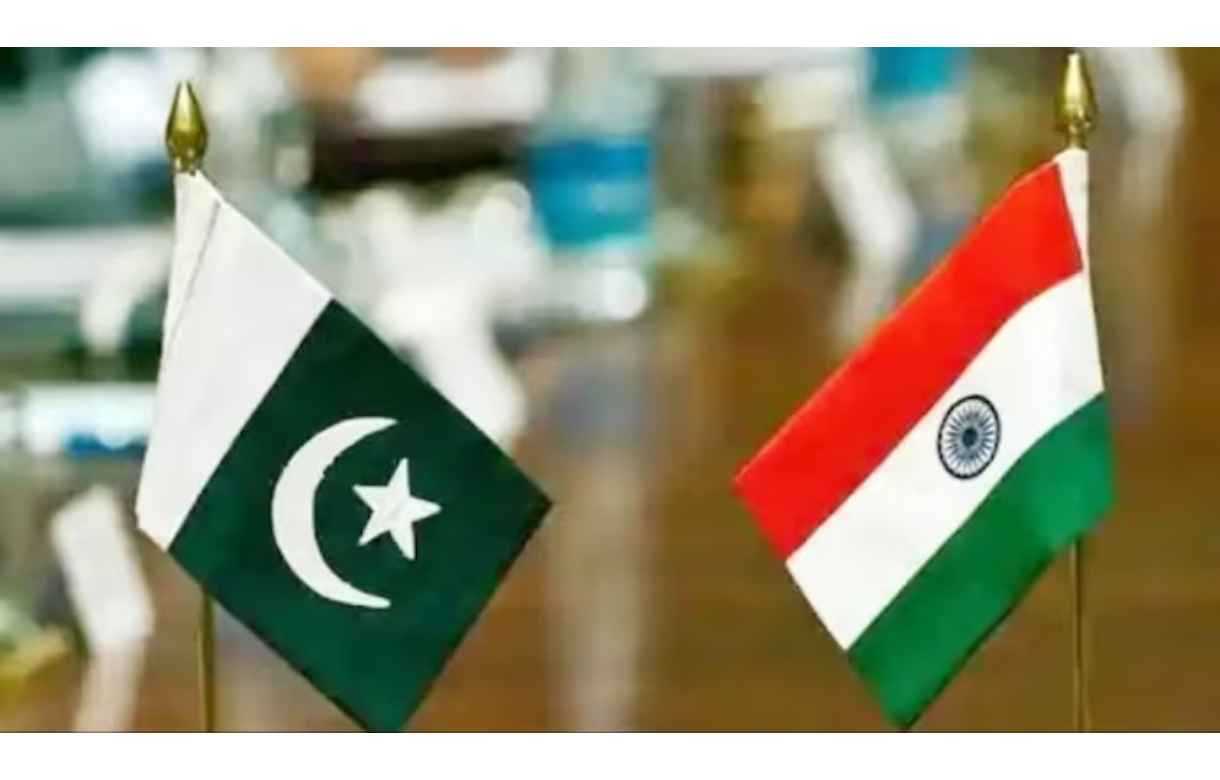
India bans direct, indirect imports of all goods from Pakistan

Published

on

India dismisses Pakistan raising Kashmir issue in UN Security Council

India has imposed an immediate ban on all direct and indirect imports from Pakistan, citing national security and public policy concerns following the April 22, 2025, Pahalgam terror attack that killed 26 people, mostly tourists.

The decision, outlined in a Government Order issued on Friday, May 2, 2025, halts all inbound shipments of Pakistani goods, effectively severing trade ties between the two nations.

The Directorate General of Foreign Trade (DGFT) amended the Foreign Trade Policy (FTP) 2023, adding a clause under “Prohibition on Import from Pakistan” that bans “direct or indirect import or transit of all goods originating in or exported from Pakistan, whether freely importable or otherwise, with immediate effect until further notice.”

Exceptions require explicit government approval, the notification stated. India’s trade with Pakistan has been minimal, with imports in April-January 2024-25 totaling just $0.42 million—0.0001% of India’s total imports—primarily fruits and nuts ($0.08 million), oil seeds and medicinal plants ($0.26 million), and organic chemicals. Exports to Pakistan during the same period were $447.65 million, led by organic chemicals ($129.55 million) and pharmaceuticals ($110.06 million).

The ban follows a series of Indian measures post-Pahalgam, including closing the Attari land-transit post, expelling Pakistani military attachés, and suspending the 1960 Indus Waters Treaty.

Pakistan retaliated by halting all trade with India, including third-country transactions, and suspending bilateral agreements.

Trade between the two nations had already dwindled after the 2019 Pulwama attack, when India imposed a 200% import duty on Pakistani goods and revoked Pakistan’s Most Favoured Nation (MFN) status under the World Trade Organization (WTO), citing security exceptions. Pakistan, which never granted India MFN status despite a 2012 commitment, suspended trade ties in August 2019.

Historical trade data reflects the declining relationship. In 2023-24, India’s exports to Pakistan were $1.18 billion, with imports at $2.88 million. In 2022-23, exports reached $627.1 million and imports $20.11 million, while 2021-22 saw exports of $513.82 million and imports of $2.54 million.

In 2017-18, total trade was $2.41 billion, with India importing $488.5 million worth of goods, mainly fruits and cement. India’s high tariffs post-Pulwama effectively curtailed imports, a trend now cemented by the total ban.

The strained ties, rooted in the Kashmir dispute and cross-border terrorism, have been further exacerbated by the Pahalgam attack. India is also reportedly urging global multilateral agencies to review loans and grants to Pakistan, signaling a broader diplomatic push.

Continue Reading

India News

AAP targets Delhi LG with Ghajini dig over pollution row, BJP hits back

AAP’s ‘Ghajini’ dig at Delhi LG over air pollution has drawn a sharp response from the BJP, escalating the political blame game as the capital’s AQI remains poor.

Published

on

The political sparring over Delhi’s air pollution intensified after the Aam Aadmi Party (AAP) took a swipe at Lieutenant Governor Vinai Kumar Saxena using a film reference, prompting a sharp rebuttal from the Bharatiya Janata Party (BJP).

The exchange comes at a time when air quality in the national capital has shown marginal improvement but continues to remain in the “poor” category.

The trigger for the latest round of accusations was a letter written by LG Saxena to AAP’s national convener and former chief minister Arvind Kejriwal. In the letter, the LG claimed that when he had raised concerns about pollution during Kejriwal’s tenure as chief minister, the issue was played down. According to Saxena, Kejriwal had remarked that pollution becomes a topic of discussion only for a few days every year before fading from public attention.

AAP’s ‘Ghajini’ poster attack

Reacting to the letter, AAP accused the LG of shifting responsibility instead of addressing the ongoing pollution crisis. The party shared an edited image on X, portraying Saxena as the lead character from the film Ghajini, a role associated with short-term memory loss.

In the post, AAP alleged that the LG was ignoring the fact that the BJP is currently in power in Delhi and therefore accountable for managing the pollution situation. The caption accompanying the image read, “L – Low Quality; G – Ghajini,” while the poster claimed that the LG had “become Ghajini.” The visual also carried text suggesting blame being repeatedly placed on Arvind Kejriwal for rising AQI levels.

BJP’s response and counter-accusation

The BJP responded strongly to AAP’s jibe, asserting that while the present government is addressing pollution, responsibility for long-term damage cannot be ignored. Speaking to media, Delhi BJP chief Virendra Sachdeva said the party is answerable for current conditions but questioned whether it should also be held accountable for what he termed the failures of the previous AAP government over the past 12 years.

Sachdeva echoed the claims mentioned in the LG’s letter, stating that concerns over pollution were earlier dismissed as seasonal issues. He further argued that air pollution is a year-round problem and accused AAP of attempting to shift the entire burden onto a government that has been in office for only the past several months.

Referring to the ‘Ghajini’ poster, the BJP leader said that if forgetfulness was the theme, AAP should have used Kejriwal’s image instead, alleging that the former chief minister had distanced himself from his responsibilities after electoral setbacks. He added that the current administration would require time to correct what he described as mistakes made during the previous government’s tenure.

Continue Reading

India News

Traffic slows in Himachal Pradesh as year-end tourist rush chokes roads to Shimla, Manali

Heavy tourist inflow during the Christmas-New Year period has slowed traffic in Himachal Pradesh, with Shimla, Manali and Dharamshala witnessing long vehicle queues.

Published

on

Shimla traffic

Traffic movement across key hill destinations in Himachal Pradesh slowed to a crawl as a heavy influx of tourists marked the year-end holiday season. Long weekends around Christmas and New Year prompted travellers, particularly from Delhi-NCR, to head towards Shimla, Manali and Dharamshala, leading to long queues of vehicles on mountain roads.

A major attraction this season is the nine-day Winter Carnival being held at the historic Ridge Ground in Shimla. The event has drawn visitors from different parts of the country, with many attending it for the first time. Tourists described the carnival as lively and enjoyable, especially for families visiting during Christmas week.

Some visitors said the festive atmosphere exceeded their expectations, while others felt the absence of snowfall slightly dampened the experience. Tourists from states including Uttar Pradesh, Punjab and Mizoram shared that snowfall during Christmas would have added to the overall charm of the hill station.

Heavy inflow of vehicles, police step up arrangements

Apart from Shimla, popular destinations such as Kullu-Manali and Dharamshala are also witnessing a steady rise in tourist numbers. Gramphu has emerged as the only snow spot currently accessible to non-4×4 vehicles, adding to the pressure on limited routes.

Police officials estimate that between 8,000 and 10,000 vehicles are entering Shimla daily during the Christmas-to-New Year period. Over the next seven days, more than three lakh tourists are expected to visit the state capital alone.

To manage traffic and ensure safety, around 400 police personnel have been deployed across sensitive and high-footfall areas. The Shimla police administration has appealed to tourists to follow traffic rules and cooperate with authorities. Officials said preparations have been made for crowd management, security checks and traffic regulation at major junctions, as congestion continues to build across the hill town.

Continue Reading

India News

BJP gets its first mayor in Kerala as VV Rajesh takes charge in Thiruvananthapuram

The BJP has created history in Kerala after VV Rajesh was sworn in as Thiruvananthapuram’s first mayor from the party, ending decades of CPM control over the civic body.

Published

on

BJP

The BJP on Friday marked a historic political moment in Kerala after VV Rajesh was sworn in as the mayor of the Thiruvananthapuram Municipal Corporation. This is the first time the party has secured the mayor’s post in the state capital, signalling a significant shift in Kerala’s urban political landscape.

Rajesh’s election follows the party’s unexpected performance in the municipal elections held earlier this month, where the BJP emerged as the single-largest party by winning 50 of the 101 seats in the civic body.

Rajesh promises inclusive development across all wards

After taking oath, VV Rajesh said the focus of the new leadership would be on collective growth and inclusive governance. He stated that development work would be carried out across all 101 wards, with the aim of transforming Thiruvananthapuram into a developed city.

Rajesh secured 51 votes in the mayoral election conducted in the 100-member House, crossing the halfway mark. The CPM candidate RP Shivaji received 29 votes, while the Congress-led UDF nominee KS Sabarinathan got 19 votes. One independent councillor abstained, while support from another independent councillor proved crucial for the BJP’s victory.

Breakthrough comes ahead of key state election

The development comes less than six months before a major election in Kerala, a state where the BJP has historically struggled. The party has never formed a government in the state and has had limited legislative presence in the past.

The mayoral win also ends decades of control by the CPM over the Thiruvananthapuram civic body. The state capital is also a Lok Sabha constituency currently represented by Congress leader Shashi Tharoor.

BJP leadership targets governance overhaul

Following the swearing-in ceremony, Kerala BJP president Rajeev Chandrasekhar criticised the previous administration, alleging long-standing governance failures and corruption in the civic body. He said basic civic issues such as drainage, water supply and solid waste management had been neglected for years, and asserted that the new administration would begin work immediately to improve the city’s infrastructure.

The party has set a target of making Thiruvananthapuram one of the top cities in the country, according to Chandrasekhar.

Internal debate preceded mayoral choice

The selection of VV Rajesh as mayor followed internal discussions within the BJP. The party was reportedly divided between Rajesh and former Director General of Police R Sreelekha before consensus emerged in Rajesh’s favour. Sreelekha, who won from the Sasthamangalam ward, is known for her earlier role handling economic offence cases.

Union minister Suresh Gopi and Rajeev Chandrasekhar were present during Rajesh’s oath-taking ceremony.

Wider impact on Kerala’s political landscape

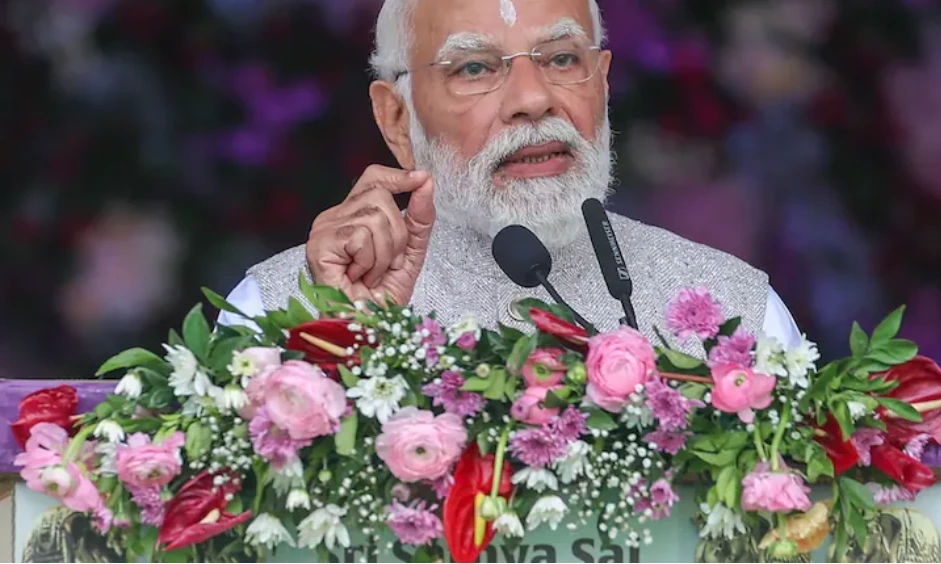
Overall results in the local body elections have posed challenges for the ruling Left Democratic Front, while the Congress-led United Democratic Front secured control of four out of six municipal bodies. Prime Minister Narendra Modi later described the BJP’s Thiruvananthapuram win as a “watershed moment,” crediting party workers for the breakthrough.

Continue Reading

Trending

© Copyright 2022 APNLIVE.com