English हिन्दी
Connect with us

India News

India clears Rs 3.25 lakh crore proposal to procure 114 Rafale fighter jets

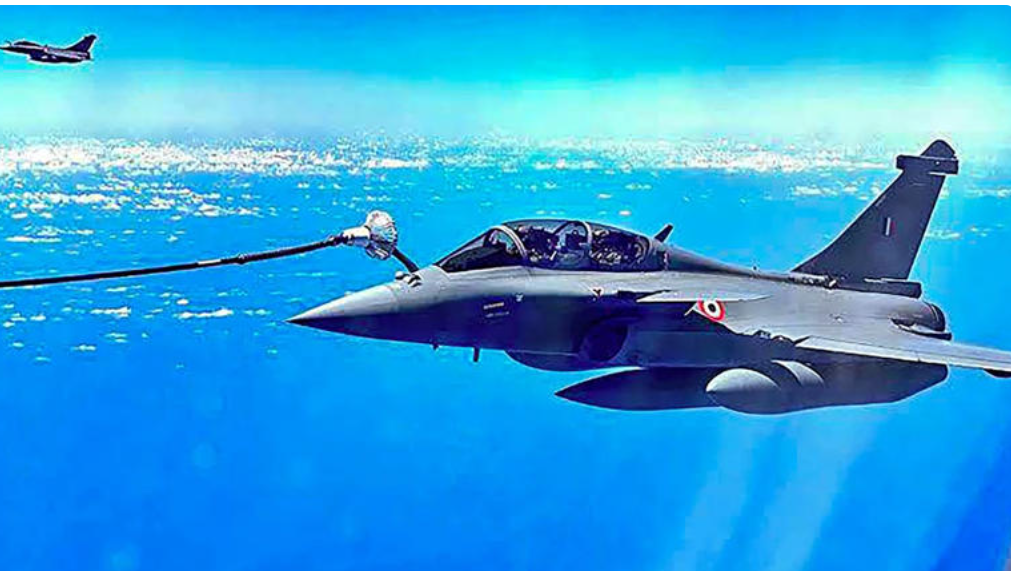
India has cleared a Rs 3.25 lakh crore proposal to acquire 114 Rafale fighter jets for the Indian Air Force, marking the country’s biggest defence procurement.

Published

on

Rafale M deal

India has approved a proposal worth Rs 3.25 lakh crore to procure 114 Rafale fighter jets for the Indian Air Force, marking the largest defence acquisition programme in the country’s history.

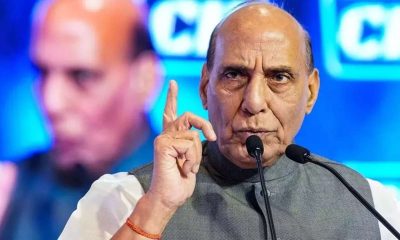
The Defence Acquisition Council (DAC), chaired by Defence Minister Rajnath Singh, granted Acceptance of Necessity (AoN) for the Multi Role Fighter Aircraft programme. The clearance comes ahead of French President Emmanuel Macron’s upcoming official visit to New Delhi.

Under the proposal, 18 Rafale aircraft will be purchased off-the-shelf from French defence manufacturer Dassault Aviation, while the remaining 96 jets will be manufactured in India.

Make in India focus and technology transfer

The programme will be structured as a strategic partnership aimed at strengthening the government’s Make in India initiative. The deal is expected to include transfer of advanced fighter jet technology as part of domestic manufacturing.

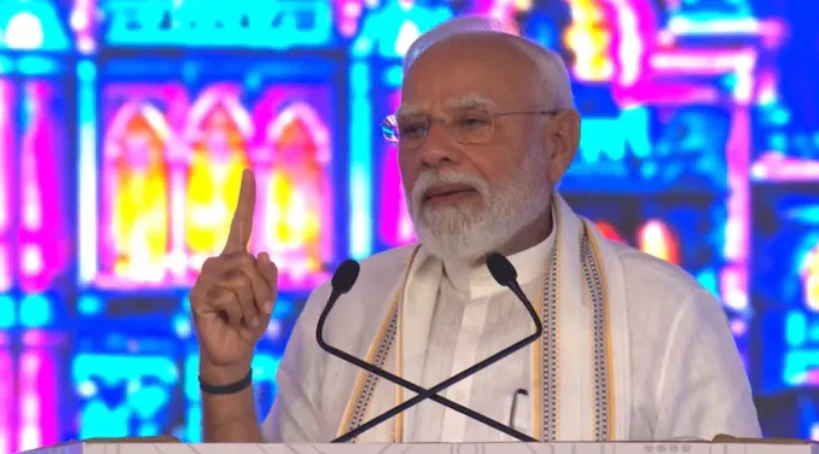
Following the DAC’s approval, the acquisition will require final clearance from the Cabinet Committee on Security (CCS), chaired by Prime Minister Narendra Modi.

Wider approvals worth Rs 3.60 lakh crore

Alongside the Rafale programme, the DAC accorded AoN for multiple capital acquisition proposals of the armed forces at an estimated total value of about Rs 3.60 lakh crore.

For the Indian Air Force, approvals were also granted for combat missiles and an Air-Ship Based High Altitude Pseudo Satellite platform. The MRFA procurement is intended to enhance air dominance capability across the full spectrum of conflict and strengthen long-range offensive strike capacity.

The combat missiles are designed to improve stand-off ground attack capability with high accuracy. The AS-HAPS platform will support persistent intelligence, surveillance and reconnaissance operations, electronic intelligence, telecommunications and remote sensing for military use.

Army, Navy and Coast Guard procurements

For the Army, AoN was granted for the procurement of Vibhav anti-tank mines and for the overhaul of Armoured Recovery Vehicles, T-72 tanks and BMP-II Infantry Combat Vehicles. The upgrades are expected to extend the operational life of these platforms.

The Navy received clearance for a 04 MW Marine Gas Turbine-based Electric Power Generator under the Make-I category of the Defence Acquisition Procedure 2020, as well as additional P-8I Long Range Maritime Reconnaissance Aircraft. The additional P-8I aircraft are expected to enhance anti-submarine warfare, maritime surveillance and maritime strike capabilities.

The Indian Coast Guard was granted approval for the procurement of Electro-Optical and Infra-Red systems for its Dornier aircraft.

Existing Rafale fleet and naval variant

The Indian Air Force currently operates 36 Rafale aircraft across two squadrons. The last delivery of the C variant took place in December 2024.

Separately, India has ordered 26 Rafale M variant aircraft for the Navy in a deal valued at Rs 63,000 crore. These aircraft will operate from INS Vikrant and INS Vikramaditya and include provisions for maintenance, logistics support and training under a Maintenance, Repair and Overhaul arrangement.

India News

Parliament’s Monsoon Session likely to bring five new bills and two pending legislations

The upcoming Monsoon Session of Parliament is expected to take up five new bills and two pending legislations, with proposals covering FCRA, MSMEs, Supreme Court judges and births and deaths registration.

Published

on

Parliament

Parliament’s Monsoon Session, expected to begin in the last week of July, is likely to feature five new bills along with two pending legislations for consideration and passage, according to sources. The government is also expected to brief political parties on the proposed legislative agenda during the customary all-party meeting ahead of the session.

Notably, the tentative agenda does not include any Constitution Amendment Bill, even as speculation continues over measures related to delimitation and women’s reservation.

Two pending bills likely to come up for consideration

Among the pending legislations is the Foreign Contribution (Regulation) Amendment Bill, 2026, which was introduced in the Lok Sabha on March 25. The proposed amendments aim to improve transparency in the regulation of foreign funds received in India.

The Viksit Bharat Education Establishment Bill, 2025, introduced in December 2025, is also expected to move forward after the Joint Committee of Parliament submits its report during the Monsoon Session.

Two bills to replace ordinances

The government is expected to introduce the Income Tax (Amendment) Bill, 2026, replacing an ordinance issued earlier. According to sources, the legislation seeks to strengthen India’s sovereign debt market, attract global investments and improve market liquidity amid geopolitical uncertainties, volatile crude oil prices and global supply chain disruptions.

Another ordinance replacement is the Supreme Court (Number of Judges) Amendment Bill, 2026, which proposes increasing the sanctioned strength of Supreme Court judges from 33 to 37, excluding the Chief Justice of India, to help speed up the disposal of pending cases.

Three new bills on the legislative agenda

The remaining proposed legislations expected to be introduced during the session include:

  • Registration of Births and Deaths (Amendment) Bill, 2026, aimed at tightening and streamlining rules governing delayed registration of births and deaths.
  • Prevention of Insults to National Honour (Amendment) Bill, 2026, which seeks stricter provisions against acts considered disrespectful to national symbols or national honour.
  • Micro, Small and Medium Enterprises Development (Amendment) Bill, 2026, intended to improve ease of doing business, strengthen mechanisms for addressing delayed payments and provide greater powers to states.

Supplementary grants also on Parliament agenda

Apart from legislative business, the government is expected to present the Demands for Supplementary Grants for the financial year 2022-23 for discussion and voting in Parliament.

Meanwhile, sources said there is speculation that the government may take up Constitution Amendment Bills related to delimitation and women’s reservation only after it is confident of securing the required two-thirds majority in Parliament.

The government is also expected to introduce Constitution Amendment Bills aimed at disqualifying jailed leaders from holding powers and advancing the proposed ‘One Nation, One Election’ framework.

Continue Reading

India News

Arunachal Pradesh floods: Fresh landslides hit five districts as over 1 lakh people remain affected

Fresh floods and landslides have affected five districts in Arunachal Pradesh, taking the total number of affected people to over 1.03 lakh as the IMD forecasts more heavy rainfall.

Published

on

Delhi floods

Fresh floods and landslides were reported in five districts of Arunachal Pradesh over the past 24 hours, adding to the devastation caused by persistent rainfall across the state. Officials said the disasters have damaged roads, bridges, irrigation infrastructure, houses and crops, while the overall number of affected people has crossed one lakh.

Fresh floods reported in five districts

According to the state Disaster Management Department’s latest daily situation report, fresh incidents were recorded in East Kameng, Upper Subansiri, Upper Siang, Kamle and Kra Daadi districts.

The affected areas include Seppa and Bameng circles in East Kameng, Daporijo in Upper Subansiri, Mariyang, Migging and Tuting in Upper Siang, Gepen, Puchigeko and Raga in Kamle, and the Tali circle in Kra Daadi district.

During the last 24 hours, 640 people were affected in East Kameng and another 53 people in Kamle.

The ongoing spell of floods and landslides has so far claimed seven lives, injured 29 people and affected 1,03,860 people across Arunachal Pradesh.

Infrastructure suffers extensive damage

Authorities reported fresh damage to key infrastructure, including roads and drainage systems in East Kameng, 13 minor irrigation projects and channels along with a flood protection wall in Upper Siang, three bridges in Kamle, and a bridge and two retaining walls in Kra Daadi.

Upper Siang remains the worst-affected district, with 49,259 people impacted. It is followed by Siang (25,365), Kra Daadi (13,731), East Kameng (6,786), Upper Subansiri (3,467), Namsai (2,657) and Anjaw (1,011).

Across the state, 804 houses have been damaged, including 614 kutcha houses and 120 pucca houses. Floods and landslides have also affected roads, bridges, power infrastructure, government buildings, schools, hospitals, water supply schemes and flood protection structures.

The cumulative damage to agriculture and horticulture has reached 603.75 hectares, including 240 hectares of agricultural land and 363.75 hectares of horticulture plantations.

IMD forecasts more heavy rainfall

The India Meteorological Department (IMD) has forecast continued rainfall across Arunachal Pradesh from Friday, with heavy to very heavy rain accompanied by thunderstorms and lightning likely over several districts during the next three days.

An orange alert has been issued for Papum Pare, Tirap and Changlang districts on Friday, warning of thunderstorms with lightning and heavy rainfall.

On Saturday, the orange alert has been extended to Longding, East Siang, Lower Subansiri, Papum Pare, Tirap and Changlang. The IMD has also warned of very heavy rainfall over Lohit and Papum Pare.

Weather conditions are expected to improve from Sunday, with most districts likely to remain under a yellow alert or no warning, indicating a gradual reduction in rainfall intensity. By Monday, conditions are expected to improve further, although isolated places may continue to receive light to moderate rain.

The IMD has advised district authorities and residents to remain vigilant, warning that continued rainfall could trigger landslides, flash floods, waterlogging and disruptions to road connectivity in vulnerable areas.

Continue Reading

India News

Illegal immigration from India to US drops 69% from 2023 peak, says US data

Published

on

By

Fears of harsh treatment, including internment, and tough border legislations under the Donald Trump administration seem to have brought down illegal immigration from India to the United States by almost 69 per cent from the peak recorded in 2023, according to the latest data released by US Customs and Border Protection (CBP). The figures indicate a significant decline in irregular migration through the US land borders.

Trump and his Make America Great Again (MAGA) support base have advocated tougher measures against illegal immigrants such as roving Immigration and Customs Enforcement (ICE) personnel who have picked up immigrants and detain them in camps. ICE personnel have killed several Americans too in the mindless drive against immigrants.

CBP data, which follows the US fiscal year (October to September), shows authorities recorded 20,614 encounters with Indian migrants between October 2025 and May 2026. During the corresponding period in FY2023, when illegal migration from India reached its highest level, the number of encounters stood at 67,212. The latest figures are also lower than the nearly 29,000 encounters recorded during the same period in FY2025.

The sharpest decline has been recorded along the US-Mexico border, where encounters involving Indian migrants fell by nearly 99 per cent, from 30,109 during the October-May period of FY2023 to 417 in FY2026. At the US-Canada border, encounters dropped to 2,250, marking a 91 per cent decline from the comparable period in FY2024.

Migration experts said the decline comes amid tighter US immigration measures, stricter border enforcement and reduced expectations of securing asylum through illegal entry routes. Experts also noted that the high financial cost and risks associated with irregular migration have discouraged many prospective migrants from attempting the journey.

Despite the decline, Indian nationals continue to account for a significant share of migrants intercepted at US land borders, says CBP. Officials from both India and the United States have repeatedly urged people to avoid illegal migration routes and instead use authorised visa and immigration channels.

Continue Reading

Trending

© Copyright 2022 APNLIVE.com