English हिन्दी
Connect with us

India News

Rajnath Singh says abnormality becoming new normal amid Iran–Israel war

Rajnath Singh says the Iran–Israel conflict shows how abnormal situations are becoming routine, warning of risks to global energy supply through the Strait of Hormuz.

Published

on

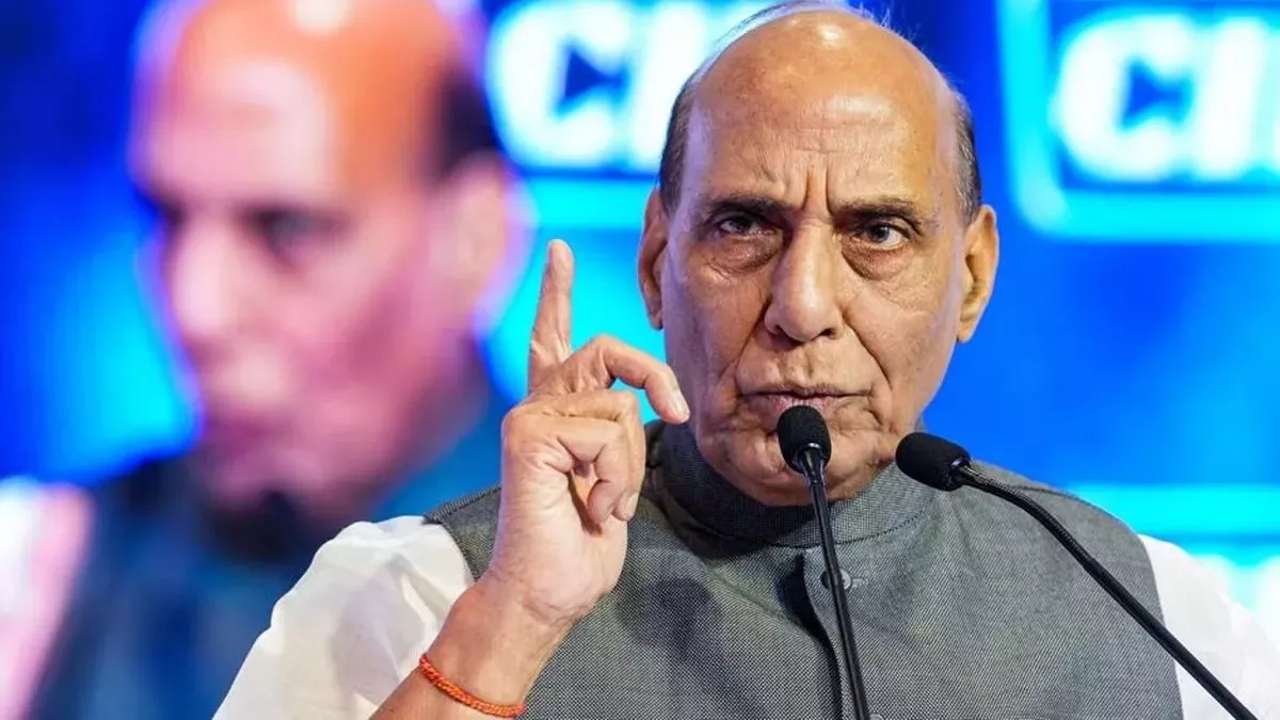
Rajnath Singh

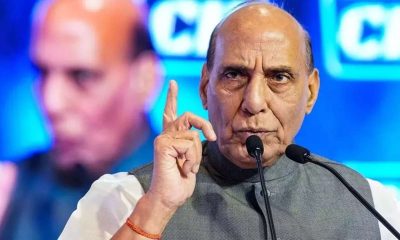
India’s defence minister Rajnath Singh on Thursday expressed concern over the escalating conflict involving Iran, Israel and the United States, warning that the ongoing situation reflects how “abnormality is becoming the new normal” in global geopolitics.

Speaking at the maritime conclave Sagar Sankalp maritime conclave in Kolkata, Singh described the evolving security environment as increasingly complex and unpredictable.

“The current situation has become quite complex, and it seems it will become even more dynamic in the future. The way different countries are competing with each other on land, in the air, at sea, and now even in space is truly a matter of concern,” Singh said.

He added that the growing instability in global affairs shows how unusual situations are gradually becoming routine.

Concern over Strait of Hormuz and global energy supply

Singh highlighted the strategic importance of the Strait of Hormuz, calling it a crucial chokepoint that carries around one-fifth of the world’s oil supply.

According to reports, Iran has shut down the vital shipping route, allowing only Chinese vessels to pass through the region. The development has raised concerns about disruptions to global energy flows across the Persian Gulf.

“When there is disruption or interruption in this region, it directly impacts the supply of oil and gas. These uncertainties affect the global economy and trade,” Singh said.

He noted that oceans are no longer viewed only as channels of trade but are increasingly becoming arenas of strategic competition among nations.

Call for stronger maritime leadership

Against the backdrop of shifting geopolitical equations, Singh said India must strengthen its role as a maritime power and demonstrate leadership in ensuring stability in the region.

“In this era of changing global geopolitics, oceans have once again come to the centre of the world’s power balance. As a major maritime nation, it is India’s responsibility to provide leadership with confidence, capability and a clear vision,” he said.

The minister emphasised that achieving self-reliance remains critical for protecting supply chains and strengthening national defence capabilities. He said the government sees defence public sector undertakings as a key pillar in advancing this vision.

Escalation of Iran-Israel-US conflict

Tensions in the Middle East escalated after the United States and Israel carried out coordinated airstrikes across Iran on February 28 following stalled nuclear talks and allegations that Tehran had resumed nuclear activity.

The strikes, carried out under the name Operation Epic Fury, targeted several Iranian cities including the capital Tehran.

Iran’s Supreme Leader Ali Khamenei was reportedly killed during the strikes on his compound in Tehran. Members of his family were also among those killed, while his wife Mansoureh Khojasteh Bagherzadeh later died from injuries sustained in the attack.

Following the airstrikes, Iran launched retaliatory missile attacks across parts of the Gulf region, including Dubai, Abu Dhabi, Qatar, and Bahrain.

The conflict has now entered its seventh day, with Iran continuing to fire multiple rounds of missiles while vowing to avenge the killing of its Supreme Leader. Meanwhile, US President Donald Trump said it was “too late” for Iran to seek talks to avoid the conflict.

India News

Mamata Banerjee says she will take over Delhi after Bengal win, sharpens attack on BJP

Mamata Banerjee says her party will move towards Delhi after winning Bengal, signalling national ambitions.

Published

on

Mamata Banerjee

West Bengal Chief Minister Mamata Banerjee has made a strong political statement during the ongoing West Bengal assembly elections 2026, saying her party will aim for a larger role at the national level after securing victory in the state.

Addressing a rally, Banerjee said that once her party wins the Bengal elections, it will move forward to “take over Delhi,” indicating a broader political strategy beyond the state. The remark comes at a time when campaigning has intensified across constituencies.

Her statement is being seen as part of a wider push by the Trinamool Congress to position itself as a key force against the Bharatiya Janata Party at the national level.

Banerjee has repeatedly expressed confidence that her party will return to power in West Bengal, aiming for another consecutive term.

Political context

The West Bengal elections have witnessed aggressive campaigning from both the ruling Trinamool Congress and the BJP. Leaders from both sides have exchanged sharp remarks, highlighting the high-stakes nature of the contest.

Banerjee’s latest comment adds to her earlier calls for opposition unity and signals her intent to expand political influence beyond the state. Similar remarks in recent weeks have indicated that her party sees the Bengal result as a stepping stone toward a larger national role.

At the same time, BJP leaders have projected confidence about their performance in the elections, further intensifying the political contest.

High-stakes election

The 2026 West Bengal assembly elections are crucial for both parties, with the Trinamool Congress seeking to retain power and the BJP aiming to make significant inroads in the state.

Banerjee’s “Delhi” remark underscores the broader national implications of the election, as regional parties increasingly position themselves in the national political landscape.

Continue Reading

India News

Pawan Khera denied anticipatory bail by Gauhati High Court in Assam case

The Gauhati High Court has denied anticipatory bail to Congress leader Pawan Khera in a case filed by Assam CM’s wife over alleged remarks.

Published

on

Congress leader Pawan Khera

The Gauhati High Court has rejected the anticipatory bail plea filed by Congress leader Pawan Khera in connection with a criminal case registered in Assam.

The case stems from a complaint filed by Riniki Bhuyan Sarma, wife of Assam Chief Minister Himanta Biswa Sarma, following remarks made by Khera earlier this month.

A single-judge bench heard arguments from both sides earlier this week and reserved its order before delivering the verdict on Friday. With the rejection of anticipatory bail, Khera no longer has protection from arrest in the case.

Background of the case

The FIR against Pawan Khera was lodged after he made allegations during a press conference on April 5, claiming that the Chief Minister’s wife possessed multiple passports and undisclosed overseas assets.

Following these statements, legal proceedings were initiated in Assam, invoking multiple charges including defamation, cheating, and forgery.

Arguments in court

During the hearing, Khera’s legal team argued that the case was politically motivated and that arrest was not necessary, asserting that he was not a flight risk.

On the other hand, the Assam government opposed the plea, stating that the case involved serious offences beyond simple defamation and required custodial investigation.

Supreme Court’s earlier stance

Before approaching the Gauhati High Court, Khera had sought protection from arrest from the Supreme Court. However, the apex court declined to extend relief and directed him to approach the appropriate court in Assam.

What happens next

With the High Court denying anticipatory bail, the legal proceedings against Khera are set to continue, and he may now face arrest depending on the course of the investigation.

The case has also triggered political reactions, adding to tensions between the Congress and the Assam government.

Continue Reading

India News

Nirmala Sitharaman reviews AI cybersecurity risks in banking, calls for stronger safeguards

Sitharaman urges banks to boost cybersecurity and adopt real-time intelligence sharing to counter AI threats.

Published

on

Nirmala Sitharaman

Union Finance Minister Nirmala Sitharaman chaired a high-level meeting with bank heads and key stakeholders to assess cybersecurity risks linked to artificial intelligence (AI) in the banking sector.

The meeting comes amid global concerns over advanced AI models that could potentially expose vulnerabilities in financial systems. Authorities discussed how such technologies may be misused to exploit software weaknesses and compromise sensitive banking data.

Banks asked to strengthen cybersecurity frameworks

During the discussions, banks were advised to take pre-emptive measures to secure IT systems, protect customer data, and safeguard financial assets.

The government emphasised the need for robust cybersecurity infrastructure, including stronger monitoring systems and improved incident response protocols. Banks were also encouraged to enhance internal preparedness against evolving digital threats driven by AI technologies.

Focus on real-time threat intelligence sharing

A key takeaway from the meeting was the push to establish a real-time threat intelligence sharing mechanism between banks, regulatory bodies, and cybersecurity agencies such as CERT-In.

This system is expected to help identify emerging risks early and enable faster response across the financial ecosystem, reducing the chances of large-scale disruptions.

Concerns linked to advanced AI models

The review gains significance in light of concerns around advanced AI systems, including models that reportedly highlight vulnerabilities in widely used software environments.

Officials noted that while AI offers significant benefits, it also introduces new challenges, particularly in cybersecurity, requiring coordinated action across institutions.

Government adopts proactive approach

The meeting reflects the government’s broader strategy to stay ahead of technological risks while promoting digital growth.

With increasing adoption of AI in financial services, authorities are focusing on ensuring that innovation is matched with strong safeguards to maintain trust and stability in the banking system.

Continue Reading

Trending

© Copyright 2022 APNLIVE.com