India News
India Legal App to break barriers, provide access to justice to common man in own language: Rajshri Rai
Speaking in Hindi, Rai said this app was a small step in the right direction to serve the people. She said the app would hold the hand of the last man standing and keep holding him till he got justice.

Editor-in-Chief of APN News and Managing Director of India Legal Rajshri Rai on Saturday said that language barrier was one of the reasons for limited access of the common man to justice.
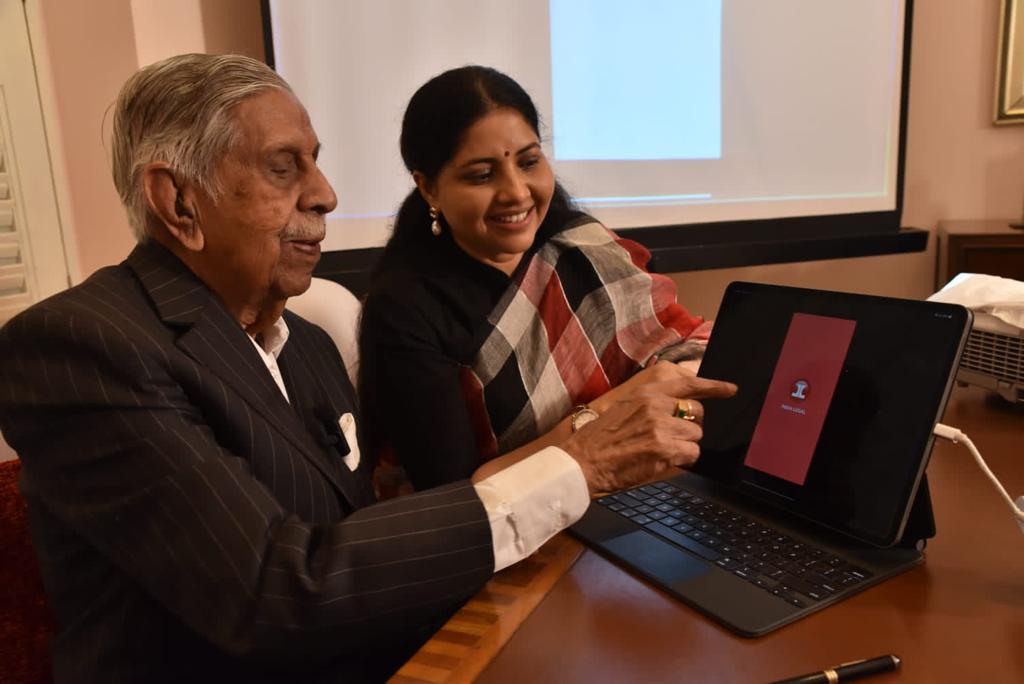
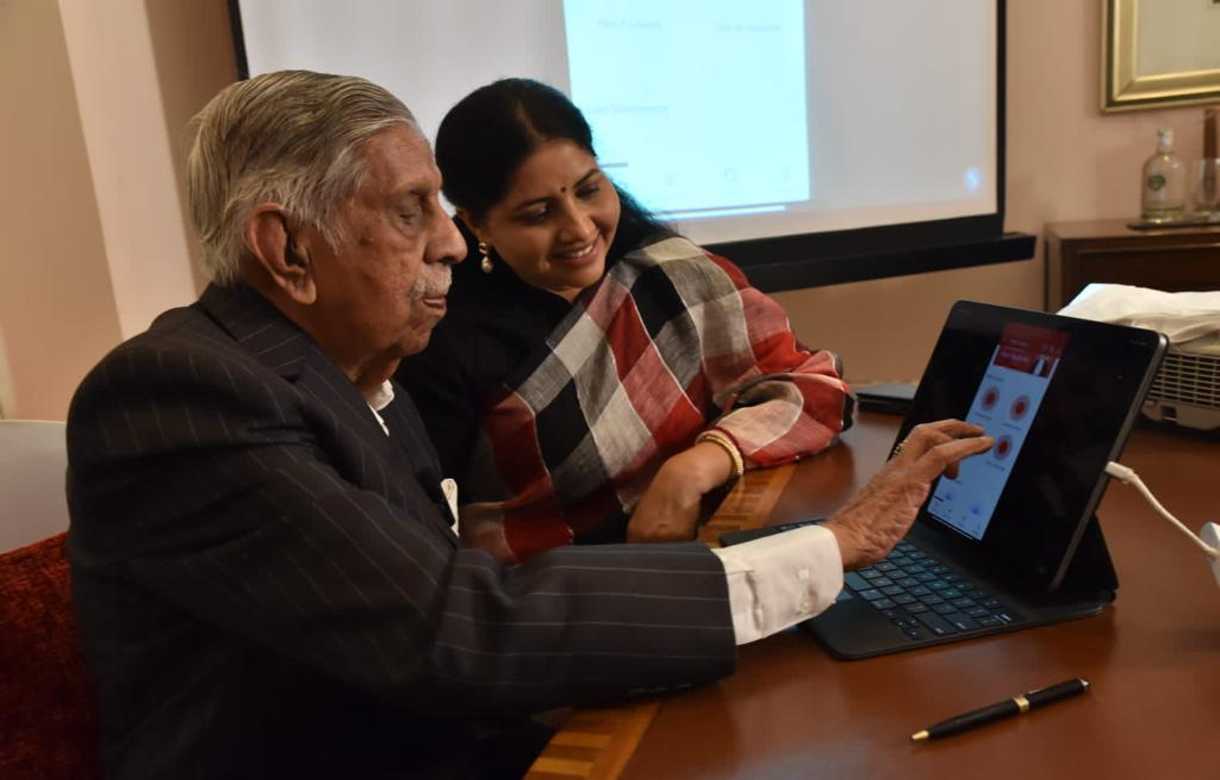
Speaking during the launch of the India Legal App, she said the multilingual app will provide access to justice to people in their own language.
She said the inspiration behind the app was the common man, and his need for justice.
Speaking in Hindi, Rai said this app was a small step in the right direction to serve the people. She said the app would hold the hand of the last man standing and keep holding him till he got justice.
Attorney General R. Venkataramani hailed the India Legal app, saying that endeavours such as these would go a long way in understanding the needs of justice for different sections of the community. It was important to reach out to the most deprived sections of the society and translate the access to justice for those who need it the most.
Solicitor General Tushar Mehta, who could not reach Bengaluru for the event, sent his best wishes for the initiative, saying that it was a momentous occasion for the judiciary and the people at large.
Noting that it would complement the Government’s vision for E-court, the SG said the endeavour would ensure justice for the masses and further prove to be a window for access to justice.
Former IIM Bangalore Dean Prof Trilochan Shastry, while showering praises on the India Legal team, especially its Managing Director Rajshri Rai for the novel initiative, said he was not very knowledgeable on legal issues, but would like to extend all possible help for the app.
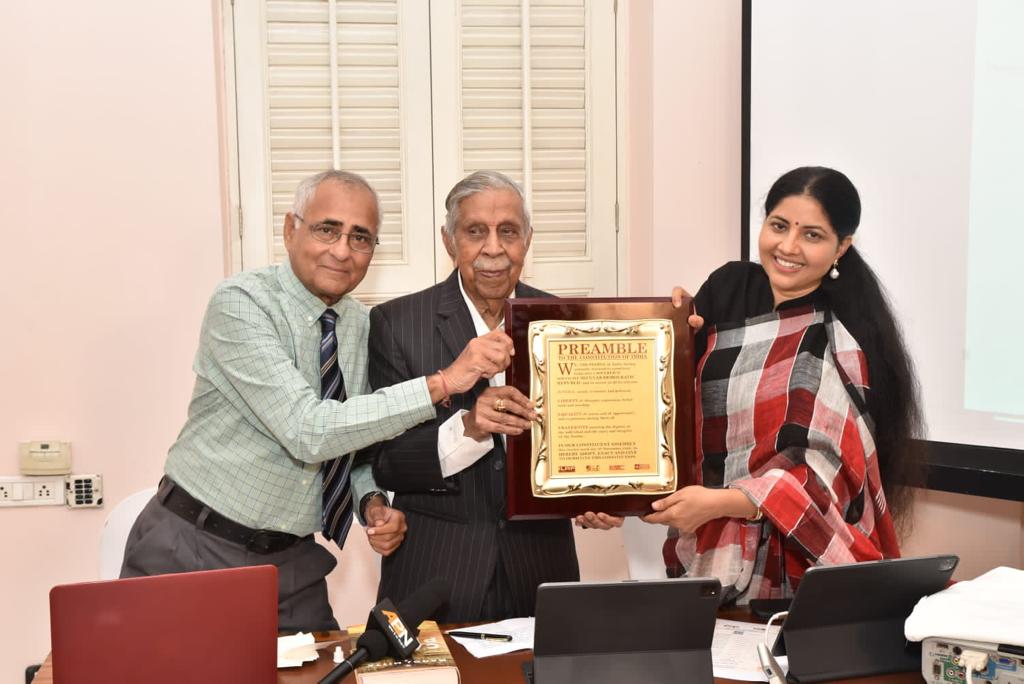
He said he would like to engage with Rajshri Rai’s team and help them in whatever way possible.
Stating that the future was in the hands of the youth, the former Dean suggested the team to recruit people in the age group of 35-45 years, since they had a rich experience of around 10-15 years and exude .
He hailed the app for providing the services in six languages, saying that majority of people in India could not avail legal aid since they did not know English and also due to various other reasons.
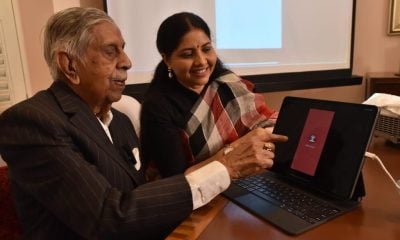
The first call on the app came from Meerut. An employee alleged that his Employer did not give him money. Justice Venkatachaliah directed him to file a case against the employer and to approach the High Court.
The second call came from Chennai. A woman, speaking in Tamil, said that she was in a live-in relationship with a man, who clicked her private photographs and was now blackmailing her. As per the woman, her former live-in partner was threatening to upload her photographs on social media. Justice Venkatachaliah advised her to file a complaint with the police.
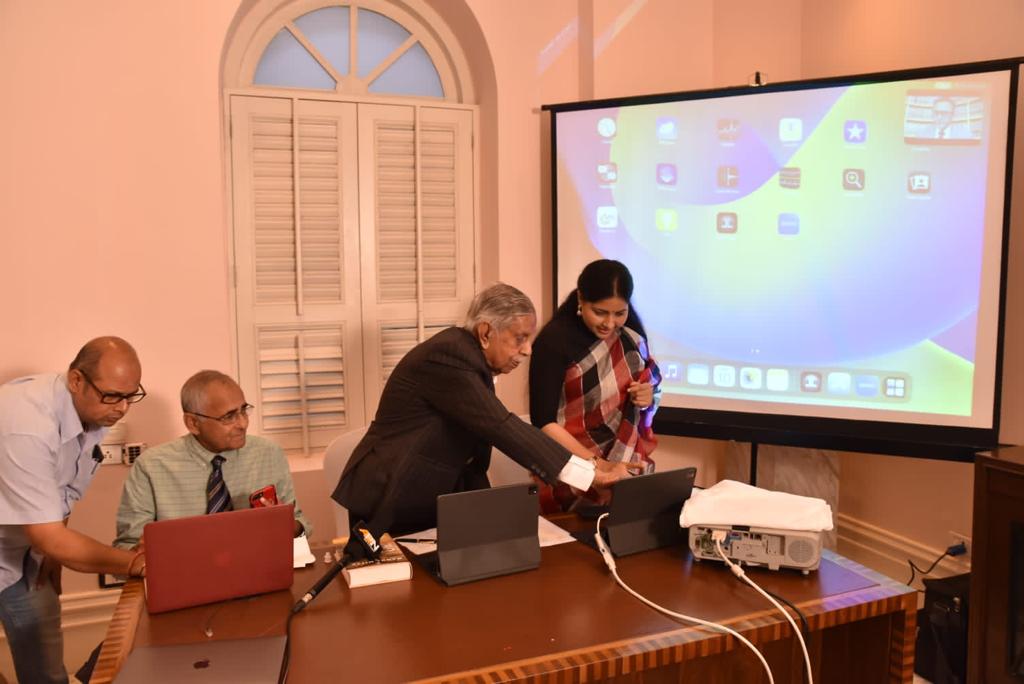
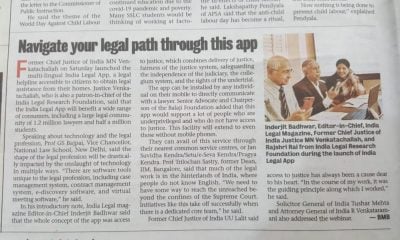
Former Chief Justice of India M.N. Venkatachaliah launched the much-awaited India legal app. The former CJI said the app will not only cater to those seeking justice, but also help the large legal community, adding that the initiative would help in disposing of around 70 percent new cases.
Senior Advocate and Balaji Foundation Chairperson Pradeep Rai, National Law University Delhi Vice Chancellor Prof (Dr) GS Bajpai, Supreme Court Advocates-on-Record Association President Manoj K. Mishra and India Legal Editor-in-Chief Inderjit Badhwar took part in the webinar.
The India Legal App is a path-breaking legal helpline that allows every citizen of India to access high calibre legal help from the safety of her/his home at the touch of a button.
It intends to change the way legal aid is made available to the people. It gives ease of access, as a person can have a jargon-free discussion on complex matters with lawyers.
The complete assurance of privacy and easy payment methods is certain to make the legal experience of people very different from interminable hassles they may have heard about.
The app can be used in 6 Indian languages, including English, Hindi, Gujarati, Marathi, Bengali and Punjabi.
The app is also useful in times of distress as a person sensing trouble or threat can contact a legal ‘friend’ till the time the police arrives.
Lawyers associated with the India Legal App assure to help people 24×7, ready to guide them through extremely tough situations, wherever they are in the country.
The India Legal App is an embodiment of trust and faith. Any individual can install this app on their mobile and directly communicate with a lawyer.
Slowly, this facility will extend to even those without mobile phones. They can avail of this service through their nearest common service centres, or Jan Suvidha Kendra/Setu/e-Seva Kendra/Pragya Kendra.
The service will be available at a reasonable cost, which can then also be paid at that service centre.
The India Legal App services include:
Free legal advice over the phone.
Payment of a specified amount for legal advice through audio and video calls.
Payment of a specified amount for document preparation.
Payment of annual membership fees to receive legal services.
Additionally, the India Legal App provides legal information and related videos to ensure users of the India Legal App are well-informed about legal matters.
India Legal is a respected politico-legal weekly magazine (available both in print and online) in the country, with complete professional journalistic and expert inputs. Its readers include lawyers, law firms and those related to the judiciary and justice system.
The India Legal Research Foundation (ILRF) is a non-profit organisation equipped with senior lawyers and devoted to bring justice to those who deserve it, but cannot afford it. ILRF provides free legal aid to the deserving and people in need.






India News
Delhi Palam fire leaves 6 dead, massive rescue operation underway
Six people died after a fire broke out in a residential building in Delhi’s Palam. Firefighters continue rescue efforts with 30 tenders at the spot.


India News
Centre mandates 60% free seat allocation on flights, caps selection fees
Airlines must now offer 60% seats without extra charges and ensure better seating arrangements for passengers under new government rules.

India News
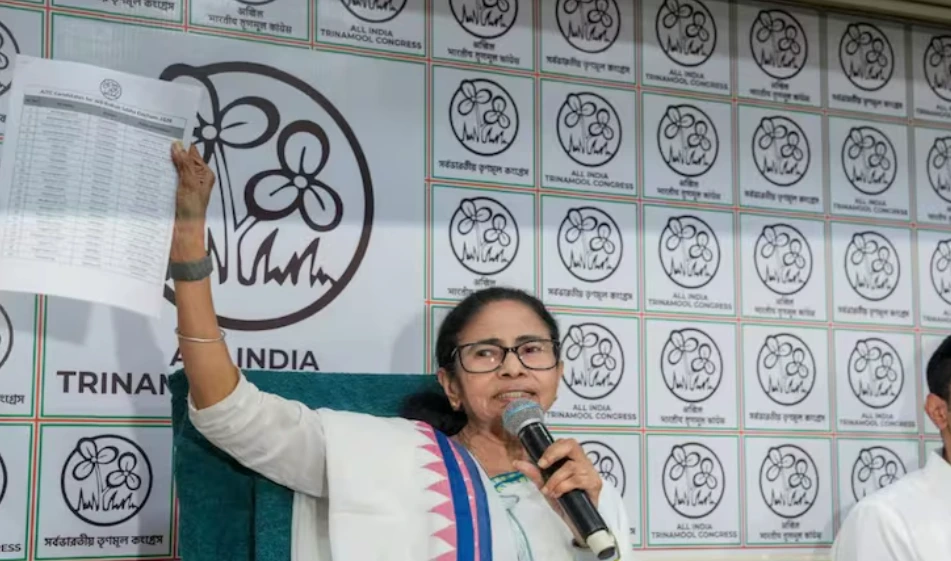
Mamata Banerjee warns BJP, EC over Bengal polls, says they will be accountable
Mamata Banerjee holds BJP and Election Commission responsible for any incidents during Bengal polls, raising concerns over officer transfers.

Centre assures action on LPG supply disruption, court closes distributors’ plea

Mamata Banerjee warns BJP, EC over Bengal polls, says they will be accountable

Top US counterterrorism official resigns over Iran war, cites conscience

US strikes Iranian missile sites near Hormuz with 5,000-pound bunker buster bombs

Netanyahu dismisses death rumours in video with US envoy, says I’m alive

Delhi Palam fire leaves 6 dead, massive rescue operation underway

Centre mandates 60% free seat allocation on flights, caps selection fees
Netanyahu dismisses death rumours in video with US envoy, says I’m alive
US strikes Iranian missile sites near Hormuz with 5,000-pound bunker buster bombs
Top US counterterrorism official resigns over Iran war, cites conscience

Afghan Men Try To Hang With The Jet Engine Of The Aircraft in Kabul- Afghanistan News – Kabul News
Trending Top 10 News: 10000 Crore Fine on Flipkart, Apple to Launch Unique Feature, Hdfc Bank Job Ad

Trending Top 10 News: Nokia 6310, Apple sales, Bachpan ka Pyar Video Kid, Dainik Bhaskar IT Raid

Trending Top 10 News: Canada bans Indian flights, Rain in Delhi NCR, AIMIM Twitter hacked, Raj Kundra case

Trending Top 10 News: Shein India, Apple New Service, Pocket Oxygen, Oppo Launched New Phone
-
India News19 hours ago
Centre assures action on LPG supply disruption, court closes distributors’ plea
-
 India News17 hours ago
Mamata Banerjee warns BJP, EC over Bengal polls, says they will be accountable
-
 Latest world news16 hours ago
Top US counterterrorism official resigns over Iran war, cites conscience
-
 Latest world news3 hours ago
US strikes Iranian missile sites near Hormuz with 5,000-pound bunker buster bombs
-
 Latest world news3 hours ago
Netanyahu dismisses death rumours in video with US envoy, says I’m alive
-
 India News2 hours ago
Centre mandates 60% free seat allocation on flights, caps selection fees
-
 India News1 hour ago
Delhi Palam fire leaves 6 dead, massive rescue operation underway