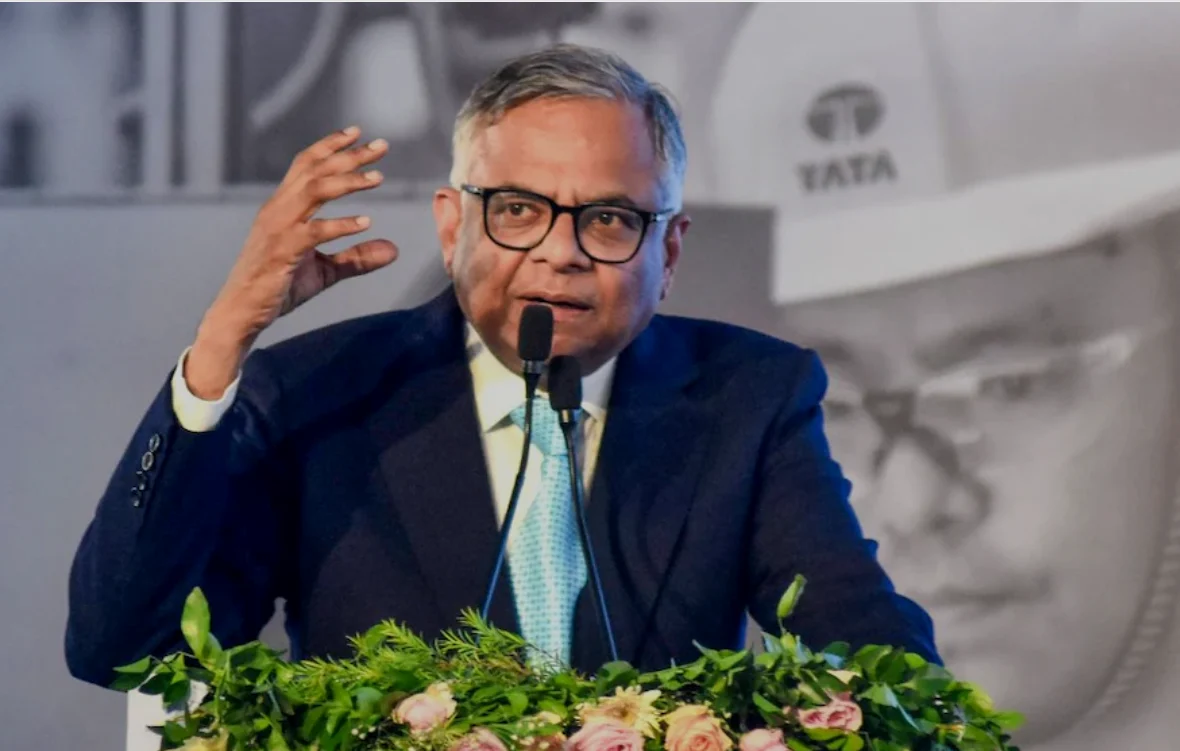
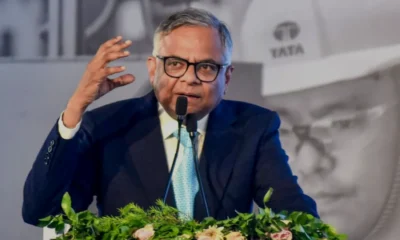
The dispute over the leadership of Tata Sons has intensified after Tata Trusts chairman Noel Tata challenged the validity of N Chandrasekaran’s reappointment as executive chairman and raised questions about reported commercial dealings between TVS Motor and a company linked to Chandrasekaran’s family.
In a letter dated October 26 to Tata Sons company secretary Suprakash Mukhopadhyay and the board, Noel sought records and disclosures relating to the September 17 board meeting at which Chandrasekaran’s reappointment for another five-year term was approved.
Noel has argued that the resolution was not properly included in the meeting agenda, that the prescribed selection procedure was not followed and that the required voting conditions were not met. He has maintained that the resolution is void and sought extensive documentation to support a review of the decision.
Why Noel Tata has challenged Chandrasekaran’s reappointment
One of Noel’s principal objections concerns the agenda and procedure followed at the September 17 board meeting.
According to his letter, neither the original nor the revised agenda specifically listed a resolution on Chandrasekaran’s reappointment. The relevant agenda item was described as a debriefing from the nomination and remuneration committee (NRC), but the reappointment resolution was subsequently moved under that item.
Noel has also questioned why a selection committee was not constituted under Article 118 of Tata Sons’ Articles of Association, despite a request for its formation dating back to August 13.
He has further argued that the affirmative vote required from directors appointed under Article 104B, read alongside Article 121, was not obtained and that conditions attached to the resolution remain unfulfilled.
Another objection relates to the certification and filing of the resolution before the board minutes had been finalised. Noel has sought the final signed minutes, voting records, different versions of the meeting agenda and the original audio-video recording and transcript.
He has also asked the company to inform the Registrar of Companies that the resolution’s validity is disputed.
Noel Tata raises questions over TVS Motor dealings
The second major issue concerns reported commercial arrangements between TVS Motor and Hanno One Warehousing, a company whose directors include Chandrasekaran’s wife, Lalitha, and son, Pranav.
Noel’s letter refers to reported dealings involving the two companies and questions whether these relationships were disclosed to Tata Sons before Chandrasekaran’s reappointment was considered.
According to the reports cited in the letter, TVS Motor leased approximately 17.41 acres of land near its Hosur plant to Hanno One in June 2025 for 29 years, with a renewal option available to Hanno One.
Hanno One is reportedly constructing a facility of approximately 3.3 lakh square feet for TVS Motor. The reported project cost is around Rs 106 crore, with a deposit of Rs 27 crore. A construction loan of approximately Rs 60 crore from HDFC Bank was also reported.
A separate arrangement involves land near TVS Motor’s Mysuru factory for an industrial park estimated to cost Rs 330 crore, intended to serve TVS Motor and its suppliers.
Noel has questioned whether these commercial relationships were disclosed to the Tata Sons board and the Tata Trusts before the reappointment decision.
He has stated that he does not recall the relevant disclosures being presented to the board. His letter also points out that the interest disclosure recorded from Venu Srinivasan at the September 17 meeting concerned his having ceased to be a director of TVS Group companies on June 10, 2026.
Why Venu Srinivasan’s role is under scrutiny
Noel has also questioned the participation of Venu Srinivasan, chairman emeritus of TVS Motor and a member of Tata Sons’ nomination and remuneration committee.
Srinivasan participated in the committee’s deliberations on September 3 and cast the vote associated with the Article 104B director requirement during the September 17 board process.
Noel has argued that Srinivasan should have disclosed the reported commercial relationship between TVS Motor and Chandrasekaran’s family before participating in the assessment and voting process.
In his letter, Noel contends that Srinivasan should have declared the dealings and recused himself from both the NRC deliberations and the subsequent board meeting.
He has questioned whether Srinivasan’s participation affects the validity of the committee’s recommendation and the board resolution.
These are objections raised by Noel and do not, by themselves, establish that a conflict of interest occurred or that the resolution is legally invalid.
Tata Code of Conduct and disclosures sought
Noel’s letter also refers to the Tata Code of Conduct, which sets out expectations regarding actual or potential conflicts of interest and the disclosure of relevant interests held by immediate family members.
He has sought declarations of interest from Chandrasekaran and Srinivasan, relevant Form MBP-1 filings, annual compliance affirmations and communications concerning Hanno One and TVS Motor.
The letter also requests records of any disclosure made in April 2025 concerning Hanno One’s incorporation, along with evidence of whether the board or any committee considered that disclosure.
Noel has questioned whether the reported commercial arrangements were brought to the attention of the legal advisers whose opinions were obtained in support of Chandrasekaran’s reappointment.
He has sought the instructions and documents provided to those advisers, the authority under which the opinions were commissioned and clarification on whether the Hanno One dealings were disclosed to them.
Additionally, he has requested the agenda, papers, minutes, attendance records and recordings of the September 3 NRC meeting.
Noel has asked Tata Sons to provide the requested records and disclosures within seven days and to preserve relevant documents, recordings and communications without alteration or destruction.
What Tata Sons has said
Tata Sons has maintained that the reported TVS Motor transaction did not require disclosure to the company. A spokesperson’s statement cited in Noel’s letter said Hanno One’s incorporation had been disclosed in April 2025 to companies chaired by Chandrasekaran.
The company has also previously defended the validity of Chandrasekaran’s reappointment, relying on legal opinions supporting the board’s interpretation of the relevant provisions of its Articles of Association.
The disagreement centres on whether the board followed the correct procedure, whether the necessary voting requirements were satisfied and whether relevant interests were adequately disclosed.
Noel’s latest letter seeks further records and clarification on these issues, keeping the dispute over Chandrasekaran’s reappointment and Tata Sons’ corporate governance in focus.